






6 Gorgeous Winter Braided Hairstyles Every Black Woman Needs to Save

Winter is a beautiful time to switch up your braid look. A new parting pattern, a few curls, or a shorter bob can make a familiar protective style feel fresh through colder days. These six ideas range from long feed-in cornrows to jumbo box braids, with notes on shape, accessories, and how to make each style work with your own hair and routine.
Braids can reduce daily manipulation, but they are not automatically protective. The weight, installation tension, and time worn all matter. Choose a braider who is willing to make adjustments, and speak up if your scalp feels sore during installation. Dermatologists at the American Academy of Dermatology note that painful or overly tight braids can pull on the hairline; their guidance on hairstyles and traction is useful to review before choosing a style.
The options below are inspiration, not rules about what Black hair should look like. Natural texture, density, length, scalp sensitivity, and personal preference vary. Use the details as a starting point, then make the size, length, and finish your own.
You May Also Like
6. Knotless Box Braids

Knotless box braids begin with your own hair and have extension hair added gradually, creating a flatter-looking base than a traditional knot. The result can feel light and flexible, especially when the braids are medium-sized and the added hair is not excessive. For winter, a mid-back length is a useful balance: long enough to style in a bun or ponytail, but often easier to tuck into a coat than waist-length braids. Ask your braider to keep the perimeter comfortable and avoid loading fragile edges with large sections.
Before the appointment, decide on braid size and length, and bring a reference photo that shows the parting as well as the finished look. Clean, detangled hair gives the braider a clear base. Discuss whether you want a middle part, side part, or flexible sections, since parting can shape the look for weeks.
Ask for a test braid near the hairline and say so immediately if it hurts.
Keep each section proportionate to the natural hair carrying it.
Choose dipped, curled, or straight ends to suit your routine.
At night, gather the braids loosely and cover them with satin or silk.
Knotless braids are versatile: wear them down, sweep one side behind the ear, or tie them into a loose low ponytail. Avoid making a tight high bun the default every day; repeated pulling can stress the same areas. A softer low style is usually easier under a beanie or hood, and keeps long braids from swinging into your face on windy days.
5. Boho Braids With Curls
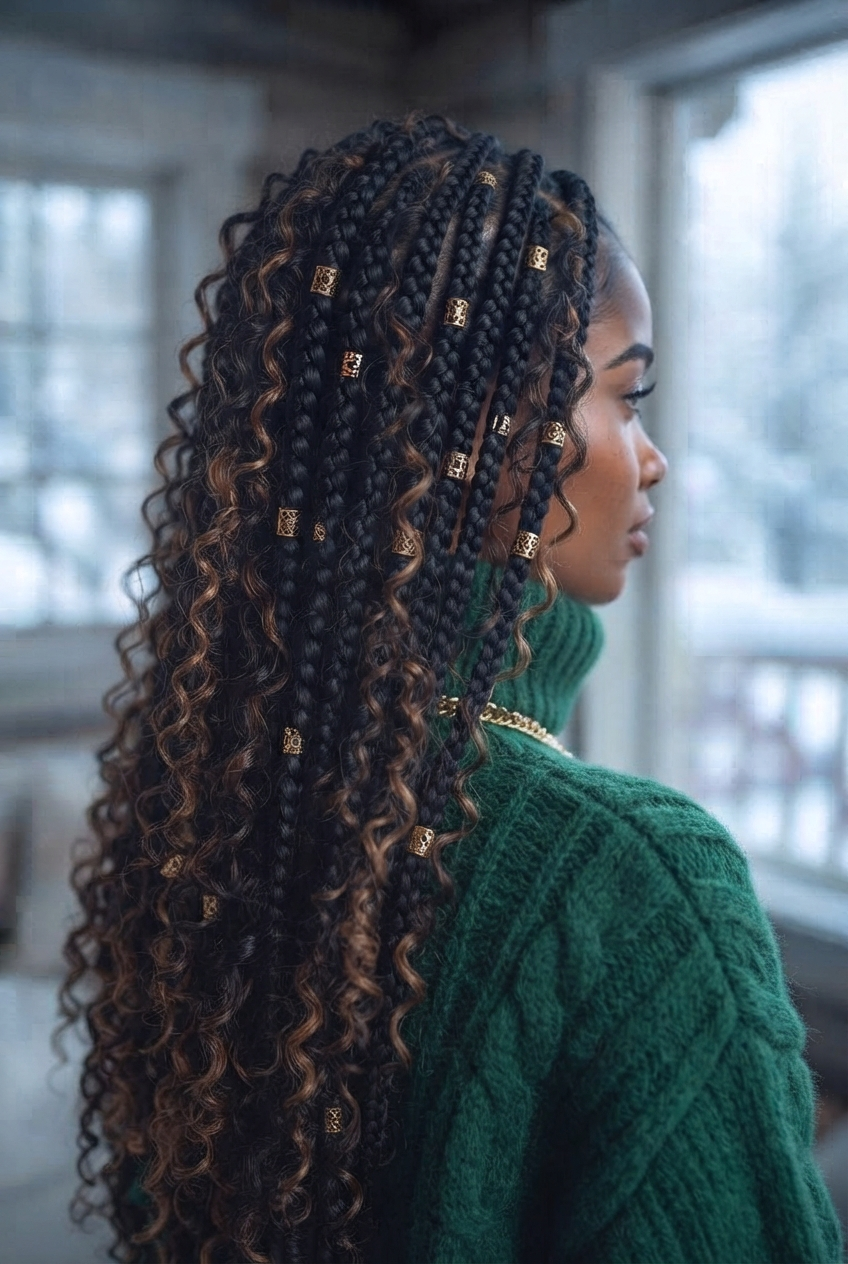
Boho braids mix braided sections with loose curls left out through the lengths or ends. The contrast gives movement and softness, making the style look romantic without needing extra accessories. For winter, a few curls around the face can brighten a coat-and-scarf outfit; curls at the ends also make a long braid set feel less uniform. Choose a subtle version with curls placed sparingly or a fuller version with more visible texture.
The loose hair needs its own care plan. It can tangle around collars, scarves, and coat zippers, so keep curls contained when dressing and undressing. At home, separate tangles gently with your fingers and a little compatible leave-in rather than pulling a comb through a knot. If the ends are synthetic or human-hair extension, follow the maker’s directions and ask your braider which products suit the hair.
Decide how much loose curl you are willing to detangle between wash days.
Keep the roots and braided sections light; avoid unnecessary extension weight.
Use a loose braid or satin scrunchie to protect the curls at night.
Refresh only the loose pieces with a small amount of water-based product.
Boho braids bring movement but need more attention than a clean knotless set. If you want less upkeep, ask for curls concentrated at the ends instead of throughout the full length. A shorter chest or shoulder length may also rub less against winter layers.
4. Long Feed-In Cornrows
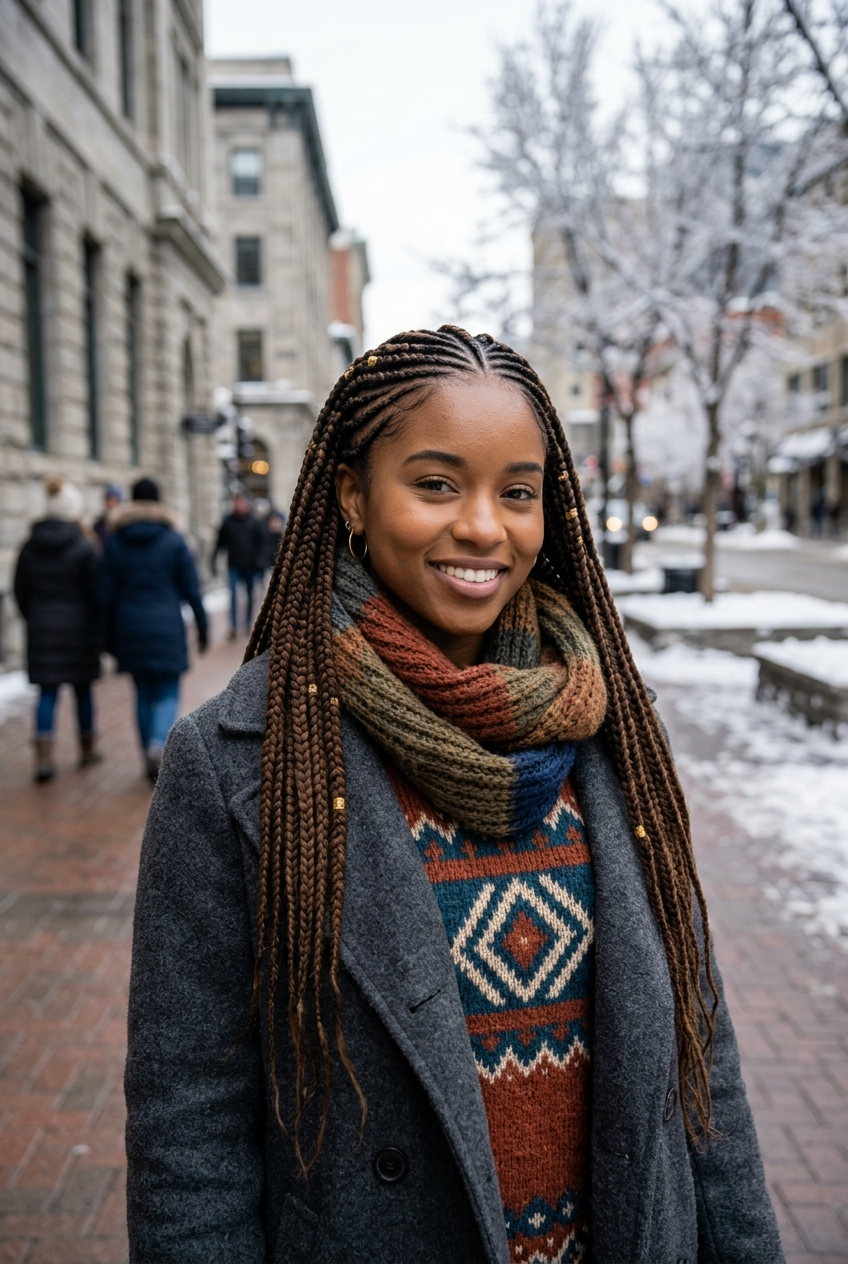
Long feed-in cornrows follow the scalp and gradually incorporate extension hair into each braid. The technique can create clean, graphic lines and a smooth transition from your natural hair to added length. Straight-back rows are classic, while curved or angled sections make the pattern more individual. Long cornrows can be styled down or gathered into a ponytail, but length adds weight, so a shorter option may feel better if your scalp is sensitive.
Talk through the design before the appointment. A photo from the front and side helps your braider understand the part pattern and where each row should end. Let them know whether you wear glasses, hats, or a headset often; those details can change what feels comfortable. Feed-in does not mean pain-free by default. The finished style should not cause stinging, bumps, or a tight pulling feeling.
Agree on a clear part map and the number and direction of rows.
Ask for a comfortable braid size and moderate extension length.
Keep the front perimeter especially gentle.
Wear rows down or in a loose ponytail to vary the tension.
A satin-lined hat reduces friction compared with rough wool, and a loose scarf can cover the ends when the wind picks up. Check that coat fastenings are not catching the braid ends. Use scalp products sparingly, and avoid scratching under the rows.
3. Braided Bob

A braided bob gives you the structure of braids with a shorter, face-framing shape. It may sit at the jaw, chin, or shoulders, with blunt, rounded, or softly layered ends. It is practical when you like braids but do not want long lengths caught under coats or weighed down by scarves. A bob can look sleek with a centre part, playful with a side part, or expressive with beads or curled ends.
The shape depends on where the braids finish, so use a reference photo with a similar face-framing length and angle. If you want the bob to curve inward, tell your braider before the ends are sealed. Some styles are trimmed after installation; others are created by braiding to a shorter length. Ask which approach they use and how the shape will look in motion.
Decide whether you prefer a chin-length, shoulder-length, or longer bob.
Choose a braid size that gives the bob fullness without excess weight.
Keep the nape rows comfortable because collars can rub there.
Add a few smooth cuffs or keep the finish minimal for easy layering.
A bob can be worn loose or tucked behind one ear. For an event, pin one side back with a clip that will not snag. At bedtime, use a satin scarf or bonnet large enough to hold the ends without folding them sharply.
2. Fulani Braids
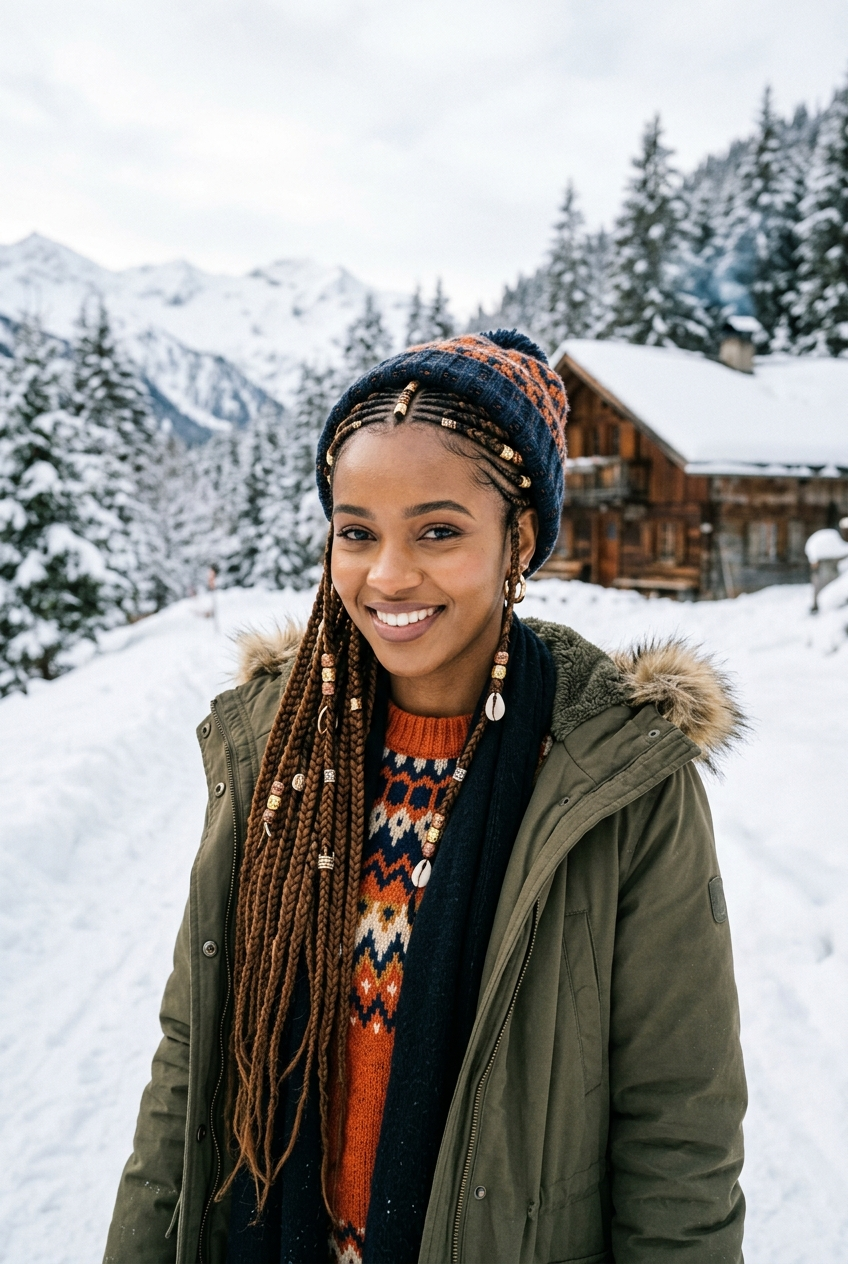
Fulani braids are often recognized by a combination of cornrows and individual braids, with face-framing rows, a centre design, or beads used as decoration. The layout is adaptable: keep the front rows distinctive and use box or knotless braids in back, or choose a simpler pattern for an everyday finish. The parting itself becomes part of the design.
If you are considering beads or cuffs, think about where they will sit and whether they might tap against your face or glasses. Lighter accessories are easier for daily wear, and a few pieces can make the pattern stand out. Share your preference for bead placement before braiding begins. A well-planned design should feel balanced, not crowded.
Bring a photo of the front, sides, and back of the pattern.
Ask for comfortable tension around the hairline and temples.
Choose beads or cuffs that are smooth and secure.
Sleep with a satin covering to protect the parts and reduce friction.
Fulani braids can be worn down, pulled into a low ponytail, or gathered into a loose half-up style. If you wear a hat, check that any beads will not press uncomfortably against your scalp. Personalize the look with color, a new parting, or a small number of accessories rather than adding weight.
1. Jumbo Box Braids
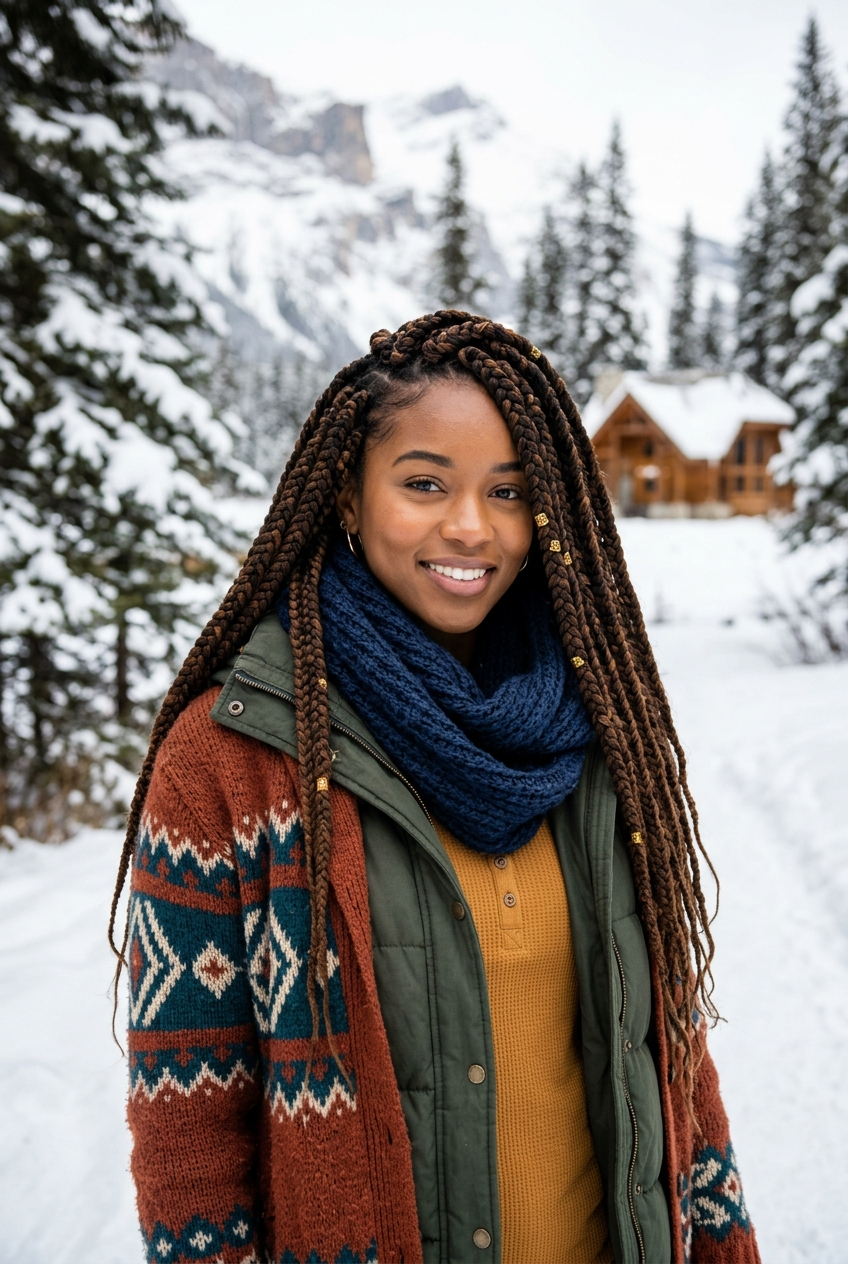
Jumbo box braids make a bold statement with fewer, thicker plaits. They can take less time to install than smaller braids, though the appointment still takes time and the finished hair can carry considerable weight. Choose a moderate length and extension amount that your natural hair can comfortably support. Ask your braider to assess density and section size rather than simply aiming for the thickest possible braid.
Bigger is not automatically gentler. Each braid carries more weight, and a heavy jumbo set can pull at the roots, especially when tied up. If you have a tender scalp or fragile areas, consider a shorter set or a different style.
Agree on the braid width and length before installation.
Ask for lightweight hair and a test braid to check comfort.
Wear them down or in a loose low tie instead of a tight top knot.
Use satin at night and separate the sections gently in the morning.
Jumbo braids are striking with only a few cuffs or thread wraps. A loose side sweep, low ponytail, or half-up gather changes the shape without adding a lot of tension.
Winter Care for Braids
Cold air, indoor heating, hats, and scarves can all change how your hair and scalp feel. A protective style still benefits from a clean scalp and gentle moisture. The American Academy of Dermatology’s Black hair care guidance offers suggestions for textured hair; tailor them to your scalp and products rather than following a routine that causes buildup or irritation.
Cleanse your scalp as needed, rinse thoroughly, and let the roots dry completely.
Apply a light leave-in to exposed natural hair and ends if they feel dry.
Avoid layering heavy oils, sprays, and gels day after day.
Use a satin-lined hat or smooth scarf under winter accessories.
Do not tie up damp braids for hours.
A scarf or bonnet at bedtime can limit friction, but should not press on your hairline. If you wear a beanie, let the braids fall naturally underneath rather than pulling them taut. When you take braids down, work slowly in good light and detangle in small sections; rushing can cause breakage.
Choose a Style That Fits Your Week
Think about your routine before settling on a braid appointment. Do you wear a hat every morning? Do you exercise often? Will you need to wash your scalp regularly? A short braided bob may suit frequent layering and active days, while long cornrows or box braids may be comfortable if you have time to secure the lengths. Boho braids bring movement but may need more detangling than a clean knotless set.
The right reference photo shows not only the braid pattern but also a realistic length and thickness. Ask about appointment time, extension weight, and how the style will feel after a few days. A good braider should be comfortable discussing tension and changing the plan if something hurts. You can request a simpler perimeter or fewer accessories to reduce weight.
Rotate the way you wear your braids. Wearing a ponytail in the same place every day can repeatedly stress the same areas, so alternate between down styles and loose low gathers. Take the style down if it becomes painful, itchy, or difficult to clean. Braids are meant to make styling easier, not leave your scalp sore.
Comfort Comes Before Hold
Any braid style should feel secure without feeling painful. The AAD advises that pain, stinging, crusting, or skin pulled taut can signal that a style is too tight. Its traction hair loss advice recommends changing styles regularly, keeping braids comfortable, and giving hair a break from repeated stress.
If a style hurts during installation, tell the braider before they finish. Do not assume you need to wait several days for pain to pass. If you notice thinning or broken hairs around your hairline, or ongoing scalp symptoms, remove the source of tension and talk with a board-certified dermatologist. Hair loss has several possible causes, so a professional can help identify what is happening.
Build a Winter Braid Plan Before Your Appointment
Before choosing a pattern, think through a regular week rather than the first day of the style. A long braid set may look beautiful in a reference photo, but if you wear a thick scarf and a high-collar coat each morning, a shorter length or low arrangement may feel easier. If you exercise, use a headset, or need to tie your hair back for work, tell your braider in advance. These details affect where the parts sit and how much extension length is practical.
Bring a few reference photos that show the braid pattern, length, and overall volume. A close-up of a hairline does not show whether the back will feel heavy, and a photo taken from behind may hide the parting you want. Choose one main reference and one or two details to adapt, then ask the braider what will work with your natural density and current hair condition. You can always simplify a pattern or reduce length while keeping the overall mood.
Ask about appointment timing, how to prepare your hair, and what maintenance products are compatible with the extension hair. Some braiders prefer a specific level of stretch or detangling; follow their instructions rather than applying lots of oil or gel beforehand. If you have had a reaction to a particular extension fiber or product, mention it before the hair is installed. A small planning conversation can make the appointment calmer and help avoid decisions made when you are already sitting in the chair.
Keep Winter Accessories From Catching
Scarves and coat collars can snag loose curls, beads, and braid ends. Before dressing, sweep long braids forward over your shoulders or gather them in a low, loose tie. Close zippers slowly and check that a scarf fringe is not tangled around a curl. For Boho styles, curls are most likely to catch where they touch rough wool, so a smooth lining or satin scarf between hair and fabric can help reduce friction.
A hat should fit over the style without forcing braids into a tight position. If beads press on your scalp or the edge of a hat rubs at your temples, change the accessory or remove the pieces that create pressure. At night, use a roomy satin covering that holds the style without compressing the crown. Comfort is a better guide than trying to keep every braid perfectly flat.
A Small Winter Braid Care Checklist
Keep your braid routine steady instead of adding a new product every time the weather changes. Check your scalp and exposed ends every few days, cleanse when they need it, and use a light leave-in only where your hair feels dry. If a product leaves residue or makes the scalp itch, pause it and rinse the area rather than layering on more.
When you want to change the silhouette, use a loose low gather, a side sweep, or a small half-up section. Take the style down before sleeping, and alternate between up and down looks so one area does not carry the same pull. This gives you several ways to wear one braid set without repeatedly tightening the roots.
Final Thoughts
Knotless box braids, boho curls, long feed-in cornrows, a braided bob, Fulani braids, and jumbo box braids each bring a different mood to winter styling. Choose the braid size, length, and accessories around your comfort and routine. A beautiful set should feel wearable from the first day to the last.
Support That Love Podcast
Frequently Asked Questions
Which braids are best for winter?
There is no single best choice. Knotless braids, cornrows, a bob, or a low-tension Fulani pattern can all work, depending on your routine, hair density, and scalp comfort. Pick a style you can maintain and clean.
Are knotless braids better for your hair?
Knotless braids can have a flatter base, but technique, braid size, weight, and tension still matter. Ask for a comfortable test braid and avoid adding more extension hair than your natural hair can support.
How long should I keep braids in?
Follow your braider’s guidance and monitor your scalp. The AAD advises avoiding extended continuous wear and notes braids generally should not be worn beyond six to eight weeks. Remove them sooner if they hurt, irritate your scalp, or become difficult to care for.
How do I protect braids under a winter hat?
Choose a satin-lined hat or place a smooth scarf between your hair and a rough knit. Wear the braids loosely under the hat and check that beads or cuffs are not pressing painfully against your scalp.
Can I wash my scalp with braids?
Yes, if your scalp needs cleansing. Use a gentle method that reaches between the parts, rinse well, and allow the roots to dry completely. Ask your braider for product guidance for your installation.
How do I keep boho braid curls from tangling?
Separate loose curls gently with your fingers, especially after wearing scarves or coats. Use a small amount of compatible leave-in and protect the curls at night with satin.
Are jumbo box braids lightweight?
Not necessarily. Jumbo braids may be fewer in number, but each one can carry more extension hair. Choose a moderate length and ask your braider to keep the set comfortable.
What should I do if my braids feel too tight?
Contact your braider promptly and ask to loosen or remove the tight sections. Pain, stinging, or skin that looks pulled tight are reasons to change the style. See a dermatologist if symptoms or hair loss continue.
Which braid style works well with coats and scarves?
A braided bob keeps the length away from collars, while a loose low gather can contain longer braids. Be mindful of zippers and rough fabrics that may catch curls, beads, or ends.
How can I care for my natural hair after removing braids?
Take your time removing extensions, then detangle in small sections using a gentle approach suited to your texture. Cleanse and condition your hair, and consider wearing a lower-manipulation style before installing another set.
Further Reading
For dermatologist-reviewed advice, read the American Academy of Dermatology’s hair styling guidance and tips for preventing traction hair loss.


.jpg)



.jpg)


