






6 Protective Braided Hairstyles for Black Women to Wear This Winter

Winter dressing often means scarves, coats, and hats, so a braid style that is easy to secure can make mornings simpler. These six protective braided hairstyles for Black women offer different silhouettes: medium knotless braids, cornrows gathered into a low bun, goddess braids, a braided ponytail, passion braids, and feed-in braids finished in a bun. Each can reduce day-to-day styling, but the best option depends on your hair, scalp, and schedule.
“Protective” describes an intention to limit handling or tuck away ends; it is not a guarantee that a style cannot cause damage. Weight and tension matter. The American Academy of Dermatology says braids should not hurt and advises loosening styles that pull. Read its guidance on hairstyles and traction before your appointment, especially if you have a sensitive hairline.
Use these ideas as a conversation starter with your braider. You can adjust braid size, length, parting, curl amount, and accessories. You do not need to copy a photo exactly to get a winter style that feels personal and practical.
You May Also Like
6. Medium Knotless Braids

Medium knotless braids are individual plaits with extensions gradually added rather than anchored in a bulky knot at the root. The medium size gives you movement and styling flexibility without the very fine parting of small braids or the bold width of jumbo braids. A shoulder-to-mid-back length is easier to tuck into a coat and may feel lighter than a waist-length set. Ask your braider to assess your density before deciding on the size and number of braids.
Talk through parting, color, extension type, and how often you wear ponytails or hats. Bring a photo of the front and back, but be open to changing the length if the reference looks heavier than your hair can comfortably carry. If you want a middle part, make sure it sits where you prefer before the first rows are completed.
Ask for one or two test braids and check that the roots feel comfortable.
Keep the braids a proportionate size for the natural hair in each section.
Choose a practical length that will not constantly catch under collars.
At night, gather the braids loosely and use a satin scarf or bonnet.
Medium knotless braids can be worn down, split over both shoulders, or gathered into a relaxed low ponytail. For a winter bun, use a large soft tie and leave enough slack that the scalp is not pulled. Alternating between wearing the braids down and loosely gathered helps avoid repeating the same tension each day.
5. Cornrows Into a Low Bun

Cornrows that feed into a low bun combine a close-to-the-scalp pattern with a tidy finish at the nape. Straight-back rows create a clean look; curved or angled parts can make the pattern more expressive. The low bun works with high collars and scarves because it does not add bulk at the crown. It can be braided from natural hair or finished with extension hair, depending on the style you want and what your hair can support.
Talk about bun size before your braider begins. A very large, heavy bun may pull on the cornrows, especially if worn every day. A compact finish may be more comfortable. Tell the braider if you wear hearing aids, glasses, or head coverings so the placement can leave those areas comfortable.
Decide on the direction and number of cornrows before the appointment.
Request relaxed tension around the temples, edges, and nape.
Keep the bun proportionate to the length and thickness of the braids.
Loosen or take down the bun if it starts to feel tight.
This style is adaptable: leave the bun simple for daily wear, or add a smooth accessory for an event. Use a satin scarf at night to limit friction. If you wash your scalp, dry the cornrows and bun completely before covering them for a long period.
4. Goddess Braids
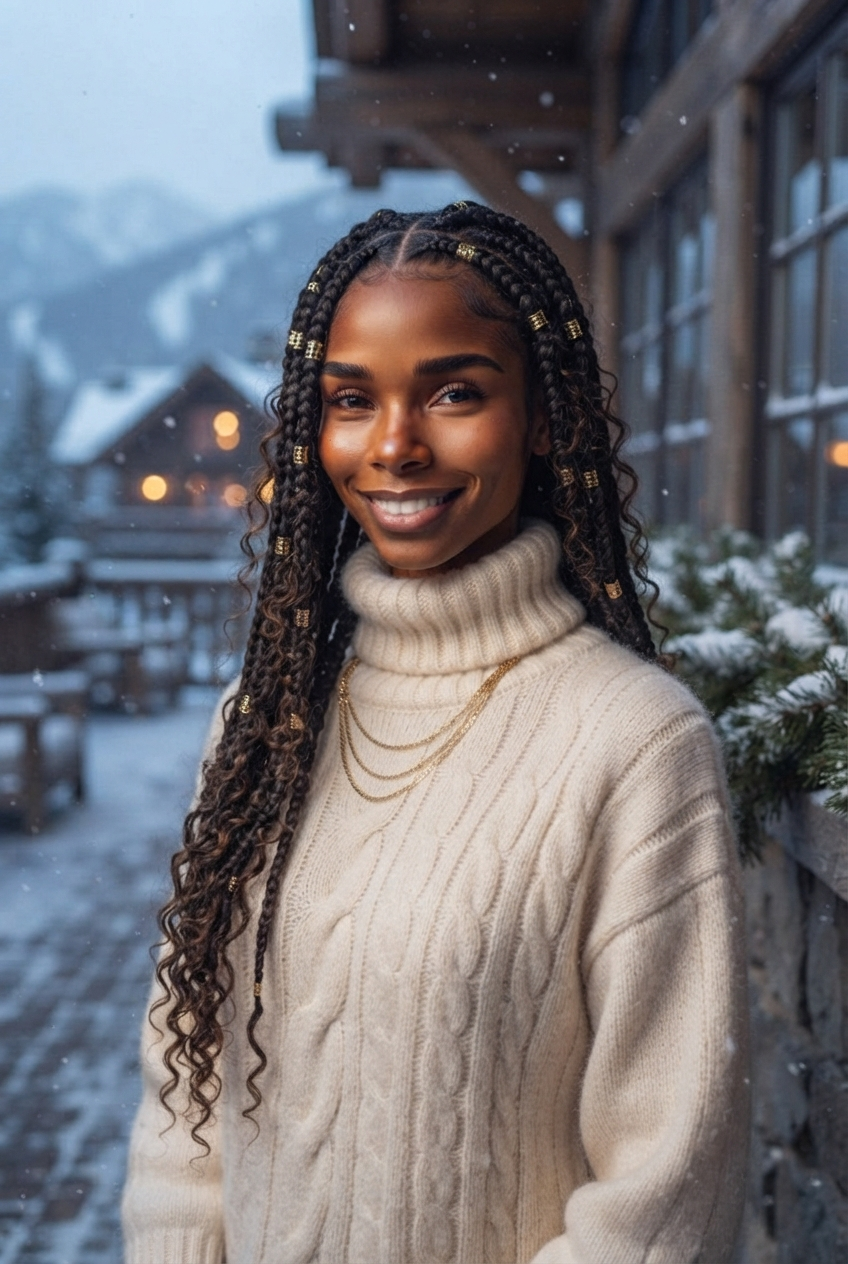
Goddess braids is a term used for several larger, sculptural braid looks, often built from cornrows or raised braids with a polished finish. The name can refer to different techniques, so bring a photo and confirm what you mean with your stylist. For winter, a side-swept pattern or a set gathered into a low bun can look elegant while staying manageable under a coat.
Because these braids are often thicker, consider total weight before choosing very long extensions. A shorter design can still feel dramatic and may be easier to sleep in and refresh. If the style includes decorative pieces, ask whether they will rub against a hat or press into your scalp.
Show the stylist the pattern from several angles, not only the front view.
Ask how the braids will be secured and whether added hair is needed.
Choose a size and length that do not strain your hairline.
Keep accessories smooth and lightweight.
Goddess braids can be worn down, pinned to one side, or arranged in a low bun. If the style is built close to the scalp, gentle cleansing may take a little planning. Ask your braider how to reach the parts without rough scrubbing, and let the roots dry thoroughly.
3. Braided Ponytail
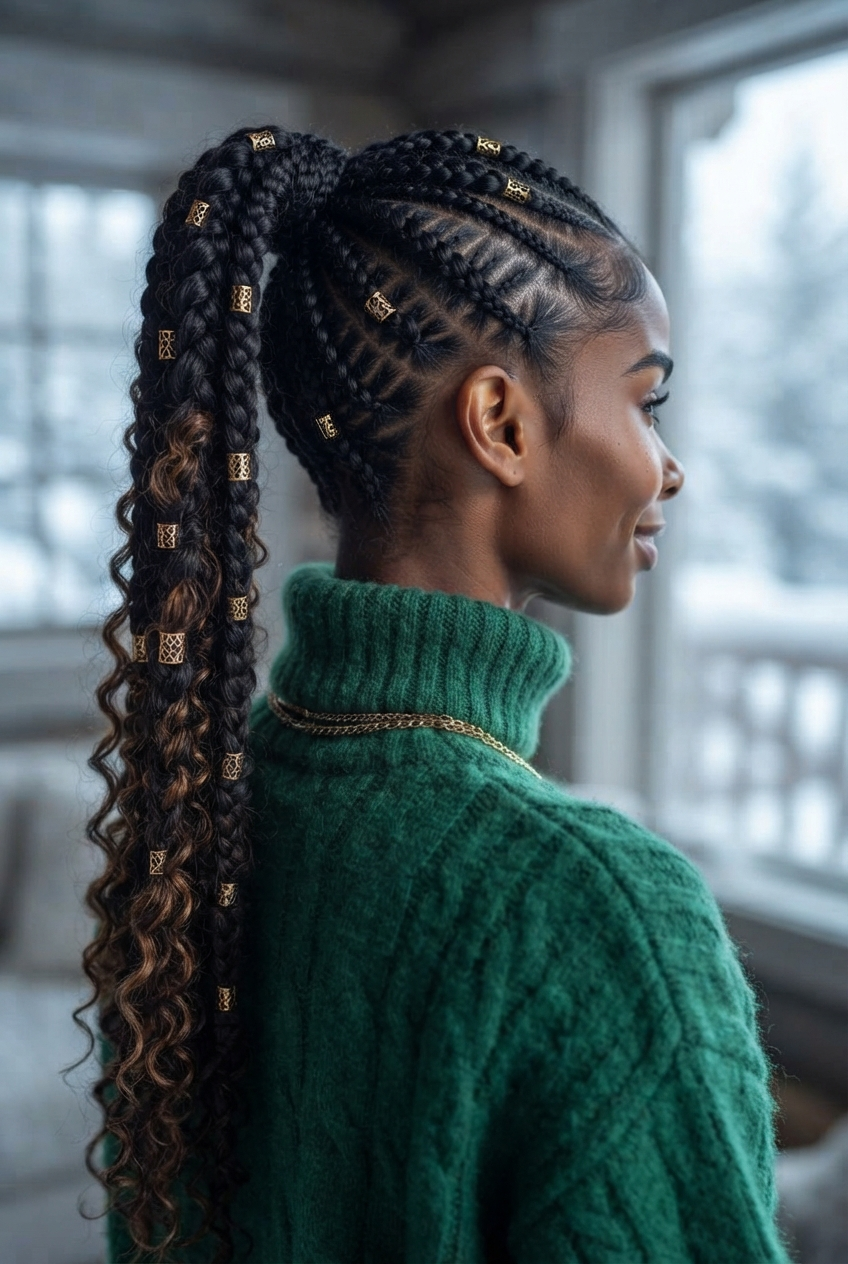
A braided ponytail gathers braid lengths at one point, creating a long, clean shape that can be worn high, mid-height, or low. It works with feed-in cornrows or individual braids and can be adjusted for casual days or dressier plans. For winter, a low or mid-height ponytail is often easier with hats and coats than a high, tightly pulled version. Leave a little slack at the base so the style feels secure without pulling.
The key is balancing the ponytail’s length and weight. A thick, long tail can tug at the attachment point, particularly when worn high all day. Ask whether your hair and chosen braid pattern are a good match for the intended ponytail. If you already have braids, gather them gently and use a soft tie rather than wrapping a narrow elastic repeatedly.
Choose a comfortable height and ask for a base that does not feel tight.
Keep the ponytail length and thickness manageable for your scalp.
Use a soft band or scrunchie to secure the tail.
Change the placement or wear the braids down on other days.
To finish the look, wrap one braid around the base only if it can be secured without tightening the whole ponytail. A few smooth cuffs may add detail, but keep them away from areas where they could catch on clothing. Before bed, take the ponytail down and cover the braids loosely.
2. Passion Braids

Passion braids are a textured, rope-like style made with curly or wavy extension hair. They offer a softer silhouette than sleek individual braids and can be shoulder-length, mid-back, or longer. Their texture pairs well with winter layers and gives a relaxed finish without extra accessories. Techniques vary by stylist, so ask whether the braids will be installed as twists, braids, or a combination.
Textured extension hair can tangle if handled roughly, particularly where it meets scarves and coat collars. A moderate length and loose nighttime routine make care easier. Keep a little compatible leave-in nearby and separate tangles gently with your fingers. Do not pull a knot apart while the hair is dry and snagged.
Choose the amount of curl and braid size based on your maintenance preference.
Ask for lightweight hair and a comfortable test section.
Use your fingers to separate loose curls rather than brushing the full style.
Protect the ends with a satin covering while sleeping.
Passion braids look lovely down, but can also be gathered into a loose low ponytail. Avoid tight daily updos if your scalp is carrying added length. If loose pieces become frizzy, refresh only those sections rather than coating the entire style.
1. Feed-In Braids With a Protective Bun
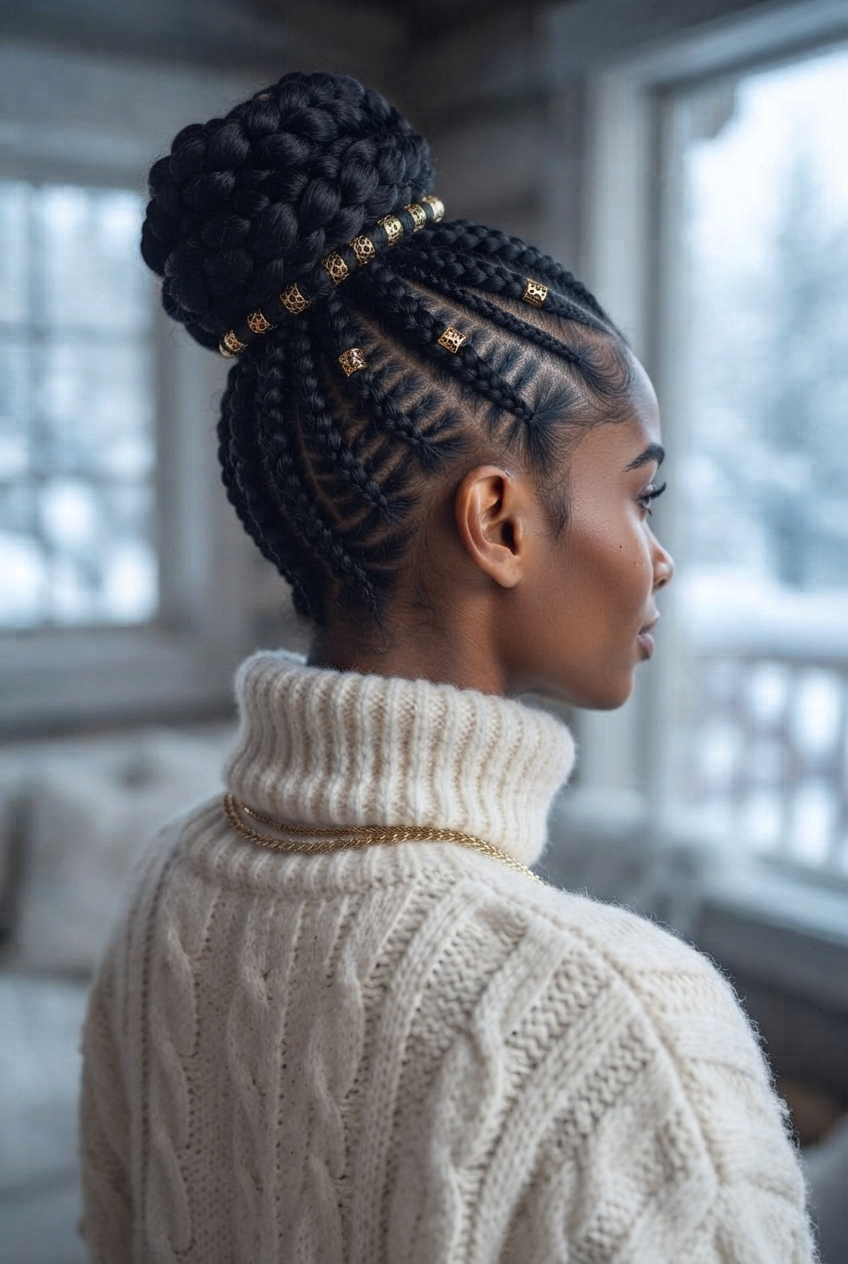
Feed-in braids with a bun use a gradual extension technique to create rows that finish in a tucked or wrapped bun. The bun keeps the ends out of the way in windy weather or around scarves. A low bun is easy under a hood or beanie; a higher bun may show the braid pattern more clearly, but it can feel less comfortable if it is heavy.
Ask about the bun’s construction, size, and how much added hair it uses. Some looks are compact and light, while others create a very full shape. The rows should not be pulled taut to support a bun that is too large. If your stylist suggests changing the braid count or bun placement to keep tension comfortable, consider that part of the design.
Decide whether you prefer straight-back, curved, or side-swept rows.
Keep the perimeter and bun base comfortable.
Ask for a light, balanced bun that your natural hair can support.
Cover the style with satin at night without compressing it tightly.
This style can look polished with little daily styling. You can loosen the bun for a softer silhouette or add a small clip if it does not snag the braids. Take the bun down occasionally if it feels tight, and do not keep the same high placement every day.
Keep a Protective Style Comfortable in Winter
Cold air does not remove the need for scalp care. If it feels dry, itchy, or coated, use a gentle product and cleansing approach that works with the braid pattern. The AAD’s hair styling advice notes that textured hair benefits from gentle handling and warns against continuously wearing braids or extensions. Tailor your routine to what your scalp needs.
Apply a light leave-in to natural hair and exposed ends when they feel dry.
Cleanse the scalp as needed, rinse thoroughly, and dry roots completely.
Use satin or silk between braids and rough winter fabrics.
Avoid scratching under braids with nails or sharp tools.
Rotate styles and vary ponytail or bun placement.
A satin-lined beanie or smooth scarf reduces friction, while a loose fit avoids pressing on beads or the hairline. If braids are long, gather them gently before putting on a coat so a zipper does not catch them.
Plan for Removal Before Installation
A braid style is easier to maintain when you know how you will take it down. Ask about the expected wear period and what signs mean it is time to remove the style. New growth, tangling at the roots, product buildup, or a style that is hard to cleanse may mean you are ready for a change. The AAD recommends switching hairstyles and not wearing braids continuously; its guidance gives a general limit of six to eight weeks, but your hair and scalp may need a shorter interval.
When removing braids, use good lighting and work in small sections. Cut only extension hair well below where your natural hair ends, and undo each braid slowly rather than pulling it apart. Detangle gently and cleanse and condition your hair before another installation. Some shedding after taking down a long-worn style is normal because shed strands can remain trapped, but do not ignore soreness, bald patches, or persistent irritation.
A break between styles gives you time to notice how your scalp and hair feel. Wear your natural texture, a loose low-manipulation style, or another comfortable option while you assess the ends. If you see ongoing thinning or have scalp symptoms, a board-certified dermatologist can help identify the cause.
A Gentle Routine for Braids Between Appointments
Protective braids still need a routine that fits your scalp. Start by checking how your scalp usually responds to cleansing and products, then keep the steps simple while the style is in. If you use a scalp cleanser, follow its directions and use the nozzle or applicator to reach between parts. Rinse thoroughly so residue does not sit at the roots. Press water out gently with a towel and allow the braids to dry fully before tying them up or putting on a close-fitting hat.
Moisture is personal. Some people prefer a light leave-in on their natural hair before installation and a small amount on exposed ends later; others find that too much product creates buildup. Try a modest amount first and notice how your hair and scalp feel over the next day. Heavy oils are not a substitute for cleansing, and scratching with fingernails can irritate the scalp. If an itchy feeling continues, consider whether the style is too tight or a product is causing a reaction instead of adding more layers.
Night care can be low-effort: take down the ponytail or bun, separate the braids into a few loose sections, and wrap them with satin or silk. Do not secure the wrap so tightly that it presses on your hairline. If you use a bonnet, choose one big enough for the braid length. A smooth pillowcase can be a useful backup on nights when a scarf slips off.
Know When a Style Needs to Come Down
Plan an approximate removal date before the braids go in, and use that date as a reminder to assess the style rather than a promise to keep it until then. New growth can tangle at the roots, and longer wear can make cleansing and detangling harder. The American Academy of Dermatology gives six to eight weeks as a general upper limit for braids, but individual hair and scalp needs vary; remove a style sooner if it becomes painful, persistently itchy, or difficult to maintain.
The AAD identifies pain, stinging, crusting, taut skin, and broken hairs around the forehead as signs to take seriously. Do not wait for a style to look untidy before changing it if your scalp is uncomfortable. Loosen or remove the braid sections causing the problem, and seek advice from a board-certified dermatologist if irritation or visible thinning continues. Traction-related hair loss can become permanent when tension continues for too long, so comfort is part of hair care.
After removal, detangle in small sections and use a gentle approach that suits your texture. Shed strands that were caught in the braids may come out together, so work patiently rather than pulling through knots. Cleanse and condition your hair, check the ends, and give your scalp a break before installing another extension style. A loose braid-out, twist-out, or low-manipulation style can bridge the gap without adding the same tension right away.
Talk Through the Plan With Your Braider
A useful consultation covers more than the braid pattern. Tell your braider how often you exercise, whether you wear a hat or headset, and how you prefer to cleanse your scalp. Mention tender areas, thinning edges, previous irritation, or extension hair that has caused discomfort. These details can guide braid size, length, parting, and the amount of added hair.
Ask what the finished style should feel like and how to care for it during the first few days. The scalp may feel different from an unbraided style, but sharp pain, stinging, or visibly pulled skin are not a normal hold test. A professional who is willing to pause, loosen a section, or change the design helps protect your comfort.
Save the care instructions and removal window somewhere easy to find. A reminder can help you check the style before new growth becomes tangled or product buildup becomes difficult to remove. If you are unsure whether a symptom is from the style or another cause, take the braids down if needed and ask a dermatologist for an assessment.
Final Thoughts
Medium knotless braids, cornrows into a low bun, goddess braids, a braided ponytail, passion braids, and feed-in braids with a protective bun give you six winter silhouettes. Keep the weight and tension comfortable, plan for scalp care, and choose a length that works with your outerwear and routine.
Support That Love Podcast
Frequently Asked Questions
What is the most protective braid style for winter?
No braid style is automatically protective. A comfortable installation, manageable weight, clean scalp, and careful removal matter more than the style name. Choose a look you can maintain without pain.
Are medium knotless braids good for winter?
They can be practical because they are versatile and can be tucked into a coat. Ask for moderate length and weight, and make sure the braids do not pull at your hairline.
Can I wear cornrows under a beanie?
Yes. A satin-lined or smooth hat can reduce friction. Keep the cornrows comfortable, and do not pull them tightly to make them fit.
How do I keep braids moisturized in cold weather?
Use a light leave-in on your natural hair or exposed ends if they feel dry. Cleanse your scalp as needed and avoid layering heavy products that leave buildup.
How long can I wear a protective braid style?
The AAD says braids generally should not be worn longer than six to eight weeks, and some people need to remove them sooner. Follow your stylist’s advice and your scalp’s condition.
Do braids have to hurt when first installed?
No. Pain, stinging, or skin that looks pulled tight can mean the style is too tight. Tell your braider immediately and ask them to loosen or redo the affected sections.
What is the difference between goddess braids and passion braids?
Stylists use the terms for different looks and techniques. Goddess braids often describe larger sculptural braids, while passion braids usually have a soft, textured finish. Bring a photo and confirm the method.
How can I keep a braided ponytail from feeling heavy?
Choose moderate length, keep the base comfortable, and vary the placement. If the tail pulls, take it down or wear braids loose rather than tightening the base.
Can I wash my hair while wearing braids?
You can cleanse your scalp when needed. Use a method that reaches between the parts, rinse thoroughly, and let the roots dry fully. Ask your braider for care advice.
What should I do if my scalp itches under braids?
Avoid scratching with nails or sharp objects. Check whether your scalp needs cleansing or the style is too tight, and remove braids if irritation is significant. Persistent symptoms merit a dermatologist’s advice.
Further Reading
Read the American Academy of Dermatology’s advice on braids and traction hair loss and hair styling without damage.


.jpg)



.jpg)


