






6 Cozy Winter Braid Styles for Black Women That Are Stylish and Low-Maintenance

A winter braid style can feel cozy and polished without adding a long daily styling routine. The right length and finish make a difference: shorter braids can stay clear of coat collars, a top knot keeps hair off your neck, and a side-swept pattern adds shape without elaborate accessories. These six braid styles include shoulder-length knotless braids, chunky box braids, half-up half-down braids, a braided top knot, side-swept cornrows, and a short braided bob.
Low-maintenance does not mean no care. Your scalp still needs attention, and installation should not hurt. The American Academy of Dermatology warns that tight braids and extensions can create repeated tension; its guidance on hairstyles and traction hair loss explains what to watch for. Choose a stylist who will adjust the plan if the braid size, length, or tension does not feel comfortable.
Think about hats, work, workouts, how often you like to cleanse your scalp, and how much time you want to spend detangling loose curls or arranging accessories. Use these ideas as a starting point and tailor them to your texture and preferences.
You May Also Like
6. Shoulder-Length Knotless Braids

Shoulder-length knotless braids are practical when you want a braided look that stays out of the way of coats and scarves. Their shorter length can feel lighter and easier to manage than a long set, while the knotless technique creates a gradual transition at the root. Choose medium or small-medium sections based on your hair and how much definition you want. A blunt shoulder line looks graphic; softly curled ends add a gentler shape.
Bring a photo that shows braid size and the point where the ends should fall. Ask your braider to check the length while you are standing naturally, since the braids may sit differently when your shoulders relax. If you wear a backpack, high collars, or a headset, mention that before deciding on the final length.
Ask for a comfortable test braid around the perimeter.
Choose extension weight and length your hair can support.
Pick a parting pattern that you can maintain as the hair grows.
Cover the style at night with a satin scarf or bonnet.
The shoulder-length finish is easy to wear down, tucked behind one ear, or gathered into a loose half-up style. A satin scrunchie can hold the top section without a tight pull. Avoid the same high ponytail every day; wearing braids loose or changing the placement gives your hairline a break.
5. Chunky Box Braids

Chunky box braids have wider sections and a bold, sculptural look. They create a full silhouette that pairs well with simple winter clothing, but the finished set should feel balanced on your scalp. Fewer, thicker braids do not always mean less weight. Ask your braider to select a size and extension amount that matches your natural hair density, and consider a shorter length if you want to wear them up often.
A clean part map keeps the style intentional. You might prefer classic squares, larger parts, or a mix of section sizes around the face. Decide on the look before installation so the stylist can distribute weight evenly. If you like a fuller set, ask whether lighter extension hair or moderate length can create volume without unnecessary heaviness.
Choose a braid width that looks full but does not overload each section.
Keep the length manageable for sleep and outerwear.
Use soft ties for styling, and avoid a tight top knot every day.
Ask the stylist to adjust any braid that feels unusually heavy.
Chunky box braids are striking worn down. Sweep one side back with a clip or gather a few braids into a loose half-up shape. At night, divide them into two or three loose sections before wrapping in satin; this can reduce tangling without compressing the roots.
4. Half-Up Half-Down Braids

A half-up half-down style keeps front sections away from your face while leaving the rest of the braids visible. It works with individual braids and some cornrow patterns, depending on how the sections are placed. The half-up shape can be a small crown gather, a loose ponytail, or a soft bun. For winter, keep it relaxed so it sits comfortably under a hood and does not tug at the temples.
If you are getting braids installed with this style in mind, tell your stylist where you expect to part and gather them. With existing braids, start with a small amount of hair and check that the tie is not too tight. Use a satin scrunchie or a soft band rather than a thin elastic.
Separate the top section from above each temple toward the crown.
Gather loosely and secure with a soft tie.
Try a small bun or let the section fall as a ponytail.
Adjust the front pieces so they frame your face without pulling.
This style shifts between casual and polished. Add a smooth accessory that will not catch the braids, or leave it simple for everyday wear. Take the gathered section down at night and cover the full style with satin. Switching between half-up and fully down prevents one area from carrying tension all day.
3. Braided Top Knot
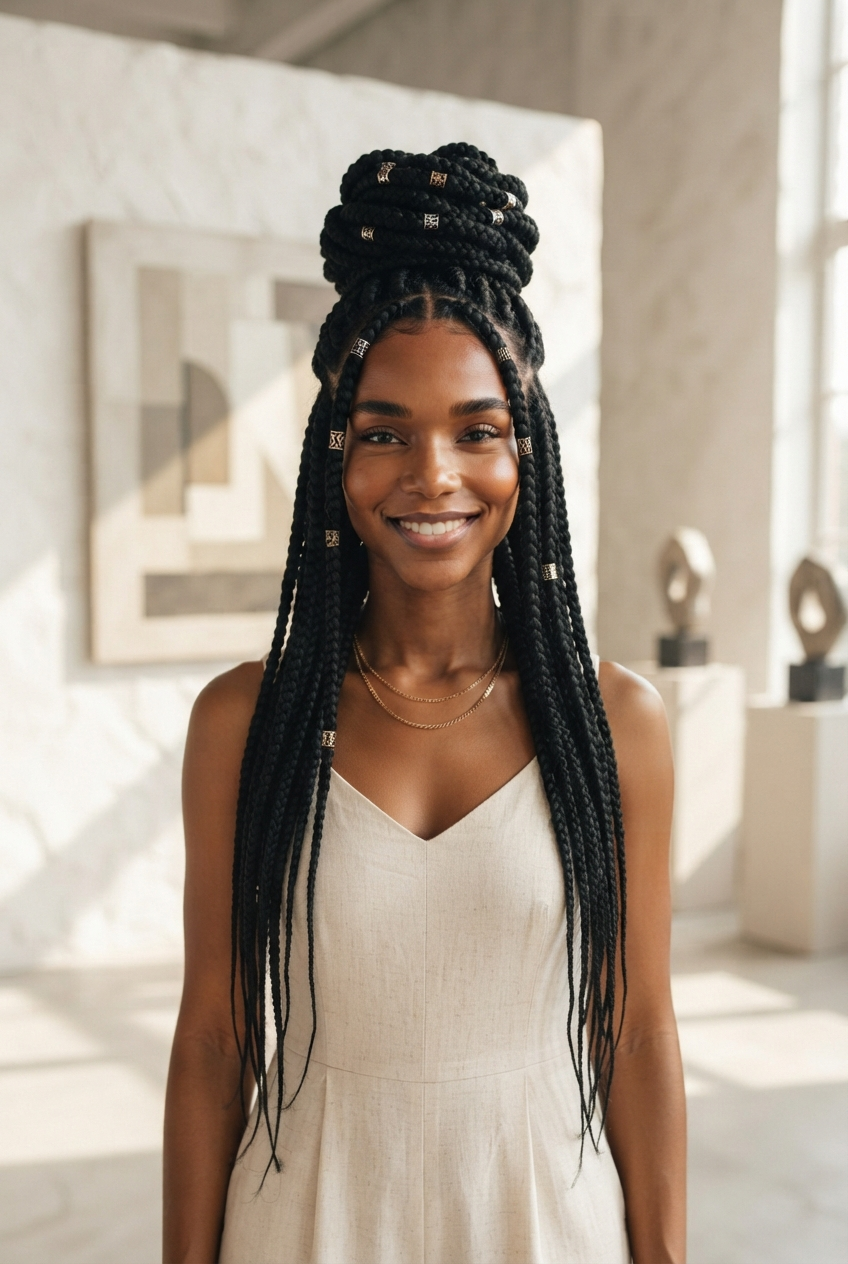
A braided top knot lifts braids away from your shoulders and gives winter outfits a clean neckline. It can be a compact bun at the crown or a softer knot positioned slightly lower. The size depends on braid length and thickness, so do not force every set into a large bun. A heavy knot can feel uncomfortable and pull at the roots; for many people, a smaller or lower shape is easier to wear.
Gather the braids gently and use a soft tie to create a loose ponytail first. Wrap the length around the base without twisting tightly, then secure the bun with a large pin or second soft tie. If the ends do not tuck safely, leave them out or choose a half-up option instead of adding tension.
Gather braids at a comfortable height, checking the hairline as you go.
Secure loosely with a wide, soft band.
Coil the length around the base and anchor it with a large smooth pin.
Take the knot down if it causes soreness or pulling.
A top knot is convenient for coats and scarves, but rotate it with down styles or a low gather. If you wear hats, make sure the bun fits without pressure. Use a satin wrap at bedtime and avoid sleeping with a tight bun in place.
2. Side-Swept Cornrows

Side-swept cornrows direct rows toward one side rather than straight back. The pattern can be subtle, with a deep side part and a few curved rows, or more graphic with angled sections that meet near the ear or nape. The style lies close to the scalp and can finish with loose ends, a ponytail, or a low bun.
The parting design is the main feature, so bring photos that show the pattern from above and both sides. Ask how the rows will meet and where the ends will sit. If you have a preferred sleeping side or wear a headset, consider that when deciding the direction of the sweep.
Choose the side and direction before installation.
Ask for gentle tension along the hairline and temples.
Decide whether the ends should remain loose or be gathered.
Protect the rows with satin at night and cleanse the scalp as needed.
Side-swept cornrows look polished with minimal accessories. In winter, a satin-lined cap helps preserve the pattern and reduces friction. Avoid repeatedly smoothing the edges with strong-hold products; fewer touch-ups usually make the style easier to maintain.
1. Short Braided Bob
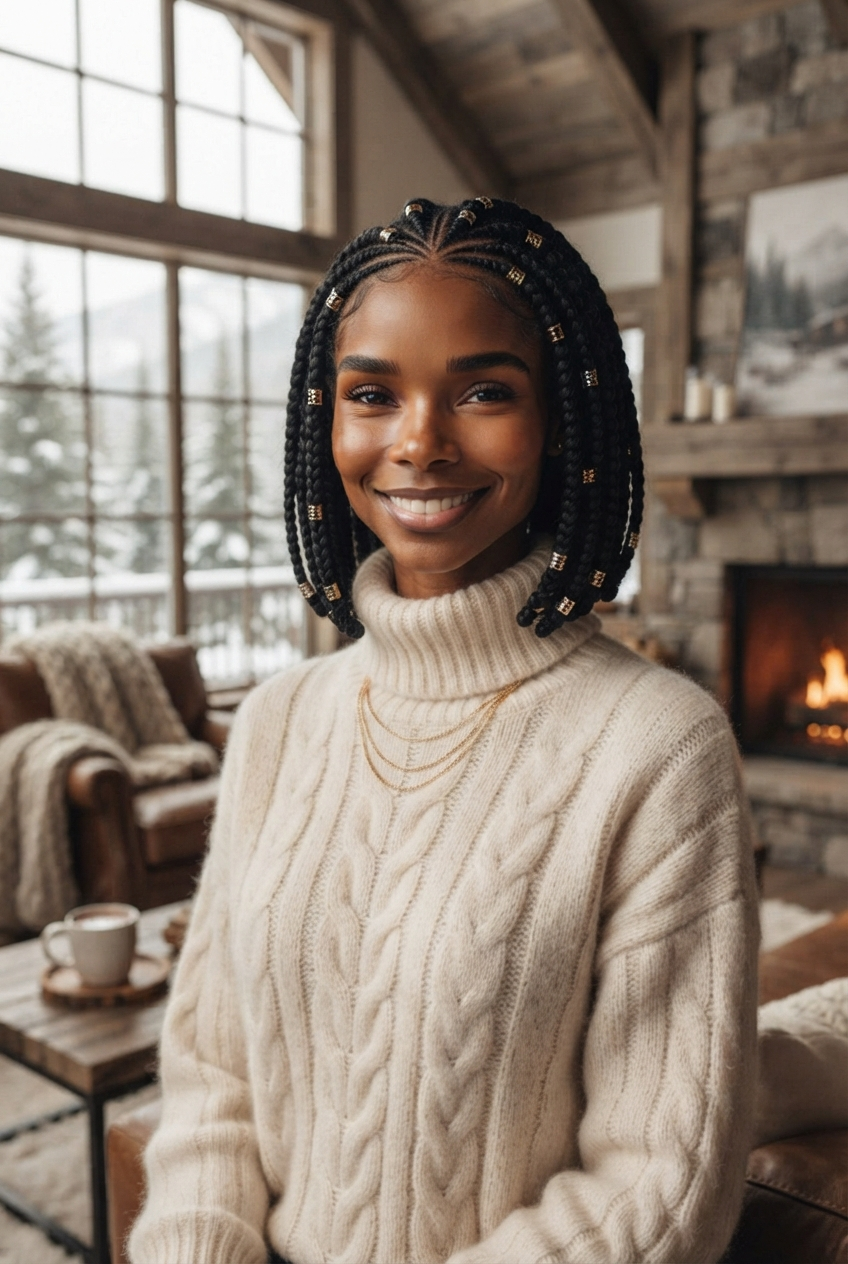
A short braided bob can sit around the chin, jaw, or shoulders and gives braids a defined outline. It is practical because it stays above many coat collars, and the ends are easier to protect at night. You can choose individual box or knotless braids, a Fulani-inspired front with a bob-length back, or an all-over pattern. The final shape may be blunt, rounded, angled, or softly curled.
Talk about length and shape before installation. If the bob is trimmed after the braids are finished, ask how much will be removed and whether the ends will keep their shape when you move. A photo with a similar braid size and density is more useful than an image of a different length.
Choose where the bob should finish and whether you want an angle.
Ask for a braid size that supports the outline without excess weight.
Keep the nape comfortable since collars can rub against shorter braids.
Use a satin bonnet large enough to cover the ends without folding them.
Wear the bob down, tuck one side behind your ear, or secure a small section with a smooth clip. If you have curled ends, protect them from scarves and detangle gently with your fingers. To refresh in the morning, smooth the part, separate the braids with your hands, and add product only if the scalp or ends need it.
Why Shorter Lengths Can Feel Easier in Winter
Long braids are beautiful, but shorter styles can be more convenient when you wear layers every day. Braids that sit near the shoulder or chin are less likely to catch in zippers, tangle under scarves, or become trapped beneath a coat. They can also be easier to cover at night and faster to refresh. If you like long braids, a loose low gather can keep the ends contained.
The best length depends on your routine. If you commute, a shorter set may be easier in crowded spaces. If you exercise often, ask for a style you can tie back loosely without pulling. If you enjoy changing your look, a medium length gives enough room for half-up styles while remaining easier to manage than waist-length braids.
Before your appointment, picture the style with your usual winter clothing. Bring a coat or scarf reference if you are uncertain about length, and let your stylist help choose a finish that sits comfortably with those layers.
A Low-Maintenance Braid Routine
A low-maintenance routine can be short, but it should still include scalp care and gentle handling. The AAD recommends that people with tightly curled or textured hair handle it gently and warns against wearing braids and extensions continuously. Read their hair styling advice, and adapt your routine to what your scalp needs.
At night, cover braids with satin or silk to reduce friction.
Cleanse your scalp when needed, rinse carefully, and dry roots fully.
Apply a light leave-in to exposed ends if they feel dry.
Avoid piling product onto the scalp; buildup can feel uncomfortable.
Change part or updo placement rather than repeating one tight look.
You do not need to oil your scalp every day unless that works for you. If you use an oil or spray, apply a small amount and notice how your scalp responds. Itching can come from dryness, buildup, or irritation, so adding more product may not solve it. Keep your routine simple, and ask your braider for care instructions specific to the installation.
When you remove braids, take your time. Detangle in sections, cleanse and condition your hair, then give your scalp and hair a break before another installation. A protective look should make everyday styling easier while leaving space to care for your natural hair.
Make the Style Work With Hats and Scarves
Winter accessories can preserve a braid style or create friction, depending on material and fit. A satin-lined beanie or smooth scarf is gentler against braids than a rough wool surface. A loose wrap protects the style outdoors without compressing the edges. If you wear a hat for several hours, make sure it is not pressing on beads, cuffs, or a bun.
Before putting on a coat, move long braids away from the zipper and collar. Tuck ends over one shoulder or gather them in a loose low ponytail. For shorter styles, check the nape where collars often rub. If loose curls are part of the look, arrange them before dressing so they do not snag on buttons or scarf fringe.
At bedtime, a satin bonnet or scarf reduces rubbing against a cotton pillowcase. Make sure the covering is large enough to hold the braids without forcing them into a tight fold. Small changes in how you dress and sleep can keep a style neat with less daily restyling.
Make a Low-Maintenance Style Fit Your Routine
A braid style feels low-maintenance when it works with what you already do. If you spend the day in a beanie, choose a shape that sits comfortably underneath it. If you want to wear a bun for work, make sure your braids are not so long or heavy that the knot pulls on the crown. If you prefer to leave your hair down, a bob or shoulder-length set may be quicker to refresh because the ends are easier to find and arrange.
Think about the amount of styling you enjoy. A half-up look takes seconds once installed braids are in place, but repeating it in the same tight position can make the roots sore. A top knot clears the shoulders, yet a small loose knot is often more comfortable than a large heavy one. Side-swept cornrows already have a strong shape and may need little styling beyond a smooth scarf at night. Choose the option you are likely to wear comfortably, not only the one that photographs well.
Keep a small maintenance kit where you get ready: a satin scrunchie, a smooth clip, a scarf or bonnet, and the one scalp product you know works for you. That is usually enough for a quick refresh. You do not need to smooth every new growth hair or add extra gel each morning. Use your fingers to arrange braids, and reserve product for the scalp or ends that actually need it.
Reduce Friction Without Overstyling
Winter clothing can make braids frizzy or tangled where they rub. A satin-lined cap, smooth scarf, or soft inner layer helps protect the hair from rough knit fabrics. Move the ends away from coat fasteners before zipping up. If braids include curled ends, loosely gather them before putting on a scarf, then let the curls fall back into place when you are indoors. Small changes to how you dress can reduce the need for daily restyling.
At night, remove tight updos and cover the braids loosely with satin or silk. If a bonnet flattens a top knot or bob, use a scarf that follows the shape instead of forcing the braids into a fold. In the morning, smooth the part with your fingers and reposition a few braids. If the style needs repeated pulling or heavy product to look right, it may not be as low-maintenance as you hoped; ask your braider how to adapt it next time.
A realistic routine also includes knowing when to take the style down. The AAD advises against continuously wearing braids and extensions, and lists six to eight weeks as a general limit for braids. Pay attention to your own scalp rather than waiting for that maximum. Pain, persistent irritation, or thinning around the hairline are reasons to change the style and seek professional advice.
Final Thoughts
Shoulder-length knotless braids, chunky box braids, half-up braids, a braided top knot, side-swept cornrows, and a short braided bob each offer a cozy winter shape. Choose the length and weight that feel comfortable, and keep your maintenance routine gentle and realistic.
Support That Love Podcast
Frequently Asked Questions
What is the easiest braid style to maintain in winter?
A shorter style such as a braided bob or shoulder-length knotless braids may be easier around coats and scarves. Maintenance still depends on your scalp, braid size, and installation.
Are shoulder-length knotless braids a good winter style?
They can be practical because the ends are easier to tuck away and may catch less on clothing. Ask for a comfortable weight and a length that suits your routine.
How do I wear braids under a winter hat?
Choose a satin-lined or smooth hat and keep the style loose underneath. Avoid pulling braids tightly to fit, and make sure accessories do not press on your scalp.
Can chunky box braids be lightweight?
They can use less extension hair and a moderate length, but larger braids can still carry weight. Ask your braider to balance fullness with comfort.
How do I make a braided top knot without pulling?
Gather the braids loosely, use a wide soft band, and keep the knot small enough that it does not tug. Take it down if you feel soreness or pressure.
How often should I wash braids?
There is no single schedule for everyone. Cleanse your scalp when it needs it, follow your stylist’s instructions, rinse well, and let the roots dry fully.
What is the difference between a braided bob and short box braids?
A braided bob describes the finished shape and length, while box braids describe a braid technique and parting pattern. A bob can be created with box braids or another suitable pattern.
How can I reduce frizz in cornrows?
Protect the style with satin or silk at night and reduce rubbing from hats and scarves. Avoid repeatedly smoothing the rows with heavy gel, which can create buildup.
How long should I keep braids in?
The AAD says braids generally should not be worn beyond six to eight weeks, and they may need to come down earlier if uncomfortable or hard to care for. Follow your stylist and scalp.
What signs mean I should remove braids?
Pain, stinging, ongoing irritation, tight skin, broken hairs around the hairline, or visible thinning are reasons to change the style and seek advice. A dermatologist can assess persistent symptoms.
Further Reading
Read the American Academy of Dermatology’s guidance on braids and traction and tips for styling without damage.


.jpg)



.jpg)


