





Top 10 Sci-Fi Books for Kids to Transport Them to New Worlds

If you have ever felt like the real world is a bit too small for your child’s growing curiosity or you’re searching for a way to spark a lifelong love of reading that pulls them away from the screen, you aren't alone. You deserve to see your child’s eyes light up as they discover distant galaxies and futuristic technologies that inspire, heal, and empower them to think beyond the possible starting today. By diving into these handpicked sci-fi masterpieces, you will gain a profound sense of connection with your young reader and a roadmap for their emotional and intellectual growth. These books offer more than just alien encounters; they provide a transformation of the mind and a gateway to a more inspired, science-minded lifestyle. Whether you are looking for high-stakes space survival or whimsical robotic friendships, this list is your portal to a universe where imagination knows no bounds. You will walk away feeling more equipped to nurture your child’s sense of wonder and more confident in their ability to dream big. Let’s start and then👇

Support our work: Donate to That Love Podcast
If you love this, check out: 10 Disney Songs Perfect for Mom: A Celebration of Maternal Love
10. A Wrinkle in Time by Madeleine L’Engle
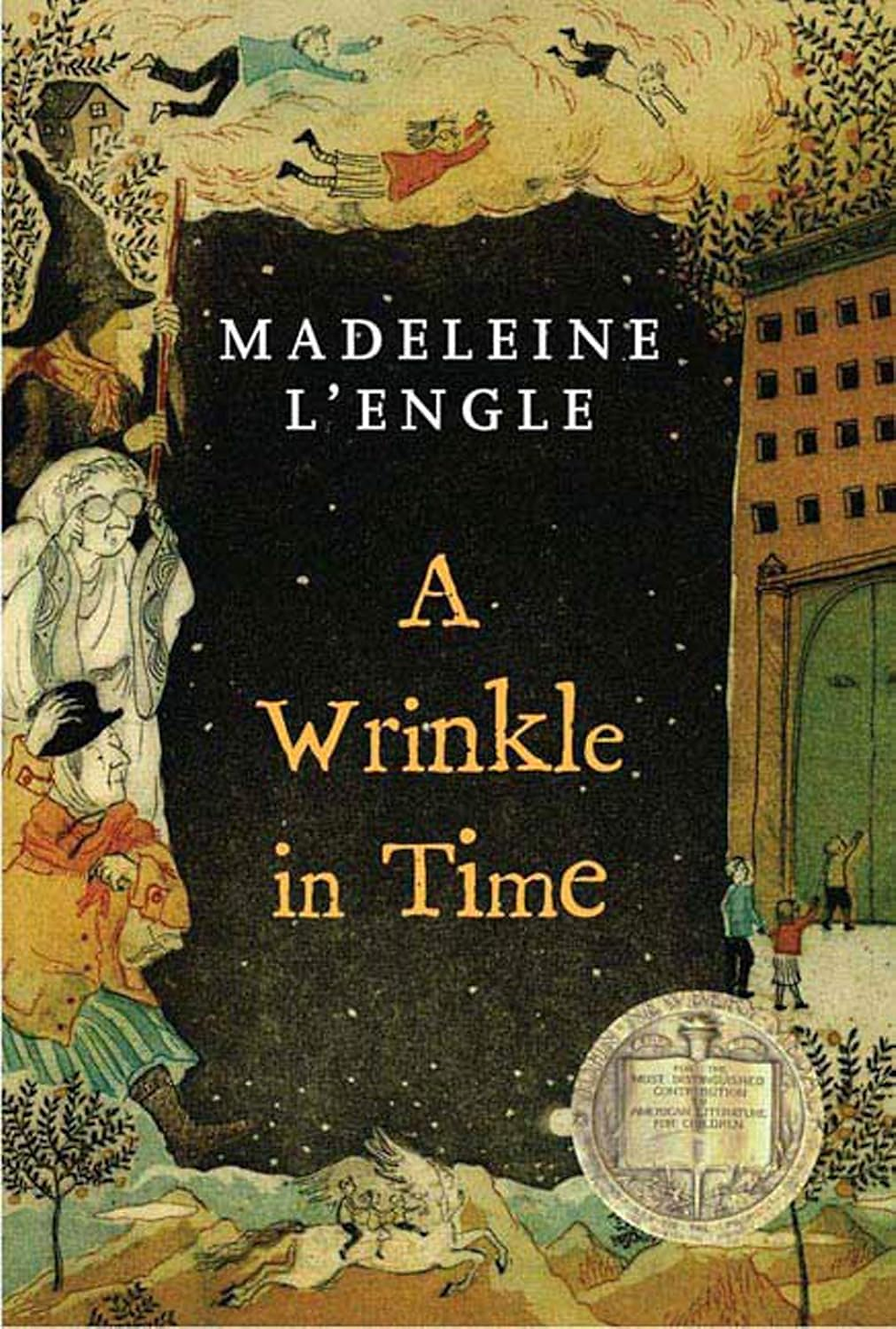
Starting our list is the timeless classic that has served as the "Big Bang" for many young sci-fi fans. A Wrinkle in Time is not just a story; it is an exploration of quantum physics through the eyes of a child, making it a foundational piece of interstellar travel literature for the middle-grade audience.
Story & Aesthetic: The story follows Meg Murry, a high-school-aged girl who fits the "outcast" mold perfectly. She is brilliant but socially awkward, struggling with her self-worth since the mysterious disappearance of her scientist father. Along with her precocious younger brother Charles Wallace and her friend Calvin, Meg is whisked away by three celestial beings—Mrs. Whatsit, Mrs. Who, and Mrs. Which. The aesthetic of the book is a beautiful blend of mid-century domestic life and trippy, multi-dimensional surrealism. From the dark, pulsing heart of the planet Camazotz to the ethereal beauty of Uriel, the world-building is both haunting and awe-inspiring.
Why People Love It: Readers adore the "flawed hero" aspect of Meg. In a world that often demands perfection, Meg is told that her "faults" (her stubbornness and anger) are actually the keys to saving her father. It’s a powerful lesson in self-acceptance that resonates as much today as it did when it won the Newbery Medal. Parents love the way it introduces complex scientific concepts like a tesseract (a wrinkle in space and time) in a way that feels like pure magic.
Why It’s Perfect for 2026: In 2026, where the line between technology and science fiction is thinner than ever, this book remains the gold standard for STEM-inspired storytelling. It encourages kids to look at the stars not just with wonder, but with a desire to understand the mathematics and physics behind them. It provides a "practical takeaway" regarding the power of love and individuality in a world that can sometimes feel overly programmed and cold.
Buy on Amazon: Order A Wrinkle in Time Here
Listen to the stories of love here: That Love Podcast Episodes
9. Zita the Spacegirl by Ben Hatke
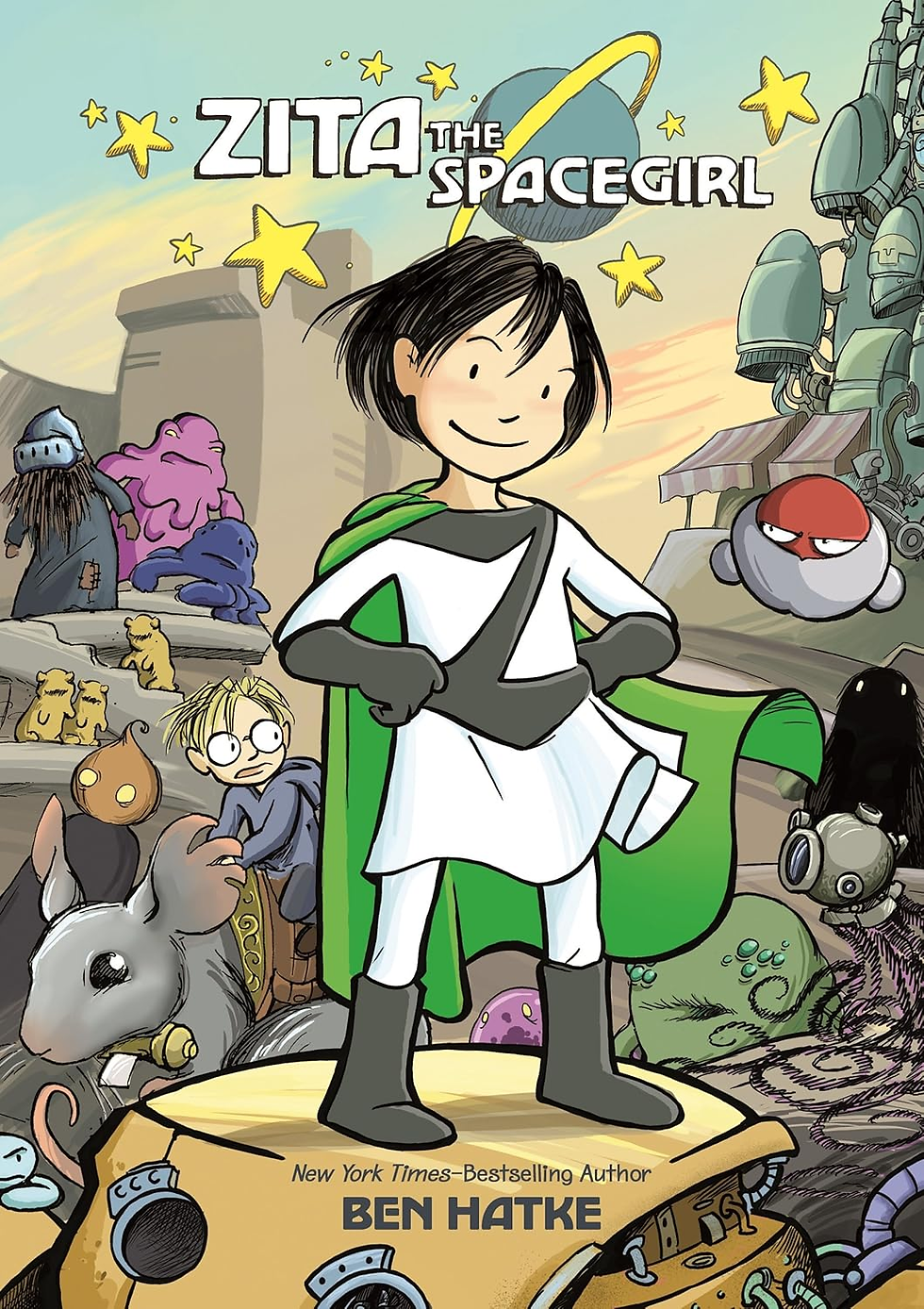
Coming in at number nine is a visual feast that has become a staple of Pinterest-friendly book lists. Zita the Spacegirl is a graphic novel that proves you don't need a wall of text to build a world that is deeply immersive and emotionally resonant.
Story & Aesthetic: When Zita’s best friend is abducted by an alien cult, she doesn't hesitate to push a mysterious button that hurls her across the galaxy to save him. On a strange, crumbling planet filled with quirky robots, giant hamsters, and neurotic monsters, Zita must become the hero she never intended to be. The aesthetic is bright, imaginative, and "scrappy." Ben Hatke’s illustrations have a hand-drawn, cozy feel that balances the high-stakes space exploration with a sense of child-like wonder.
Why People Love It: The "graphic novel" format makes it incredibly accessible for reluctant readers. Kids love Zita’s bravery and the "found family" she builds along the way. She isn't a demigod or a trained soldier; she’s just a girl with a big heart who refuses to give up. The humor is visual and punchy, making it a "scroll-stopping" physical reading experience that keeps kids turning pages.
Why It’s Perfect for 2026: With the rise of visually-driven platforms like TikTok, the graphic novel is more popular than ever. Zita the Spacegirl fits perfectly into a modern lifestyle where kids crave quick, impactful storytelling that doesn't skimp on depth. It teaches resourcefulness and the importance of helping others, even when you’re far from home.
Buy on Amazon: Order Zita the Spacegirl Here
8. Cosmic by Frank Cottrell Boyce

Ranked at number eight is a hilarious, heart-warming story that explores the "pretending to be an adult" fantasy every kid has had. Cosmic is a unique blend of British humor and high-stakes interstellar adventure.
Story & Aesthetic: Liam Digby is twelve years old, but he’s so tall that everyone mistakes him for an adult. He decides to lean into the confusion and enters a contest to win a trip to a space-themed theme park. Through a series of hilarious mishaps, he ends up on a real rocket ship, hurtling toward the stars with a group of other children—all while pretending to be the adult "father" figure of the group. The aesthetic is "accidental astronaut." It’s grounded in the relatable struggles of being a kid who doesn't fit in, which then explodes into the vast, silent beauty of deep space.
Why People Love It: It’s "belly-laugh" funny. Liam’s internal monologue about the absurdities of adult behavior is gold. But beneath the jokes, there is a deep, emotional story about the bond between fathers and sons. It explores what it truly means to be a "grown-up" and the value of keeping your child-like sense of wonder.
Why It’s Perfect for 2026: As space tourism becomes a more frequent topic in our daily news cycle, Cosmic offers a satirical yet sweet look at the future of space travel. It provides a "lifestyle improvement" by encouraging kids to appreciate the time they have to be kids. It’s a "relatable and discussion-driven" book that parents will enjoy reading alongside their children.
Buy on Amazon: Order Cosmic Here
7. Dragon Pearl by Yoon Ha Lee

At number seven, we have a groundbreaking entry from the "Rick Riordan Presents" imprint. Dragon Pearl is a stunning example of how science fiction can be enriched by mythology, creating a "space opera" that feels entirely fresh.
Story & Aesthetic: Min comes from a long line of fox spirits, but she must hide her magic to stay safe in a world ruled by high-tech corporations and a strict interstellar government. When her brother is accused of deserting the Space Forces to search for the legendary "Dragon Pearl," Min runs away to find him and clear his name. The aesthetic is a vibrant fusion of Korean folklore and "cyberpunk" technology. Imagine ancient spirits navigating holographic displays and battle-worn spaceships.
Why People Love It: It’s a "chosen one" story with a twist. Min’s powers of shapeshifting and illusion make her an incredibly dynamic protagonist. Readers love the "world-building" that incorporates ghosts, dragons, and tigers into a galaxy-spanning adventure. It’s a "bold and fresh" take on the genre that honors cultural heritage while pushing the boundaries of the future.
Why It’s Perfect for 2026: Diversity in children’s literature is a major focus in 2026, and Dragon Pearl leads the charge. It provides an "inspired guide" for kids to see their own cultures reflected in the stars. It balances STEM concepts with the spiritual, encouraging a holistic view of the universe.
Buy on Amazon: Order Dragon Pearl Here
You’ll also love: 12 Clean Shows That Promote Christian Values
6. We Dream of Space by Erin Entrada Kelly

Coming in at number six is an emotional, character-driven story set against the backdrop of one of NASA’s most significant moments. This is for the kids who love historical sci-fi and deep family dynamics.
Story & Aesthetic: Set in 1986, the story follows the Thomas siblings—Bird, Cash, and Fitch—as they prepare for the launch of the Space Shuttle Challenger. Bird is a girl who dreams of being NASA’s first female commander, spending her time drawing blueprints and dreaming of the stars. The aesthetic is pure 80s nostalgia—radios, arcade games, and the static of tube televisions. It’s a quiet, atmospheric story that builds toward a major historical event.
Why People Love It: It’s "emotionally impactful." Unlike the high-action entries on this list, this book focuses on the "internal space" of its characters. It captures the feeling of wanting to escape a difficult home life and the way science can provide a sense of order and hope. Bird is an incredibly relatable "STEM girl" who inspires readers to pursue their passions regardless of their circumstances.
Why It’s Perfect for 2026: In a year where we are looking back at the "history of the future," this book reminds us of the risks and rewards of exploration. It provides a "practical takeaway" regarding resilience in the face of tragedy. It’s the kind of "faith and inspiration" story that helps kids process complex world events through a personal lens.
Buy on Amazon: Order We Dream of Space Here

5. The Last Cuentista by Donna Barba Higuera

Ranked at number five is the Newbery Medal winner that has taken the award-winning sci-fi world by storm. This is a "dystopian" survival story that centers on the power of storytelling.
Story & Aesthetic: The world is ending, and a small group of humans is being sent to a new planet to preserve the species. Petra Pena is a girl who wants to be a "Cuentista" (storyteller) like her grandmother. However, when she wakes up from cryogenic sleep on the new planet, she discovers that a sinister "Collective" has erased everyone’s memories of Earth. Petra is the only one who still remembers the old stories, and she must use them to save humanity’s soul. The aesthetic is cold, clinical, and high-tech, contrasted with the warmth and color of Petra’s memories and folklore.
Why People Love It: It’s a "high-stakes" thriller that never loses its heart. The way Donna Barba Higuera weaves Mexican folklore into a futuristic setting is masterful. It explores the idea that culture and identity are just as important for survival as food and air. It’s a "bold and fresh" narrative that provides a transformation of how we view the importance of history.
Why It’s Perfect for 2026: In an era of rapid AI advancement, The Last Cuentista asks the vital question: What makes us human? It provides a "lifestyle upgrade" by encouraging kids to cherish their family stories and oral traditions. It’s a "must-read" for anyone interested in the intersection of ethics and technology.
Buy on Amazon: Order The Last Cuentista Here
Mid-article Break: Listen to the latest That Love Podcast episodes
4. The City of Ember by Jeanne DuPrau

At number four is the classic underground survival story that has inspired a generation of "escape room" fans. The City of Ember is the ultimate mystery set in a world where the light is literally running out.
Story & Aesthetic: For generations, the people of Ember have lived in a massive underground city, protected from a surface world they know nothing about. But now, the city’s giant generator is failing, and the lights are flickering out. Lina and Doon, two twelve-year-olds, discover a fragmented ancient message that might lead to a way out. The aesthetic is "steampunk" and "industrial." It’s a world of rusty pipes, flickering lightbulbs, and the smell of ozone—a dark, claustrophobic setting that makes the quest for light feel urgent and heroic.
Why People Love It: The "puzzle-solving" aspect is addictive. Readers love following Lina and Doon as they decode the instructions and explore the hidden corners of their city. It’s a story about resourcefulness, curiosity, and the courage to question authority. It provides a "real-life example" of how small actions can lead to massive change.
Why It’s Perfect for 2026: With current global focus on sustainable energy and environment, The City of Ember is more relevant than ever. It sparks "discussion-driven" conversations about how we use our resources and the importance of planning for the future. It’s a "timeless" classic that fits perfectly into an inspired lifestyle focused on problem-solving.
Buy on Amazon: Order The City of Ember Here
You’ll also love: 12 Bathroom Spring Cleaning Tips: Transform Your Space in a Day
3. Space Case by Stuart Gibbs

Ranked at number three is a "Moon-base mystery" that feels like a cross between Agatha Christie and The Martian. Space Case is a high-energy, funny, and scientifically accurate thriller.
Story & Aesthetic: Dashiell Gibson is twelve years old and living on Moon Base Alpha—the first human colony on the lunar surface. Sounds cool, right? According to Dash, it’s actually boring, cramped, and the food is terrible. But things get interesting when the base’s top scientist is found dead outside the airlock. The authorities call it an accident, but Dash is convinced it was murder. The aesthetic is "near-future realism." It’s based on actual NASA designs for lunar bases, giving it a gritty, "STEM-heavy" feel that makes the mystery even more grounded.
Why People Love It: It’s a "who-dunnit" in a place where no one can escape. Stuart Gibbs is a master of pacing and humor. Dash is a relatable protagonist who uses logic and observation to solve the case. It’s a "science-minded" book that doesn't feel like a lecture; it feels like an adventure. Parents love the "practical takeaway" regarding the reality of space living versus the Hollywood fantasy.
Why It’s Perfect for 2026: As we get closer to actual human missions back to the Moon, Space Case provides an "inspired guide" for what that life might actually look like. It’s a "modern and fresh" take on the interstellar mystery genre that is perfect for curious kids who love to ask "how does that work?"
Buy on Amazon: Order Space Case Here
2. The Wild Robot by Peter Brown

Coming in at number two is the emotional powerhouse that has become a global phenomenon. The Wild Robot is a beautiful exploration of the "nature vs technology" conflict, wrapped in a story of unlikely motherhood.
Story & Aesthetic: Roz is a high-tech robot who is shipwrecked on a remote, wild island. To survive, she must learn to communicate with the animals and adapt to the harsh environment. When she accidentally becomes the adoptive "mother" to an orphaned gosling, the story transforms into a deep meditation on love and growth. The aesthetic is "organic-mechanical." The juxtaposition of Roz’s smooth, metallic body against the lush, green textures of the forest is visually stunning. Peter Brown’s own illustrations throughout the book make it a "Pinterest-worthy" treasure.
Why People Love It: It’s "heart-wrenching and hopeful." Roz’s journey to find her "purpose" on the island is incredibly moving. It explores themes of empathy, community, and the idea that we are not defined by our programming (or our past). It’s a "found family" story that resonates deeply with kids and parents alike. The "viral" success of its recent movie adaptation has only increased its "stardom" status.
Why It’s Perfect for 2026: In a world increasingly dominated by Artificial Intelligence, The Wild Robot offers a gentle, "inspired guide" to the ethics of technology. It encourages kids to find balance between the digital and the natural world. It’s a "lifestyle improvement" book that fosters a deep respect for the environment and for the "spark" of life in all things.
Buy on Amazon: Order The Wild Robot Here
You’ll also love: Tough Guy by Rachel Reid: A Book Review on Vulnerability and Strength
1. Amari and the Night Brothers by B.B. Alston

Taking the top spot on our list is the "supernatural-sci-fi" crossover that has redefined the genre for a new generation. Amari and the Night Brothers is a masterclass in representation, world-building, and "chosen one" excitement.
Story & Aesthetic: Amari Peters has always been a "misfit," but her world is turned upside down when she finds a ticking briefcase in her missing brother’s closet. This leads her to the Bureau of Supernatural Affairs—a secret agency that manages the magical and alien entities living among us. Amari discovers she has been granted a "supernatural talent" and must compete in a high-stakes summer camp to find her brother and save the world. The aesthetic is "Men in Black meets Harry Potter." It’s high-tech, futuristic, and sparkling with magical energy. From flying elevators to living elevators (yes, the elevators have personalities), every detail is "inspired."
Why People Love It: Amari is the hero we’ve all been waiting for. She is brave, smart, and fiercely loyal to her family. Readers love the "underdog" story—Amari has to deal with prejudice and "legacy" kids who think she doesn't belong. It’s a "discussion-driven" book that handles themes of social justice and equity with a light but impactful touch. The "intense chemistry" between the characters and the fast-paced action make it a "completely addictive" read.
Why It’s Perfect for 2026: Amari represents the "future of fiction." It is inclusive, modern, and fresh. It provides a "transformation" of the traditional magic academy trope by adding a high-tech, bureaucratic layer that feels very 2026. It’s the ultimate "inspiration" for any kid who has ever felt like they didn't belong, teaching them that their "difference" is their superpower. This is the #1 middle-grade sci-fi book to own this year.
Buy on Amazon: Order Amari and the Night Brothers Here
Final call to check the pod: That Love Podcast Episodes
Conclusion
The universe of middle-grade sci-fi is more than just a collection of stories; it is a laboratory for your child's imagination and a safe space for their emotional growth. From the industrial mystery of The City of Ember to the heart-warming mechanical soul of The Wild Robot, each of these books offers a unique transformation of the spirit. By prioritizing these high-quality narratives, you are giving your child the tools to navigate a complex future with courage, empathy, and a bold sense of self. Remember, the stories we read as children become the "blueprints" for the adults we become. This year, choose to gift your child a galaxy of possibilities. Grab one of these titles, find a cozy reading nook, and let the adventure begin. You’ll find that the "stardom" isn't just in the books—it’s in the bright, inspired future your child is building with every page they turn.
Support the show: Donate to That Love Podcast
Explore more romantic and inspiring content: That Love Podcast Episodes
💡 You May Also Love

10 FAQs
1. What age group are these sci-fi books for? Most of these titles are "middle-grade," meaning they are perfect for kids aged 8 to 12. However, older readers (and even adults!) often find them deeply engaging.
2. Why is sci-fi good for kids' brain development? Sci-fi encourages lateral thinking and problem-solving. It forces kids to imagine "what if" and introduces STEM concepts in a narrative context.
3. Is Amari and the Night Brothers too scary for an 8-year-old? It has some moments of tension and "monsters," but it is generally very appropriate for the age group. It emphasizes bravery over fear.
4. What is the benefit of graphic novels like Zita the Spacegirl? Graphic novels bridge the gap for visual learners and reluctant readers. They provide context clues through art that help with vocabulary acquisition.
5. Are these books scientifically accurate? Books like Space Case and We Dream of Space pride themselves on scientific realism, while A Wrinkle in Time uses science as a springboard for philosophical exploration.
6. Which book is best for a child who loves animals? The Wild Robot and Zita the Spacegirl are fantastic choices for animal lovers, featuring unique robotic and alien creatures.
7. How can I get my kid into reading sci-fi? Start with a "found family" story like Amari or a funny one like Cosmic. Reading together before bed is a great way to build the habit.
8. What does "Found Family" mean in these books? It refers to a group of people (or aliens/robots) who aren't related by blood but choose to support and love each other as a family.
9. Why is The Last Cuentista so popular right now? It won the Newbery Medal, the highest honor in US children's literature, and its focus on the "survival of culture" is a very current theme.
10. Can I find these on Kindle or Audible? Yes! All these titles are available on Amazon Kindle and Audible, which is perfect for a modern lifestyle on the go.
External Link: The Planetary Society - Space Exploration for Kids
Are you ready to add some new titles to your bookshelf? Whether you're on the hunt for the latest bestseller, a rare collectible, or a budget-friendly classic, the internet is full of incredible places to shop for books. Below are the most loved, highly searched, and reader-approved websites where book lovers go to discover, buy, and support the stories they cherish:
Amazon Books – The go-to online bookstore for millions of readers, offering everything from new releases to obscure finds, all with fast delivery and regular deals.
Bookshop.org – Support local indie bookstores with every purchase while enjoying a beautiful selection of curated booklists and new releases.
Barnes & Noble – A trusted name in bookselling, offering thousands of titles in all genres, along with gifts, games, and a great eBook selection.
Books-A-Million – A reader’s paradise featuring books, magazines, collectibles, and more—perfect for fans of fiction, fandoms, and family reads.
ThriftBooks – A budget-friendly book-buying haven with great deals on gently used books and free shipping on orders over a certain amount.
AbeBooks – Ideal for collectors and treasure hunters, this site specializes in rare books, first editions, and academic texts.
IndieBound – Discover and support local independent bookstores across the country with this brilliant platform that connects you to nearby shops.
Waterstones – The UK’s iconic book retailer with a refined selection of fiction, nonfiction, and exclusive signed editions.
Book Depository – Offers free worldwide shipping and a massive international catalog, making it a top choice for global readers.
Alibris – Search millions of titles from independent sellers, including textbooks, out-of-print books, and hard-to-find literary gems.

.jpg)



.jpg)


