





10 Best True-Crime Series on Netflix

Netflix has made true-crime series a familiar part of streaming, but a large catalogue can make it difficult to find work that is both compelling and responsible. Some entries follow a single case across several episodes; others gather cases or examine a pattern of policing, media attention or community response. A documentary series is always shaped by the access its filmmakers receive and the material they choose to include. It should be treated as a perspective on a case, not as a substitute for court records or independent reporting. We keep descriptions spoiler-light, avoid graphic detail and distinguish allegations from legal findings. Availability changes by country, date and subscription tier. Netflix’s current UK true-crime category includes several titles in this ranking, including *American Nightmare*, *Missing: Dead or Alive?*, *Murdaugh Murders: A Southern Scandal*, *The Keepers*, *Night Stalker* and *American Murder: Gabby Petito*. Check the live page for the rest. This is a ranking for documentary storytelling, care and lasting interest, rather than a measure of the real-world suffering behind each case.
Netflix’s mix of single-case series and anthology formats makes it possible to choose a focused investigation or a shorter episode. The collection changes over time, and regional categories are discovery tools rather than guarantees of access. We recommend checking the individual page, reviewing the content notes and bringing an open but careful mind to every case.
A practical way to watch any nonfiction crime story is to keep three columns in mind: what a record or court established, what a participant says happened, and what the filmmaker infers from those materials. The categories can overlap, but they are not interchangeable. Marking them mentally helps you follow the narrative without accepting its strongest edit as the only possible reading. It also makes later research more productive: you can look up a specific date, ruling or interview rather than searching for a general answer to a complicated case. Where the documentary reports a crime, a conviction or an allegation, the people affected deserve privacy and accurate language. Do not contact them, publish a theory about them or treat public attention as permission to invade their lives. If the series raises a practical concern—such as online safety, abuse or a missing person—use reputable support organizations and official channels. This kind of thoughtful viewing allows documentaries to prompt conversation while reducing the risk that a real person’s experience becomes an internet guessing game.
More from That Love Podcast
Our ranked picks
10 — Who Killed Jill Dando?

This documentary revisits the 1999 murder of British television presenter Jill Dando and the investigation that followed. It follows the public response, the evidence considered by investigators and the conviction of Barry George, which was later quashed. The case remains a painful example of the limits of certainty in a high-profile investigation, and the series returns to the questions that have continued to occupy the public.
Its strongest contribution is the way it makes the timeline and investigative decisions accessible to viewers who may know the case only from headlines. The central subject deserves to remain a person rather than a symbol: Dando was a journalist and presenter with a life and career beyond the crime. Viewers should remember the distinction between the quashed conviction and the unresolved public questions; the documentary cannot name an unknown killer by force of narrative.
It ranks tenth as a concise, compelling British case study whose subject remains unresolved. It is a good fit for viewers interested in media history and investigations, provided they are comfortable with unanswered questions. Netflix’s UK true-crime catalogue currently surfaces it; regional access may vary.
A documentary series is an edited account, even when it uses original recordings. Think about the questions the filmmakers ask, who receives the most time and how the episodes sequence evidence. A highly confident ending may be a sign of strong storytelling rather than a final legal answer. For cases that remain disputed or unresolved, consult reliable reporting and official records before drawing conclusions. A practical way to watch any nonfiction crime story is to keep three columns in mind: what a record or court established, what a participant says happened, and what the filmmaker infers from those materials. The categories can overlap, but they are not interchangeable.
9 — American Murder: Gabby Petito

This film follows the disappearance and killing of Gabby Petito, a young woman who was travelling with her fiancé, Brian Laundrie, in 2021. It uses publicly shared social-media posts, police footage, interviews and reporting to examine the search, the couple’s relationship as it appeared online and the attention that rapidly built around the case. It also asks why some missing-person cases receive such intense coverage.
The documentary’s central challenge is balancing an unusually public digital record with the private reality of intimate-partner violence. Petito’s posts are not a full account of her life, and they should not be read as a complete explanation of what happened. The film gives space to family members and the search effort, while showing how a highly visible online narrative can both aid attention and distort understanding. Its subject matter may be distressing.
It sits at nine because it is a timely examination of social-media visibility and missing-person coverage, though the abundance of online material can make it feel familiar to viewers who followed the case in real time. Recommended for viewers interested in media, digital evidence and how families navigate public attention. Netflix lists it in its UK true-crime collection.
Netflix’s anthology shows offer a different rhythm from single-case series. Unsolved Mysteries lets you enter and leave between cases, while Catching Killers emphasizes investigative work across episodes. Longer projects such as Making a Murderer require more attention to dates, appeals and separate defendants. Choose a format that fits the time you have and the amount of uncertainty you are comfortable carrying. A practical way to watch any nonfiction crime story is to keep three columns in mind: what a record or court established, what a participant says happened, and what the filmmaker infers from those materials. The categories can overlap, but they are not interchangeable.
8 — Night Stalker: The Hunt for a Serial Killer

The four-part series documents Los Angeles detectives’ pursuit of the offender later known as the Night Stalker. It combines interviews, police recollections and archive footage to show the pressure on investigators and residents as cases were connected. The narrative is organized around a search, but the real-world victims are never simply clues in a chase; their families and communities experienced the fear and loss at the heart of the story.
This is a tense production, with a dark aesthetic and strong emphasis on the investigation’s pace. That style can make it gripping, but it may be too intense for viewers who prefer restrained presentation. Its useful material concerns the work of linking evidence and the role of witnesses, not the shock value of its crimes. The series addresses murder and sexual violence, so check content information before starting.
It ranks eighth for its focused account of investigative work and its substantial archive, while the atmosphere is less measured than some entries higher on the list. It suits viewers who want a multi-episode case narrative and can handle heavy subject matter. The title is currently listed in Netflix’s UK true-crime catalogue.
Missing-person stories need special care because family members may still be searching for answers. Avoid treating online speculation as a tip or contacting people who have not invited public attention. The most useful response to a documentary is often to learn about established reporting channels and to keep the person’s life in view beyond the mystery surrounding a disappearance. A practical way to watch any nonfiction crime story is to keep three columns in mind: what a record or court established, what a participant says happened, and what the filmmaker infers from those materials. The categories can overlap, but they are not interchangeable.
7 — The Keepers

This seven-part series investigates the 1969 killing of Sister Cathy Cesnik, a Baltimore teacher and nun, alongside allegations of abuse connected to a local school. Former students, particularly Gemma Hoskins and Abbie Schaub, pursue leads and bring long-held memories into public view. The story is about a homicide, but also about the social conditions that can silence people and the long process of being heard.
The series’ most lasting strength is its attention to survivors and the persistence of those who refused to let a case disappear from view. It handles serious allegations that should be described carefully and not treated as proven simply because they appear in a documentary. The women who speak on camera are more than sources: the series shows how their recollections, research and community ties shape the investigation. Its length allows the story’s ethical and institutional questions to emerge.
At seven, it is an important, affecting work with a powerful community focus. It is recommended for viewers who want a deeper, survivor-centred investigation, with the understanding that the case and allegations are complex. Netflix currently includes the series in its UK true-crime catalogue.
For viewers interested in institutional accountability, American Nightmare and Murdaugh Murders make the response of police, media and local power part of the story. The Keepers asks how institutions can fail to hear people over time. Each series has its own editorial approach, so compare their claims with records and note when a story was produced. A practical way to watch any nonfiction crime story is to keep three columns in mind: what a record or court established, what a participant says happened, and what the filmmaker infers from those materials. The categories can overlap, but they are not interchangeable.
6 — Catching Killers
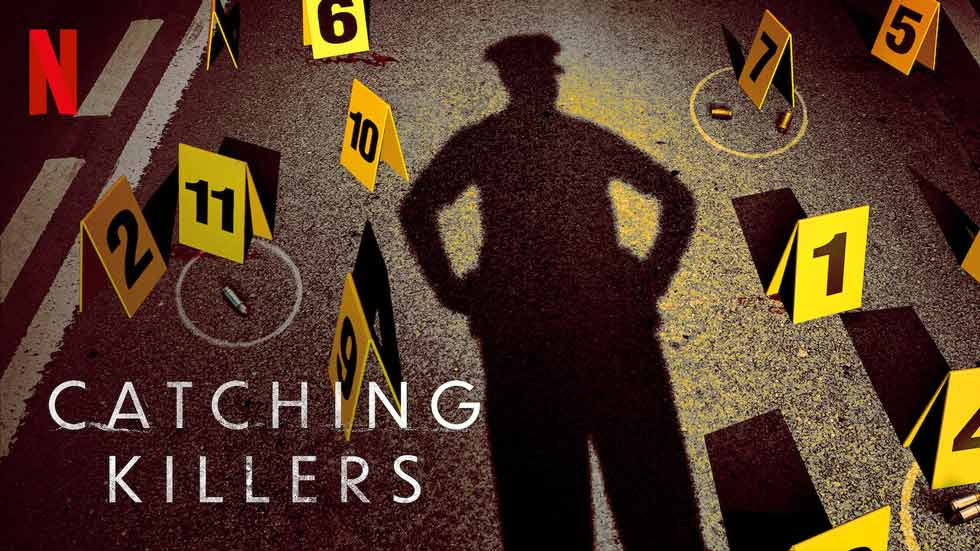
This anthology series brings together investigators who describe cases involving serial murder and the work required to identify offenders. Each episode uses interviews, archive footage and a concise case structure to explain how a lead, a pattern or a piece of evidence changed an investigation. Its format is designed for individual episodes, making it easier to watch selectively than a single case spread across a season.
The show’s value depends on the episode: some offer illuminating detail about teamwork and forensic methods, while others lean into dramatic reenactment. A viewer should keep the focus on investigative decisions and victims rather than the branding of an offender as a character. The anthology format can be useful for comparing how different jurisdictions handle complex cases, but it necessarily compresses context and leaves room for follow-up reading.
It ranks sixth as an accessible entry point into case-based true crime, with a flexible format and interviews that make police procedure easy to follow. It is less cohesive than the season-long investigations above it. Netflix’s UK true-crime section currently features the series.
One reason these titles travel widely is that streaming lets a case reach viewers far from the place where it happened. That can bring neglected reporting into focus, but it can also turn a local community into a spectacle. Respect for people named in the series means not amplifying unverified accusations or assuming that a screen appearance makes someone open to contact. A practical way to watch any nonfiction crime story is to keep three columns in mind: what a record or court established, what a participant says happened, and what the filmmaker infers from those materials. The categories can overlap, but they are not interchangeable.
5 — Murdaugh Murders: A Southern Scandal

This series examines the Murdaugh family, a prominent legal dynasty in South Carolina, and the overlapping investigations that drew national attention. It covers deaths, financial misconduct and the murder case involving Alex Murdaugh, using local reporting, interviews and records to trace how influence shaped public understanding. The story’s scale can be difficult to follow, but the series makes the connections between power, wealth and accountability its central thread.
Its strongest passages show how a community can know a family through reputation while still struggling to scrutinize it. The documentary includes accounts from people affected by the cases, and its reporting should be read alongside court records for precise legal outcomes. The narrative is not simply a family mystery: it asks who is heard, who is protected and how institutions respond when a powerful name is involved. It contains discussion of death, violence and financial crime.
At five, the series earns a high position for the broader institutional questions embedded in its case narrative. Viewers who enjoy reporting about local power and courtroom developments will find a lot to follow; those seeking a simple chronology may want to pause between episodes. Netflix currently lists it in its UK true-crime category.
Start with the Netflix title page to confirm whether the series is available in your account. A result in a UK category can still disappear or move behind a different plan. The catalogue links in this article are useful discovery points, while the individual show page is the final check for season count, language options and content notices. A practical way to watch any nonfiction crime story is to keep three columns in mind: what a record or court established, what a participant says happened, and what the filmmaker infers from those materials. The categories can overlap, but they are not interchangeable.
4 — Missing: Dead or Alive?

This docuseries follows investigators in South Carolina as they respond to missing-person reports. Each case brings its own timeline, family dynamics and uncertainty; the series shows calls, interviews and searches as officers try to determine what happened and where a person might be. The title makes clear that not every disappearance has the same outcome, and the show’s central subject is the work of responding while information is incomplete.
Its value comes from foregrounding the families and officers who must act before they know whether a person is in danger, has left voluntarily or is facing another circumstance. The format’s emotional framing can heighten suspense, so viewers should be mindful that the people shown are living through the events. A responsible watch does not treat every person who goes missing as a mystery for an audience to solve; it respects privacy and uncertainty.
It sits fourth for bringing attention to the practical and emotional work behind missing-person investigations. It is a strong choice for viewers interested in case response and community services, with difficult emotional subject matter. Netflix currently features it in its UK true-crime catalogue.
Pay attention to the difference between an allegation, an investigative theory, a charge and a court finding. These words mark different stages and standards. A series may cover all of them in a few episodes, and a later update may change what was known when it premiered. Keeping those categories separate makes a viewer less vulnerable to an edit that compresses time. A practical way to watch any nonfiction crime story is to keep three columns in mind: what a record or court established, what a participant says happened, and what the filmmaker infers from those materials. The categories can overlap, but they are not interchangeable.
3 — Unsolved Mysteries

The revived series returns to the anthology format that made the original famous, presenting unresolved disappearances, suspicious deaths and other cases through interviews, records and scene-setting. Each episode follows a different question and invites viewers to consider the information available without promising that a tidy answer exists. Some stories have received new attention after release, but audience interest is not the same as proof.
The show is most effective when it gives families and witnesses space to explain what remains unknown. It is also a reminder that public tips must be handled responsibly: speculation can harm living people and derail a careful inquiry. Its episodic format encourages reflection and follow-up reading, though the emotional weight varies considerably by case. Viewers who prefer a fully resolved narrative may find the uncertainty frustrating.
It ranks third because of its durable format, range of cases and ability to make investigative questions legible without requiring a full season commitment. The best way to watch is to pause before reaching conclusions and seek official updates. Netflix’s UK catalogue includes the series.
True-crime series can create a sense that viewers should solve the case themselves. That instinct is understandable, but real investigations involve information viewers do not have and people who may be harmed by speculation. Use the series to understand a timeline or a system, then leave case-specific conclusions to the evidence and legal process. A practical way to watch any nonfiction crime story is to keep three columns in mind: what a record or court established, what a participant says happened, and what the filmmaker infers from those materials. The categories can overlap, but they are not interchangeable.
2 — American Nightmare

This documentary series follows the 2015 kidnapping of Denise Huskins and the suspicion cast on her and Aaron Quinn. It maps how early assumptions shaped the police response and public coverage, then follows the evidence and later developments that challenged the first account. The story is about an investigation, but also about how quickly a victim can be blamed when a reported crime does not match familiar expectations.
The series’ measured focus on the couple’s experience gives it a strong human centre. It highlights the difference between an initial theory and a conclusion supported by evidence, while showing the consequences of a public narrative that took hold too soon. Its relatively short length makes the case easy to follow, although viewers should still distinguish the documentary’s structure from a comprehensive record of every decision. It is a distressing story involving abduction and trauma.
At number two, it stands out for clarity, restraint and relevance to how institutions and media handle reports of violence. It is recommended for viewers interested in investigative accountability and victim treatment. Netflix UK currently lists the series among its true-crime titles.
Think about whose voice is absent. Families, witnesses, defense teams, investigators and journalists may have different kinds of access. The strongest series make those limits visible. When only one side is available, it is fair to note that boundary rather than assume the missing perspective would support a preferred theory. A practical way to watch any nonfiction crime story is to keep three columns in mind: what a record or court established, what a participant says happened, and what the filmmaker infers from those materials. The categories can overlap, but they are not interchangeable.
1 — Making a Murderer

This landmark series follows Steven Avery’s legal history in Wisconsin, including a wrongful conviction that was later overturned and a subsequent prosecution, as well as the separate case involving Brendan Dassey. The filmmakers track the investigation, defense and trial over many episodes, offering an unusually extensive view of how criminal cases are assembled and argued. Its long form invites viewers to follow details that would be lost in a feature-length account.
It is an influential series precisely because it opened questions about evidence and procedure to a broad audience. It is also a constructed documentary with an editorial point of view, and its presentation has been challenged by commentators and people connected to the cases. Treat it as a starting point for learning, not a final adjudication. Read court decisions and independent reporting, and keep Avery’s and Dassey’s legal situations distinct.
It takes the top place for its access, depth and cultural impact. The series asks audiences to think about the system as well as the individuals before it, and it rewards careful watching. It is best for viewers prepared to commit to a long, detail-heavy account. Netflix currently lists it in its UK documentary catalogue.
Netflix’s titles in this list range from individual investigations to collections. The best starting point is the one that matches your interest and capacity: a short account of institutional error, a detailed case history, a missing-person response or an anthology. You do not need to watch the most distressing title to understand the genre. A practical way to watch any nonfiction crime story is to keep three columns in mind: what a record or court established, what a participant says happened, and what the filmmaker infers from those materials. The categories can overlap, but they are not interchangeable.
Conclusion
These ten selections show how true-crime documentaries can investigate evidence, institutions and media attention while keeping real people at the centre. The best viewing experience comes from curiosity paired with care: ask what the film can establish, notice what remains uncertain, and look for reliable reporting when a legal question matters. Choose according to the subject you can comfortably watch, and remember that the people behind every case continue to live with its consequences.
Streaming can make a series feel definitive because the episodes offer a beginning and an ending. Real cases often continue in court, in public records or in the lives of people involved. Use the ending as a prompt for careful reading, not as a reason to stop asking what is known.
You May Also Like
More stories to explore
Frequently Asked Questions
Are all these titles currently on Netflix UK?
Netflix’s live UK true-crime page currently features several entries, including American Nightmare, Missing: Dead or Alive?, Murdaugh Murders, The Keepers and Night Stalker. Catalogue rights can change, so confirm each title on your account.
Which series is best to start with?
American Nightmare is a concise starting point. For a longer case study and legal process, begin Making a Murderer. If you prefer separate cases in each episode, try Unsolved Mysteries or Catching Killers.
Are these all documentaries?
Yes, the titles in this list are nonfiction series or documentary anthologies. Their reenactments and editing still shape an interpretation, so consult additional reporting for disputed or evolving case details.
Which series focuses on missing people?
Missing: Dead or Alive? follows investigators responding to missing-person reports. Unsolved Mysteries and Who Killed Jill Dando? also explore unresolved questions, though their formats and case histories differ.
Does Making a Murderer prove Avery’s innocence?
A documentary presents an edited account and cannot itself decide a legal question. The series raises questions about evidence and procedure; readers should consult court decisions and independent reporting for a complete view.
What is difficult about watching The Keepers?
It discusses abuse allegations, a killing and the effects of trauma. Content warnings are available through Netflix and external guidance services. Consider your own comfort and take breaks as needed.
How does American Nightmare differ from a typical crime series?
Its focus includes the public treatment of Denise Huskins and Aaron Quinn after they reported a kidnapping. It examines credibility, institutional assumptions and media coverage alongside the investigative timeline.
Are the cases resolved?
Some have legal outcomes, others retain unanswered questions, and certain cases have separate proceedings. A show’s ending should not be treated as the definitive legal status; look for current official records.
Can viewers send tips after watching?
Only use an official law-enforcement or family-authorized channel if one is listed by a credible source. Do not contact people named in online speculation or post unverified accusations.
How were the titles ranked?
Editorial discussion considers storytelling, reporting, treatment of affected people and the series’ contribution to understanding a case, not the seriousness of the crimes.
More places to watch
A thoughtful way to choose and watch
A practical way to watch any nonfiction crime story is to keep three columns in mind: what a record or court established, what a participant says happened, and what the filmmaker infers from those materials. The categories can overlap, but they are not interchangeable. Marking them mentally helps you follow the narrative without accepting its strongest edit as the only possible reading. It also makes later research more productive: you can look up a specific date, ruling or interview rather than searching for a general answer to a complicated case. Where the documentary reports a crime, a conviction or an allegation, the people affected deserve privacy and accurate language. Do not contact them, publish a theory about them or treat public attention as permission to invade their lives. If the series raises a practical concern—such as online safety, abuse or a missing person—use reputable support organizations and official channels. This kind of thoughtful viewing allows documentaries to prompt conversation while reducing the risk that a real person’s experience becomes an internet guessing game.
When the credits finish, make a note of the questions the series leaves open and the sources that could answer them. For legal matters, court documents and reliable reporting are stronger references than a social-media thread. For current streaming access, the platform’s own title page is the most direct source. This keeps your next step grounded and lets the recommendation serve as a starting point for informed viewing.




.jpg)





.jpg)


