






15 Best Pixar Movies Ranked From Worst to Best

What is the best Pixar movie? It sounds like a simple question until you have to put Toy Story, Coco, WALL-E and Inside Out in an order—and explain why one must sit below another.
Pixar’s best films do not all aim for the same feeling. Some make us laugh at monsters and toys. Others make us confront grief, growing up or the fear that we have wasted our lives. The common thread is the studio’s gift for turning an imaginative premise into something painfully recognisable.
This is a ranking of 15 selected Pixar favourites, not a claim that these are the only Pixar films worth watching. We have judged them on storytelling, characters, visual imagination, emotional impact and how well they hold up on a rewatch. A film at No. 15 is still a recommendation; the competition simply gets fierce.
Our original shortlist included Toy Story 5, which was released in June 2026. We have left it out of this critical ranking rather than pretend its place among the classics is settled so soon. We have included Toy Story 4 instead and will revisit the ranking once the fifth film has had time to live beyond its opening run. For now, this is a guide to the Pixar movies we would most readily return to.
There will be disagreements. That is part of the fun.
Let’s get into it 👇
Love thoughtful film lists? You can support That Love Podcast, listen to our episodes and explore our earlier guide to the greatest Pixar movies.
You Might Like This
If Pixar has you in the mood for even more brilliant animation, memorable characters, and shows that prove cartoons are definitely not just for kids, these are great next reads:
Listen After You Watch
Love character-driven stories, comedy, romance, and unforgettable personalities? Discover hundreds of original audio drama episodes on That Love Podcast.
Want to reach an audience that cares about film and storytelling? Advertise with That Love Podcast.
15. Cars (2006)

Lightning McQueen is a racing star who cares about winning, fame and arriving at his next big opportunity. Stranded in Radiator Springs, he has to slow down long enough to notice the people around him.
That is a sturdy family-film premise, and Cars is frequently more charming than its detractors admit. The town feels lived-in; its residents have routines and old disappointments; Lightning’s gradual attachment to them gives the film a genuine emotional centre. For a child who loves vehicles, the world itself is irresistible.
Why rank it fifteenth? Because its central lesson—success matters less when you have nobody to share it with—is familiar, and the film takes a while to reach its most affecting moments. Compared with Pixar at its most daring, Cars follows a recognisable route.
Still, the quieter scenes with Doc Hudson bring unexpected melancholy. Radiator Springs is not merely a place where Lightning learns to be nicer. It represents lives and communities passed over in the rush towards whatever comes next. Adults may respond to that aspect more strongly than they remember.
Why it belongs: A warm, accessible reminder that Pixar can give a familiar story a distinctive world.
Where it falls short: The journey is less surprising than the films ranked above it.
If your family likes gentler choices, our feel-good movies with family-first messages offers more ideas.
14. Luca (2021)

Two young sea monsters discover the pleasures of an Italian seaside town while hiding what they really are. Their dream of winning a race begins as an adventure and becomes a test of friendship.
Luca deserves affection for its scale. The fate of the universe is not at stake. The central questions are whether Luca can trust his curiosity, whether Alberto can cope with sharing his friend, and whether the people around them will accept what they do not understand.
The sunlit streets, meals and sea breeze give the film the feeling of a remembered summer. Its gentleness is not a flaw, but it does mean the story lands differently from Pixar’s more intricately constructed achievements. The conflict can feel slight, and some turns arrive exactly when expected.
What stays with us is the friendship’s emotional precision. Alberto’s bravado conceals loneliness; Luca’s excitement can unintentionally make Alberto feel abandoned. Neither is a bad friend. They are children learning that closeness does not mean wanting identical things.
Why it belongs: A lovely, intimate film about friendship, difference and the courage to explore.
Where it falls short: Its modest plot cannot quite match Pixar’s most inventive storytelling.
13. Turning Red (2022)

Mei Lee is thirteen, ambitious and used to meeting her mother’s expectations. Then strong emotions begin transforming her into an enormous red panda.
The metaphor is gloriously obvious—and that is part of the fun. Adolescence often feels impossible to conceal, especially when family expectations and friendships pull in different directions. Turning Red turns that experience into a bright, fast comedy without making Mei’s embarrassment the only thing that matters about her.
Its sharpest insight is about the women in her family. Mei and her mother love one another deeply, but love does not prevent control or misunderstanding. The film is at its strongest when it lets both of them be vulnerable rather than assigning one the role of villain.
The exuberant animation and friendship group give it an identity unlike any earlier Pixar film. It can also feel hectic, and its enormous finale risks overpowering the more intimate relationship at the centre. Those are meaningful reservations, not reasons to dismiss how confidently it captures a specific age and emotional world.
Why it belongs: A bold, funny coming-of-age story with a memorable mother-daughter relationship.
Where it falls short: Its loud climax is less affecting than its quieter discoveries.
12. Toy Story 4 (2019)

Woody has a new child to care for, but he is no longer the centre of her playtime. A road trip, a handmade toy called Forky and a reunion with Bo Peep force him to ask what his purpose is when the old answer no longer fits.
That is a worthwhile question for a fourth film to ask. Pixar’s animation is gorgeous, the antique shop provides an eerie new setting, and Bo Peep returns with a life that challenges Woody’s assumptions. Forky’s confusion about being a toy is funny because it exposes how strange the franchise’s rules have always been.
Why not place it higher? Because Toy Story 3 had already offered such a powerful farewell that another ending had to justify reopening the story. Toy Story 4 does find a new emotional direction, but some beloved members of the ensemble have little to do. It is often more a Woody film than a film about the whole toy community.
That focus is both its strength and its limitation. Woody’s choice is moving; whether it feels completely right for the character is a debate worth having after the credits.
Why it belongs: Beautiful animation and a serious new question for one of Pixar’s best characters.
Where it falls short: The wider ensemble recedes, and the previous ending was hard to surpass.
11. Soul (2020)

Joe Gardner believes his life will truly begin once he becomes the jazz musician he has always wanted to be. A sudden accident sends him into a fantastical realm where souls discover their personalities—and challenges his certainty about what makes a life worthwhile.
Soul contains some of Pixar’s most ambitious thinking. It asks whether a grand purpose is necessary to justify being alive, or whether ordinary pleasures deserve just as much attention. Its music and New York scenes feel rich with texture; the contrast with its abstract otherworld makes the film visually unusual.
The film’s adult protagonist helps it explore disappointment in a way that many family animations do not. Joe is not trying to choose a career someday. He is wondering whether he has missed his chance. That makes the story especially potent for older viewers.
Our reservation is structural. The body-switching comic detour sometimes feels like a more conventional adventure interrupting the film’s strongest philosophical questions. Its ending is generous, but the route there is less seamless than Pixar’s finest work.
Why it belongs: A daring reminder that a life is more than its achievements.
Where it falls short: Its middle section does not always match the originality of its central idea.
10. Up (2009)

Carl Fredricksen ties thousands of balloons to his home and flies towards the adventure he once imagined sharing with his wife, Ellie. A young Wilderness Explorer called Russell accidentally comes along.
The opening sequence is rightly celebrated, but reducing Up to those early minutes would miss its larger achievement. Carl’s grief has made him protective of the past and suspicious of new attachments. Russell’s relentless presence asks him to recognise that affection for Ellie need not mean refusing everyone else.
The airborne house is one of Pixar’s loveliest images: a whole life physically lifted into an impossible adventure. The film also knows how to make Carl and Russell funny together. Their differing rhythms create a partnership that gradually feels necessary rather than merely cute.
The reason Up sits at No. 10 is its uneven second half. The jungle adventure, talking dogs and villainous confrontation are entertaining, yet they do not always carry the emotional precision of Carl’s smaller decisions. Its greatest scenes reach remarkable heights; the whole film does not remain at the same altitude.
Why it belongs: An unforgettable portrait of grief, adventure and opening the door again.
Where it falls short: Its action plot is less distinctive than its emotional premise.
9. Monsters, Inc. (2001)

In Monstropolis, children’s screams power the city. Sulley and Mike are expert employees at the company that collects them—until a little girl follows Sulley into the monster world.
This is Pixar world-building at its most immediately delightful. The bureaucracy, factory rules and door-storage system make a ridiculous idea feel almost practical. Mike’s comic anxiety and Sulley’s imposing gentleness create a double act that remains fun long after the central surprise is familiar.
Then Boo arrives and changes the scale of the story. Sulley can no longer think of children as an abstract source of fear or energy. He has to care about one particular child. The film’s emotional turn grows naturally from its premise rather than being added to it.
Its best scenes are kinetic and ingenious, especially when the countless doors become the basis for an action sequence. If we rank it below the top eight, it is only because those films push their ideas into even more affecting territory. Monsters, Inc. remains one of the easiest Pixar films to recommend to almost anyone.
Why it belongs: A nearly perfect comedy premise with friendship and tenderness underneath.
Where it falls short: Its themes are a little less complex than Pixar’s very best.
Take a break with more That Love Podcast episodes before the top eight.
You Might Like This
If Pixar has you in the mood for even more brilliant animation, memorable characters, and shows that prove cartoons are definitely not just for kids, these are great next reads:
Listen After You Watch
Love character-driven stories, comedy, romance, and unforgettable personalities? Discover hundreds of original audio drama episodes on That Love Podcast.
8. Finding Nemo (2003)

After Nemo is taken from the reef, his father Marlin crosses the ocean to find him. Dory, whose optimism unsettles Marlin’s fearful habits, becomes his unlikely travelling companion.
Finding Nemo is an adventure with a finely balanced emotional argument. Marlin’s protectiveness comes from a terrible loss; it is not a joke to be brushed aside. Nemo’s need for independence is equally valid. The film lets a child understand why a parent worries and lets a parent remember why a child needs room to grow.
The ocean offers seemingly endless invention: sharks with good intentions, a perilous field of jellyfish, an aquarium full of escape plans and the calm chaos of the sea turtles. Those encounters are funny and memorable, but they also keep testing Marlin’s willingness to trust others.
Why No. 8 rather than higher? A few stops along the journey feel episodic beside Pixar’s most tightly unified stories. Still, the emotional line from opening tragedy to hard-won trust never disappears.
Why it belongs: A vivid adventure that takes both parent and child seriously.
Where it falls short: Its road-movie structure sometimes pauses the central story.
7. The Incredibles (2004)

The Parr family has superpowers but must live as if it does not. Bob longs for the heroic past; Helen manages the realities of the present; their children are still discovering who they are. A new threat forces them to act together.
The Incredibles remains unusually sharp because its superhero story is also a family story. Powers reveal personality. Violet’s invisibility speaks to her self-consciousness. Dash’s speed expresses his frustration at being told to hold back. Bob’s strength cannot solve the domestic problems he has avoided.
Brad Bird’s action scenes are clear, exciting and sometimes genuinely frightening. But the film’s most satisfying moment is not simply the family defeating an enemy. It is watching them begin to recognise how much stronger they are when they trust one another.
The humour about capes, secret identities and superhero nostalgia still works. So does the more uncomfortable idea that being exceptional can become an excuse for entitlement. The film handles that tension energetically, though its villain and threat occasionally pull it towards a more standard action finale.
Why it belongs: One of animation’s best combinations of family comedy and superhero spectacle.
Where it falls short: Its final conflict is a touch more conventional than its character writing.
6. Toy Story 2 (1999)

Woody discovers that he is part of a valuable vintage collection. Being preserved and admired forever suddenly looks tempting—especially when Jessie and the other Roundup toys make him feel wanted. Buzz and Andy’s toys, meanwhile, set out to bring him home.
Where the original Toy Story asks whether Woody can share Andy’s love, the sequel asks a harder question: is being loved worth the certainty of eventually being left behind? Jessie’s history gives that fear a devastating shape. The film is funnier and more expansive than a summary of its themes suggests, but it never treats those themes lightly.
The rescue mission lets Buzz and the ensemble shine. The collector’s world adds a new kind of threat: not destruction, but a safe existence emptied of actual play. That distinction makes Woody’s decision matter.
Some viewers will reasonably place this at No. 1. It is an exceptionally confident sequel that deepens its characters without repeating the first film. We have ranked it sixth only because the five above it feel either more formally daring or more emotionally complete to us.
Why it belongs: A sequel that makes its predecessor richer on a rewatch.
Where it falls short: Its emotional core is powerful, though split between Woody’s dilemma and a busy rescue plot.
Read our full Toy Story 2 review for a closer look at Jessie and the film’s ideas about love and loss.
5. Inside Out (2015)
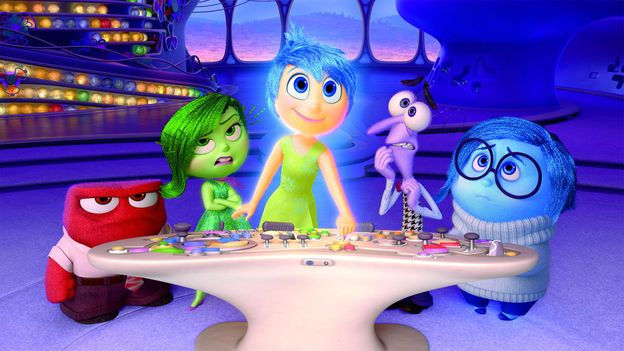
When Riley’s family moves, Joy works desperately to keep her happy. Sadness seems to complicate every attempt. Their trip through Riley’s mind gradually reveals why that apparent problem cannot—and should not—be fixed.
The brilliance of Inside Out lies in making an abstract experience visible without pretending emotions are simple. Its glowing memories, personality islands and control-room disagreements are inventive enough for children to follow. Adults may recognise something more difficult: the urge to hurry someone out of sadness because witnessing it feels unbearable.
Joy’s change of heart is the film’s real story. She does not lose her value. She learns that she is not enough on her own. That is a sophisticated idea delivered through colourful adventure and accessible comedy.
The film’s inner-world mechanics sometimes invite questions it cannot fully answer, and viewers who prefer Pixar’s more grounded settings may find the concept conspicuous. We find its imaginative precision worth that risk. Few family films offer such a useful invitation to talk about what children feel during change.
Why it belongs: A striking visual language for emotions, anchored by a genuinely moving insight.
Where it falls short: Its conceptual machinery can feel more visible than the storytelling in Pixar’s most effortless films.
4. Ratatouille (2007)
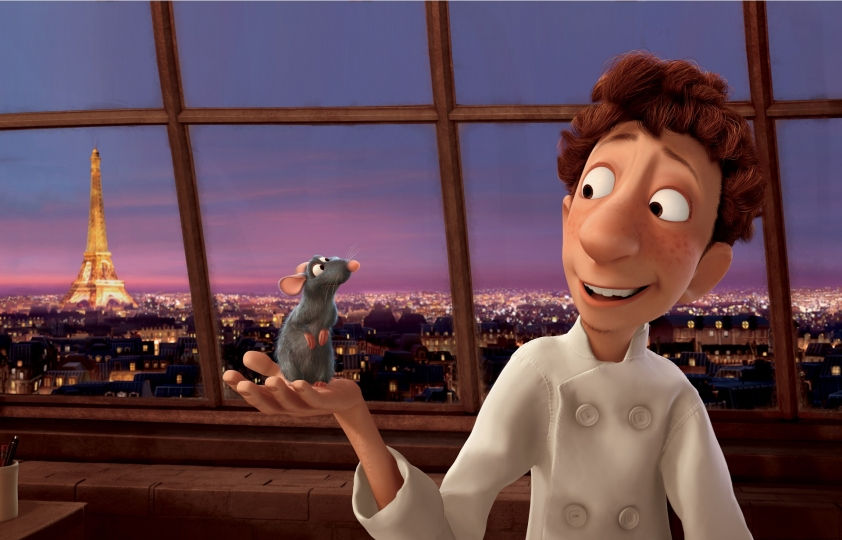
Remy is a rat who longs to cook in a Paris restaurant. Linguini works in that restaurant but cannot cook. Together, they form a partnership that should be impossible and, for a while, seems capable of making both their dreams come true.
Ratatouille understands the joy of making something well. Food is not merely a subject for pretty animation. It is the means through which characters express skill, memory, ambition and care. Even its comic premise—a rat secretly guiding a human chef—is tied to the film’s central question: who is allowed to create?
Remy’s talent does not erase his obligations to his family, and his family’s expectations do not erase that talent. Linguini has to accept help rather than bluff his way through expertise. The film gives these tensions room to develop while remaining consistently funny.
Its climactic encounter with critic Anton Ego is among Pixar’s finest statements about art. Without spoiling the moment, the film argues that discovery requires openness from the person receiving a work as well as courage from the person making it.
Why not rank it even higher? The final three have an emotional immediacy that reaches us a little more deeply. On craft, Ratatouille could contend for No. 1.
Why it belongs: A beautifully built comedy about talent, belonging and the pleasure of creation.
Where it falls short: Its emotional impact may be quieter than the films in our top three.
3. Toy Story 3 (2010)
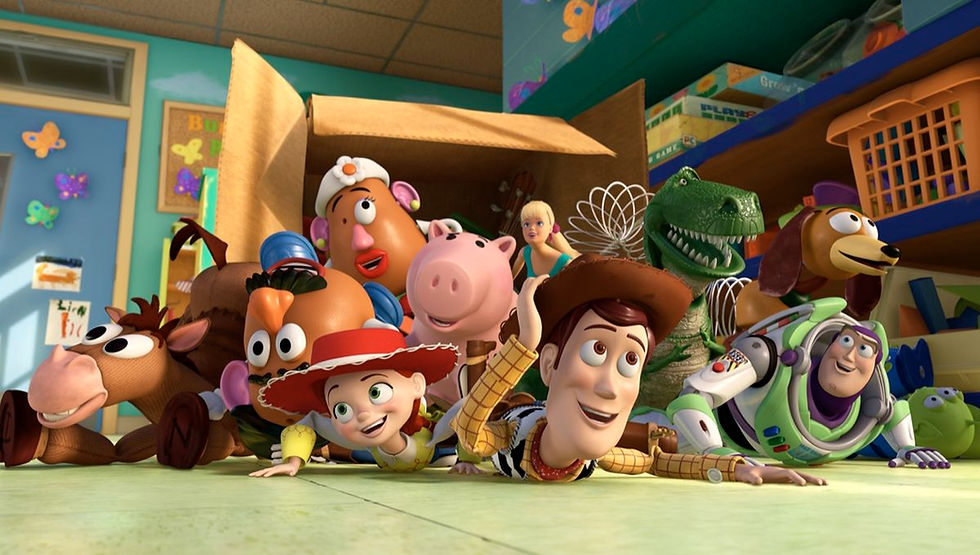
Andy is leaving for college. His toys face an uncertain future, and a mistaken delivery sends them to Sunnyside Daycare—a place that first looks like an answer to all their fears.
The third Toy Story understands that a child growing up changes the lives of those who loved them. That is the fantasy’s emotional truth. Woody, Buzz and the others have always measured their purpose by being there for Andy; now they must imagine what comes next.
Sunnyside turns that fear into a wonderfully constructed adventure. Its apparently cheerful leader, Lotso, offers one possible response to abandonment: stop trusting anyone. The toys’ attempt to escape gives the film comedy, teamwork and mounting tension, while Woody’s loyalty keeps the emotional stakes clear.
Then comes an ending that refuses to treat change as a betrayal of the past. It is difficult to watch without thinking about your own childhood, whether you were the one leaving or the one watching someone go.
Why third? We love its conclusion, but it draws much of its force from two earlier films. That dependence is not a weakness exactly; it is the special achievement of a trilogy. Our top two make their cases in a single film.
Why it belongs: An extraordinarily satisfying chapter about growing up and letting go.
Where it falls short: Its fullest emotional effect depends on the history audiences bring to it.
Our Toy Story 3 review goes deeper into its ending and why it still hurts.
Before our top two, you can advertise with That Love Podcast or support our work.
You Might Like This
If Pixar has you in the mood for even more brilliant animation, memorable characters, and shows that prove cartoons are definitely not just for kids, these are great next reads:
Listen After You Watch
Love character-driven stories, comedy, romance, and unforgettable personalities? Discover hundreds of original audio drama episodes on That Love Podcast.
2. Coco (2017)

Miguel loves music, although his family has forbidden it for generations. His journey into the Land of the Dead seems at first to promise answers about a famous ancestor. It ultimately asks something more personal: what do we owe the people whose stories brought us here?
Every part of Coco serves that question. Photographs, songs and family traditions are not background decoration. They determine how characters understand one another and what might be lost if memory fades. The film’s visual abundance makes the Land of the Dead a place of wonder, but its emotional pull remains rooted in Miguel’s family.
Crucially, the film does not simply present tradition as an obstacle and individual ambition as the answer. Miguel’s longing to play music matters. So do his relatives’ fears and histories. The most affecting moments come when those positions stop looking mutually exclusive.
Its twists are carefully planted, and its music carries feeling across generations without requiring long explanations. By the end, an intimate family connection feels as momentous as the vast world the film has shown us.
We place Coco second because it joins spectacle, mystery and grief with remarkable confidence. It may also be the Pixar film most likely to leave a whole family talking about their own relatives afterwards.
Why it belongs: A vivid, emotionally precise celebration of memory, music and family.
Where it falls short: Its early rule-setting takes a little time before the deeper story reveals itself.
1. Toy Story (1995)

Woody is Andy’s favourite toy, and that position shapes his whole identity. Then Buzz Lightyear arrives. Woody’s jealousy sends the two into an adventure that forces them to stop competing long enough to understand each other.
The original Toy Story earns our No. 1 spot not simply because it changed animation, though its place in film history is undeniable. It wins because the story remains so clear, funny and emotionally honest. Woody is capable of selfishness. Buzz is ridiculous and vulnerable. Their friendship has to be built out of mistakes rather than assumed from the beginning.
The premise is perfectly pitched for family viewing. Children understand the excitement of toys coming alive. Adults recognise the fear of being replaced. Pixar lets both experiences occupy the same story without explaining the metaphor until it loses its magic.
Its supporting toys have distinct voices; Sid’s house turns a short journey into a genuine test; the finale delivers suspense and delight. There is scarcely a scene that does not sharpen a character, deepen the world or set up a payoff.
Some later Pixar films are more visually sophisticated. Several make us cry harder. But Toy Story establishes the studio’s most durable promise: a wildly imaginative idea can reveal something ordinary and true about love, insecurity and friendship. More than thirty years after its release, it still works on its own terms.
Why it belongs: An almost perfectly told story that remains entertaining, moving and endlessly rewatchable.
Where it falls short: Its early computer animation inevitably shows its age beside Pixar’s recent visual achievements—though its character work does not.
Read our 1995 Toy Story review for a fuller appreciation of Woody, Buzz and the film that started it all.
You Might Like This
If Pixar has you in the mood for even more brilliant animation, memorable characters, and shows that prove cartoons are definitely not just for kids, these are great next reads:
Listen After You Watch
Love character-driven stories, comedy, romance, and unforgettable personalities? Discover hundreds of original audio drama episodes on That Love Podcast.
Final Thoughts
A Pixar ranking says as much about what we want from a story as it does about the films themselves. If you come for big ideas, Soul or Inside Out might top your list. If you want to be swept away emotionally, you might choose Coco or Toy Story 3. If precision of craft is everything, Ratatouille has an excellent claim.
We choose Toy Story because it makes Pixar’s particular magic feel effortless. It is inventive without forgetting character, funny without dodging difficult feelings, and accessible to a child while revealing new shades to an adult.
The loveliest thing about this list is that there is no bad place to begin. Even our No. 15 has something to offer the right viewer. Pick the one whose question speaks to you—about ambition, family, friendship or change—and see where it takes you.
If you enjoy our film coverage, please support That Love Podcast and explore our episodes.
Frequently Asked Questions
What is the best Pixar movie of all time?
Our choice is Toy Story (1995). Its historical importance matters, but the deciding factor is how well its story still works: Woody and Buzz’s rivalry, their developing friendship and the fear of being replaced remain immediately understandable. Other films arguably surpass it in visual detail or emotional intensity. Rankings are subjective, and Coco, Ratatouille or WALL-E could reasonably be someone else’s No. 1.
Is this a ranking of every Pixar film?
No. It is a ranking of 15 selected films, as the title states. Pixar has made more feature films than can fit here. We chose a mix of early landmarks, beloved sequels and newer titles, then ordered those selections. If your favourite is missing, its absence does not mean we consider it inferior to every film listed; it means it was outside this particular 15-film shortlist.
Why did you leave out Toy Story 5?
Toy Story 5 was released on 19 June 2026, but we have not assigned it a subjective place among decades-old favourites in this edition. Pixar and Disney describe its premise as “Toy meets Tech,” with Bonnie’s new tablet, Lilypad, challenging the toys’ role in her life. That is a worthwhile subject, but a critical ranking should rest on a considered view of the finished film, not its promotional synopsis. Film details: Disney.
Why is Toy Story 3 below the original?
Toy Story 3 is one of Pixar’s most emotionally complete sequels. Its ending may affect many viewers more deeply than anything in the first film. We rank the original higher because it establishes the characters and their world so economically, then tells a complete story on its own. The third film’s emotional power is inseparable from the years audiences have already spent with Woody, Buzz and Andy.
Which Pixar movie is the saddest?
That depends on the experiences you bring to it. Coco deals directly with family memory and loss. Toy Story 3 confronts growing up and saying goodbye. Up opens with a portrait of love and grief, while Inside Out makes space for sadness itself. If you want a good cry, all four are strong candidates. If a child is watching, consider whether these themes may prompt questions you will want to discuss together.
What Pixar film should I watch with young children?
Cars and Monsters, Inc. are accessible starting points for many families, though even gentle-looking animated films can include scenes that frighten particular children. Toy Story is a superb introduction, but Sid’s altered toys may be unsettling. There is no universally safe age based only on the film’s animation style. Check the rating and themes, and choose according to your child’s sensitivities.
Which Pixar movie is best for adults?
Soul may speak most directly to adults wrestling with purpose, achievement and disappointment. Ratatouille is an excellent choice for anyone who loves art, food or the pursuit of craft. Inside Out can deepen with age because its central lesson about accepting sadness changes meaning as we accumulate experience. Pixar’s greatest strength is that adults do not have to watch these films only as companions to children.
Is WALL-E missing from the ranking?
Yes—and it is the most painful omission from this 15-film selection. Its near-wordless opening, environmental imagination and tender robot romance would make it a strong contender in an expanded ranking. Including every deserving film would require a longer list. If you are building your own Pixar marathon, add WALL-E immediately; leaving it out of these fifteen is a limit of the format, not a dismissal of the film.
Where can I watch Pixar movies in the UK?
Many Pixar films are associated with Disney+, but catalogues and purchase options can change. Check Disney+ UK for the individual title before planning a movie night, or look for digital rental, purchase and physical-media options. A film’s presence in this ranking does not guarantee that it is included with any particular subscription on the day you read this.
What should I watch first if I have never seen a Pixar film?
Start with Toy Story if you want to understand the studio’s foundations. Choose Monsters, Inc. for broad comedy, Finding Nemo for adventure or Coco for music and a strong family story. If you are watching with someone who doubts animation can address adult concerns, Soul or Ratatouille may be the most persuasive introduction. There is no need to watch Pixar’s unrelated films in release order.
More Places to Find Great Movies and TV Shows
For film details and more perspectives, explore Pixar’s feature-film catalogue, IMDb, Rotten Tomatoes, Collider, Screen Rant, CBR, MovieWeb, /Film and ComicBookMovie.
For more rankings, reviews and conversations about the stories that stay with us, visit That Love Podcast.


.jpg)



.jpg)


Comments