






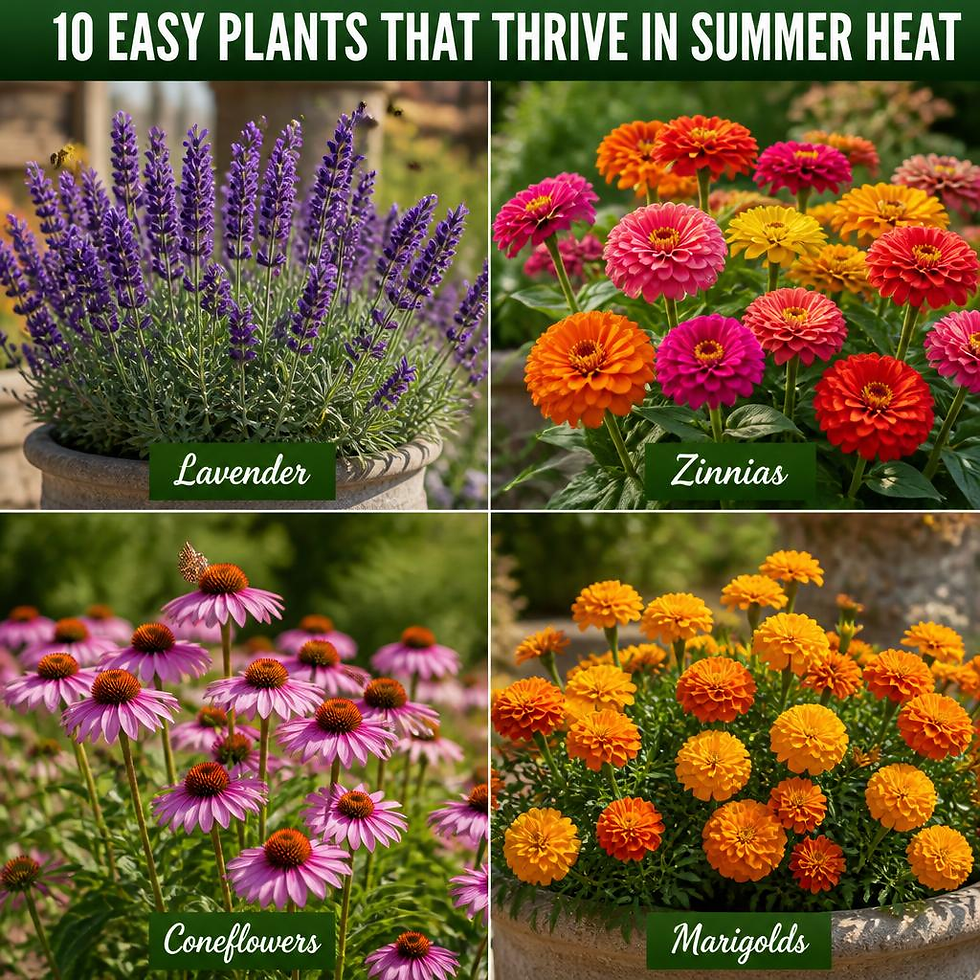
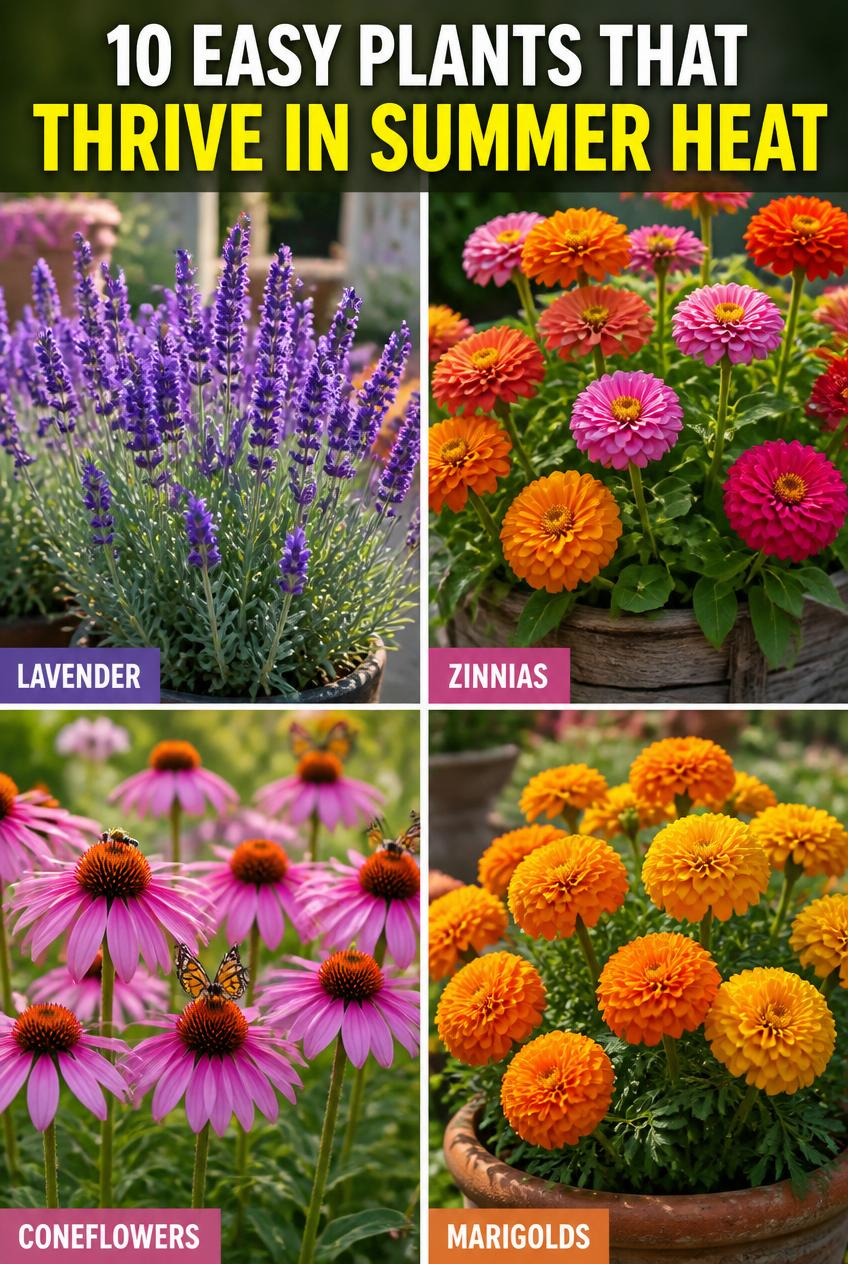
10 Easy Plants That Thrive in Summer Heat

Every summer, the same thing happens — you plant something beautiful, the heat arrives, and within weeks it looks like it has given up entirely.
The good news is that this is not your fault and it is not inevitable. The solution is simply choosing plants that were built for exactly the conditions that defeat the ones you've been trying to grow. There is an entire world of plants that don't just survive summer heat — they thrive in it, bloom harder for it, and look better in August than they did in May.
This list gives you the 10 easiest, most heat-tolerant, and most genuinely beautiful plants to grow in summer — whether you have a full garden, a balcony, a collection of containers, or just a few pots on a windowsill. Each one is chosen for its heat resilience, its low maintenance requirements, its visual impact, and its real-world accessibility. No specialist knowledge required. No complicated care routines.
You'll get specific planting guidance, watering tips, soil requirements, sunlight needs, and the honest answer on how much work each plant actually demands — so you can choose what fits your lifestyle and your space with confidence.
Whether you want a kitchen garden herb, a pollinator magnet for your outdoor space, a drought-tolerant ground cover, or a full summer border that blooms from June to October without needing constant attention — something on this list is your answer.
Summer gardening starts here. Let's go 👇
💛 Love great content? Help us keep creating: Donate to That Love Podcast
If you love this, check out: Self-Care Ideas | That Love Podcast
10. Verbena 🌸

Sunlight: Full sun Water: Low — drought tolerant once established Soil: Well-drained, average to poor Best For: Containers, hanging baskets, ground cover Height: 15–45cm depending on variety
Verbena is one of summer's most reliably cheerful and most reliably underrated plants — a trailing or mounding annual that produces clusters of small, brightly coloured flowers in shades of purple, red, pink, white, and magenta from early summer right through to the first autumn frosts.
The heat performance of verbena is outstanding. This is a plant that looks better as summer intensifies — once established in well-drained soil or a container, it tolerates full sun and periods of drought with cheerful indifference, continuing to flower heavily even when more demanding plants have long since surrendered.
Verbena's trailing habit makes it particularly valuable in containers and hanging baskets, where it spills over the edges with a soft, colourful cascade that transforms even the most utilitarian balcony into something worth stopping to look at. In garden borders, spreading varieties provide useful ground cover that suppresses weeds while maintaining excellent colour impact.
Care Requirements: Plant in well-drained soil in full sun. Water moderately until established, then reduce significantly — verbena actively prefers conditions on the dry side. Deadhead spent flower clusters regularly to encourage continuous blooming. Feed with a balanced liquid fertiliser every two to three weeks for the best flower production.
Why It Thrives in Heat: Verbena's native range includes parts of South America with intense sun and significant dry periods. The plant's drought tolerance and sun preference are not adaptations — they are its natural operating conditions.
Pro Tip: Pinch back young verbena plants to encourage bushy, well-branched growth rather than a single long trailing stem. Pinched plants flower more profusely and for longer.
Shop This Plant:
🎙️ Stream That Love Podcast — the perfect garden listening companion: thatlovepodcast.com/episodes
9. Rosemary 🌿

Sunlight: Full sun Water: Very low — extremely drought tolerant Soil: Sandy, well-drained, alkaline preferred Best For: Kitchen garden, containers, borders, wildlife garden Height: 30–150cm depending on variety
Rosemary is the plant that summer was designed for — a Mediterranean native so well adapted to heat, drought, and poor soil that it can feel almost insulting to water it. In the conditions that destroy other plants, rosemary quietly gets on with growing, flowering, and smelling extraordinary.
The culinary value of rosemary needs no introduction — this is one of the most versatile and widely used kitchen herbs available, and growing your own means having fresh, intensely aromatic sprigs available from June through autumn without any cost beyond the initial plant. A single established rosemary plant can supply a household's cooking needs comfortably throughout summer.
The ornamental value of rosemary is less often discussed but equally genuine. The plant's fine, silver-green needle foliage provides excellent year-round texture in borders and containers. Many varieties produce small blue or lilac flowers in late spring and early summer that are among the first and most important forage sources for bees and other early pollinators.
Care Requirements: Plant in a sunny, sheltered position with excellent drainage — rosemary's primary enemy is not heat or drought but waterlogged roots in winter. In containers, use a gritty, well-drained compost. Water sparingly in summer, even less in winter. Trim lightly after flowering to maintain shape but avoid cutting into old wood.
Why It Thrives in Heat: Rosemary evolved along the Mediterranean coastline in conditions of intense summer heat, low rainfall, and poor, rocky soil. These are not stresses for rosemary — they are its preferred growing conditions.
Pro Tip: Plant rosemary near a path, patio, or doorway where brushing past it releases the fragrance. The sensory experience of warm rosemary in summer sun is one of gardening's most genuinely pleasurable moments.
Shop This Plant:
8. Succulents 🌵

Sunlight: Full sun Water: Minimal — water deeply and infrequently Soil: Fast-draining, gritty, low nutrients Best For: Containers, rockeries, raised beds, window boxes Height: 5–60cm depending on species
Succulents have earned their enormous popularity over the past decade for very good reason — they are genuinely one of the most forgiving and most visually striking categories of plant available, and their heat and drought tolerance makes them almost uniquely suited to summer growing conditions.
The succulent family includes an extraordinary range of forms, colours, and textures. Sedums (stonecrops) are the most cold-hardy option for UK outdoor growing, with many varieties thriving in exposed positions with no winter protection. Echeverias produce the rosette forms most associated with succulent aesthetics. Sempervivums (houseleeks) are so tough they were historically grown on rooftops as fire protection and will survive in tiny amounts of soil with no attention whatsoever.
For summer containers and arrangements, mixing succulent species and varieties produces a living composition that evolves slowly throughout the season, requires almost no maintenance, and looks genuinely architectural.
Care Requirements: The cardinal rule of succulents is drainage — waterlogged soil will kill them far more reliably than any summer heat. Use a specialist succulent compost or mix standard potting compost with at least 50% horticultural grit. Water deeply when the compost is completely dry, then wait until it is completely dry again before watering once more. In outdoor summer conditions, this typically means watering once every ten to fourteen days.
Why It Thrives in Heat: Succulents store water in their leaves, stems, and roots as an adaptation to environments with unpredictable rainfall and prolonged drought. Summer heat simply allows them to access and use this stored resource while maintaining full metabolic function.
Pro Tip: Move succulents in containers to the sunniest spot in your garden or on your balcony for summer. The more sun they receive, the more intensely their colours develop — many varieties show their best colouration only in full sun with mild drought stress.
Shop This Plant:
You'll also love: 60 Fun Summer Date Ideas to Ignite Your Romance
7. Black-Eyed Susans 🌼

Sunlight: Full sun to partial shade Water: Low to moderate — drought tolerant once established Soil: Average, well-drained Best For: Borders, wildflower gardens, cutting gardens, pollinator planting Height: 45–90cm
Black-Eyed Susans (Rudbeckia hirta) are the sunflower's cheerful, more manageable cousin — golden-yellow daisy-like flowers with distinctive dark centres that bloom profusely from midsummer right into autumn, providing one of the most reliably long-lasting colour shows available in any summer garden.
The name is poetic but the plant is practical. Black-Eyed Susans are genuinely easy — tolerant of heat, tolerant of drought once their roots are established, tolerant of average or even poor soil, and tolerant of the kind of neglect that would defeat more demanding perennials. They are also magnificent cut flowers, lasting well in a vase and maintaining the warm, golden colour that makes them one of summer's most photographed garden residents.
Their value for pollinators is significant. The open, accessible flower form and the extended blooming period make Black-Eyed Susans one of the best single plants you can add to a garden if attracting bees, butterflies, and beneficial insects is a priority.
Care Requirements: Plant in full sun for the best performance, though they will tolerate partial shade with slightly reduced flowering. Water moderately until established, then rely largely on rainfall supplemented by watering during extended dry spells. Deadhead regularly to extend the blooming season, or leave the seed heads to self-seed and provide winter food for birds.
Why It Thrives in Heat: Native to North American prairies, Black-Eyed Susans evolved in conditions of high summer heat and seasonal drought. Their deep root systems access moisture that surface-rooted plants cannot reach during dry periods.
Pro Tip: Black-Eyed Susans self-seed generously if allowed to set seed at the end of the season. Leave a few seed heads standing in autumn and you'll have a natural colony establishing itself without any intervention, expanding the planting for free.
Shop This Plant:
6. Salvia 🔵
Sunlight: Full sun Water: Low to moderate — excellent drought tolerance once established Soil: Well-drained, average fertility Best For: Borders, containers, pollinator gardens, cottage gardens Height: 30–90cm depending on variety
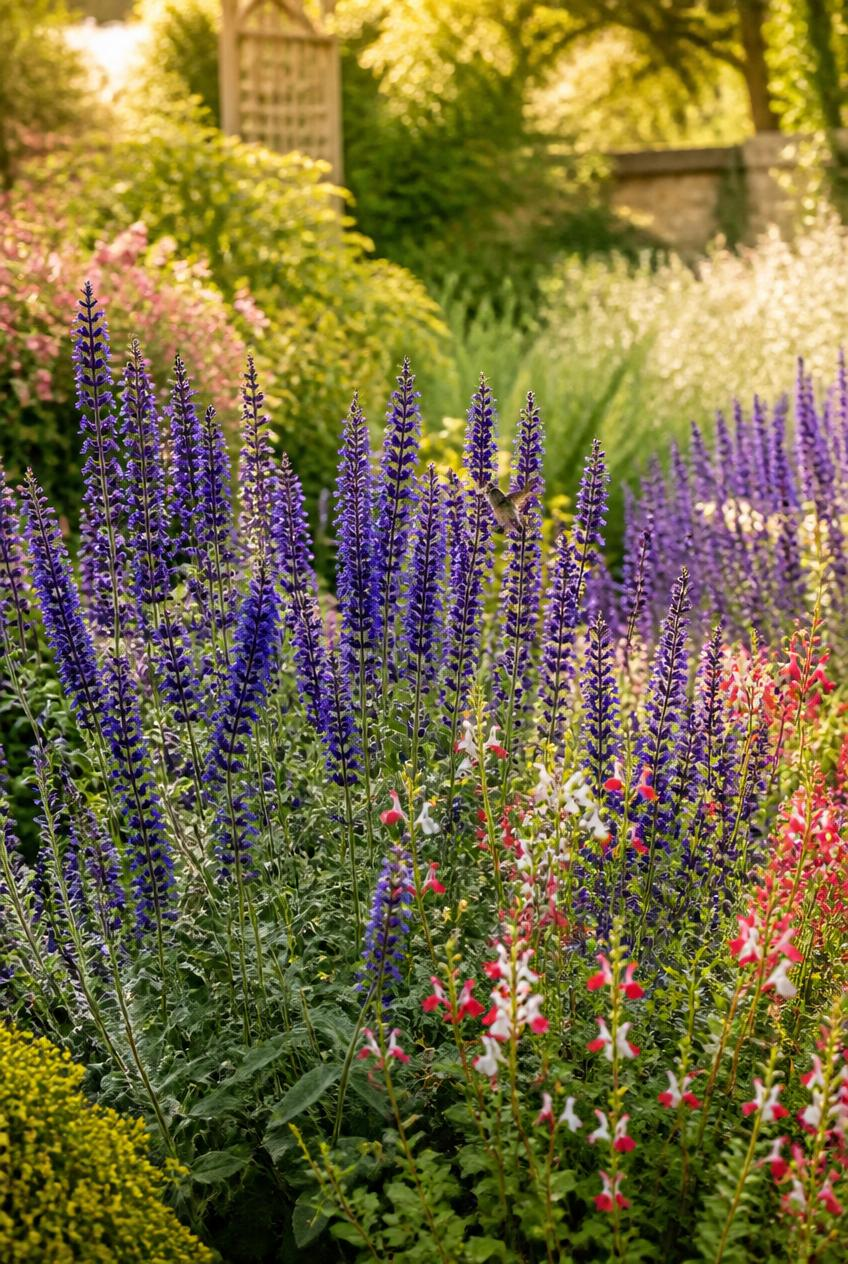
Salvia is having a genuine moment in contemporary gardening culture — one of the most discussed and most planted border perennials of the past five years, and for excellent reason. The range of available varieties has expanded dramatically, offering spikes of colour in every shade of blue, purple, pink, red, and white that perform from early summer through to frost.
The most popular varieties for summer heat performance include Salvia nemorosa (one of the most reliable and most widely available, with compact purple-blue spikes from June onwards), Salvia Hot Lips (a striking bicolour red and white variety that thrives in full sun), and the tender salvias like Salvia guaranitica, which require overwintering in frost-free conditions but produce stunning deep blue flowers on tall stems throughout summer.
Salvias are among the most valuable plants available for supporting pollinators — the tubular flower form is specifically adapted to serve bees and butterflies, and a salvia in full bloom in a sunny border will be visited by pollinators continuously throughout the day.
Care Requirements: Plant in well-drained soil in full sun. Water moderately until established, then reduce to occasional deep watering during extended dry spells. Cut back lightly after the first flowering flush in June to encourage a strong second flush in late summer and autumn. In frost-prone areas, mulch the crown in late autumn for winter protection.
Why It Thrives in Heat: Most salvia species originate from Mediterranean and South American environments with hot, dry summers. The silvery, aromatic foliage of many varieties is an adaptation to reduce water loss in high heat.
Pro Tip: Cut salvias back by about a third after their first flowering flush — this hard cut may look dramatic but produces a much larger and more floriferous second flowering period in late summer.
Shop This Plant:
🎙️ Stream That Love Podcast while you garden: thatlovepodcast.com/episodes
5. Lantana 🌈

Sunlight: Full sun Water: Low — very drought tolerant Soil: Well-drained, average to poor Best For: Containers, hanging baskets, borders in warm positions Height: 30–150cm
Lantana is the summer showstopper that most gardeners in temperate climates haven't tried yet — and the ones who have always come back for more. Its flower clusters change colour as they age, producing multi-toned displays of yellow, orange, red, and pink on the same plant simultaneously, creating a constantly shifting colour palette that looks different every week of the season.
The heat performance of lantana is exceptional. This is a plant that blooms harder as temperatures rise — exactly the opposite of most flowering annuals, which tend to slow and struggle in the hottest weeks of summer. In full sun with free-draining soil or compost, lantana produces continuous, vibrant flowering from early summer until the first frosts.
Lantana is also one of the premier butterfly plants available, attracting feeding butterflies in significant numbers during its bloom period. In a sunny container near a seating area, a well-grown lantana surrounded by feeding butterflies creates one of summer's most enchanting garden moments.
Care Requirements: In the UK and temperate climates, grow as an annual or overwinter in a frost-free position. Plant in the warmest, sunniest spot available in well-drained compost. Water moderately during establishment, then very sparingly once established. Deadhead lightly and feed monthly for maximum flowering.
Why It Thrives in Heat: Lantana is native to tropical and subtropical regions of the Americas and Africa, where conditions of intense heat and seasonal drought are the norm rather than the exception.
Pro Tip: Bring lantana indoors before the first frosts in a temperate climate and overwinter in a bright, frost-free position. Cut back lightly in spring and move outside after the last frost date — an overwintered plant will be significantly larger and more vigorous than a newly purchased one.
Shop This Plant:
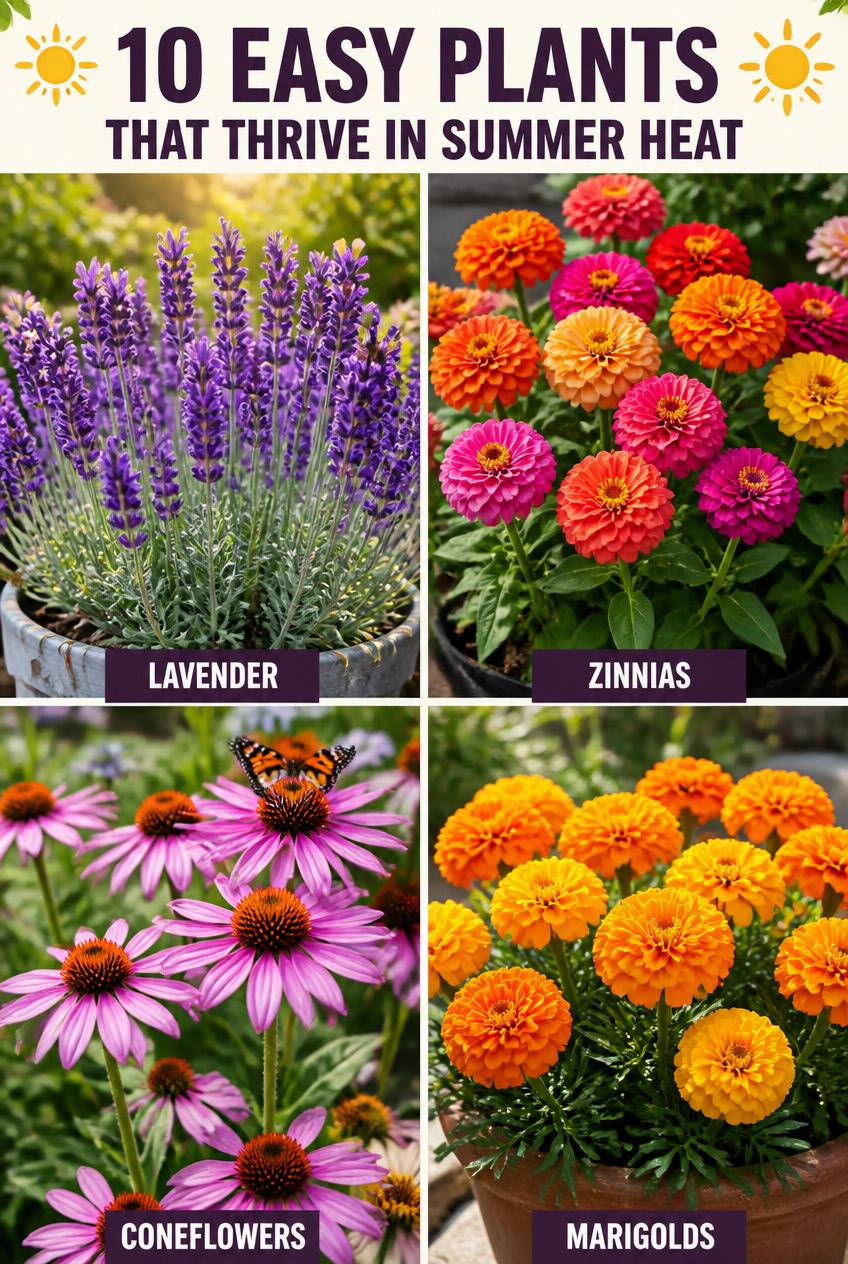
4. Marigolds 🧡

Sunlight: Full sun Water: Low to moderate — tolerates drought Soil: Average, well-drained Best For: Borders, containers, vegetable gardens, companion planting Height: 15–90cm depending on variety
Marigolds are the beginner gardener's most reliable friend and the experienced gardener's most undervalued ally — a plant so easy to grow from seed, so prolific in its flowering, and so genuinely beautiful in its warm orange, yellow, and gold tones that it deserves to be in every summer garden without exception.
French marigolds (Tagetes patula) are compact and ideal for containers, edging, and smaller spaces. African marigolds (Tagetes erecta) grow significantly taller and produce larger, denser flowers in the most vibrant oranges and yellows available in the annual range. Signet marigolds (Tagetes tenuifolia) are smaller with fine, fern-like foliage and smaller but profuse flowers, and their foliage has a citrus-like fragrance that deters many garden pests.
The companion planting value of marigolds is well established: their root secretions are known to deter nematodes and their strong scent confuses aphids, whitefly, and other garden pests. Growing marigolds alongside tomatoes, courgettes, and other vegetable crops provides natural pest management with no chemicals required.
Care Requirements: Sow directly in the growing position from late spring, or plant out seedlings after the last frost. Full sun, well-drained soil, and regular deadheading are the only requirements. They will continue blooming prolifically throughout summer with no additional feeding required in average garden soil.
Why It Thrives in Heat: Marigolds' Mexican origin means they evolved with intense summer heat, high sun exposure, and periods of drought as standard conditions. They are drought tolerant once established and bloom more freely in hot, dry conditions than in cool, wet ones.
Pro Tip: Sow new marigold seeds every three to four weeks through early summer for a continuous succession of fresh plants that keep the display at its most vibrant throughout the season.
Shop This Plant:
You'll also love: Date Night Tips | That Love Podcast
3. Zinnias 🌺

Sunlight: Full sun Water: Low to moderate — drought tolerant once established Soil: Well-drained, average fertility Best For: Cutting gardens, borders, containers, wildflower gardens Height: 30–90cm
Zinnias are the cut flower garden's superstar — fast-growing, prolific, available in the widest colour range of any summer annual, and specifically designed by nature to bloom harder the more you cut them. They are also among the most heat-tolerant summer flowering plants available, genuinely increasing their flowering rate as temperatures rise through the summer months.
The colour range of modern zinnia varieties is extraordinary: deep jewel tones of purple, burgundy, and scarlet; bright carnival shades of orange, yellow, and hot pink; soft pastels of peach, cream, and lavender; and doubles, pompoms, and dahlias forms that look like tiny decorative florist flowers. A well-planted zinnia patch in full summer sun is simply one of the most visually spectacular things a garden can contain.
Zinnias are among the easiest plants to grow from seed directly in the ground — sow from late May, thin to 30cm apart, and watch them establish and flower within six to eight weeks. They require no staking, no special care, and no expertise. They just grow, bloom, and wait for you to cut them.
Care Requirements: Sow directly in warm, well-drained soil after the last frost. Full sun is essential — zinnias in shade will be tall, lanky, and poorly flowered. Water at the base rather than overhead (overhead watering encourages powdery mildew). Deadhead or cut for the vase regularly — this is the most important single action for extending the blooming period.
Why It Thrives in Heat: Zinnias are native to Mexican grasslands and are one of the most heat-demanding summer annuals available. They actually require warm soil temperatures to germinate and establish, which is why they should not be sown until the soil has genuinely warmed.
Pro Tip: Cut zinnias in the early morning before the heat of the day. Take stems long, cut at a node, and place immediately in cold water. They last seven to ten days in a vase and every stem you cut produces two to three new flowering branches — making cutting not just acceptable but actively beneficial.
Shop This Plant:
2. Coneflowers (Echinacea) 🌸

Sunlight: Full sun to partial shade Water: Low — excellent drought tolerance once established Soil: Well-drained, average to poor Best For: Borders, wildflower gardens, pollinator plantings, cottage gardens Height: 60–120cm
Coneflowers (Echinacea) are the perennial that every gardener should grow — long-lived, heat tolerant, drought resistant once established, strikingly beautiful, and among the most important pollinator plants available in the summer garden.
The classic Echinacea purpurea produces large, daisy-like flowers with drooping pink-purple petals surrounding a prominent raised central cone — one of the most distinctive and immediately recognisable flower forms in temperate gardening. Modern breeding has expanded the range dramatically: deep orange, rich red, soft yellow, creamy white, and bicolour varieties now complement the classic purple-pink in a palette that suits every garden aesthetic.
Coneflowers bloom from midsummer through early autumn, giving them one of the longest active seasons of any summer perennial. The flowers transition into architectural seed heads that provide winter bird food (goldfinches in particular are strongly attracted to coneflower seed heads) and structural interest in the garden through the dormant season.
Care Requirements: Plant in well-drained soil in full sun. Water well in the first season to establish the deep root system that enables future drought tolerance. Once established — from the second year onwards — coneflowers require very little water even in extended dry periods. Divide large clumps every three to four years to maintain vigour and increase your planting for free.
Why It Thrives in Heat: Native to North American prairies, Echinacea evolved to survive harsh midsummer heat and drought. Its deep taproot system accesses subsoil moisture that shallower plants cannot reach during dry periods.
Pro Tip: Resist deadheading coneflowers at the end of summer. The seed heads are genuinely ornamental through winter and are among the most valuable wildlife food sources in the winter garden — leaving them standing benefits birds significantly more than tidying them away.
Shop This Plant:
🎙️ Before the number one — stream That Love Podcast: thatlovepodcast.com/episodes
1. Lavender 💜
Sunlight: Full sun Water: Very low — extremely drought tolerant Soil: Poor, well-drained, alkaline preferred Best For: Borders, containers, edging, sensory gardens, cut flower drying Height: 30–90cm depending on variety
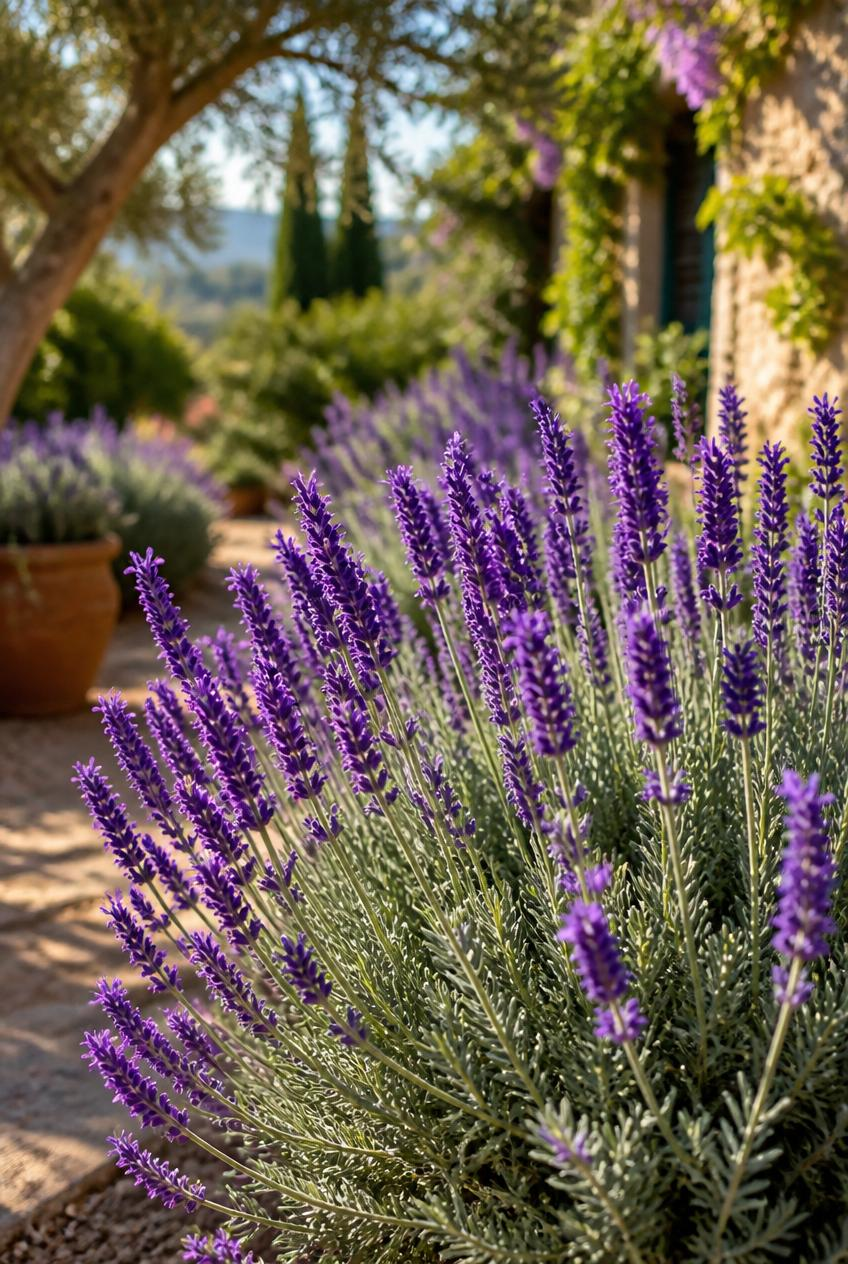
Lavender is number one on this list because it is the most completely perfect summer plant available — combining extraordinary heat tolerance, exceptional drought resistance, magnificent sensory presence, outstanding wildlife value, culinary and wellbeing uses, structural beauty in the garden, and one of the most recognisable and most universally loved scents in the natural world.
Growing lavender successfully in the UK is almost entirely a question of drainage. Lavender planted in rich, moist soil will struggle and eventually die — not because of the climate but because its roots hate sitting in moisture. Lavender planted in free-draining, gritty, poor soil in full sun is almost indestructible, and will reward your benign neglect with increasingly magnificent flowering year after year.
The best varieties for UK gardens include Lavandula angustifolia (English lavender) — the hardiest and most fragrant, with varieties including Hidcote (deep purple, compact), Munstead (slightly larger, lavender-blue), and Vera (classic cottage garden form). Lavandula x intermedia varieties (lavandin) flower later in the season and on taller stems, extending the lavender season into late summer. French lavender (Lavandula stoechas) with its distinctive butterfly-like bracts is slightly less hardy but produces the most distinctive and unusual flower form.
Lavender's value for pollinators is difficult to overstate. A well-established lavender hedge in full flower will be visited by bees — particularly bumblebees and honeybees — continuously throughout the day, with the plant producing nectar more consistently during hot, dry weather than most other flowering plants.
The multisensory experience of a lavender plant in summer sun — the colour, the fragrance intensifying in the heat, the sound of bees, the silvery foliage — is one of the most complete sensory experiences available in any garden, and one of the most reliable sources of genuine summer pleasure.
Cut lavender for drying just before the flowers fully open. Tied in small bunches and hung upside down in a dry, dark location, dried lavender retains its fragrance for months and provides the same sensory pleasure inside your home through autumn and winter that the living plant provides in your garden through summer.
Care Requirements: Full sun, excellent drainage, and restraint with watering are the only requirements. Add grit liberally to planting holes in clay soil or heavy compost. Prune lightly after flowering — cut back to just above the green growth, never into the old wood — to maintain a compact, productive shape. Replace plants every five to seven years when they become woody and less productive.
Why It Ranks First: Lavender is the one plant on this list that combines outstanding heat tolerance, near-zero maintenance requirements, extraordinary sensory value, wildlife benefits, culinary and wellbeing uses, and genuine, year-round beauty into a single, affordable, widely available package. There is no better summer plant for most gardens in the UK and temperate climates worldwide.
Shop This Plant:
Conclusion
Summer heat does not have to mean a failing garden. Every plant on this list was chosen because it genuinely belongs in the conditions that defeat less well-suited choices — and because beauty, practicality, and simplicity can coexist in the same plot of earth.
From lavender's complete sensory perfection to the zinnia's cut-and-come-again generosity, from the coneflower's perennial reliability to the marigold's pest-deterring practicality, from the succulent's architectural drought-proof presence to rosemary's kitchen-ready utility — there is something here for every gardener, every space, and every level of experience.
The most important thing is to start. Buy one plant this weekend, find the sunniest spot you have, and let it show you what heat can do for something that was made for it.
💛 Support That Love Podcast: Donate here
🎙️ Stream That Love Podcast now: thatlovepodcast.com/episodes
💡 You May Also Love
10 Frequently Asked Questions
1. What are the easiest plants to grow in summer heat? The easiest plants to grow in summer heat are lavender, marigolds, succulents, rosemary, and zinnias. All five require minimal watering once established, thrive in full sun, and tolerate the drought conditions that summer heat creates without significant intervention. Lavender, rosemary, and succulents are particularly forgiving of neglect.
2. What plants survive summer drought in the UK? The best drought-tolerant summer plants for UK gardens include lavender, rosemary, salvia, verbena, Black-Eyed Susans, coneflowers (Echinacea), and succulents. All perform best in well-drained soil with full sun and require minimal watering once their root systems are established.
3. What summer flowers are low maintenance? The lowest maintenance summer flowering plants are marigolds, zinnias, Black-Eyed Susans, and verbena — all annual or short-lived perennials that require only planting, occasional deadheading, and minimal watering. Coneflowers and lavender are the lowest maintenance perennial options, requiring no deadheading and very little watering once established.
4. When should I plant summer heat-tolerant plants? Most summer heat-tolerant plants should be planted after the last frost date in your area — typically mid-May in most of the UK. Annuals like zinnias and marigolds can be sown directly from seed from late May. Tender perennials like lantana should wait until night temperatures are consistently above 10°C. Lavender, rosemary, and perennials can be planted any time the soil is workable, including autumn.
5. How often should I water summer garden plants? Watering frequency depends entirely on the plant. Drought-tolerant plants like lavender, rosemary, and succulents should be watered deeply and infrequently — once every ten to fourteen days in hot summer conditions is usually sufficient. Zinnias, marigolds, and Black-Eyed Susans need moderate watering during establishment but significantly less once roots are established. Verbena and lantana prefer conditions on the dry side once settled.
6. What are the best plants for a low-maintenance summer garden? The best plants for a low-maintenance summer garden are lavender, rosemary, coneflowers, Black-Eyed Susans, and succulents — all of which require minimal watering, no staking, little or no feeding, and reward infrequent attention with maximum visual impact. Marigolds are the best low-maintenance annual choice.
7. Are succulents good for outdoor UK gardens in summer? Yes — many succulent varieties are perfectly suited to outdoor UK summers. Sempervivums (houseleeks) and many sedums are fully hardy outdoors year-round. Echeverias can be grown outdoors in summer and overwintered indoors. The key for all outdoor succulents is drainage — they must not sit in waterlogged soil, especially through winter.
8. What plants attract pollinators in summer? The best summer plants for attracting pollinators are lavender, salvia, coneflowers, Black-Eyed Susans, lantana, and marigolds. Lavender is particularly valuable for bees. Coneflowers and Black-Eyed Susans support butterflies as well as bees. Lantana attracts feeding butterflies in significant numbers. Including a mix of these plants creates a pollinator-supporting garden that is active from early summer through to autumn.
9. Can I grow summer heat-tolerant plants in containers? Yes — verbena, lantana, succulents, marigolds, and zinnias all do excellently in containers. The key for container growing in summer heat is: use large containers (they retain moisture better than small ones), use well-drained compost, water consistently (containers dry out faster than garden soil), and feed regularly with a balanced liquid fertiliser. Place containers in the sunniest position available.
10. What is the best summer plant for a beginner gardener? Marigolds and zinnias are the best summer plants for complete beginners — both can be sown directly from seed with minimal preparation, germinate reliably, grow quickly, and flower prolifically with very little intervention. Lavender is the best perennial starter plant for beginners — it is low maintenance, beautiful, fragrant, and essentially impossible to kill once planted correctly in well-drained soil.
For more garden and lifestyle inspiration: Self-Care Ideas | That Love Podcast



.jpg)





.jpg)


