




Scary Movie (2026) Review: The Wayans Are Back and the Audience Is Absolutely Here for It

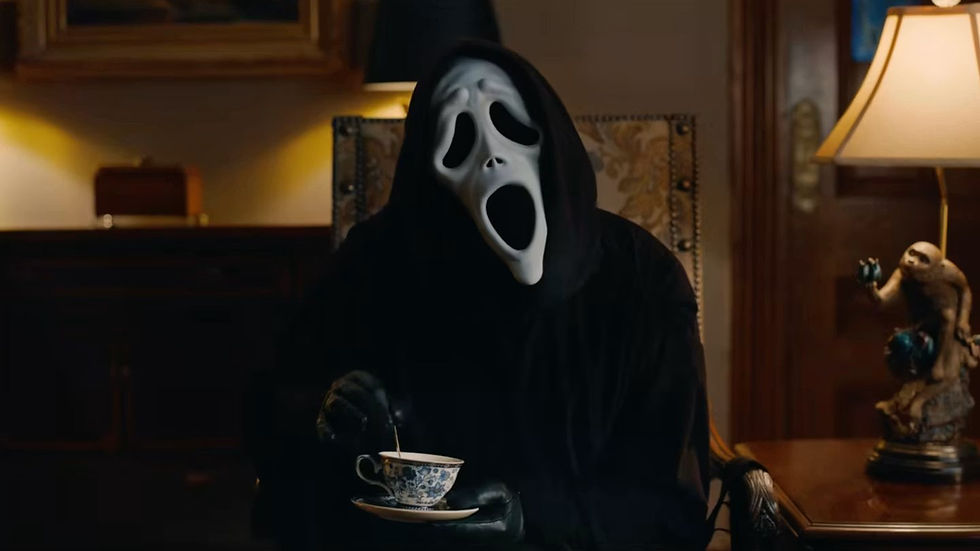
There is a particular kind of summer that belongs to the movies that critics give up on before the audience even gets through the door. Scary Movie (2026) is precisely that kind of film — loud, reckless, cheerfully offensive, and absolutely certain of what it is. Released on June 5, 2026 by Paramount Pictures and Miramax, this sixth installment in the long-running horror parody franchise arrives thirteen years after the catastrophically received Scary Movie 5, carrying the weight of a dormant legacy and the improbable energy of a reunion nobody knew they needed until they were already laughing. Directed by Michael Tiddes, with Marlon and Shawn Wayans returning to a series the family was unceremoniously dropped from after financial disputes following 2001's Scary Movie 2, this is less a sequel and more a reclamation. Anna Faris is back as Cindy Campbell. Regina Hall is back as Brenda Meeks. The Ghostface mask is back. And the Scary Movie review the internet has been writing since the trailer dropped turns out to have been, in one key respect, entirely wrong: audiences love it. With a $105.5 million global opening weekend on a $30 million budget, this is the most commercially successful entry in franchise history. The critics called time. The audience bought tickets anyway. What exactly is going on?
💖 If this review helps you decide what to watch, consider supporting us here:
Related Reading from That Love Podcast
If you love great movies and TV, you'll enjoy these:
Plot Summary: Cindy's Back, and So Is Everyone Else
Scary Movie (2026) picks up with Cindy Campbell (Anna Faris) living in a booby-trapped house she has modified over the years following her previous run-ins with the Ghostface killer — a woman who has made her peace with the fact that survival means preparation. Her estranged daughters Sara (Olivia Rose Keegan) and Tuesday (Savannah Lee Nassif) are navigating their own lives when the Ghostface mask resurfaces, pulling the entire extended family back into the orbit of the franchise's central joke: that these characters are the worst possible people to be placed in the middle of a horror film, and yet somehow keep surviving anyway.
The film is structured as a "requel" — a term the movie itself lampoons — mirroring the legacy sequel format established by David Gordon Green's Halloween (2018) and Tyler Gillett and Matt Bettinelli-Olpin's Scream (2022). Shorty (Marlon Wayans) returns from whatever improbable circumstances left him alive. Ray (Shawn Wayans) is back. So is the incompetent Officer Doofy (Dave Sheridan), the sharp-tongued Brenda, and the entire ensemble that made the original Scary Movie a $278 million phenomenon in 2000. Anthony Anderson, who crossed franchise lines for Scary Movies 3 and 4, completes his return. New cast members including Damon Wayans Jr., Kim Wayans, Heidi Gardner, and Sydney Park provide fresh comic targets for a film that is primarily interested in making you recognise something from recent cinema and laugh at it.
The film parodies The Substance, Sinners, Scream, Halloween, M3GAN, Smile, Longlegs, and Terrifier — a buffet-wide approach to modern horror that gives it considerably more material than previous entries had to work with after years of franchise dormancy. Its targets are the monoculture. Its weapons are the Wayans family's long-honed instinct for physical comedy, character-based absurdity, and the specific pleasure of a joke that arrives exactly when you expect it and still lands.
Director's Vision: Michael Tiddes and the Wayans Method
Michael Tiddes is not a director whose name generates critical reverence, and Scary Movie (2026) does not pretend otherwise. His filmography — A Haunted House (2013), Fifty Shades of Black (2016), Naked (Netflix, 2017) — represents a decade-long creative partnership with Marlon Wayans that has operated entirely outside the approval structures of mainstream critical culture, building its audience through word of mouth, VOD performance, and an understanding of what a specific demographic wants and will pay to experience.
What Tiddes brings to Scary Movie is an economy of purpose. He knows what this film is supposed to do — make people laugh as frequently and as physically as possible, reference horror films that audiences have seen in the past four years, and give the legacy cast enough room to do what made them beloved — and he organises every directorial decision around that goal. The cinematography is competent rather than distinctive; this is not a film that asks you to admire its visual language. It asks you to be ready for the next joke.
The editing rhythm is the film's most interesting technical quality. Tiddes and his editor cut with the instincts of a stand-up comedian performing to a live room — building a setup with care, letting the punchline land in silence, and then moving immediately to the next sequence before the energy drops. When this works, the experience is genuinely propulsive. When it doesn't — and critical consensus suggests it doesn't consistently — the result is the specific dead-air feeling that Doug Jamieson of The Jam Report described precisely: "sequences that had my audience laughing loudly, followed almost immediately by stretches of awkward silence where punchlines seemed to drift into the room and die on arrival."
The score is functional and largely forgettable, which is appropriate. The film's sound design borrows liberally from the horror films it parodies — jump scare stings, creeping string tension, the familiar sonic vocabulary of contemporary horror — and deploys these cues with a wink that is the film's version of a self-aware joke.
For a deeper dive into the kind of British genre entertainment that takes a different approach to the same instinct for crowd-pleasing, you'll also love the Audio Fiction Vault | That Love Podcast, where similar genre work gets a very different treatment.
Themes and Deeper Meaning: What Is a Scary Movie Actually For?
The thematic core of Scary Movie (2026) is, somewhat unexpectedly, a meditation on the nature of legacy sequels — and whether nostalgia is a sufficient reason to bring anything back. The film knows it is itself a legacy sequel, and it makes this self-awareness part of its comedy. The characters die and come back. Characters who died in previous films are simply present, with no explanation offered. The franchise acknowledges its own death and resurrection in the structure of its storytelling.
This turns out to be more interesting than it sounds. At its most pointed, Scary Movie (2026) is actually a parody of the cultural phenomenon it is participating in — the "requel" format, the nostalgia economy, the way that contemporary Hollywood has decided that resurrections of beloved franchises represent a safer bet than original ideas. The film is simultaneously a product of that economy and a joke at its expense. That it manages this double position while also landing on roughly the same commercial terms as the films it parodies gives it an accidental cultural significance that its critical reception doesn't quite account for.
The deeper thematic interest lies in the film's treatment of women across two generations — Cindy, who has been surviving impossible situations for twenty-six years of franchise time, and her daughters Sara and Tuesday, who are encountering the same horrors fresh. Olivia Rose Keegan's performance as Sara includes a full-film recreation of Anna Faris's breathy, deadpan performance style from the original, which reads both as comedy and as a comment on inherited coping mechanisms. The joke is that the daughter has absorbed her mother's patterns without realising it. There is, buried in the parody format, a genuine observation about how trauma and resilience pass between generations — though the film is not primarily interested in pressing on this, and quickly pivots back to the next horror reference before the thought fully develops.
The film also connects to a broader conversation about what we ask of comedy — whether it has a responsibility to its targets, and what the relationship between offence and catharsis actually looks like when it works. As you can read more about in the Relationship Advice | That Love Podcast section, emotional honesty in storytelling — even comedy — tends to land harder when it's rooted in something true.

Acting Performances: Faris, Hall and the Power of Deadpan
The best argument for Scary Movie (2026) is Anna Faris's performance as Cindy Campbell, and the argument is not complicated: she is extraordinary at this. Faris has always had one of the most precise deadpan instruments in comedy, the ability to play absolute conviction inside complete absurdity, and after thirteen years away from the character she returns with that instrument fully intact. When Cindy falls into one of her own spike pits — again — Faris's expression of resigned familiarity is one of the film's best jokes, and it comes almost entirely from her face.
"I've survived six of these. I know what I'm doing. I have a system."
Regina Hall as Brenda Meeks brings the series' other great asset back in full force: the specific energy of a character who is fully aware of how dire the situation is and finds this primarily annoying rather than frightening. Hall and Faris have the kind of effortless comic chemistry that the franchise has always relied on, and their reunion scenes — particularly an extended sequence parodying Sinners — are among the best-timed in the film.
Marlon Wayans as Shorty is the film's id: physical, unfiltered, and operating on the instinct that there is always a funnier thing to do than whatever just happened. His performance style hasn't mellowed in twenty-five years, and in the context of this particular film, that stubbornness is its own form of commitment. Shawn Wayans brings quieter energy as Ray, which creates useful contrast in their scenes together.
The newer cast members have less to work with. Damon Wayans Jr. brings genuine charisma to a supporting role that underutilises him. Heidi Gardner, perhaps the most technically skilled newcomer in the cast, gets several solid moments in a recurring bit about The Substance that suggests a sharper version of this film exists somewhere in the edit. Sydney Park as Tuesday is game and committed, and her chemistry with Olivia Rose Keegan as Sara produces some of the most natural-feeling work in the film.
The weakest performance decision is the return of Doofy (Dave Sheridan), who several critics, including Screen Rant's reviewer, have noted "should have been left in the past." The character's comedy has not aged, and the film's attempts to update it feel mechanical rather than earned.
Strengths: When Scary Movie (2026) Gets It Exactly Right
The film's strongest sequences are the ones that commit fully to their parody target and trust the audience to be with them. The opening sequence — a parody of Scream VI's opening, featuring a recent Oscar nominee in a brief cameo that arrives as a genuine surprise — is the best single sequence in the film: tight, well-executed, and funny in the specific way that parody humour works when it lands, which is the feeling of recognition plus subversion arriving simultaneously.
The Substance parody is the film's most sustained strong section — and given that Coralie Fargeat's film gave the comedy world an extraordinary amount of material to work with, this is not surprising. Heidi Gardner's work here is funny, committed, and occasionally brilliant. The jokes build on each other in the way that good sketch comedy does, each beat deepening the absurdity without losing the thread of the target.
Faris and Hall together are consistently the film's best argument for its own existence. Any sequence that puts them in the same frame and lets them react to each other generates the kind of easy, natural comic chemistry that cannot be manufactured — it either exists between two people or it doesn't, and between these two it absolutely does. Their reunion itself, in the first act, lands with a warmth that is both funny and genuinely affecting.
The film's self-awareness about the requel format — the fact that it is performing the same trick it is parodying — gives several sequences an additional layer that more attentive viewers will appreciate. When characters acknowledge that they shouldn't still be alive, or that they've been through this exact scenario before, the joke operates on at least two levels at once.
As a crowd-pleaser in the purest sense, Scary Movie (2026) also succeeds in the way that a crowd-pleaser must: it gives you enough moments of genuine laughter that the stretches in between feel acceptable rather than punishing.
You can find more films that prioritise the crowd experience in our roundup of the 10 Feel-Good Summer Movies That Never Get Old.
Areas for Improvement: The Stretches Between the Laughs
The critical consensus — 30% on Rotten Tomatoes, 37 on Metacritic — reflects a real experience of the film's weaknesses, even if it overstates their severity. The pacing problem is genuine: the film struggles to maintain its own energy between set pieces, and the connecting tissue of plot and character development that bridges the parody sequences is significantly thinner than the best sequences deserve.
Julian Roman of MovieWeb captured it well: "Scary Movie goes south with sluggish pacing that dips after every good belly laugh." This is the film's central structural problem — it generates genuine momentum with its best material and then loses it before the next good sequence begins. For a film that runs only 96 minutes, there are stretches that feel considerably longer.
The decision to return the Doofy character without updating his comedic purpose is the film's most consistently wrong-footed call. Several other jokes that probe contemporary political sensitivities have a hit-or-miss quality that Linda Marric of HeyUGuys summarised accurately: "the jokes arrive at machine-gun pace, yet almost none of them land" — a verdict that overstates the case, but points at a real tendency toward quantity over editorial selectivity in the script's joke density.
For audiences who prioritise wit and sustained comic construction — the Naked Gun tradition, the ZAZ era's precision — Scary Movie (2026) will be a frustrating experience. It is not that kind of comedy. It is the kind that swings often and connects intermittently, and whether that intermittency feels acceptable or exhausting will depend almost entirely on the individual viewer's relationship with the franchise.
Comparative Analysis: Where Does Scary Movie 2026 Sit in the Franchise and Genre?
The obvious comparison is The Naked Gun (2025), which critics treated as a genuine return to form for the parody genre — a film that demonstrated what surgical wit and commitment to its comedic architecture could produce in the contemporary market. Scary Movie (2026) is not that film. It operates in a different tradition — broader, faster, more physical, less interested in the sustained logic of its own jokes — and should be evaluated on those terms.
Within the franchise itself, the Wrap's reviewer offered the most interesting verdict: "this new Scary Movie is probably the funniest one, at least since the original." This is a higher bar than it sounds. Scary Movie 2 (which Keenen Ivory Wayans directed and which holds a 13% on Rotten Tomatoes) was critically savaged. Scary Movie 3 and 4 (David Zucker-directed, which the franchise's current installment mostly ignores) were more structurally tight but colder in their comic register. Scary Movie 5 (4% on Rotten Tomatoes) is the low point by almost any measure. Against that lineage, Scary Movie (2026) is a meaningful improvement — which says something about how far the franchise had fallen, and also something genuine about the quality of what Tiddes and the Wayans family have produced.
The comparison to Scream — both the franchise it parodies and the meta-horror tradition it belongs to — is the most illuminating one. Scream has spent six films asking whether horror films can be self-aware about their own conventions and still be genuinely scary. Scary Movie answers the same question about comedy: can a parody be self-aware about the parody economy and still be genuinely funny? The answer is: sometimes, and that sometimes is enough for the $105 million opening weekend the film achieved.
Compare and explore similar titles:
Target Audience: Who Should Buy a Ticket?
Scary Movie (2026) is made for a specific audience and will work significantly better for them than for anyone outside that group. If you saw Scary Movie (2000) in theatres or on home video as a teenager or young adult, and have fond memories of Anna Faris's specific comic energy and the franchise's approach to horror parody, this film is almost certainly worth your time. The 69% audience score on Rotten Tomatoes and 5.9 on IMDb suggest that the film's target demographic is finding it a satisfying reunion experience.
If you are a fan of modern horror — particularly The Substance, Sinners, and the recent run of elevated horror that the film parodies — there is additional pleasure available in watching your recent viewing history dismantled with varying degrees of precision.
The film carries an R rating and Marlon Wayans has been explicit in interviews that the Wayans family position themselves as "equal opportunity offenders." Audiences sensitive to crude physical comedy, sharp irreverence toward current political topics, and the specific texture of low-brow parody humour should approach with clear expectations. This is not a film with aspirations to subtlety.
It is, however, a film that is significantly better with an audience. The social experience of a full cinema reacting to familiar references and landing gags together is part of the product — and the opening weekend figures suggest that audience is absolutely showing up.
Personal Impact: What Stays With You
Scary Movie (2026) is not a film that stays with you in the way that the year's more artistically ambitious releases stay with you. It does not ask to be considered the next morning. But it does something that is genuinely harder than it looks, which is to walk into a genre that has been declared dead — the franchise parody — and make it feel alive enough for a $105 million opening weekend.
What stays with me after watching it is the Anna Faris performance, specifically — the completely undiminished quality of her deadpan in a role she hasn't inhabited for thirteen years, the ease with which she and Regina Hall pick up the chemistry of two women who have been through impossible things together and simply continue, slightly older and no wiser, into the next impossible thing. There is something in that continuity that feels, in a film otherwise entirely committed to the disposable, oddly touching.
The film also stays with you as a question about what audiences actually want from cinema in 2026, and why the gap between what critics value and what audiences choose can be this wide. Scary Movie (2026) is not a film critics should have loved. But the $105 million opening weekend is an audience speaking with uncommon clarity. Whether you agree with that audience is its own kind of horror parody punchline.
Conclusion: Verdict on Scary Movie (2026)
Scary Movie (2026) is not a good film by the conventional measures that film criticism has spent a century developing. It is, however, a very effective one — effective at doing the specific thing it was designed to do, which is to put Anna Faris, Regina Hall, and the Wayans family in a room together and aim them at the current horror landscape with maximum velocity. The result is inconsistent, often crude, intermittently brilliant, and completely comfortable with being all three things simultaneously.
It is the kind of summer film that critics review and audiences attend. For the audience it was made for, Scary Movie (2026) delivers enough genuine laughs to justify the ticket price — and the franchise-record opening weekend confirms that this audience is substantially larger than the critical conversation would suggest.
The verdict: if you loved the original, go with low expectations and they will be exceeded. If you've never been a Scary Movie person, nothing here will convert you. Stream it in theaters now while the communal experience is available — this is emphatically a film that benefits from an audience.
Watch Scary Movie (2026) in theaters now. Find showtimes on Fandango or the Paramount Pictures website.
💖 If you enjoyed this review, please consider supporting That Love Podcast here:
🛒 Explore more films and related titles in our curated Amazon collection.
More from That Love Podcast
You'll also enjoy these:
💡 You Might Also Like
Frequently Asked Questions
Is Scary Movie (2026) worth watching? Yes — with calibrated expectations. If you are a fan of the original Scary Movie and appreciate broad, physical parody comedy built around current horror film references, Scary Movie (2026) delivers enough genuine laughs to justify the runtime. The franchise-record $105.5 million opening weekend demonstrates that the audience it was made for is absolutely finding value in it. The 69% audience score on Rotten Tomatoes is the more useful metric here than the 30% critical score.
Do I need to have seen the previous Scary Movie films to enjoy Scary Movie (2026)? No, but familiarity with the original 2000 Scary Movie and its sequel will significantly enhance the experience. The film follows the "requel" format — acknowledging its own history while introducing new characters — and contains in-jokes about the franchise's continuity. Most importantly, it parodies contemporary horror films rather than older ones, so a working knowledge of The Substance, Sinners, Scream, and M3GAN is more useful than having seen Scary Movies 3 through 5.
Where can I watch Scary Movie (2026) in the UK and US? Scary Movie (2026) is currently showing exclusively in cinemas, having been released on June 5, 2026 by Paramount Pictures and Miramax. A streaming release has not yet been announced. For US audiences, it is screening widely in major chains. UK theatrical distribution is through Paramount's UK distribution arm. Check Fandango (US) or Vue/Cineworld/Odeon websites (UK) for current showtimes.
Is Scary Movie (2026) suitable for families? No. Scary Movie (2026) carries an R rating (US) and is not appropriate for children or young teenagers. Marlon Wayans has described the film as made for audiences who appreciate "equal opportunity" comedy — including crude physical humour, strong language, and content that many viewers will find offensive. Parents should note that the film's content significantly exceeds a 15 certificate equivalent.
Does Scary Movie (2026) have a happy ending? Yes, in the sense that all parody films of this type end with the franchise characters surviving against the odds — which is itself part of the joke. Without spoiling specifics, the film resolves its central threat in a manner consistent with the franchise's approach to mortality, which is essentially that no character in a Scary Movie stays dead long enough for it to count.
Is Scary Movie (2026) based on a book or true story? No. Scary Movie (2026) is an original screenplay in the horror parody tradition, written to lampoon specific films from the contemporary horror landscape. The Scary Movie franchise as a whole was originally inspired by the revival of the teen slasher genre in the late 1990s — particularly I Know What You Did Last Summer and Scream. The 2026 installment extends this to parody more recent titles including The Substance, Sinners, and the Scream and Halloween legacy sequels.
How long is Scary Movie (2026)? Scary Movie (2026) has a runtime of 1 hour 36 minutes (96 minutes). It is rated R. It is a theatrical release currently showing in cinemas in the US and UK.
Scary Movie (2026) vs The Naked Gun (2025) — which is better? These two films represent different strands of the parody tradition. The Naked Gun (2025) received significantly stronger critical reception and is generally considered the more precisely crafted comedy — built on the surgical wit of the ZAZ tradition. Scary Movie (2026) is broader, louder, and more physical. Critics prefer The Naked Gun; the Scary Movie audience score suggests its fans found what they came for. If you want wit and structural precision, The Naked Gun. If you want nostalgia, the Wayans energy, and a parody buffet of recent horror, Scary Movie.
Will there be a Scary Movie 7? No announcement has been made about a Scary Movie 7 as of the film's release on June 5, 2026. However, the franchise-record opening weekend performance — $52.7 million domestic and $105.5 million globally — makes a sequel commercially viable in a way that was not true before this film's release. Marlon Wayans has expressed enthusiasm for continuing the franchise. Formal confirmation would come from Paramount Pictures and Miramax.
Who plays Cindy Campbell and Brenda Meeks in Scary Movie (2026)? Cindy Campbell is played by Anna Faris, who originated the role in Scary Movie (2000) and returns for the sixth entry twenty-six years later. Brenda Meeks is played by Regina Hall, who also originated her role in the 2000 film. Both were confirmed for the production in August 2025. Their reunion is widely considered the film's greatest asset and the primary reason for its strong audience reception.
About the Director: Michael Tiddes
Michael Tiddes is a Los Angeles-based director whose creative partnership with Marlon Wayans has defined his filmography. His work includes A Haunted House (2013), which grossed $40 million worldwide on a $2.5 million budget and generated a sequel; Fifty Shades of Black (2016), a parody of the Fifty Shades of Grey franchise; and Naked (2017), a Netflix comedy starring Marlon Wayans. Tiddes operates in the direct-to-comedy tradition that the Wayans family has developed since Keenen Ivory Wayans directed the original Scary Movie in 2000 — focused on audience engagement over critical approval, and consistently profitable relative to production budgets. Scary Movie (2026) represents by far the largest theatrical platform of his career.
💖 If you'd like to support That Love Podcast and help us continue creating passionate reviews, storytelling, and inspiring content, consider donating here: https://www.thatlovepodcast.com/donate


.jpg)



.jpg)


hi88 mình vừa lướt qua trang đó đúng nghĩa vài phút thôi, chủ yếu xem bố cục họ làm ra sao chứ mình không có ngồi mò kỹ. Nhìn cái là thấy họ chia phần khá rõ, cuộn xuống tới đâu thì nội dung hiện theo từng khối dạng card tới đó nên mắt bắt nhịp nhanh, đọc kiểu “ướt át” vẫn theo được. Mình thích nhất mấy chỗ họ trình bày thông tin theo cột, số với tiêu đề canh thẳng hàng nên liếc một cái là hiểu (đỡ phải đảo mắt qua lại). Thanh menu cũng đặt ngay chỗ dễ thấy, bấm qua lại giữa các mục cảm giác mượt chứ không bị giật, và các khung nội…
Buổi tối cách đây vài ngày tôi nằm lướt điện thoại đọc mấy bài chia sẻ trên mạng thì thấy Sc88 David chơi ko đẹp xuất hiện liên tục, vì tò mò nên tôi cũng vào xem và điều khiến tôi chú ý trước tiên là cách bố trí nội dung khá rõ ràng và dễ nhìn. Chỉ cần lướt vài phút là đã có thể nắm được các mục chính mà không bị rối mắt. Tổng thể mang lại cảm giác gọn gàng giúp người xem cảm thấy thoải mái khi theo dõi thông tin.
I like that the drift boss unblocked doesn't rely on complicated features to stay interesting. The endless drifting, smooth controls, and increasing difficulty are more than enough to keep every session engaging. It's a great reminder that simple games can still be incredibly fun.
GG88 mình mới lướt thử vì thấy bạn bè hay nhắc, kiểu vào xem giao diện có dễ dùng không thôi chứ không có ý “nghiên cứu” gì. Cảm giác đầu tiên là trang nhìn khá gọn, chia nhóm nội dung rõ ràng nên kéo xuống không bị ngợp chữ. Mình có để ý phần FAQ cho tân thủ, đọc vài dòng là hiểu vụ xác thực xong có tiền trải nghiệm tặng luôn, khỏi phải đi tìm vòng vòng. Nói chung thao tác bấm qua lại ổn, các khối nội dung tách bạch nên mắt đỡ mệt, nhất là cái box FAQ đặt riêng nhìn phát thấy ngay.