





8 Dystopian Reads That Feel Chillingly Real


Introduction
There's a strange comfort in reading about the end of the world as we know it. Dystopian fiction, with its grim futures and cautionary tales, has always held a dark fascination. But in recent years, that fascination has sharpened into a chilling recognition. The line between fiction and reality feels thinner than ever, and these stories have transformed from speculative warnings into something that feels unsettlingly familiar.
Why are we so drawn to these dark reflections of our world? Perhaps it's because they give us a language for our anxieties about technology, power, and the environment. They are a safe space to explore our deepest fears. This guide delves into 8 of the most powerful dystopian reads that feel chillingly real today, from the classics that laid the groundwork to modern masterpieces that hold a mirror to our current moment.
💖 If this guide inspires or helps you, consider supporting us here:
Main Body Content
1. Nineteen Eighty-Four by George Orwell: The Blueprint for Tyranny

The Vibe: A suffocating, gray-scale nightmare of total surveillance and psychological manipulation.
Why It Feels Chillingly Real: Published in 1949, George Orwell's masterpiece has never felt more prescient. The story of Winston Smith's struggle under the totalitarian regime of Oceania, ruled by the omnipresent Big Brother, is the foundational text of modern dystopian thought. Its concepts have become part of our cultural lexicon: "Big Brother," "thoughtcrime," "doublethink." In an age of mass surveillance, where our phones listen to us and our every click is tracked, the idea of the telescreen feels less like fiction and more like a documentary. The novel's depiction of "newspeak" and the manipulation of historical records to fit a political narrative is eerily reminiscent of modern concerns about "fake news" and disinformation campaigns.
Why It's Trending: Nineteen Eighty-Four experiences a massive surge in sales and interest whenever political anxieties are high. The hashtag #Orwellian is a common fixture on social media to describe government overreach or corporate surveillance. On TikTok's #BookTok community, it is continually recommended as an essential read, often discussed alongside contemporary political events. As a 2024 article from The Atlantic noted, the novel's relevance is constantly renewed by our evolving relationship with technology and truth. It remains the ultimate warning against the erosion of individual thought.
The Emotional Heart: At its core, 1984 is a devastating love story and a profound exploration of what it means to be human in a world that seeks to crush the human spirit. Winston's forbidden love for Julia is a radical act of rebellion, a desperate attempt to claim a small piece of personal freedom and authentic emotion. The novel's most terrifying aspect isn't the physical control, but the psychological warfare waged to break that spirit. It's a harrowing look at how love can be both a powerful act of defiance and a vulnerability to be exploited, a theme we see twisted in our review of The Ritual - A Dark College Romance by Shantel Tessier.
📚 Buy it on Amazon Here → [Affiliate Link]
2. The Handmaid's Tale by Margaret Atwood: The War on Women

The Vibe: A terrifyingly plausible, slow-motion horror story about the dismantling of women's rights under a patriarchal theocracy.
Why It Feels Chillingly Real: Margaret Atwood's 1985 novel imagines the Republic of Gilead, a totalitarian state in what was once the United States, where fertile women are stripped of all autonomy and forced into ritualized child-bearing for the ruling class. Atwood famously stated that she included nothing in the novel that had not already happened somewhere in history. In the years since its publication, and especially with the recent global debates and legal changes surrounding reproductive rights, the book has felt less like a warning and more like a playbook. The slow creep of lost freedoms, the use of religious scripture to justify oppression, and the policing of women's bodies are themes that resonate with a chilling and immediate power.
Why It's Trending: The award-winning television adaptation brought Gilead's horrors to a new generation, and the iconic red robes and white bonnets have become a powerful symbol of protest in real-world political demonstrations. The hashtag #HandmaidsTale is used to draw parallels between the book and current events. On Pinterest, the book's stark, powerful quotes are featured on boards dedicated to "feminist literature" and "dystopian aesthetic." A 2025 report from Pew Research on social trends indicates that concerns over gender equality and bodily autonomy remain a major topic of public discourse, ensuring the novel's continued relevance.
The Emotional Heart: The story is told through the intimate, haunting perspective of Offred, who clings to memories of her past life—her husband, her daughter, her own name. Her internal monologue is a masterclass in survival, a testament to the resilience of the human spirit in the face of unimaginable oppression. The novel is a profound exploration of female friendship and rivalry, motherhood, and the quiet ways in which people resist. It's a story about the power of memory and the desperate hope for a future where one can be free. The themes of stolen identity and survival are as gripping as those in our review of The Woman in the Cabin by Becca Day.
📚 Buy it on Amazon Here → [Affiliate Link]
3. Never Let Me Go by Kazuo Ishiguro: The Quietly Devastating Look at Humanity
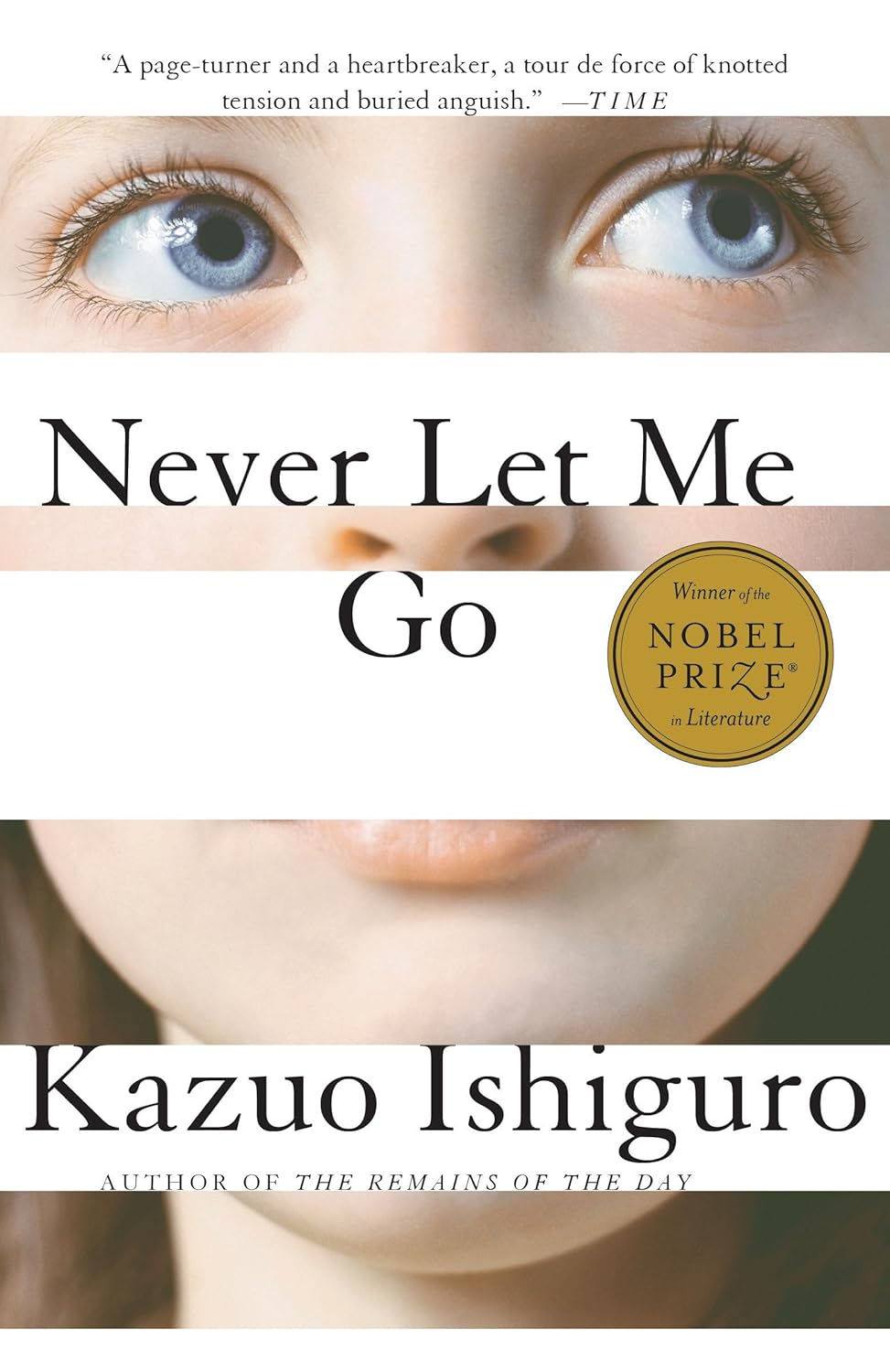
The Vibe: A beautiful, melancholic, and deeply unsettling story that feels like a hazy memory of a dream that turned into a nightmare.
Why It Feels Chillingly Real: On the surface, Hailsham seems like an idyllic English boarding school. The students are cared for, encouraged in their creativity, and form deep bonds of friendship and love. But as Kathy H. recounts her memories of her friends Ruth and Tommy, a dark and horrifying truth about their purpose is slowly revealed: they are clones, raised solely to donate their vital organs to "originals" in early adulthood. The chilling reality of this novel isn't in a violent uprising or a totalitarian state; it's in the quiet, passive acceptance of a horrifying fate. In an era of rapid advancements in genetic engineering and cloning, the ethical questions at the heart of this book feel more urgent than ever.
Why It's Trending: Never Let Me Go is a literary masterpiece that has found a huge audience with the "sad girl" and "dark academia" aesthetics on TikTok and Pinterest. Its melancholic tone, beautiful prose, and focus on memory and loss resonate deeply. It's often discussed on Reddit's r/books for being one of the most emotionally devastating novels of the 21st century. As a report from The Guardian on literary trends notes, there is a growing appetite for "quiet dystopias" that focus on emotional and psychological horror rather than overt action.
The Emotional Heart: This is a story about the desperate, human need to prove that our lives have meaning. The characters, knowing their fates are sealed, cling to art, love, and memory as a way of creating a "soul." The central love triangle is one of the most poignant and heartbreaking in modern literature. It's a profound meditation on what it means to live a full life, even when that life is cruelly short. The quiet desperation and search for meaning is as profound as the journey in our review of What the Light Touches by Xavier Bosch.
📚 Buy it on Amazon Here → [Affiliate Link]
4. Station Eleven by Emily St. John Mandel: Finding Hope After the Apocalypse

The Vibe: A hauntingly beautiful and ultimately hopeful ode to art, connection, and humanity in the aftermath of a global pandemic.
Why It Feels Chillingly Real: A swift and deadly flu, the "Georgia Flu," wipes out 99% of the world's population. Twenty years later, a small troupe of actors and musicians known as the Traveling Symphony journeys through the Great Lakes region, performing Shakespeare for the scattered settlements of survivors. The novel weaves together the stories of characters before, during, and after the collapse, creating a rich tapestry of human experience. Written years before the COVID-19 pandemic, its depiction of a world suddenly and irrevocably changed by a virus felt eerily prophetic and became a touchstone for many during the lockdowns of 2020.
Why It's Trending: Station Eleven became a cultural phenomenon, especially after the recent, critically acclaimed HBO Max adaptation. It's a constant on #BookTok, celebrated as a "post-apocalyptic novel for people who don't like post-apocalyptic novels." Its focus isn't on zombies or violence, but on the quiet, beautiful work of rebuilding civilization through art. The book's motto, "Survival is insufficient," (borrowed from Star Trek) has become a mantra for many. As a trends report from Statista on post-pandemic media shows, there is a strong consumer desire for stories that offer hope and focus on community and resilience.
The Emotional Heart: This is a profoundly hopeful book. It argues that even after everything is lost, the things that make us human—art, music, love, connection—will endure. It's a meditation on the strange, invisible threads that connect our lives across time and space. The novel's structure, which jumps between the pre- and post-apocalyptic world, creates a powerful sense of nostalgia and loss, but ultimately celebrates the incredible resilience of the human spirit. It’s a story that reminds us that even in the darkest of times, there is beauty and hope to be found. This search for light in the darkness is a theme often found in the most powerful love songs about hope and healing.
📚 Buy it on Amazon Here → [Affiliate Link]
5. Parable of the Sower by Octavia E. Butler: The Uncannily Prophetic Vision of Collapse

The Vibe: A gritty, terrifying, and yet deeply inspiring story of survival and the birth of a new faith in a collapsed America.
Why It Feels Chillingly Real: Written in 1993 and set in the 2020s, Parable of the Sower is one of the most frighteningly prophetic dystopian novels ever written. It depicts a near-future United States ravaged by climate change, corporate greed, social inequality, and political demagoguery. Society has crumbled into walled-off, privatized communities where the police are untrustworthy and basic resources are scarce. The protagonist, Lauren Olamina, a young Black woman with a condition called "hyperempathy," is forced to flee her home and embark on a dangerous journey north, all while developing a new belief system called Earthseed. The book's depiction of climate refugees, water scarcity, and a politician who promises to "make America great again" is so accurate it's breathtaking.
Why It's Trending: Octavia Butler's work has seen a massive and well-deserved resurgence in recent years. Parable of the Sower has become a foundational text for understanding Afrofuturism and is a constant on anti-racist reading lists. On social media, readers are continually shocked by its prescience. As a feature in The New Yorker highlighted, Butler wasn't just writing science fiction; she was a brilliant social commentator whose warnings are now our reality.
The Emotional Heart: Despite its brutal and violent world, this is a story of incredible strength and hope. Lauren Olamina is one of the most compelling protagonists in modern fiction. Her creation of Earthseed, a faith centered on the idea that "God is Change," is a radical act of hope and adaptation in a world that has fallen apart. The book is a powerful exploration of community, empathy, and the human need for belief. It's a tough read, but an essential one, a story about the power of one person to create change, a theme as empowering as the story in The Striker by Ana Huang.
📚 Buy it on Amazon Here → [Affiliate Link]
6. Klara and the Sun by Kazuo Ishiguro: The Artificial Friend and the Lonely Human Heart

The Vibe: A gentle, poignant, and deeply unsettling look at a near-future world through the eyes of a solar-powered Artificial Friend.
Why It Feels Chillingly Real: Klara is an AF (Artificial Friend), a highly intelligent android designed to be a companion for lonely children in a world where social interaction has been largely replaced by technology. From her place in the store, she observes the world with a curious and deeply empathetic eye. She is eventually chosen by a sickly girl named Josie. The story unfolds through Klara's limited but profound perspective as she tries to understand the complex, often contradictory, world of human emotions, love, and faith. In an age where AI is developing at an exponential rate, Ishiguro's novel poses urgent questions about consciousness, love, and what it truly means to be human.
Why It's Trending: This was one of the most anticipated and acclaimed literary novels of recent years. It taps directly into the current cultural conversation and anxiety surrounding artificial intelligence. On Reddit's r/printSF (science fiction) and r/books, discussions about the novel often revolve around its chillingly plausible depiction of a future where AI companions are commonplace. It's a "soft sci-fi" novel that appeals to readers of literary fiction, praised for its beautiful prose and deep emotional resonance.
The Emotional Heart: This is a heartbreakingly beautiful story about love and devotion. Klara's unwavering, almost naive dedication to Josie is incredibly moving. The novel is a profound exploration of loneliness in the modern world and our desperate attempts to connect. Through the eyes of a non-human narrator, Ishiguro holds a mirror up to our own species, revealing our beauty, our cruelty, and our deep-seated need to believe in something. The story's exploration of unconditional love is as powerful as the sentiments in the most timeless love songs by Whitney Houston.
📚 Buy it on Amazon Here → [Affiliate Link]
7. The School for Good Mothers by Jessamine Chan: The Panopticon of Modern Motherhood

The Vibe: A tense, kafkaesque, and utterly terrifying novel that takes the societal pressures of modern motherhood to their nightmarish conclusion.
Why It Feels Chillingly Real: Frida Liu is having a very bad day. Overwhelmed and sleep-deprived, she leaves her toddler daughter, Harriet, at home alone for a couple of hours. A moment of poor judgment turns into a nightmare when a neighbor reports her. The state decides she is an unfit mother and sends her to a high-tech, live-in rehabilitation program where she and other "bad mothers" are re-educated. They are given lifelike AI dolls to care for, and their every action is monitored, scored, and judged by a faceless system. This novel is a searing critique of the impossible standards placed on mothers and the way the state can weaponize the concept of "child welfare."
Why It's Trending: This book was an instant bestseller and a lightning rod for conversation. It taps into the very real anxieties of modern parents, particularly mothers, who feel they are under constant scrutiny. The hashtag #TheSchoolForGoodMothers is filled with TikTok videos of mothers reacting to the book's horrifyingly plausible scenarios. As an article from The Cut on parenting trends points out, the "intensive parenting" model has created a culture of fear and judgment, which this novel brilliantly satirizes and extrapolates.
The Emotional Heart: This is a visceral and heartbreaking story about the fierce, primal love between a mother and her child. Frida's desperate struggle to pass the program's cruel tests and get back to her daughter is a gut-wrenching journey. The novel is a powerful exploration of maternal love, societal judgment, and the ways in which systems can fail the very people they are meant to protect. It's a story that will stay with you long after you finish it, a testament to the powerful, almost terrifying, bond of family, a theme we explore in our review of Happy After All by Maisey Yates.
📚 Buy it on Amazon Here → [Affiliate Link]
8. Tender is the Flesh by Agustina Bazterrica: The Unspeakable Social Commentary
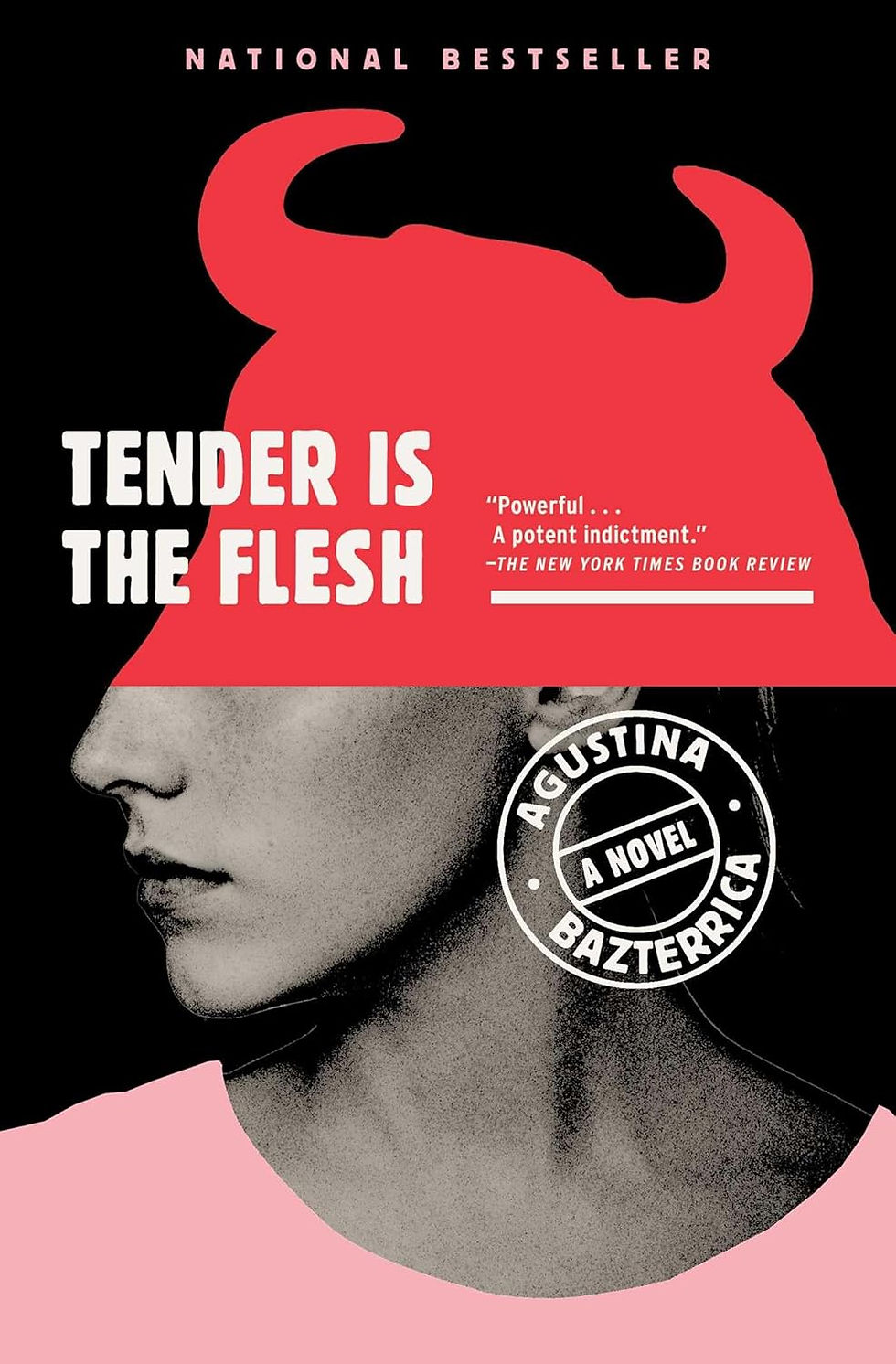
The Vibe: A brutal, stomach-churning, and unforgettable allegory that will haunt your thoughts for weeks. (Note: This book comes with a major trigger warning for cannibalism, gore, and violence.)
Why It Feels Chillingly Real: A virus has made all animal meat poisonous to humans. To satisfy the demand for meat, the government legalizes the breeding and slaughter of humans for consumption. Marcos works at a processing plant, where his job is to slaughter these humans, who are referred to as "special meat" and have their vocal cords removed. He tries to distance himself from the horror of his work, but when he is gifted a live "specimen," his carefully constructed emotional walls begin to crumble. This novel is a brutal, unflinching look at the human capacity for cruelty, commodification, and moral compromise.
Why It's Trending: This is one of the most viral and controversial books on #BookTok. Users film their shocked and horrified reactions to reading certain passages. It's a book that generates intense debate. Its chilling premise serves as a powerful allegory for our own society's industrial meat production and the ways we dehumanize others to justify exploitation. A report from Vox on "extreme horror" in literature identifies a growing trend of readers seeking out challenging, transgressive fiction that forces them to confront uncomfortable truths.
The Emotional Heart: Beneath the visceral horror, this is a story about the loss of humanity and the desperate search for a spark of connection in a world devoid of it. Marcos's internal struggle and his complex relationship with the "specimen" he is given form the devastating core of the novel. It is a profoundly dark and pessimistic book, but its power lies in its ability to force the reader to question their own moral compass and the systems they participate in. It is a story about the consequences of losing love and empathy, a dark reflection of the themes in our review of None of This Is True by Lisa Jewell.
📚 Buy it on Amazon Here → [Affiliate Link]
Conclusion
Dystopian fiction is more than just dark entertainment; it is a vital and necessary genre that helps us process the anxieties of our time. These eight novels, in their own unique and haunting ways, hold up a mirror to our world, forcing us to confront uncomfortable truths about power, humanity, and the potential futures we are creating.
By exploring these chillingly real worlds from the safety of our reading nooks, we are not just escaping; we are engaging. We are asking critical questions, fostering empathy, and perhaps, being inspired to build a better, more compassionate future. These stories are a warning, but they are also a testament to the enduring power of love, art, and the resilient human spirit.

💖 If you enjoyed this, please consider donating here: https://www.thatlovepodcast.com/thewriter.
🛒 Want to explore similar items? Visit our curated list of dystopian must-reads on Amazon: {PLATFORM_LINK}.
Related Articles
Book Review: The Deal by Elle Kennedy – A Captivating College Romance
Book Review: Part of Your World by Abby Jimenez – A Transcendent Romantic Comedy
Book Review: The Husband’s Secret by Liane Moriarty – A Gripping Tale of Secrets and Consequences
Book Review: Gone Again by Doug Johnstone – A Heart-Wrenching Family Drama Cloaked in Mystery
Book Review: Bride by Ali Hazelwood – A Spellbinding Paranormal Romance With Bite
Book Review: Tom Lake by Ann Patchett – A Reflective Journey Through Love, Family, and Choices
Book Review: Five Brothers by Penelope Douglas – A Dark Emotional Journey into Love and Power
Book Review: King of Wrath by Ana Huang – An Arranged Marriage Mafia Romance That Sizzles
FAQ Section
Q1: What defines a "dystopian read"? A: A dystopian read is a story set in a fictional society that appears perfect on the surface but is deeply flawed underneath. These societies are typically characterized by oppressive social or political control, the loss of individuality, and environmental or technological disaster. Dystopian novels serve as cautionary tales, exploring the potential negative consequences of current trends, societal norms, and political systems.
Q2: I'm new to dystopian fiction. Which book on this list should I start with? A: For a beginner, Station Eleven by Emily St. John Mandel is an excellent starting point. While it's set after a societal collapse, its focus on hope, art, and human connection makes it more accessible and less bleak than many other titles in the genre. For a classic and essential introduction, you can't go wrong with George Orwell's Nineteen Eighty-Four.
Q3: Why are we so fascinated by dystopian stories that feel so real? A: Dystopian fiction provides a safe framework to explore our real-world anxieties. Reading about a society ravaged by a pandemic or controlled by surveillance allows us to process our fears about those issues from a safe distance. These stories can be validating, showing us that we're not alone in our concerns, and they can also be empowering, encouraging us to think critically about our own world.
Q4: Are all dystopian reads dark and depressing? A: While the genre is known for its grim settings, not all dystopian reads are relentlessly bleak. Many, like Station Eleven and Parable of the Sower, contain profound messages of hope and celebrate the resilience of the human spirit. They often focus on the power of love, art, and community to endure even in the darkest of times, which can be incredibly uplifting.
Q5: What's the difference between a dystopian and a post-apocalyptic novel? A: The two genres often overlap, but there's a key distinction. A dystopian novel focuses on a society that is functioning, but in a repressive and controlled way (like in 1984 or The Handmaid's Tale). A post-apocalyptic novel is set after a major catastrophic event has caused the collapse of civilization, and the story often focuses on the challenges of survival in a broken world (like in Station Eleven).
Q6: I love YA dystopian fiction like The Hunger Games. Are there any on this list for adults? A: All the books on this list are considered adult fiction, but they will definitely appeal to fans of YA dystopia. If you love the high-stakes world and social commentary of The Hunger Games, you will appreciate the deep political critique in Nineteen Eighty-Four and The Handmaid's Tale, and the survival themes in Parable of the Sower.
Q7: How do these dystopian reads relate to themes of love and relationships? A: Love is often a central and radical theme in dystopian fiction. In societies that seek to control every aspect of life, choosing to love someone authentically can be the ultimate act of rebellion. These stories explore how relationships are tested under extreme pressure and how love, friendship, and family can be a source of profound strength and hope against oppressive systems.
Q8: Some of these books sound very intense. How should I approach them? A: It's important to be mindful of your own mental health when reading intense fiction. If a book deals with themes that are particularly triggering for you, it's okay to take breaks or decide not to finish it. Reading summaries or reviews beforehand can help you prepare. It can also be helpful to discuss the book with a friend, which can make processing the difficult themes feel less isolating.
Q9: Where can I find more recommendations for dystopian reads? A: Social media is a great resource. The #dystopianbooks tag on TikTok and Instagram is full of suggestions. Goodreads has countless user-created lists for every subgenre of dystopia. Online forums like Reddit's r/printSF and r/dystopia are also excellent places to find in-depth discussions and recommendations from a very knowledgeable community of readers.
Q10: Why do dystopian novels from decades ago, like 1984, still feel so relevant? A: The most enduring dystopian novels tap into timeless human fears and societal vulnerabilities: the fear of losing our freedom, the dangers of unchecked power, the temptation of sacrificing liberty for security, and the struggle to maintain our individuality. Because these are fundamental aspects of the human condition, these novels are constantly reinterpreted and find new relevance in the context of each new generation's political and technological landscape.
You Might Also Like
Book Review: Does It Hurt? by H.D. Carlton – A Dark and Gripping Romance You Can’t Put Down
Book Review: Twisted Love by Ana Huang – An Epic Romance of Love and Vengeance
Book Review: Fourth Wing by Rebecca Yarros – A Fantasy Romance That Will Take Your Breath Away
"Slow Living" 101: A Guide to a More Intentional, Peaceful Life
The Ultimate Digital Detox Guide: 5 Steps to Reclaim Your Focus
Beyond the Bubble Bath: 20 Self-Care Ideas That Aren't About Spending Money



.jpg)





.jpg)


