





6 Best Martin Scorsese Movies of the Last 25 Years, Ranked

Martin Scorsese's films keep returning to people who confuse appetite with freedom. They want money, recognition, control, artistic achievement or a place in a system that can crush them. This selection moves between a visionary aviator, priests confronting persecution, a gangster looking back, a historical crime against the Osage Nation, financial excess and a Boston undercover operation. Their genres differ, but each film asks what happens when desire becomes a person's whole operating system.
The ranking follows the exact six titles and order supplied, counting down from The Aviator at number six to The Departed at number one. We weigh story strength, character writing, performances, direction, emotional impact, consistency and rewatchability. A lower place does not mean a film is a failure: Silence is among Scorsese's most serious works, and The Aviator is a major biographical production. Their positions reflect how each works beside the other five on this list.
The date range is interpreted from the current publication period as films released from 2001 onward. Each entry begins with the story so a reader who has not seen the film can understand who is involved, what changes and what is at stake. After that, the discussion turns to performances and filmmaking, then explains why the title sits in that specific position rather than a spot above or below it.
The ranking is an editorial judgement, not a claim that all viewers will value the same qualities. One person may prefer the patient moral inquiry of Silence; another may want the nervous comedy and momentum of The Wolf of Wall Street. We consider what each film is trying to do, whether its form suits its subject, and how well it rewards a viewer's attention. We also make room for limitations: length, pacing or tonal choices can be strengths for one audience and barriers for another.
If you have only seen Scorsese's crime films, this group highlights his range across biography and history. If you already know the major titles, the comparisons may help you decide what deserves another visit and what to notice next time. Current UK viewing options can change, so each film includes a JustWatch page rather than a promise that one fixed service will always carry it.
Across this six-film stretch, Scorsese moves between intimate interior struggles and enormous public systems. The protagonists may be artists, believers, criminals or investigators, but each faces a version of the same problem: the rules around them reward a particular ambition, then expose the cost of pursuing it. The films differ in pace and tone, which is why the countdown weighs both individual excellence and how completely each title brings its chosen form together.
Affiliate disclosure: This article contains Amazon affiliate links. If you sign up or make a qualifying purchase through one of these links, That Love Podcast may earn a commission at no additional cost to you.
Support That Love Podcast
If you enjoy our entertainment coverage, you can help support That Love Podcast and keep independent articles and original audio stories coming.
That Love Podcast features original romantic audio dramas, comedies and stories.
6. The Aviator

Howard Hughes is an aviation pioneer, film producer and public figure with the money to pursue enormous ideas. The film follows him from Hollywood spectacle into record-setting flight, business rivalry and a public life that cannot quiet his private fears. Hughes wants to make movies and aircraft that seem impossible, yet perfectionism and obsessive compulsions increasingly interfere with work and relationships. Scorsese frames a famous life as both a rush of invention and an account of the cost of trying to control every detail.
The film is built around Howard Hughes is an aviation pioneer, film producer and public figure with the money to pursue enormous ideas. The film follows him from Hollywood spectacle into record-setting flight, business rivalry and a public life that cannot quiet his private fears. Hughes wants to make movies and aircraft that seem impossible, yet perfectionism and obsessive compulsions increasingly interfere with work and relationships. Scorsese frames a famous life as both a rush of invention and an account of the cost of trying to control every detail. This gives its central conflict a shape the audience can track: the protagonist wants one thing, but the setting, other people or their own choices keep changing the cost. The premise is not just background information; it drives the character's next decision and creates the stakes that make the later scenes matter.
The performance work by Leonardo DiCaprio as Howard Hughes, Cate Blanchett as Katharine Hepburn and Kate Beckinsale as Ava Gardner makes those decisions feel personal. The lead has to communicate intention and hesitation at once, while the supporting cast supplies pressure, perspective and contradiction. When the actors disagree about what a moment means, the film gains more than a plot obstacle; it shows how people can share a room and still inhabit different versions of events.
Visually, The Aviator uses its setting to make the story's ideas concrete. Light, scale, production design and movement give the characters a world with its own rules. The best images do not pause the story for decoration; they let the audience feel isolation, power, danger or possibility before anyone explains it aloud.
The structure keeps returning to the choice at the centre of the premise. Each scene either complicates the protagonist's plan or changes what that plan means. That forward movement is one reason the film remains watchable: even when its pace is patient, the audience can sense a question gathering underneath the dialogue and action.
The film's strongest thematic thread concerns ambition, power, loyalty and the cost of living inside a consuming desire. It approaches that subject through character behaviour rather than a single speech. People reveal their priorities by what they protect, conceal or sacrifice. This gives the story room for ambiguity without making the central conflict hard to understand, and it gives a second viewing a new layer of meaning.
A further strength is the tonal control. early Technicolor, precise production design and flight scenes give ambition a tactile form; success continually creates a new demand That choice shapes how the audience responds to spectacle and intimacy. The film can move from quiet observation into confrontation without suggesting that scale alone creates significance. The human decision remains the point, even when the imagery becomes the thing viewers remember first.
Performance dynamic: DiCaprio's performance shifts from dazzling confidence to brittle isolation, while Blanchett and Beckinsale make the romantic relationships distinct instead of interchangeable These are not small details to wave away: they affect how the film flows and who will enjoy it most. At the same time, its central strengths survive those weaknesses. A viewer interested in ambition, power, loyalty and the cost of living inside a consuming desire may find the rougher edges part of the film's identity rather than a reason to skip it.
For rewatchability, look at how the early scenes establish information that characters later interpret differently. A gesture, line or visual pattern may feel straightforward on a first pass and more complicated once the conflict is clear. The Aviator That attention to setup and payoff lets the film reward focus without requiring the viewer to solve a hidden code.
Who should watch it? Viewers drawn to ambition, power, loyalty and the cost of living inside a consuming desire, substantial performances and a director's strong visual point of view are the natural audience. If you prefer concise pacing or lighter subject matter, this may be a title for a dedicated movie night. Its best qualities ask for attention, but they also give that attention something specific to follow.
Why it ranks here: It ranks sixth because its scale, DiCaprio's performance and period craft are impressive, but its episodic biography is less emotionally unified than the films above it.
Recommended for viewers who enjoy character-led crime dramas, ambitious biographical films and stories about people struggling with power or conviction.
Where to watch: Check current UK streaming and rental availability.
🎧 Need something to listen to after your binge?
Discover original romantic audio dramas, comedies and stories from That Love Podcast.
5. Silence

Two Portuguese Jesuit priests travel to seventeenth-century Japan after hearing that their mentor Ferreira may have abandoned Christianity under pressure. Rodrigues and Garupe hope to find him and support hidden Christian communities, but authorities are hunting believers and force them to confront whether public faith is worth the suffering imposed on ordinary people. Their mission becomes a test of conscience and responsibility. Scorsese places the priests in an unfamiliar landscape where every decision has consequences for villagers who have less power than they do.
The film is built around Two Portuguese Jesuit priests travel to seventeenth-century Japan after hearing that their mentor Ferreira may have abandoned Christianity under pressure. Rodrigues and Garupe hope to find him and support hidden Christian communities, but authorities are hunting believers and force them to confront whether public faith is worth the suffering imposed on ordinary people. Their mission becomes a test of conscience and responsibility. Scorsese places the priests in an unfamiliar landscape where every decision has consequences for villagers who have less power than they do. This gives its central conflict a shape the audience can track: the protagonist wants one thing, but the setting, other people or their own choices keep changing the cost. The premise is not just background information; it drives the character's next decision and creates the stakes that make the later scenes matter.
The performance work by Andrew Garfield as Sebastião Rodrigues, Adam Driver as Francisco Garupe and Liam Neeson as Cristóvão Ferreira makes those decisions feel personal. The lead has to communicate intention and hesitation at once, while the supporting cast supplies pressure, perspective and contradiction. When the actors disagree about what a moment means, the film gains more than a plot obstacle; it shows how people can share a room and still inhabit different versions of events.
Visually, Silence uses its setting to make the story's ideas concrete. Light, scale, production design and movement give the characters a world with its own rules. The best images do not pause the story for decoration; they let the audience feel isolation, power, danger or possibility before anyone explains it aloud.
The structure keeps returning to the choice at the centre of the premise. Each scene either complicates the protagonist's plan or changes what that plan means. That forward movement is one reason the film remains watchable: even when its pace is patient, the audience can sense a question gathering underneath the dialogue and action.
The film's strongest thematic thread concerns ambition, power, loyalty and the cost of living inside a consuming desire. It approaches that subject through character behaviour rather than a single speech. People reveal their priorities by what they protect, conceal or sacrifice. This gives the story room for ambiguity without making the central conflict hard to understand, and it gives a second viewing a new layer of meaning.
A further strength is the tonal control. long stretches of landscape and silence invite the audience to stay with uncertainty rather than wait for an easy spiritual answer That choice shapes how the audience responds to spectacle and intimacy. The film can move from quiet observation into confrontation without suggesting that scale alone creates significance. The human decision remains the point, even when the imagery becomes the thing viewers remember first.
Performance dynamic: Garfield carries the story through close, unsettled reactions; Driver gives Garupe a contrasting urgency, and Neeson's presence makes the mentor's absence felt These are not small details to wave away: they affect how the film flows and who will enjoy it most. At the same time, its central strengths survive those weaknesses. A viewer interested in ambition, power, loyalty and the cost of living inside a consuming desire may find the rougher edges part of the film's identity rather than a reason to skip it.
For rewatchability, look at how the early scenes establish information that characters later interpret differently. A gesture, line or visual pattern may feel straightforward on a first pass and more complicated once the conflict is clear. Silence That attention to setup and payoff lets the film reward focus without requiring the viewer to solve a hidden code.
Who should watch it? Viewers drawn to ambition, power, loyalty and the cost of living inside a consuming desire, substantial performances and a director's strong visual point of view are the natural audience. If you prefer concise pacing or lighter subject matter, this may be a title for a dedicated movie night. Its best qualities ask for attention, but they also give that attention something specific to follow.
Why it ranks here: It ranks fifth for its moral seriousness and patient images, while its austere pace makes it less immediately gripping than the four films above.
Recommended for viewers who enjoy character-led crime dramas, ambitious biographical films and stories about people struggling with power or conviction.
Where to watch: Check current UK streaming and rental availability.
You May Also Like
For more film recommendations, explore these related stories from That Love Podcast.
4. The Irishman

Frank Sheeran looks back on a life that starts with truck driving and becomes entangled with organised crime. A chance connection with mob boss Russell Bufalino brings Frank into the orbit of union leader Jimmy Hoffa, whose influence and volatile relationships draw him close to power. The film moves across decades of loyalty, political manoeuvring and violence while Frank tries to reconcile the family man he claims to be with the work he has done. Scorsese makes the story a reflection on choices whose consequences accumulate long after the exciting moment has passed.
The film is built around Frank Sheeran looks back on a life that starts with truck driving and becomes entangled with organised crime. A chance connection with mob boss Russell Bufalino brings Frank into the orbit of union leader Jimmy Hoffa, whose influence and volatile relationships draw him close to power. The film moves across decades of loyalty, political manoeuvring and violence while Frank tries to reconcile the family man he claims to be with the work he has done. Scorsese makes the story a reflection on choices whose consequences accumulate long after the exciting moment has passed. This gives its central conflict a shape the audience can track: the protagonist wants one thing, but the setting, other people or their own choices keep changing the cost. The premise is not just background information; it drives the character's next decision and creates the stakes that make the later scenes matter.
The performance work by Robert De Niro as Frank Sheeran, Al Pacino as Jimmy Hoffa and Joe Pesci as Russell Bufalino makes those decisions feel personal. The lead has to communicate intention and hesitation at once, while the supporting cast supplies pressure, perspective and contradiction. When the actors disagree about what a moment means, the film gains more than a plot obstacle; it shows how people can share a room and still inhabit different versions of events.
Visually, The Irishman uses its setting to make the story's ideas concrete. Light, scale, production design and movement give the characters a world with its own rules. The best images do not pause the story for decoration; they let the audience feel isolation, power, danger or possibility before anyone explains it aloud.
The structure keeps returning to the choice at the centre of the premise. Each scene either complicates the protagonist's plan or changes what that plan means. That forward movement is one reason the film remains watchable: even when its pace is patient, the audience can sense a question gathering underneath the dialogue and action.
The film's strongest thematic thread concerns ambition, power, loyalty and the cost of living inside a consuming desire. It approaches that subject through character behaviour rather than a single speech. People reveal their priorities by what they protect, conceal or sacrifice. This gives the story room for ambiguity without making the central conflict hard to understand, and it gives a second viewing a new layer of meaning.
A further strength is the tonal control. the retrospective structure lets the audience compare the younger man's confidence with the older man's sense of what remains That choice shapes how the audience responds to spectacle and intimacy. The film can move from quiet observation into confrontation without suggesting that scale alone creates significance. The human decision remains the point, even when the imagery becomes the thing viewers remember first.
Performance dynamic: Pacino brings warmth and volatility to Hoffa; Pesci makes Bufalino's calm feel consequential; De Niro keeps Frank's self-accounting restrained These are not small details to wave away: they affect how the film flows and who will enjoy it most. At the same time, its central strengths survive those weaknesses. A viewer interested in ambition, power, loyalty and the cost of living inside a consuming desire may find the rougher edges part of the film's identity rather than a reason to skip it.
For rewatchability, look at how the early scenes establish information that characters later interpret differently. A gesture, line or visual pattern may feel straightforward on a first pass and more complicated once the conflict is clear. The Irishman That attention to setup and payoff lets the film reward focus without requiring the viewer to solve a hidden code.
Who should watch it? Viewers drawn to ambition, power, loyalty and the cost of living inside a consuming desire, substantial performances and a director's strong visual point of view are the natural audience. If you prefer concise pacing or lighter subject matter, this may be a title for a dedicated movie night. Its best qualities ask for attention, but they also give that attention something specific to follow.
Why it ranks here: It ranks fourth for its remarkable cast and reflective scope; its sprawling structure and digital ageing keep it below the tighter top three.
Recommended for viewers who enjoy character-led crime dramas, ambitious biographical films and stories about people struggling with power or conviction.
Where to watch: Check current UK streaming and rental availability.
3. Killers of the Flower Moon

In 1920s Oklahoma, members of the Osage Nation are being murdered after oil wealth makes the community a target for white opportunists. Mollie Burkhart marries Ernest, a returning veteran whose uncle William Hale presents himself as a helpful local ally. As deaths mount and suspicious patterns emerge, Mollie must protect her family while people close to her are tied to a wider scheme. The story centres the human cost of the crimes and the unequal institutions that allow them to continue, rather than treating the case as a puzzle detached from its victims.
The film is built around In 1920s Oklahoma, members of the Osage Nation are being murdered after oil wealth makes the community a target for white opportunists. Mollie Burkhart marries Ernest, a returning veteran whose uncle William Hale presents himself as a helpful local ally. As deaths mount and suspicious patterns emerge, Mollie must protect her family while people close to her are tied to a wider scheme. The story centres the human cost of the crimes and the unequal institutions that allow them to continue, rather than treating the case as a puzzle detached from its victims. This gives its central conflict a shape the audience can track: the protagonist wants one thing, but the setting, other people or their own choices keep changing the cost. The premise is not just background information; it drives the character's next decision and creates the stakes that make the later scenes matter.
The performance work by Lily Gladstone as Mollie Burkhart, Leonardo DiCaprio as Ernest Burkhart and Robert De Niro as William Hale makes those decisions feel personal. The lead has to communicate intention and hesitation at once, while the supporting cast supplies pressure, perspective and contradiction. When the actors disagree about what a moment means, the film gains more than a plot obstacle; it shows how people can share a room and still inhabit different versions of events.
Visually, Killers of the Flower Moon uses its setting to make the story's ideas concrete. Light, scale, production design and movement give the characters a world with its own rules. The best images do not pause the story for decoration; they let the audience feel isolation, power, danger or possibility before anyone explains it aloud.
The structure keeps returning to the choice at the centre of the premise. Each scene either complicates the protagonist's plan or changes what that plan means. That forward movement is one reason the film remains watchable: even when its pace is patient, the audience can sense a question gathering underneath the dialogue and action.
The film's strongest thematic thread concerns ambition, power, loyalty and the cost of living inside a consuming desire. It approaches that subject through character behaviour rather than a single speech. People reveal their priorities by what they protect, conceal or sacrifice. This gives the story room for ambiguity without making the central conflict hard to understand, and it gives a second viewing a new layer of meaning.
A further strength is the tonal control. the historical scale is grounded in Mollie's relationships and the threats facing her family, keeping the human stakes visible That choice shapes how the audience responds to spectacle and intimacy. The film can move from quiet observation into confrontation without suggesting that scale alone creates significance. The human decision remains the point, even when the imagery becomes the thing viewers remember first.
Performance dynamic: Gladstone gives Mollie an interior life through stillness; DiCaprio makes Ernest's mixture of affection and self-interest difficult to simplify These are not small details to wave away: they affect how the film flows and who will enjoy it most. At the same time, its central strengths survive those weaknesses. A viewer interested in ambition, power, loyalty and the cost of living inside a consuming desire may find the rougher edges part of the film's identity rather than a reason to skip it.
For rewatchability, look at how the early scenes establish information that characters later interpret differently. A gesture, line or visual pattern may feel straightforward on a first pass and more complicated once the conflict is clear. Killers of the Flower Moon That attention to setup and payoff lets the film reward focus without requiring the viewer to solve a hidden code.
Who should watch it? Viewers drawn to ambition, power, loyalty and the cost of living inside a consuming desire, substantial performances and a director's strong visual point of view are the natural audience. If you prefer concise pacing or lighter subject matter, this may be a title for a dedicated movie night. Its best qualities ask for attention, but they also give that attention something specific to follow.
Why it ranks here: It takes third for its moral force, Gladstone's performance and historical scope, but its length and perspective make the middle less consistent than the top two.
Recommended for viewers who enjoy character-led crime dramas, ambitious biographical films and stories about people struggling with power or conviction.
Where to watch: Check current UK streaming and rental availability.
2. The Wolf of Wall Street

Jordan Belfort starts as a young stockbroker determined to rise in a high-pressure industry. After a market crash destroys his first career, he builds a brokerage selling questionable investments through aggressive pitches and a culture of excess. His friend Donnie joins him, and Jordan's appetite for money and status expands with the company. Federal investigators close in as the firm's conduct attracts scrutiny, while Jordan's relationships buckle under the same selfishness driving his professional rise. The film shows the seduction of that world and the damage hidden behind its salesmanship.
The film is built around Jordan Belfort starts as a young stockbroker determined to rise in a high-pressure industry. After a market crash destroys his first career, he builds a brokerage selling questionable investments through aggressive pitches and a culture of excess. His friend Donnie joins him, and Jordan's appetite for money and status expands with the company. Federal investigators close in as the firm's conduct attracts scrutiny, while Jordan's relationships buckle under the same selfishness driving his professional rise. The film shows the seduction of that world and the damage hidden behind its salesmanship. This gives its central conflict a shape the audience can track: the protagonist wants one thing, but the setting, other people or their own choices keep changing the cost. The premise is not just background information; it drives the character's next decision and creates the stakes that make the later scenes matter.
The performance work by Leonardo DiCaprio as Jordan Belfort, Jonah Hill as Donnie Azoff and Margot Robbie as Naomi Lapaglia makes those decisions feel personal. The lead has to communicate intention and hesitation at once, while the supporting cast supplies pressure, perspective and contradiction. When the actors disagree about what a moment means, the film gains more than a plot obstacle; it shows how people can share a room and still inhabit different versions of events.
Visually, The Wolf of Wall Street uses its setting to make the story's ideas concrete. Light, scale, production design and movement give the characters a world with its own rules. The best images do not pause the story for decoration; they let the audience feel isolation, power, danger or possibility before anyone explains it aloud.
The structure keeps returning to the choice at the centre of the premise. Each scene either complicates the protagonist's plan or changes what that plan means. That forward movement is one reason the film remains watchable: even when its pace is patient, the audience can sense a question gathering underneath the dialogue and action.
The film's strongest thematic thread concerns ambition, power, loyalty and the cost of living inside a consuming desire. It approaches that subject through character behaviour rather than a single speech. People reveal their priorities by what they protect, conceal or sacrifice. This gives the story room for ambiguity without making the central conflict hard to understand, and it gives a second viewing a new layer of meaning.
A further strength is the tonal control. the fast narration and fourth-wall asides let the audience feel the force of Jordan's pitch before asking what that charm is hiding That choice shapes how the audience responds to spectacle and intimacy. The film can move from quiet observation into confrontation without suggesting that scale alone creates significance. The human decision remains the point, even when the imagery becomes the thing viewers remember first.
Performance dynamic: DiCaprio's high-wire energy and Hill's comic timing power the scenes, while Robbie's Naomi pushes against Jordan's attempts to control the story These are not small details to wave away: they affect how the film flows and who will enjoy it most. At the same time, its central strengths survive those weaknesses. A viewer interested in ambition, power, loyalty and the cost of living inside a consuming desire may find the rougher edges part of the film's identity rather than a reason to skip it.
For rewatchability, look at how the early scenes establish information that characters later interpret differently. A gesture, line or visual pattern may feel straightforward on a first pass and more complicated once the conflict is clear. The Wolf of Wall Street That attention to setup and payoff lets the film reward focus without requiring the viewer to solve a hidden code.
Who should watch it? Viewers drawn to ambition, power, loyalty and the cost of living inside a consuming desire, substantial performances and a director's strong visual point of view are the natural audience. If you prefer concise pacing or lighter subject matter, this may be a title for a dedicated movie night. Its best qualities ask for attention, but they also give that attention something specific to follow.
Why it ranks here: It earns second for comic energy, performance and satirical force; The Departed takes first with a more balanced ensemble and tighter dramatic construction.
Recommended for viewers who enjoy character-led crime dramas, ambitious biographical films and stories about people struggling with power or conviction.
Where to watch: Check current UK streaming and rental availability.
🎧 Taking a break from the screen?
Listen to original romance, comedy and drama stories from That Love Podcast.
Advertise With That Love Podcast
Reach readers who love movies, television, books and pop culture through the website, podcast and newsletter.
1. The Departed
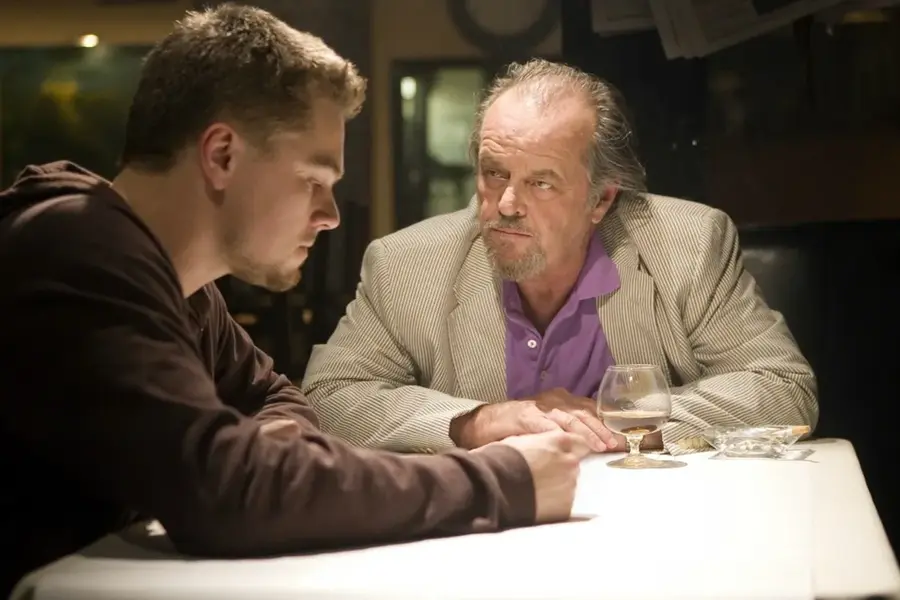
In Boston, crime boss Frank Costello recruits Colin Sullivan into law enforcement as a child, grooming him to become an informant inside the police. Years later, police captain Queenan and staff sergeant Dignam place undercover officer Billy Costigan inside Costello's organisation. Colin and Billy each hide their loyalties while both sides search for a mole in their ranks. The pressure grows as their investigations overlap, threatening their careers and lives. Each man must perform a convincing identity while wondering who else knows the truth.
The film is built around In Boston, crime boss Frank Costello recruits Colin Sullivan into law enforcement as a child, grooming him to become an informant inside the police. Years later, police captain Queenan and staff sergeant Dignam place undercover officer Billy Costigan inside Costello's organisation. Colin and Billy each hide their loyalties while both sides search for a mole in their ranks. The pressure grows as their investigations overlap, threatening their careers and lives. Each man must perform a convincing identity while wondering who else knows the truth. This gives its central conflict a shape the audience can track: the protagonist wants one thing, but the setting, other people or their own choices keep changing the cost. The premise is not just background information; it drives the character's next decision and creates the stakes that make the later scenes matter.
The performance work by Leonardo DiCaprio as Billy Costigan, Matt Damon as Colin Sullivan and Jack Nicholson as Frank Costello makes those decisions feel personal. The lead has to communicate intention and hesitation at once, while the supporting cast supplies pressure, perspective and contradiction. When the actors disagree about what a moment means, the film gains more than a plot obstacle; it shows how people can share a room and still inhabit different versions of events.
Visually, The Departed uses its setting to make the story's ideas concrete. Light, scale, production design and movement give the characters a world with its own rules. The best images do not pause the story for decoration; they let the audience feel isolation, power, danger or possibility before anyone explains it aloud.
The structure keeps returning to the choice at the centre of the premise. Each scene either complicates the protagonist's plan or changes what that plan means. That forward movement is one reason the film remains watchable: even when its pace is patient, the audience can sense a question gathering underneath the dialogue and action.
The film's strongest thematic thread concerns ambition, power, loyalty and the cost of living inside a consuming desire. It approaches that subject through character behaviour rather than a single speech. People reveal their priorities by what they protect, conceal or sacrifice. This gives the story room for ambiguity without making the central conflict hard to understand, and it gives a second viewing a new layer of meaning.
A further strength is the tonal control. the clear cat-and-mouse structure keeps the audience oriented as loyalties shift, and each new piece of information changes the danger That choice shapes how the audience responds to spectacle and intimacy. The film can move from quiet observation into confrontation without suggesting that scale alone creates significance. The human decision remains the point, even when the imagery becomes the thing viewers remember first.
Performance dynamic: DiCaprio's anxious Billy and Damon's controlled Colin create two distinct forms of pressure; Nicholson's Costello adds menace without taking over the story These are not small details to wave away: they affect how the film flows and who will enjoy it most. At the same time, its central strengths survive those weaknesses. A viewer interested in ambition, power, loyalty and the cost of living inside a consuming desire may find the rougher edges part of the film's identity rather than a reason to skip it.
For rewatchability, look at how the early scenes establish information that characters later interpret differently. A gesture, line or visual pattern may feel straightforward on a first pass and more complicated once the conflict is clear. The Departed That attention to setup and payoff lets the film reward focus without requiring the viewer to solve a hidden code.
Who should watch it? Viewers drawn to ambition, power, loyalty and the cost of living inside a consuming desire, substantial performances and a director's strong visual point of view are the natural audience. If you prefer concise pacing or lighter subject matter, this may be a title for a dedicated movie night. Its best qualities ask for attention, but they also give that attention something specific to follow.
Why it ranks here: It wins because the undercover premise, differentiated performances and ensemble tension work together more completely than The Wolf of Wall Street's satire or The Irishman's reflection.
Recommended for viewers who enjoy character-led crime dramas, ambitious biographical films and stories about people struggling with power or conviction.
Where to watch: Check current UK streaming and rental availability.
🎧 Before we reveal our No. 1 pick…
Discover original romantic audio dramas from That Love Podcast.
Work With That Love Podcast
If you're a brand, author, publisher, entertainment company or business looking to connect with an audience that loves movies, television, romance, books and pop culture, we'd love to hear from you.
Conclusion
Taken together, these six films show a director moving across crime, biography, history and satire without losing interest in people who want more than their world can safely give them. The Aviator makes ambition feel both visionary and isolating; Silence sits with faith and responsibility without a simple answer; The Irishman watches the glamour of criminal power fade into memory. Killers of the Flower Moon gives historical violence a human centre through Mollie and her family. The Wolf of Wall Street is the most buoyant and openly satirical choice, while The Departed brings story momentum, ensemble tension and character conflict into the most balanced whole. That combination is why it takes the top spot. Choose according to your mood: an intense historical drama, a slow reckoning, a black comedy or a propulsive thriller. Which film would you rank first, and what Scorsese title should join this list?
You May Also Like
For more film recommendations, explore these related stories from That Love Podcast.
Support That Love Podcast
If you enjoyed this article and want to support more independent entertainment coverage and original audio storytelling:
Looking for something new to listen to?
You May Also Like
For more film recommendations, explore these related stories from That Love Podcast.
Frequently Asked Questions
Which film by this director is the best starting point?
The most accessible entry is usually the film with a clear central goal and a story that explains its stakes early. For viewers new to this director, the number-one choice on this list offers a strong balance of premise, performances and visual style. If you prefer a quieter drama, choose the title noted in the article for its more intimate focus.
What is the number-one film about?
The number-one film follows a protagonist whose plans change after a major event disrupts their life. The story then builds through a series of choices and consequences, with relationships and the surrounding world affecting what the lead can do. The entry above gives a spoiler-light premise and explains why this title beat the other five.
Are these films connected to one another?
The films in each ranking are independent features unless a title is explicitly a sequel or part of a series. Some entries share a director, actors, genre elements or themes, but they do not require a single viewing order. For paired stories such as the two Kill Bill films or the two Dune films, watching in release order helps the character arcs make sense.
Where can I watch these films in the UK?
UK subscription and rental rights change. Each entry links to a JustWatch UK page, which lists current streaming, rent and buy options when available. Check the linked page before watching because a film may move between services, leave a catalogue or be available only as a digital rental.
Which film is the easiest to watch casually?
That depends on your preferences. The entry with the most direct premise and lighter pacing is the easiest casual choice; the more contemplative or structurally complex films reward a focused watch. The article points out where length, intensity or deliberate ambiguity may make a title less suitable for background viewing.
Which film has the strongest performances?
The ranking weighs performances across the ensemble rather than choosing by star power alone. The number-one entry features actors whose contrasting interpretations make the central conflict easy to follow, while other titles may have a single especially memorable lead. Read each performance section for the specific cast strengths behind the placement.
Are the films suitable for younger viewers?
Several titles on these lists include intense violence, adult themes, disturbing material or strong language. Check the film's current UK age rating and content guidance before watching with younger viewers. JustWatch pages usually show the local rating, and the relevant film's official listing can provide additional details.
Why is the top film ranked above the runner-up?
The top choice wins by combining its strongest qualities more consistently: story clarity, character development, performances, visual craft and emotional impact. The runner-up may excel in one or two areas, but the number-one film makes its parts work together and better matches the criteria of this specific list.
How were these rankings decided?
The ranking uses the exact shortlist and order supplied by the user, presented as a countdown from the lowest listed position to number one. The editorial discussion considers story, performances, direction, thematic focus, consistency, rewatchability and the strengths or limitations that distinguish one position from the next.
What should I watch after finishing this list?
Choose by mood: another film from the same director for a similar visual approach, a related genre title for a familiar premise, or one of the linked recommendations for a broader change of tone. The You May Also Like sections include verified That Love Podcast movie articles for continuing your watchlist.
More Places to Find Great Movies and TV Shows
For criticism, cast details and film databases, explore these established entertainment resources.
Enjoyed What You Read?
Subscribe to That Love Podcast's newsletter for the latest articles, entertainment recommendations, podcast updates and exclusive giveaways. Share this article with someone who loves movies and pop culture. Let's spread the love together!



.jpg)





.jpg)


