


10 Things Despicable Me 2 Does Better Than the First Movie

Despicable Me introduced Gru as a supervillain whose plan to steal the Moon changes when he adopts three sisters. Despicable Me 2 faces a different challenge: Gru has already chosen Margo, Edith and Agnes, so the sequel cannot simply tell the same story again. Instead, it asks what happens after the former villain becomes a father, meets an unlikely partner and discovers that his old skills may be useful on the side of the law.
The first film has a powerful advantage. Its story of Gru gradually loving the girls is a concentrated emotional journey, and Vector provides a memorable rival. Calling the sequel better at some things does not mean the original is inferior overall. This is a subjective comparison of ten specific choices where Despicable Me 2 offers something we particularly enjoy, from its spy-story setting to the way it continues Gru's family life.
In the 2013 sequel, Anti-Villain League agent Lucy Wilde (Kristen Wiig) recruits Gru (Steve Carell) to investigate the theft of PX-41, a dangerous mutagen. Their search takes them to Paradise Mall and the restaurant owner Eduardo Pérez (Benjamin Bratt). At home, Gru is raising the girls, trying to run a jelly business and facing questions about whether another adult might become part of their family. Meanwhile, the Minions' loyalty places them directly in the path of the villain's plan.
We have ranked these comparisons by how much they add to the sequel's story, comedy and character relationships. Each entry explains what happens in both films and why the difference matters. We count down from number 10 to number 1, where our favourite improvement appears last. The ranking is an editorial opinion, not a claim that every viewer should prefer the sequel.
Spoiler warning:The comparisons discuss major events and endings from both films. For the sequel's UK streaming and rental options, check the current JustWatch listing, as availability can change. Let’s get into it
Support That Love Podcast
Enjoying the recommendations? If you enjoy our entertainment coverage, you can help support That Love Podcast and keep independent articles and original audio stories coming.Donate to That Love Podcast.
Affiliate disclosure: This article contains Amazon affiliate links. If you sign up or make a qualifying purchase through one of these links, That Love Podcast may earn a commission at no additional cost to you. As an Amazon Associate I earn from qualifying purchases.
10. It Gives the Minions a More Direct Role in the Main Conflict

Image source: Wallpaper Abyss · Image credit: Illumination / Universal Pictures
In the first Despicable Me, Gru's Minions help him prepare his Moon-stealing scheme and contribute a stream of visual jokes as he competes with Vector. They are loyal employees whose enthusiasm can make a task more complicated than their boss expects. In the sequel, they remain comic helpers, but Eduardo captures many of them and uses PX-41 to turn them into aggressive purple creatures. Their transformation becomes a major part of the danger Gru and his family must confront.
The change gives the Minions a direct connection to the climax. Gru cannot treat the purple creatures as disposable enemies because they are the same helpers who have worked beside him for years. Dr Nefario's antidote and the jelly delivery system give the family a way to stop El Macho's plan while trying to restore their friends.
That is an improvement if you enjoy the Minions as more than background performers. Their comedy still comes from physical timing and collective chaos, but the sequel also makes their fate matter to the main characters. The first film arguably uses them more sparingly, which may be preferable if you find their noise overwhelming. More screen time is not automatically better for every viewer.
Why it ranks here:This comparison places tenth because the purple transformation gives the Minions a stronger story function, but the extra attention can interrupt the quieter family material. The entries above make a greater difference to Gru's relationships or the sequel's structure.
Best for:Viewers who want Minion comedy with a clear place in the plot.
Where to watch:Check Despicable Me 2's UK listing.
Listen to That Love Podcast
Need something to listen to after family movie night? Discover original romantic audio dramas, comedies and stories from That Love Podcast.Listen to the episodes.
9. It Uses a Pop Song to Show Gru's Mood Changing

Image source: IMDb · Image credit: Illumination / Universal Pictures
The first film's music supports Gru's elaborate schemes and his growing relationship with the girls. In Despicable Me 2, his connection with Lucy begins to change his everyday mood after they work together and she helps him through an awkward date. The song “Happy,” performed by Pharrell Williams, accompanies a lighter stretch of Gru's routine, giving the audience an immediate sense that his feelings are affecting how he moves through the world.
The sequence has a simple comic advantage: Gru is not a character who usually advertises emotional ease. He tends to sound impatient or guarded, so a visibly brighter mood becomes funny in itself. The song does not need to explain the whole romance. It lets familiar surroundings feel different because Gru is experiencing them differently.
The musical choice also gives the sequel a recognisable identity of its own. The original has songs and score associated with its heist and family story; the sequel uses a buoyant pop track to mark a romantic change. Both approaches fit their films, and preferring one depends on whether you respond more to the first movie's emotional build or the second's burst of optimism.
It is useful to avoid treating a popular song as proof of a better film. Its strength here is its relationship to character: Gru's mood has shifted because Lucy has become important to him. The energy of the music makes that shift accessible to children while giving adults a familiar comedy of someone trying, and failing, to hide that they are falling for another person.
Why it ranks here:The musical sequence takes ninth because it expresses Gru's new feelings quickly and memorably. It edges above the Minion transformation for its direct character focus, but a song sequence has less structural weight than the comparisons still to come.
Best for:Fans of upbeat animation and visual storytelling driven by music.
Where to watch:Find the film's current UK options.
8. It Turns an Ordinary Shopping Centre Into a Spy World

Image source: CinemaBlend · Image credit: Illumination / Universal Pictures
The original film takes Gru from his suburban home and underground laboratory to Vector's high-security fortress as he tries to steal a shrink ray and complete his Moon heist. In Despicable Me 2, the Anti-Villain League sends Gru and Lucy undercover at Paradise Mall, where they operate a cupcake shop while observing other businesses. A restaurant owner, a shopkeeper and the building's familiar corridors become pieces of a spy investigation.
The first movie's fortress is inventive and gives its villain a clear home advantage. The sequel's mall offers a different comic benefit: children and adults already know what the space is supposed to be used for. A cupcake shop is a plausible place to buy a snack, not an obvious headquarters for a secret mission. That gap makes the cover story immediately understandable.
Eduardo's restaurant turns an everyday business into a source of suspicion. Gru and Lucy's after-hours investigation involves food, a safe and a determined chicken as well as the danger of being caught. When the Minions arrive with a vehicle, doors and escalators become obstacles in an escape that could only happen because the characters are trying to drive through a place designed for shoppers.
The mall also keeps the spy story close to family life. Margo can meet Antonio there, Gru can run into Eduardo in a public setting and Lucy can share a workplace with her new partner. The setting allows several relationships to overlap without requiring a separate location for every plot.
Why it ranks here:Paradise Mall takes eighth because it gives the sequel a comic spy setting that connects the investigation with ordinary social encounters. It beats the musical moment for its sustained contribution, although the original's Moon-heist locations remain more spectacular.
Best for:Fans of undercover comedy and familiar places turned into action sets.
Where to watch:See the current UK listing.
7. It Gives Dr Nefario a Reason to Question His Job

Image source: Wallpaper Abyss · Image credit: Illumination / Universal Pictures
Dr Nefario (Russell Brand) helps Gru create inventions and prepare the Moon heist in the first film. He also worries that the girls will distract Gru from his criminal ambition, showing that his loyalty to his boss does not always make him sensitive to their needs. In the sequel, Gru's decision to leave villainy changes Nefario's work too. Making jelly is not the exciting scientific challenge he wants, so he leaves for another opportunity and eventually finds himself close to El Macho's plan.
The sequel gives Nefario a motivation that exists independently of Gru's immediate goal. He misses the kind of work he enjoyed and has to decide what loyalty means when his former employer's priorities have changed. That is a useful complication: Gru's family life may be good for him and the girls without being equally satisfying for every person who once worked in his laboratory.
Nefario's return becomes meaningful because his skills are needed to reverse the effects of PX-41. He develops an antidote and helps Gru's team restore the Minions. The plot gives his scientific work a constructive purpose, rather than presenting him only as a person who supplies the next gadget.
The first film gives Nefario a more direct role in Gru's initial conflict between the heist and the girls. The sequel does not necessarily make him a deeper character in every respect, but it gives his professional dissatisfaction a clearer cause and a payoff in the climax.
Why it ranks here:Nefario's changing role earns seventh because it shows that Gru's reformed life affects his colleagues too. It ranks above the mall setting for its character development, though his relatively limited screen time keeps it outside the top six.
Best for:Viewers interested in supporting characters and the consequences of Gru's career change.
Where to watch:Check Despicable Me 2 in the UK.
6. It Makes Gru's Past Useful Without Sending Him Back to Crime
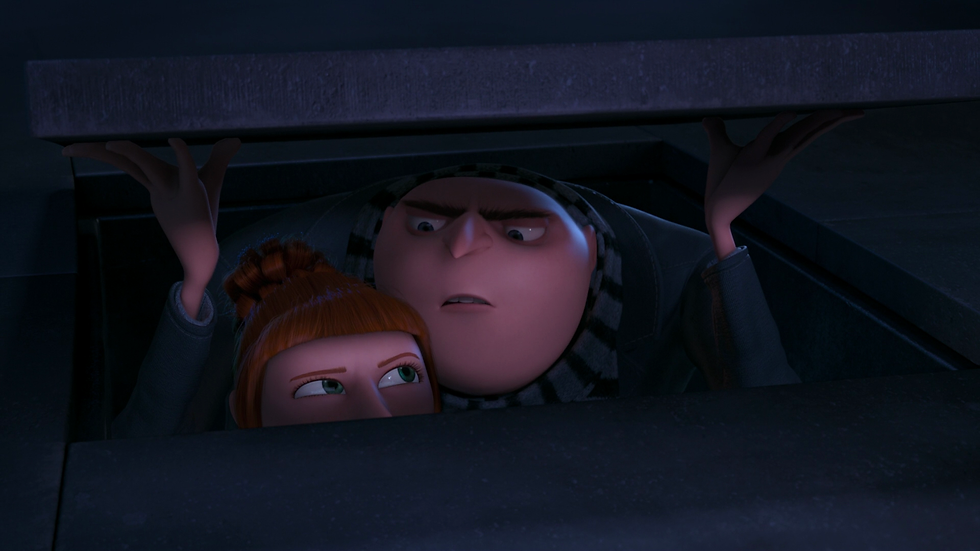
Image source: Wallpaper Abyss · Image credit: Illumination / Universal Pictures
In Despicable Me, Gru's knowledge of gadgets, security and villainous competition serves his plan to steal the Moon. His rivalry with Vector is driven partly by pride and the need to prove that he can still carry out an extraordinary crime. In the sequel, the Anti-Villain League asks him to use that same experience to investigate a stolen mutagen. Lucy believes a former villain may recognise a criminal plan that the agency has missed.
The shift allows Gru to remain capable without repeating the first film's central moral conflict. He does not have to abandon every skill associated with his past in order to be a good father. His familiarity with disguises, suspicious behaviour and elaborate schemes can help protect other people when he chooses a different goal.
His suspicion of Eduardo is a clear example. The restaurant owner appears friendly and respectable, but Gru recognises a resemblance to the supposedly dead El Macho. His theory is not immediately accepted as proof, so the investigation still needs evidence. The story gives him an active part in the mystery rather than asking Lucy to do all the work while he reacts.
The first movie uses Gru's villainous ambition more sharply: his plan is in direct conflict with his growing attachment to the girls. The sequel cannot reproduce that exact tension without undoing his change. Its advantage is showing how an ability learned for one purpose can be redirected towards another.
Why it ranks here:Gru's new use for his old skills takes sixth because it gives the sequel a mission that follows naturally from the original. It beats Nefario's subplot for its importance to the whole adventure, while the top five focus on relationships and payoffs with greater emotional impact.
Best for:Fans who want Gru to remain resourceful while seeing him work towards a different goal.
Where to watch:See the UK streaming and rental options.
You May Also Like
For more animated favourites and family movie ideas:
5. It Lets Margo Have a Story About Growing Up
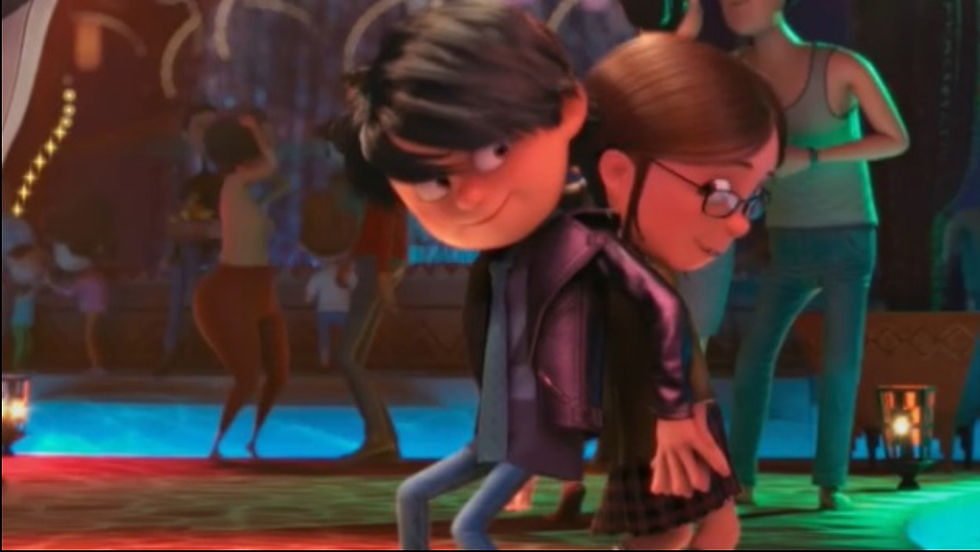
Image source: IMDb · Image credit: Illumination / Universal Pictures
In the first film, Margo is the oldest of the three sisters Gru adopts. She is cautious about trusting him and looks after Edith and Agnes while they adjust to a home that initially serves his scheme. By the sequel, that bond is established. Margo can spend less time asking whether Gru will care for them and more time developing interests of her own, including her attraction to Eduardo's son Antonio.
That change gives Gru a new parenting problem. He wants to protect Margo, but he cannot control every relationship she might explore. At Eduardo's party, his efforts to interrupt her time with Antonio turn his anxiety into physical comedy. When Antonio disappoints her, Gru's response is exaggerated by a freeze ray, but the feeling behind it is familiar: he hates seeing his daughter hurt.
The comparison favours the sequel in one specific respect. The first film gives Margo a strong reason to be guarded, and her eventual trust in Gru is central to its emotional impact. Despicable Me 2 can build on that foundation by allowing her to behave like a young person whose life is not entirely defined by whether her father will stay. She has room to want independence, even if the subplot remains brief.
The film could have developed Margo's perspective further. Antonio's behaviour and Gru's reaction receive much of the attention, and Edith has even less individual story space. Still, the subplot recognises that a happy adoption is not the end of family change. Children continue to grow, and parents continue learning how to support them.
Why it ranks here:Margo's independence opens the top five because it gives Gru's fatherhood a fresh, recognisable challenge. It ranks above the new spy mission for its emotional specificity, while the entries ahead have a larger effect on the whole family or the film's central partnership.
Best for:Families who like stories about the complicated transition from protection to trust.
Where to watch:Check Despicable Me 2's UK availability.
4. It Introduces Lucy as a Partner With Her Own Job

Image source: ACMI · Image credit: Illumination / Universal Pictures
The first film's central relationships are Gru's rivalry with Vector and his unexpected bond with Margo, Edith and Agnes. There is no equivalent to Lucy Wilde, the Anti-Villain League agent who arrives in the sequel to recruit him. Lucy has a mission before she becomes romantically interested in Gru: she must help find the stolen PX-41, work undercover at Paradise Mall and respond when their investigation puts them in danger.
Lucy changes the film's chemistry because she can meet Gru on several levels. She understands the gadgets and risks of his old world, but she also sees him as a father and a person who can be embarrassed. Her cheerful confidence contrasts with his guarded manner, creating comedy before either character has admitted to deeper feelings.
The restaurant date is especially useful. Gru's arranged evening with Shannon becomes uncomfortable, and Lucy intervenes when she notices that he is being treated unkindly. The resulting slapstick is exaggerated, but the relationship detail is clear: Lucy pays attention to Gru when he would prefer to hide his discomfort.
Kristen Wiig voices Lucy in the sequel; she also voiced Miss Hattie in the first film, a different character with a very different role. That casting fact is a pleasant connection between the movies, but Lucy's importance comes from what the sequel gives her to do. She recruits, investigates and makes choices about her own future rather than appearing only at the end as a romantic reward.
The original does not need a Lucy character to succeed; its focus is Gru and the girls. The sequel's advantage is that it can add an adult partnership without abandoning that family foundation. The quick jump to marriage leaves some courtship off screen, but their shared work establishes why they might enjoy each other's company.
Why it ranks here:Lucy takes fourth because she brings a new comic rhythm and an independent role in the mission. She beats Margo's subplot for her impact across the film, while the top three comparisons show how the sequel uses its established relationships more broadly.
Best for:Viewers who enjoy energetic spy partners and a romance built through teamwork.
Where to watch:Find the current UK listing.
3. It Makes an Earlier Failure Part of the Solution

Image source: Wallpaper Abyss · Image credit: Illumination / Universal Pictures
In the first film, Gru's inventions and planning support the Moon heist and the confrontation with Vector. Despicable Me 2 begins with a smaller, less successful project: Gru and Dr Nefario are trying to make and sell jelly. The business does not seem like a promising future, especially when the product tastes unpleasant and Nefario misses his old work. During the climax, however, Nefario's antidote to PX-41 can be delivered using that same jelly, helping restore the transformed Minions.
The payoff is satisfying because it connects a domestic joke to the main adventure. The audience has already seen that the business is not thriving, so its later usefulness is a reversal rather than a new device introduced without context. Gru's attempt at a legitimate career has not succeeded in the way he expected, but it supplies something his family and colleagues can use.
The cure also changes the goal of the climax. El Macho's purple creatures are not faceless enemies; they are Gru's captured helpers. A solution that restores them allows the film to combine action with loyalty. Nefario's scientific skill, the family's participation and Gru's concern for the Minions all contribute to the result.
The first film has its own strong payoffs, especially the conflict between the Moon heist and the girls' recital. The sequel's advantage here is more specific: an apparently failed everyday business becomes part of a practical solution. It is a neat way to connect the film's reformed-Gru setup to the spy plot.
Why it ranks here:The jelly-and-antidote payoff reaches third because it ties an early joke, Nefario's work and the Minions' fate together. It beats Lucy's introduction for the number of story threads it resolves, while the top two comparisons have a stronger emotional reach.
Best for:Viewers who enjoy a family-film climax where an earlier detail becomes useful.
Where to watch:See current UK viewing options.
2. It Gives Gru a Relationship Between Equals

Image source: CultureMap Dallas · Image credit: Illumination / Universal Pictures
The first film's most important relationship is between Gru and the three girls who gradually become his family. That bond is moving because he begins with more power and responsibility than they have, then learns to use both with care. Despicable Me 2 adds a different kind of connection: Lucy is an adult agent with her own skills, assignments and choices. She and Gru work together, disagree, help each other and eventually recognise that their partnership has become personal.
Lucy can challenge Gru in a way the children cannot. She recruits him with a gadget, accompanies him undercover and has the confidence to respond when his plans become awkward. Gru, in turn, contributes knowledge of villainous schemes and notices details that support his suspicion of Eduardo. Their relationship has a professional reason to exist before it becomes romantic.
The sequel also lets each character choose the relationship. Gru struggles to express his feelings when Lucy is reassigned, while Lucy turns back after recognising that she does not want to leave him behind. El Macho's capture of Lucy creates a conventional rescue climax, but her decision to return occurs before Gru reaches her.
This does not mean the first film lacks meaningful adult relationships. Dr Nefario and Gru have a long working history, and Gru's mother is part of his emotional background. The sequel's improvement is the addition of a sustained adult partnership in which Gru can be vulnerable without being the person responsible for raising the other party.
The leap from rescue to wedding is quick, and some viewers may want more time with Lucy's relationship with the girls. Even so, the film establishes mutual respect and enjoyment through the mission, the awkward date and their shared response to danger.
Why it ranks here:Gru and Lucy's partnership takes second because it adds a new dimension to his life without erasing the family story. It edges out the jelly payoff for its emotional importance, but our top pick affects the entire shape of the sequel.
Best for:Viewers who enjoy an awkward romance between capable characters who learn to trust each other.
Where to watch:Check Despicable Me 2 on JustWatch UK.
1. It Shows What Happens After Gru Becomes a Father

Image source: IMDb · Image credit: Illumination / Universal Pictures
Despicable Me builds towards Gru's decision to put Margo, Edith and Agnes ahead of his Moon-stealing ambitions. The girls begin as part of his plan to reach Vector, but their relationship changes him. Despicable Me 2 begins after that choice: Gru is already responsible for the sisters, and fatherhood shapes his work, social life and response to danger from the opening scenes onwards.
That starting point is the sequel's most valuable advantage. Instead of making Gru prove once more that he can care, the film asks how he cares on an ordinary day. He arranges Agnes's birthday party, worries about Margo's interest in Antonio and tries to build a legitimate business. These are smaller problems than stealing the Moon, but they reveal what his earlier decision means in practice.
The princess costume is especially effective because Gru's pride and his daughter's happiness come into conflict. He looks uncomfortable performing for a room of children, yet he does it because Agnes needs him. The scene assumes the audience already knows why he loves her, allowing the comedy to grow from how he expresses that love.
Margo's subplot adds another stage of parenting. In the first film, gaining the girls' trust is the central challenge. In the sequel, Margo trusts Gru but also wants experiences he cannot supervise. His protectiveness is funny and sometimes excessive, showing that becoming a good father is not a problem he solved permanently at the end of the previous movie.
Lucy's arrival then raises a family question without replacing the existing bond. Agnes hopes for a mother, Gru develops feelings for Lucy and the household has to imagine welcoming another person. The wedding is a compressed ending, but its meaning depends on the family already being real before Lucy arrives.
The first movie arguably delivers the more powerful single transformation: watching Gru choose the girls over his old ambition is hard to beat. The sequel does something the original cannot do at the same stage. It explores the continuing work of being a parent after the life-changing decision has been made, giving Gru room to remain funny, imperfect and devoted.
Why it ranks first:The sequel's established family life gives every other improvement its foundation. It edges out Gru and Lucy's partnership because the birthday, Margo's independence, the Minions' rescue and the wedding all gain meaning from the family Gru is already trying to care for.
Best for:Families who want a follow-up about how love continues through everyday decisions and new changes.
Where to watch:Confirm Despicable Me 2's current UK availability.
Where the First Movie Still Has the Advantage
The original has a clearer emotional transformation. Gru begins by using the girls to reach Vector, then has to decide whether his plan matters more than they do. That conflict gives the first film a concentrated shape that the sequel, with its romance, mystery and Minion subplot, does not always match.
Vector is also a particularly effective rival for the original story. He represents a younger villain challenging Gru's status, so their competition is tied directly to Gru's pride. Eduardo is entertaining and threatens the Minions, but his plan is more straightforward and his personal connection to Gru is less developed.
Finally, the first film gives the three sisters a shared journey from an uncertain situation to a home with Gru. The sequel expands Margo's independence and Agnes's hopes, but Edith receives less individual attention. A viewer who values the sisters' collective story may reasonably prefer the original overall.
Final Thoughts
Despicable Me 2 does not need to replace the first film to be a strong sequel. Its best choices grow from what the original established: Gru's family is real, his old skills remain useful and the people around him have to adjust to his changed priorities.
Our favourite improvement is seeing Gru continue the work of fatherhood after the first film's emotional turning point. Lucy's partnership and the Minions' larger role give that established family new challenges. Which comparison would you put at number one?
Want to Reach Entertainment Fans?
If you are a brand, author, publisher, streaming company, entertainment business or creator looking to reach an engaged audience, That Love Podcast offers advertising opportunities across the website, podcast and newsletter.Find out more about advertising.
You May Also Like
Find more family stories and favourite screen characters:
Support and Listen
Help us continue independent entertainment coverage and original audio storytelling bydonating to That Love Podcast. You can also listen to our latest episodes.
You May Also Like
Explore more ensemble comedy and viewing ideas:
Frequently Asked Questions
Is Despicable Me 2 better than the first movie?
That is subjective. The sequel adds Lucy, an undercover mission and a continuing family story; the original has a more concentrated arc about Gru becoming a father.
What does Despicable Me 2 do best?
Our top choice is showing Gru's everyday life as an established father. The sequel can explore new parenting challenges because the first film has already built the family's bond.
Who is Lucy Wilde?
Lucy is an Anti-Villain League agent who recruits Gru to help investigate a stolen mutagen. Kristen Wiig voices her.
Did Kristen Wiig appear in the first film?
Yes. She voiced Miss Hattie in Despicable Me and voices the separate character Lucy Wilde in the sequel.
Why do the Minions turn purple?
Eduardo, secretly El Macho, uses PX-41 on captured Minions, transforming them into aggressive purple creatures for his plan.
How is Gru's jelly useful later?
Dr Nefario develops an antidote to the mutagen, and Gru's team uses jelly to deliver it to the transformed Minions during the climax.
Who is Antonio?
Antonio is Eduardo's son and a romantic interest for Margo. Gru's concern about Margo growing up becomes part of the party storyline.
Do I need to watch the first movie before the sequel?
The sequel explains enough to follow its own mission, but the first film gives important context for Gru's adoption of the girls and his change of priorities.
Where can I watch Despicable Me 2 in the UK?
JustWatch lists Sky Go, NOW Cinema and digital rental or purchase options. Availability can change, so check the current listing.
Is Despicable Me 2 suitable for young children?
The UK listing gives the film a U rating, though the purple Minions and some action scenes may frighten sensitive younger viewers. A current parent guide can help families decide.
Sources and Viewing
Join the Newsletter
Visit That Love Podcast to join the newsletter for entertainment recommendations and new stories.