





Nirvana – Nevermind (1991) Review: A Loud, Restless Breakthrough

The Nevermind 1991 album arrived in September carrying the weight of a sound that had not yet turned into a cliché, and that is why it is hard to approach today. Most of us know it through its biggest single, through radio and through the endless retrospectives that followed. My expectation going in was that familiarity would do most of the work: a few famous songs, a nod along, and the rest of the Nevermind album left in the shadows.
That is not what happened. Nevermind is built on tension between loud and quiet, between a pop melody and a sneer, between a band that sounds ready to tear a room apart and songwriting that often sounds like it is talking to itself. The genre is grunge and alternative rock, and any alternative rock album review has to start with the songs. That label barely explains why Nevermind still feels alive in 2026. The Nevermind songs keep their edges because the band plays them with real commitment, and Butch Vig’s production makes room for big choruses without sanding off the grit.
What makes it interesting is how often Nevermind pulls you in with a hook and then unsettles the feeling it has just created. The opening run is strong, but the Nevermind album does not stay in that gear. Quieter songs sit close to the hits, which helps it feel like a full statement rather than a playlist of singles. The main strength is the band itself: Kurt Cobain, Krist Novoselic and Dave Grohl sound unusually focused. The main weakness is that the final stretch can feel uneven, and the Nevermind lyrics are often more mood than explanation. I found that mostly fascinating, although the back end does sag a little.
It also helps that Nevermind is short enough to hear in one sitting. At roughly forty-two minutes, it asks for a commitment that feels reasonable, and that matters when the emotional range covers so much ground.
This Nevermind review treats the Nevermind album as a listening experience rather than a museum piece, so the question is whether it still works as a classic album review in 2026. So, is Nevermind actually worth listening to? Let’s get into it 👇

Support That Love Podcast
Enjoying the recommendations? You can help support That Love Podcast and keep independent music coverage and original audio stories coming. Donate to That Love Podcast
You May Also Love
If you are in the mood for more music, pop culture and entertainment reads, try these next:
Want to Reach Music Fans?
If you are an artist, label, music PR agency, independent musician or concert promoter, That Love Podcast can put you in front of readers who care about albums. Find out more
Nirvana – Nevermind Album Information
Artist: Nirvana
Album: Nevermind
Released: September 24, 1991
Year: 1991
Genre: Grunge and alternative rock
Label: DGC Records
Length: About 42 minutes across the standard 12 tracks
Producers: Butch Vig (producer), Andy Wallace (mixing)
Previous Album: Bleach (1989)
The Nevermind album details below cover the Nevermind release date, the Nevermind producers and the label. Official release details are on Nirvana’s official Nevermind page, and the album’s background is covered on Wikipedia.
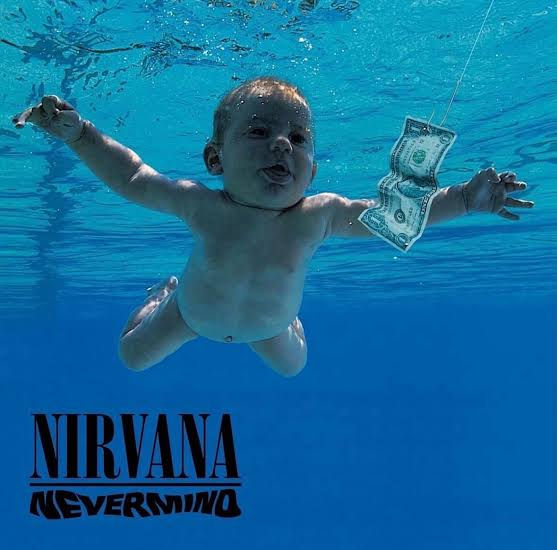
Nevermind Tracklist
The standard album runs to twelve tracks in this order. This is the definitive Nevermind tracklist, and the Nevermind track listing below follows the official sequence:
Smells Like Teen Spirit
In Bloom
Come as You Are
Breed
Lithium
Polly
Territorial Pissings
Drain You
Lounge Act
Stay Away
On a Plain
Something in the Way
Many CD pressings also include a hidden track, “Endless, Nameless”, after a long silence following the final song. It sits outside the standard sequence.
What Is Nevermind About?
Nevermind is not a concept album, and there is no story tying the twelve songs together. The Nevermind songs gather around alienation, boredom, anger, desire and the awkward pressure to perform a version of yourself for people who do not quite get you. Its emotional tone is volatile rather than fixed: one song sounds sarcastic, the next sincere, and the next defeated. I think that instability is intentional, and it makes the Nevermind album feel closer to real life than a neat collection of moods.
Sound and Production
Vig’s production is why the Nevermind sound feels so immediate. The drums are big and forward without sounding overcooked, and Grohl hits hard enough that every chorus feels like a physical push. Novoselic’s bass gives the Nevermind songs a sturdy centre, and the guitars are layered and abrasive, yet the arrangements leave space for melody. The main sessions took place at Sound City Studios in Van Nuys, California, in May 1991, and Andy Wallace was brought in to oversee the mix after Vig’s initial mixes were rejected. Dynamics do the rest: the hush before a chorus makes the explosion feel earned.
“Polly” was recorded earlier, in 1990, at Smart Studios in Madison, Wisconsin, and Nevermind is partly a patchwork of sessions. That does not undermine it. The stripped-back songs sit well beside the full-band numbers, and the production keeps those different recordings in the same emotional world. The guitars also keep a metallic edge that the mix never fully sands away, which is a large part of why Nevermind still sounds alive.
🎧 Need something to listen to after the music stops?
That Love Podcast creates original romantic audio dramas, comedies and stories. Listen to That Love Podcast
Vocals and Performance
Cobain’s voice does much of the emotional work. He moves between a bored drawl, bright melody, raw shouting and a softer, fragile tone, sometimes within a single verse. He is not a polished singer in the conventional sense, and I do not think Nevermind wants him to be. Grohl’s drumming carries much of the weight when the vocals pull back, and the harmonies add force at the right moments. The performances fit the material, although the final stretch sometimes drops energy in a way that makes the vocal sound tired rather than intentional.
Lyrics and Themes
The Nevermind lyrics work through images, fragments and feelings rather than a plot you can summarise in a sentence. Several themes return: feeling out of place, the strain of being looked at, the appeal of intensity, and the way attraction can curdle into resentment. The hooks are built from short, repeated phrases, and that is Nevermind’s paradox: its most confident hooks often sit on lines that sound uncertain. “Polly” is the clearest case of direct storytelling, grounded in a real, disturbing news story and handled with seriousness rather than drama.
Track-by-Track Review
Smells Like Teen Spirit
Everyone knows the riff, so my first reaction is awareness of how much weight the song carries. The verses hold back and the chorus releases that tension with a force that feels earned. It has been heard so often that the first flash of recognition is hard to recreate, but it is still Nevermind’s best argument for itself.
In Bloom
Looser and more playful than the opener, with a chorus that seems to poke fun at the people singing along. Cobain’s delivery moves between mock cheer and suspicion. It sits close to the opener in energy, so it can feel like a second version of the same idea, although the attitude keeps it lively.
Come as You Are
The opening riff gives the track a cool, watchful start, and the melody is more inviting than the mood underneath it. That gap between welcome and wariness is the song’s pleasure. The chorus is so familiar that it takes a moment to hear what is unsettling about it.
Breed
Fast, compact and abrasive. It works best when you let it hit you without analysing every line, and the drums push the song with real momentum. It is over before it establishes a memorable identity, but it gives the sequence useful speed.
Lithium
One of the sharpest examples of dynamics on the Nevermind album. The restrained verses, the opening chorus and the shifts between calm and chaos feel like a narrator unable to settle. I only question how predictable the final loud section feels after so many loud-quiet exchanges.
Polly
The most stripped-back song in the first half, and one of the most disturbing. The clean, quiet arrangement keeps the voice close to the listener, which makes the subject harder to brush off. It is not a pretty song, and its brevity can make it feel like an interlude, but it marks a crucial change of atmosphere.
Territorial Pissings
Nevermind’s loudest, most confrontational blast, arriving after tension that makes the noise feel like release. The riffs are blunt and the tempo fast. It works as a deliberate rupture. The shouting can wear thin on repeat listens, though a few seconds less would not hurt.
Drain You
One of the most rewarding songs here, because its pop instincts sit comfortably beside rougher textures. The hook is immediate and the song keeps shifting detail around it. It is the track I most often recommend to someone who has only heard the singles, although its strongest moments arrive quickly.
Lounge Act
More nimble than some of its neighbours, with a jittery rhythm and tension that never fully releases. I find the arrangement more interesting than the chorus, which sounds smaller in memory. It rewards texture more than an immediate hook.
Stay Away
Short, quick and direct, and it gets to the point before you settle in. The band plays it with tight, punchy force. It lacks the sophistication of some tracks, but it does not need it. It can feel like a sketch that ends before the idea fully develops.
On a Plain
A mid-tempo swagger that sets it apart from the faster songs around it. The melody is clear and Cobain sounds reflective rather than aggressive. It is not as memorable as the singles, but it is well built, and it can drift in the middle of the sequence.
Something in the Way
Nevermind closes in a submerged hush, and this is where much of its emotional weight sits. The arrangement is sparse, the vocal sits close and the mood is weary rather than explosive. It does not resolve the tension of the louder songs, which is why it works. Its emptiness can feel relentlessly bleak, and some listeners will find it hard to re-enter Nevermind after the noise.
Best Songs on Nevermind
If you want the best songs on Nevermind in one place, these five are the strongest, and they rank above the rest of the Nevermind songs for different reasons.
Smells Like Teen Spirit rises above the rest because its quiet-to-loud structure makes the chorus feel bigger than anything else on the Nevermind album.
Lithium is the clearest lesson in dynamics, with an arrangement that carries the emotional shape of the song.
Drain You balances hook and oddness better than almost anything here, so each return feels satisfying rather than familiar.
Come as You Are turns a welcoming melody into something wary, and that gap keeps it interesting after many plays.
Something in the Way is the emotional counterweight that makes the rest of Nevermind make sense.
More Music Reads
If you want more music coverage to read next, try these:
Bonobo’s Distance in Static Review – A Beautiful, Restless Album Searching for Connection
Blossoms’ Songs From the Wedding Cake Review – Bright Hooks, Big Feelings and a Few Familiar Vows
Remi Wolf’s Mud Review – A Raw, Restless Pop Record About Starting Over
Troye Sivan’s She’s the Best Review – Late-Night Pop With a Softer Side
Get Your Music in Front of Readers
Musicians, labels, PR agencies, brands and publishers can reach listeners who read album reviews closely through That Love Podcast’s website, podcast and newsletter. Advertise with us
Album Sequencing and Cohesion
The opener is an announcement, and Nevermind does not try to repeat that trick for its whole length. The first stretch has momentum, then the middle darkens. The jump from “Territorial Pissings” back into quieter songs is the kind of reversal the Nevermind album depends on. At about forty-two minutes, the length is well judged, and the final song refuses to resolve the tension, which gives the sequence a real ending. The middle section is where the pacing softens most, but it also gives the closer more contrast when it arrives. I would not change the running order, even if a different sequence might suit a playlist better.
How Does It Compare With Nirvana’s Other Music?
Anyone reading a Nirvana album review will want to know where this Nevermind album sits in the catalogue. Nirvana Nevermind follows Bleach, the 1989 album, and the difference is large. Bleach is rawer and more underground. Nevermind keeps some grit, but the hooks are stronger and the production gives the band a more confident sound. Grohl is the drummer here, the first Nirvana studio album to feature him after Chad Channing had played on Bleach. In Utero (1993) is harsher and less interested in polish. I would not call Nevermind the best Nirvana album without qualification, but it is the most accessible, and the one I would recommend first.
Legacy and Influence
Nevermind is widely credited with bringing alternative rock to a far bigger audience. It debuted at No. 144 on the Billboard 200 and reached No. 1 in January 1992, according to Wikipedia’s list of Billboard 200 number-one albums of 1992. The RIAA has certified it Diamond, and Rolling Stone’s 500 Greatest Albums of All Time placed it at No. 17 in earlier editions and No. 6 in the 2020 and 2023 revisions. It belongs in any list of the best albums of 1991. Does it still sound good? Yes. The songs themselves have held up, even though the production now sounds like a template. Later alternative bands borrowed its loud-quiet method so often that the template can feel familiar now, but few of those imitators matched the songwriting. That is the best measure of its staying power: the template has been copied, and the original still holds the room.
What Works Best
The strongest feature is the marriage of memorable songwriting and discomfort. “Lithium” uses dynamics to give its subject a shape you can feel, and “Drain You” makes each return satisfying. “Polly” and “Something in the Way” widen the emotional range rather than acting as pauses, so the Nevermind album never becomes a one-note blast. Grohl’s drums, Novoselic’s bass and Cobain’s guitar work as a unit.
What Doesn’t Quite Work
Ambiguity is a strength, but it is not free. Some lyrics are hard to follow, and a few tracks rely on atmosphere more than a fully developed idea. The second half is less immediate than the opening, so Nevermind asks for patience once the singles have done their work. The cultural reputation can also flatten a complex scene into an origin story.
🎧 Want more stories to get lost in?
Explore romantic audio dramas, comedies and original stories from That Love Podcast. Listen to That Love Podcast
Is Nevermind Worth Listening To?
Yes. Is Nevermind worth listening to in 2026? Yes. As a grunge album review, my answer is clear: it is essential for anyone exploring alternative rock or grunge, and it rewards listeners who want strong melodies with unresolved emotions. It may not suit anyone who wants pristine polish, explicit storytelling or a steady upbeat mood. For a first listen, start at the beginning and let the sequence play through rather than skipping to the hits.
Put Your Music in Front of Readers
Want to reach listeners who follow albums, music news and pop culture? That Love Podcast offers advertising and sponsorship across its website, podcast and newsletter. Advertise with us
Final Verdict
Nirvana’s Nevermind is a landmark because its songs feel both direct and unsettled. Its 35th anniversary makes this Nevermind 1991 album review a timely one. The melodies are strong, the band plays with force and precision, and the sequence keeps widening its emotional palette after the opening run of hits. Its biggest strength is the way the songwriting holds up against the discomfort. Its biggest weakness is the sagging final third, which asks more of a listener than the opening did. I would not call that a flaw so much as a cost of Nevermind’s ambition, since a record this tense cannot keep the same pressure all the way through. The best songs are “Smells Like Teen Spirit”, “Lithium” and “Drain You”. It will last because the emotions do not depend on the era.
Review Score
⭐ Review Score: 8.5/10
A forceful, melodic album whose quiet unease gives its biggest choruses more weight, held back slightly by an uneven final stretch.
Track Ratings
Nevermind songs ranked from best to weakest, with a score for each:
Smells Like Teen Spirit — 9.5/10
Lithium — 9/10
Drain You — 9/10
Come as You Are — 8.5/10
Polly — 8.5/10
Something in the Way — 8.5/10
In Bloom — 8/10
Lounge Act — 7.5/10
Breed — 7/10
Territorial Pissings — 7/10
Stay Away — 7/10
On a Plain — 7/10
Best Track: Smells Like Teen Spirit
Most Underrated Track: Drain You
Weakest Track: Territorial Pissings
You May Also Love
Still hungry for more? These reads are worth your time:
Conclusion
This Nevermind album review ends with a simple thought: it stayed with me for different reasons than I expected. I came for the famous songs and left thinking about the quieter ones, especially how Nevermind gets under the skin in its last minutes. It gets the balance between a big hook and unease right, without tidying up the feelings it raises. Its limits are real: a few songs feel like sketches, and the Nevermind lyrics ask for more patience than some listeners will give.
I will return to this Nevermind album, mostly for the first half and for “Something in the Way” on quieter nights. Now I want to hear from you. What is your favourite track on Nevermind, and which one do you skip? Share your score, and tell me your view of the singles.
Support That Love Podcast
Enjoying the recommendations? You can help keep independent music coverage going. Donate to That Love Podcast
Need something to listen to? Listen to That Love Podcast
Frequently Asked Questions About Nevermind
When was Nevermind released?
The Nevermind release date is September 24, 1991, when Nevermind was released on DGC Records. It was Nirvana’s second studio album, following Bleach in 1989, and its 35th anniversary fell in 2026. It became a major commercial success, and its influence has lasted far longer than most albums of its year.
Who is the artist behind Nevermind?
Nevermind is by Nirvana: Kurt Cobain on vocals and guitar, Krist Novoselic on bass and Dave Grohl on drums. It was the first Nirvana studio album to feature Grohl on drums, and the trio’s chemistry is central to the Nevermind album’s drive and cohesion.
How many songs are on Nevermind?
The Nevermind tracklist has 12 tracks, from “Smells Like Teen Spirit” to “Something in the Way”. Many CD pressings also include the hidden track “Endless, Nameless” after a long silence. Check the edition you are buying before comparing track counts.
What are the best songs on Nevermind?
The most cited Nevermind songs are “Smells Like Teen Spirit”, “Come as You Are”, “Lithium”, “In Bloom” and “Something in the Way”. For a less obvious pick, “Drain You” is a strong candidate, because its hook and its rougher textures balance well.
What genre is Nevermind?
The Nevermind genre is usually described as grunge and alternative rock. It combines punk energy with melodic songwriting, and the balance between heavy guitars and memorable choruses defines much of its appeal.
Who produced Nevermind?
The Nevermind producers were Butch Vig and Andy Wallace. Vig produced the Nevermind album, and Wallace was brought in to oversee the mix. The main sessions were recorded at Sound City Studios in Van Nuys, California, in May 1991, while “Polly” was recorded earlier, in 1990, at a different studio.
Does Nevermind have any featured artists?
No. The Nevermind credits list only the band members, Cobain, Novoselic and Grohl, and Nevermind does not feature guest artists. That is part of why it sounds so unified.
Is Nevermind worth listening to?
Yes. It is essential for anyone exploring alternative rock or grunge, and it also rewards listeners who want strong melodies with unresolved emotions. Start from the opening track and let the sequence play through rather than skipping straight to the singles.
What is Nevermind about?
Nevermind is not a concept album. Its songs circle around alienation, desire, anger, boredom and the pressure to perform, and the Nevermind lyrics often work through images and feelings rather than one plot.
Where can I listen to Nevermind?
Find the Nevermind album on your preferred music streaming service or from a physical retailer, since availability varies by country and service. Nirvana’s official release page is a good place to confirm Nevermind details.
Music Resources
Billboard covers US chart news, album charts and industry stories.
Rolling Stone publishes music journalism, album reviews and classic album lists.
NME offers British music news, reviews and features.
Pitchfork publishes independent music criticism and album reviews.
Enjoyed What You Read?
Subscribe to That Love Podcast’s newsletter for the latest music reviews, entertainment recommendations, articles, updates and giveaways. If you know someone who loves music, albums and pop culture, share this review with them too. Let’s spread the love together!




.jpg)





.jpg)


