






10 Best Sitcoms Like Superstore

Superstore turned an ordinary big-box store into a lively social world. At Cloud 9, customer requests, corporate policies, staffing pressures and break-room conversations all became story material. Amy, Jonah, Dina, Garrett, Cheyenne, Mateo, Glenn and Sandra were funny as individuals, but the series’ lasting appeal came from watching coworkers form a community inside a job that rarely made their lives easy.
This ranking includes direct workplace relatives as well as comedies that share the show’s mockumentary style, frontline-worker perspective or balance of satire and affection. Some take place in schools, public offices or service businesses. Others focus on corporate leadership or a different kind of team. The closest matches understand that the job is not just a backdrop: it shapes the characters’ schedules, ambitions, conflicts and relationships. A few picks are more idealistic than Superstore; others are drier or more cringe-driven.
Each entry begins with its premise and key characters, then explains its workplace comedy and how it compares with Cloud 9. We have also included a “Who should watch it” note so you can find the right tone quickly. Whether you miss the break-room friendships, the customer chaos or the social satire, there is a different route into the list.
Streaming availability can change by region and date. Each show links to a JustWatch UK search page where you can check current subscription, rental and purchase options. If the institutional satire was the hook, choose a show about how management shapes the work. If it was the coworkers, start with the entries built around a large ensemble who keep showing up for one another.
These recommendations are not all about retail, and that is deliberate. Superstore’s workplace format can be enjoyed through several lenses: the comedy of customer service, the friction between management and staff, the friendships formed on repetitive shifts, or the docuseries-style camera that catches reactions between the jokes. A school sitcom may share the frontline-worker point of view; a corporate comedy may echo the institutional satire; a mockumentary may capture the ensemble’s everyday intimacy. The notes below make those connections specific, so you can pick a series that matches your favorite part of Cloud 9 rather than settling for a superficial similarity.
A workplace recommendation works best when it explains the actual overlap, so this list points to the setting, team dynamic or institutional critique that connects each show to Superstore.
Affiliate disclosure: This article contains Amazon affiliate links. If you sign up or make a qualifying purchase through one of these links, That Love Podcast may earn a commission at no additional cost to you. As an Amazon Associate I earn from qualifying purchases.
How we ranked these sitcoms
We considered how central the workplace is to each show, how varied and memorable its ensemble feels, and whether the comedy notices the real pressures of the job. We also looked at warmth: Superstore can make fun of corporate policy and customer behavior while still respecting the people working the floor. The top recommendations combine several of these traits, while lower entries offer a more specialized but still enjoyable workplace angle.
Choose your next workplace
For another mockumentary workplace, begin with the closest format matches. For frontline-worker stories, look for a school, store or service team whose job drives the plot. If you want a bigger change, try corporate satire or a procedural workplace ensemble. The list spans those approaches, so match the recommendation to whether you want Cloud 9’s warmth, its institutional jokes or its coworker chemistry.
10 Trollied

Story: Set inside the fictional Valco supermarket, Trollied follows staff members as they juggle customers, stock, management pressure and personal squabbles across the shop floor. The store’s leadership changes, but the routine remains: a shift has to be covered, a delivery has to be dealt with and a supposedly simple customer interaction can become the day’s main event. The staff include cashiers, managers and department workers whose different levels of ambition make the supermarket feel like a small town with fluorescent lighting. The series draws its comedy from the contrast between corporate targets and the very human people expected to meet them.
Why it works for fans: Like Superstore, Trollied turns a large retail workplace into a complete social world. Its employees share shifts, gossip and practical frustrations, while customers arrive as unpredictable interruptions to the routine. The British setting and dry delivery give it a different rhythm from Cloud 9’s broad American satire, and its stories are more likely to stay close to the day-to-day store operation. That makes it a useful companion watch: familiar enough to scratch the workplace-comedy itch, but distinct in its tone and retail details. The ensemble focus also means the jokes can move naturally from the tills to management without changing the basic setting.
Why it ranks here: It opens the list because the supermarket setting is the clearest link to Superstore, though its humor and character arcs are less expansive.
Who should watch it: Watch if you want a British shop-floor comedy built around coworkers, customers and the small dramas of a shift.
9 Rostered On

Story: This Australian workplace comedy follows the employees of a discount retail store as they manage shifts, customers and the awkward hierarchy between floor staff and supervisors. The staff are expected to keep the shop running while dealing with ordinary pressures that grow larger through their own personalities: someone has to cover a shift, a manager wants a target met, and a customer’s request becomes a test of patience. Its low-key observational style gives attention to the routines of retail work and the bonds formed by people who see one another through long days and changing rosters.
Why it works for fans: Rostered On shares Superstore’s interest in the invisible labor that keeps a retail business moving. Rather than presenting the shop as a glamorous setting, it makes the everyday work—scheduling, stocking, serving and coping with management—the source of comic friction. The scale is smaller and the style more understated, so viewers looking for Cloud 9’s huge ensemble and elaborate episodes may find it modest. But that modesty is also its selling point: it recognizes the texture of service work and the odd intimacy of a team assembled by a roster. The staff’s frustrations and alliances make the setting feel specific without needing big plot twists.
Why it ranks here: It ranks here as a direct retail-workplace cousin with a distinctive Australian voice, although its scope is more compact than the entries above.
Who should watch it: Try it if you enjoy quieter, character-led comedy about shift work and the people you are scheduled alongside.
8 Stath Lets Flats

Story: Stath Charalambos (Jamie Demetriou) works at his father’s London lettings agency, Michael & Eagle, where he is expected to show prospective tenants around flats. Stath is awkward, overconfident and often disastrous at the practical parts of the job, while his sister Sophie and colleague Al try to manage their own ambitions and his latest mistake. The agency’s small staff navigate viewings, paperwork and pressure from the property market, with every appointment offering an opportunity for Stath’s peculiar sales technique to derail the day. His father’s expectations keep the family and workplace conflicts tightly connected.
Why it works for fans: This is a particularly good Superstore follow-up for viewers who like a workplace comedy grounded in low-paid service and sales work. Stath’s job depends on reading people and helping them make a major decision, but his social instincts often fail at precisely the wrong moment. The show’s mockumentary framing and ensemble scenes create a world where the coworkers know one another’s flaws intimately. Its humor is much more cringe-driven and its lead less competent than Superstore’s central employees, but both series find comedy in the gap between a company’s pitch and the real human experience of getting a job done.
Why it ranks here: It enters the top five for its precise workplace detail and distinctive characters, although its cringe style is a bigger tonal departure.
Who should watch it: Choose it if you like awkward, character-driven comedy set inside a small service business.
7 Party Down
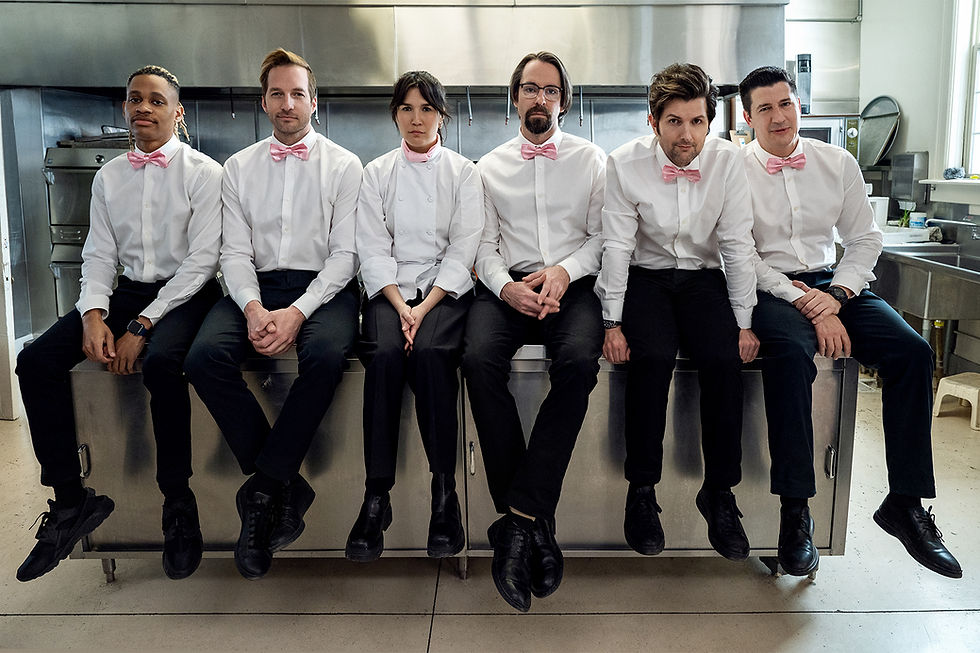
Story: Party Down follows a Los Angeles catering crew made up of actors and writers whose career plans have not worked out yet. Henry Pollard (Adam Scott) has stepped away from acting, but his coworkers keep chasing auditions, writing opportunities and imagined big breaks. Their shifts take them to different parties, where affluent clients’ celebrations provide a backdrop for service mishaps and personal embarrassment. Manager Ron Donald wants the team to behave professionally, while Casey, Kyle and Roman bring competing ambitions and insecurities to each event. The crew’s pink bow ties promise polished service; their conversations reveal how uncertain the future feels.
Why it works for fans: It is a strong pick for Superstore fans because the comedy comes from workers who know the job is temporary but still need to get through it together. The catering events provide the same flexible workplace engine as Cloud 9, and the staff develop their own rhythms as they handle customers and management. Party Down is more melancholy and adult, and it focuses on a smaller group of creative aspirants rather than a large retail team. Yet it shares Superstore’s sympathy for people whose work may not be their dream but still shapes their friendships, routines and sense of possibility.
Why it ranks here: It makes the upper half for its unusually good ensemble and workplace chemistry, even though its tone is more wistful than Superstore’s.
Who should watch it: Choose it for smart, dry workplace comedy about ambition, service jobs and accidental coworkers.
6 Animal Control

Story: Frank Shaw (Joel McHale) is a former police officer who now leads a team of animal control workers in Seattle. His job brings him face to face with creatures ranging from ordinary pets to wildlife, while his coworkers bring their own competing ideas about how to handle the work. The team responds to calls, tries to keep the city safe and navigates the office’s relationships between assignments. The workplace gives the series a steady source of practical problems and unexpected chaos, as the animals and the humans can both behave in ways that no training manual quite anticipates.
Why it works for fans: The series offers a workplace ensemble and a job that naturally generates weekly cases, much like Superstore uses the store’s operations and customer incidents to set stories in motion. Its public-service setting changes the stakes: instead of checkout lines, the team deals with animals, residents and field calls. Frank’s dry, sometimes cynical outlook is a different center from Amy or Jonah, but coworkers help soften the procedural setup with personal conflicts and absurd reactions. The show is lighter and less interested in corporate satire than Superstore, making it a breezy option when you want a familiar ensemble comedy with a new job attached.
Why it ranks here: It ranks seventh for its dependable workplace setup and broad comic possibilities, though the animal-call format gives it less social commentary.
Who should watch it: Watch if you want an easygoing ensemble comedy where each workday brings a new practical mess.
More sitcoms to explore
5 American Auto

Story: At Detroit’s fictional Payne Motors, new CEO Katherine Hastings (Ana Gasteyer) takes charge of an American car company facing changing markets and uncertain public trust. Her executive team includes ambitious product leader Sadie, communications chief Jack, legal counsel Elliot and veteran designer Cyrus. They try to respond to new technologies, public relations crises and internal politics, often discovering that the biggest obstacle is the company’s own culture. The show places its characters in boardrooms, advertising meetings and test drives, where decisions about cars quickly become decisions about reputation, jobs and the company’s future.
Why it works for fans: For Superstore viewers, American Auto shifts the workplace lens from front-line retail to corporate leadership. It uses an ensemble and a repeatable stream of work crises, but the employees are executives whose misjudgments expose how institutions respond to pressure. That makes it a closer cousin to Superstore’s corporate satire than to its break-room hangout scenes. The jokes are built around business language, technology and public image, while the characters’ workplace alliances provide the ongoing story. It is smaller than Cloud 9 and more boardroom-centered, but the core pleasure is similar: watching people try to make a workplace function while the system keeps generating its own absurdities.
Why it ranks here: It ranks sixth as the most direct corporate-satire match, with less of Superstore’s broad floor-level ensemble texture.
Who should watch it: Pick it if you enjoy workplace comedy about executives, corporate spin and decisions that go wrong in public.
4 Brooklyn Nine-Nine

Story: The detectives and civilian staff of Brooklyn’s 99th Precinct handle cases while building a close, eccentric workplace family. Jake Peralta (Andy Samberg) is a talented but immature detective whose playful instincts clash with new captain Raymond Holt (Andre Braugher), a disciplined leader who values order. Their colleagues—including Amy Santiago, Rosa Diaz, Charles Boyle, Terry Jeffords and administrator Gina Linetti—bring different strengths and comic habits to the precinct. Cases offer a regular workday structure, but the lasting stories come from friendships, rivalries, promotions and the team’s shared confidence that they can solve problems together.
Why it works for fans: The biggest connection to Superstore is its ensemble warmth. Both shows turn a workplace into a community, give staff members distinct voices and let personal relationships develop alongside the job. Brooklyn Nine-Nine moves faster and uses police cases as a plot engine, while Superstore is more directly about retail labor, customer behavior and corporate policy. But if the favorite part of Cloud 9 was watching coworkers become a support system, the precinct is an easy next destination. Holt’s leadership and Jake’s immaturity also create a reliable comic contrast that resembles the push and pull between capable managers and impulsive employees.
Why it ranks here: It ranks fourth for its lovable ensemble and consistent workplace chemistry, while its case-of-the-week structure sets it apart from retail satire.
Who should watch it: Watch for a fast, upbeat ensemble comedy about coworkers who become friends and keep showing up for one another.
3 Parks and Recreation

Story: Leslie Knope (Amy Poehler) works in the Parks Department of Pawnee, Indiana, where she approaches local government with boundless optimism. Her colleagues include pragmatic Ron Swanson, sarcastic April Ludgate, earnest Andy Dwyer, ambitious Tom Haverford and competent planner Ben Wyatt. They try to improve parks and public spaces while dealing with budget constraints, eccentric residents and the friction of municipal bureaucracy. Leslie’s friendship with nurse Ann Perkins becomes one of the series’ emotional anchors, and the department gradually grows from a group of coworkers into a team with shared projects and deep affection.
Why it works for fans: Parks and Recreation is an excellent match for Superstore because it understands that a workplace comedy can criticize an institution and still love the people inside it. The Parks Department has limited resources and plenty of absurd rules, but the characters’ shared work creates a reason to collaborate. Superstore is more interested in the economic and social realities of retail; Parks is more idealistic about public service and civic life. Both build long-running friendships, give secondary characters distinct storylines and allow small work victories to matter. Its balance of broad jokes and sincere character moments makes it an especially satisfying follow-up.
Why it ranks here: It reaches third for its rich ensemble and combination of workplace absurdity with genuine affection, narrowly below the two closest structural cousins.
Who should watch it: Put it on if you want a warm, optimistic workplace comedy about coworkers trying to make their community better.
2 The Office

Story: The Scranton branch of Dunder Mifflin sells paper, but the series is really about the coworkers who spend each day together under regional manager Michael Scott (Steve Carell). Salesman Jim Halpert and receptionist Pam Beesly form a slow-building relationship, while Dwight Schrute treats the office as a proving ground for his ambition. Accountants, sales staff and warehouse workers each contribute to a documentary-style view of the business. Work tasks, office parties, client visits and Michael’s attempts at leadership create the routine, while the camera crew captures the quiet looks and awkward silences that make the workplace feel lived in.
Why it works for fans: The Office is one of Superstore’s clearest ancestors: a mockumentary about an ordinary workplace, a flawed manager and employees whose work lives and personal lives overlap. Both make room for customer-facing business pressures, office politics and unexpectedly tender relationships. The Office is more intimate and cringe-based, focusing on a paper company branch, while Superstore enlarges the canvas to include a whole retail floor and a wider range of labor issues. Yet the same pleasures are here: recurring coworkers, deadpan reactions, management mishaps and the sense that a job can become a community because the same people keep returning.
Why it ranks here: It takes second place for its influence and close format match; the top-ranked show has an even more direct retail setting and labor perspective.
Who should watch it: Start here if you want a workplace mockumentary with memorable characters, awkward humor and slow-burn emotional stories.
1 Abbott Elementary

Story: At an underfunded Philadelphia public school, dedicated second-grade teacher Janine Teagues (Quinta Brunson) tries to give her students the support they need despite limited supplies and an uneven administration. Her colleagues include veteran teacher Barbara Howard, blunt Melissa Schemmenti, history teacher Jacob Hill and principal Ava Coleman, whose self-interest often clashes with the school’s needs. Substitute Gregory Eddie gradually finds his place on the staff. The documentary crew records classroom problems, fundraising efforts and staff-room conversations, revealing a team that may disagree about methods but shares a commitment to the children.
Why it works for fans: Abbott Elementary is the strongest Superstore follow-up because it combines a mockumentary workplace, a broad ensemble and a clear-eyed view of an institution under strain. Cloud 9’s employees deal with corporate priorities that can conflict with customers and staff; Abbott’s teachers work around resource shortages and a principal who does not always understand the job. Both shows use recurring workplace routines to build relationships, and both balance jokes about management with respect for frontline workers. Abbott is gentler and more openly idealistic, but its staff-room dynamics and specific workplace details make it feel like a close cousin rather than a mere format match.
Why it ranks here: It ranks first for its close ensemble format, frontline-worker perspective and balance of workplace satire with heartfelt character development.
Who should watch it: Choose it if you want a warm mockumentary about coworkers doing meaningful work inside a flawed institution.
Further reading and official show information
Conclusion
A great follow-up does not need to repeat the original show beat for beat. The best recommendations here keep the pleasures that make a sitcom rewatchable—distinct voices, relationships that change, a setting that generates new stories and enough comic invention to make the next episode feel fresh. Start with the title that matches what you miss most, then let its own characters and rhythms take over.
If you found a new favorite from this ranking, support the podcast and browse more episodes for your next watch-list conversation.
More sitcoms to explore
More sitcoms to explore
Frequently asked questions
What sitcom is most like Superstore?
Abbott Elementary is the closest overall match on this list: both use a mockumentary ensemble to show frontline workers navigating an institution with limited resources and imperfect leadership. The Office is another direct format relative, while Parks and Recreation brings a warmer public-service workplace. Each shares a different part of Superstore’s appeal.
What should I watch after Superstore?
Start with Abbott Elementary if you want a warm workplace ensemble, The Office for mockumentary awkwardness, or Parks and Recreation for coworkers trying to improve their community. If retail settings are the draw, look at Trollied or Rostered On. The ranked entries explain which part of Cloud 9 each series echoes.
Which show has a retail setting like Cloud 9?
Trollied and Rostered On both center retail employees and the day-to-day pressures of shop work. They have smaller casts and different national settings, but share Superstore’s interest in customers, shifts and the relationships formed on the floor. Check the linked JustWatch searches for current UK availability.
Is Abbott Elementary a mockumentary like Superstore?
Yes. Both use documentary-style interviews and a workplace ensemble, though Abbott is set in a public school rather than a big-box store. Its teachers contend with limited resources and administration, while Superstore focuses more on retail labor and corporate policy. The format and frontline-worker perspective make them natural companions.
Which recommendation is the funniest?
Comedy is subjective, but Brooklyn Nine-Nine is a strong option for fast, upbeat ensemble jokes, while Stath Lets Flats leans into awkward cringe and The Office uses deadpan discomfort. Abbott Elementary is gentler and character-focused. Try a pilot from each to see which comic rhythm fits your mood.
Are these shows suitable for fans of workplace comedy?
Yes. All ten entries use a job, team or institution as a recurring story engine, though the kinds of work vary from retail and catering to teaching, policing and corporate leadership. If you want the closest texture to Superstore, prioritize shows with recurring coworkers and everyday workplace problems.
Which series is closest to Superstore’s social commentary?
Abbott Elementary and American Auto both bring institutional pressures into the comedy, though from very different viewpoints. Parks and Recreation explores public service and bureaucracy with more optimism. Superstore’s focus on retail labor is particular, but these shows also use workplace rules and management decisions to create more than a one-off joke.
Can I watch these series casually?
Many episodes have self-contained workplace stories, making them easy to sample. Relationship arcs and staff changes build over time, so release order gives a fuller experience. The Office, Abbott Elementary and Brooklyn Nine-Nine are accessible starting points; check the title’s JustWatch result for the seasons currently available in your region.
Which show is the warmest follow-up?
Parks and Recreation and Abbott Elementary are especially strong if you want comedy that is affectionate toward its coworkers. Brooklyn Nine-Nine also builds a supportive team, though its police setting gives it a different story engine. These picks retain Superstore’s sense that a workplace can become a community.
Where can I check UK streaming availability?
Each ranked title links to a JustWatch UK search page. Streaming catalogues change, and a service may carry only selected seasons or offer the show to rent or buy. Follow the current search result and verify the format and episodes available before starting.



.jpg)





.jpg)


