






10 Best Budget-Friendly Self-Care Ideas

You want to look after yourself, but most self-care advice assumes a spa budget, a gym membership or a weekend away that you cannot justify this month. This list gives you ten practical self-care ideas that cost little or nothing, so you can rest and recharge without adding to the bills.
Self-care does not need to look expensive to work. Often it is the small, repeatable things that make a week feel lighter: a walk after lunch, a phone left in another room at bedtime, or a chat with a friend who asks how you are really doing. These habits are easy to keep because they fit into ordinary days rather than asking you to plan a special occasion.
Money worries can make rest feel like a luxury. Bills go up, the weekly shop takes longer, and the idea of a treat can feel like one more thing to pay for. Many people end up skipping the breaks they need most, then feel worn out and less able to cope. The ideas below are built around what you already have: your time, your street, your library card, your kitchen and your own thoughts.
The list counts down from 10 to 1, so the idea we think most people will value most sits at number 1, at the end. Each entry explains why people tend to value the idea, gives a reason it works and suggests one small step you can take this week. None of them asks you to spend money you do not have.
Think of this as a menu rather than a set of rules. Try one idea, notice how it feels, then add another when it starts to feel natural. Self-care works best when it fits your real life, including the mornings when you are running late, the weeks when the children are off school and the evenings when you have only twenty minutes to yourself.
Some ideas look after your body, some look after your home and some look after your relationships. You may find that one area needs more attention than the others right now, and that is useful information in itself. Notice which idea makes you feel a little lighter when you read it, and start there.
There is no need to do all ten, or to do them perfectly. A single habit repeated three or four times a week will do more for you than a long list you never start. If you miss a day, pick up where you left off instead of treating it as a failure. Rest is not a test you can fail.
Grab a notebook or open your notes app, then write down two things that have helped you rest in the past. Chances are they are already on this list, or very close to it. Let's start 👇
Support That Love Podcast: if this guide helps, you can support our work here.
If you love this, check out: 10 Summer Self-Care Ideas That Don’t Involve Spending Money
Do you run a brand or a business? You can advertise with That Love Podcast and reach readers who care about everyday wellbeing and thoughtful stories.
10. Protect One Restful Hour Each Week
Rest often gets dropped first when a week fills up. Choosing one hour you protect each week for something restorative turns rest into a planned part of your life rather than a leftover. The hour can be a walk, a cup of tea somewhere you enjoy, an afternoon on a park bench or a film on the sofa. Write it in your calendar as you would any other appointment, and treat it as fixed unless something urgent comes up. Many people find that a regular slot is easier to keep than a vague plan to rest when there is time. You can move the hour around as your week changes. The point is not to fill it with productivity, but to protect a short block of time that belongs to you.

Why it works: A planned slot stops rest from being pushed aside, and the planning costs nothing.
Try this: Add a repeating one-hour slot to your calendar for next week and name it something you will look forward to.
🎧 Prefer to listen? Explore our episodes for stories to enjoy while you rest.
9. Take a Slow Shower or Bath Routine
A warm shower or bath becomes self-care when you slow down and give it your attention. Notice the temperature of the water, the smell of your soap and the feel of a warm towel afterwards. You do not need expensive products. Switch off the overhead light, use a lamp you already own and take a few minutes at the end to sit quietly rather than rushing into the next task. For many people, this kind of small ritual signals the end of the day or a reset after a demanding week. If a long shower or bath is unsafe or tiring for you, adjust the routine to suit you, perhaps with a quick wash and a few quiet minutes in a chair.
Why it works: Warmth, routine and quiet time are all free, and the habit is easy to repeat often.
Try this: Tonight, take a ten-minute shower with the lights low and no phone, then dry off slowly and sit for two minutes.
8. Declutter One Small Space
A cluttered room can make it harder to relax, even when you are not thinking about it. Tidying one small space, such as a drawer, a shelf or the corner of a table, gives you a quick sense of order and a visible result. You do not have to tackle the whole house. Use three boxes or bags: one for things to keep, one for things to give away and one for rubbish or recycling. Put back only what you use, and be kind to yourself about items with sentimental value. Many people find that a cleared space makes it easier to unwind in the evening. Because you are working with what you already own, the task costs nothing, and a small area can often be finished in about fifteen minutes.
Why it works: It costs nothing, gives a clear result in a short time and makes your home feel more restful.
Try this: Pick one drawer, empty it onto a towel and keep only the items you have used in the last few months.
7. Write for Five Minutes in a Notebook
Writing things down can help you sort out a busy head. Journaling does not have to be a long diary entry. You might list three things you noticed today, write down a worry so you can look at it on paper, or plan the next day in a few lines. A notebook costs little, and the back of an envelope or a notes app on your phone works just as well. Many people value journaling because it gives thoughts somewhere to go, which can make a crowded day feel more manageable. There is no right way to do it and no need to write every day. Some weeks you may write daily, and other weeks you may not write at all. What matters is that the habit feels like a private, low-pressure space for you.

Why it works: It needs no special skills, costs little and creates a private place to reflect.
Try this: Tonight, write three sentences: one thing that went well, one thing that felt hard, and one thing you want to do tomorrow.
6. Stretch or Move Gently at Home
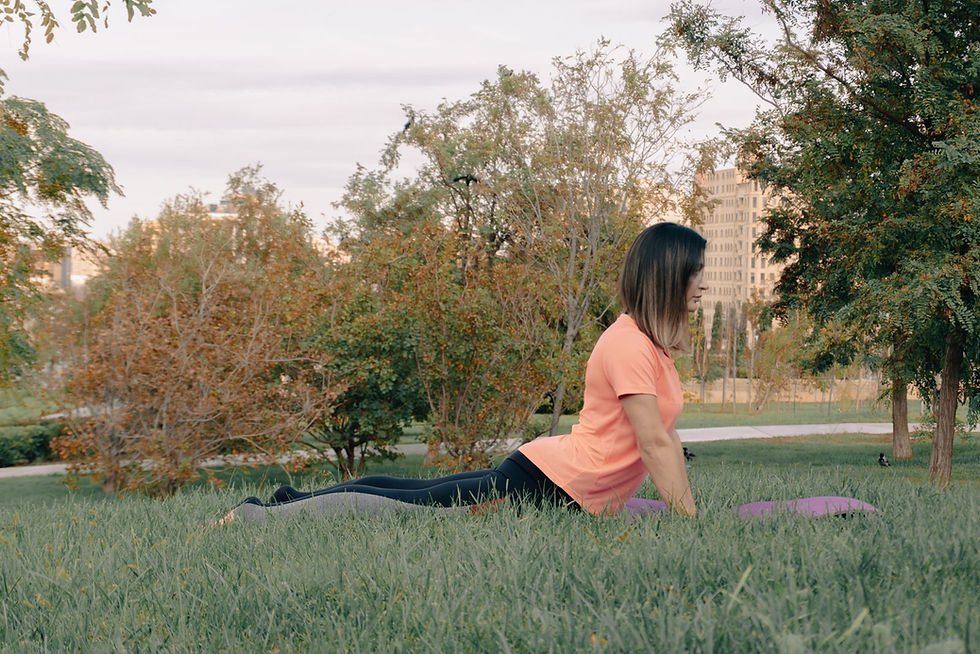
Sitting for long stretches can leave your neck, shoulders and back feeling stiff by the afternoon. A few minutes of gentle stretching or movement can break that up, and it does not need equipment or a gym membership. You can follow a free online routine, or simply roll your shoulders, reach your arms overhead, stretch your hamstrings against a chair and take a few slow breaths. Keep the movement comfortable and stop if anything hurts. Slow, steady movement is usually more useful than a fast routine you cannot repeat. If you have an injury or a health condition, check with your GP or a physiotherapist before you start a new routine. Many people find that short, regular movement fits into the day more easily than a long workout they keep postponing.
Why it works: It needs no equipment, fits into five minutes and gives your body a break from sitting.
Try this: Set a five-minute timer after lunch and stretch your arms, back and legs before you return to your desk.
🎧 Need a quiet break? Our episodes make good company on a slow evening.
Are you a brand, publisher or business looking for a warm, engaged audience? Advertise with us and reach readers who value thoughtful stories and practical everyday advice.
5. Borrow From Your Local Library
A public library is one of the most useful free resources in the UK. Most branches offer books and audiobooks, many also offer magazines and e-books, and many run events such as reading groups, talks and children's sessions. A library visit can be a gentle outing in itself: you walk there, browse the shelves, sit somewhere quiet and bring home something to enjoy later. Services vary between councils and branches, so check your local council's website to see what is on offer and what you need to join. Reading for pleasure is also a form of rest that many people value, because it gives your mind a story to follow rather than a list to manage. If you are not sure where to start, ask a librarian. They are used to helping people find something new, and a tote bag helps you carry it home.
Why it works: Borrowing gives you books and events without buying them, and a trip out can be a restful break in itself.

Try this: Look up your local library's website this week and reserve one book or audiobook you have wanted to read.
4. Cook a Simple Meal at Home, Slowly
Cooking something simple for yourself can be a calm ritual. It asks for your attention in a gentle way, gives the evening a clear task and ends with a plate of food you made. You do not need a complicated recipe. Soup, eggs on toast, or pasta with a handful of frozen peas and a little grated cheese can all feel like a proper meal. Put on some music, lay the table even if you are eating alone and take a moment to notice the smells and textures. Cooking at home also tends to cost less than ordering in, which can make the habit easier to keep. Keep your ingredients to five or six, use what is already in the cupboard and let the process be slow rather than perfect.
Why it works: The routine costs little, slows the day down and gives you a satisfying result you can enjoy straight away.
Try this: Choose one recipe with five ingredients or fewer and cook it on a night you would normally order a takeaway.
3. Reach Out to Someone You Trust
Connection is one of the most consistently valued parts of looking after yourself, and it is one of the few forms of self-care that is entirely free. A short phone call, a voice note, a text that asks how someone is really doing, or a walk with a friend can make a week feel less lonely. You do not need a plan or a long chat. Pick someone you feel comfortable with, keep the conversation light and be willing to listen as well as talk. Mind's everyday wellbeing tips cover loneliness and connecting with people, which is a useful place to read more. If you feel lonely or low for more than a short while, tell someone close to you, speak to your GP or contact a helpline. Asking for help is a sensible step, not a failure.
Why it works: Talking with someone who knows you costs little, and regular contact is easy to keep up when it is kept simple.
Try this: Send one message today to a friend you have not spoken to recently, asking what they are looking forward to this week.
2. Set a Screen-Free Wind-Down Before Bed
Many people find it harder to wind down when a screen is the last thing they see, and bedtime is often when a busy mind is at its loudest. A screen-free wind-down gives the end of your day a clear shape. Plug your phone in across the room, dim the lights and choose something quiet for twenty or thirty minutes. Reading a paper book, listening to a podcast at a low volume, stretching gently or writing a short list for tomorrow all work well. You do not need to buy anything new, because a bedside lamp, a library book and an alarm clock are enough. If the routine feels hard at first, start with ten minutes and build up slowly, so it feels like a treat rather than another rule to keep.
Why it works: It costs nothing, sets a clear end to the day and gives your evening a calm rhythm you can repeat every night.
Try this: Tonight, charge your phone outside the bedroom and read for fifteen minutes before the lights go off.
🎧 Keep listening: Hear more of our stories on the episodes page.
1. Take a Short Walk Outside Each Day
Walking is one of the simplest forms of self-care because it costs nothing, needs no special kit and fits into an ordinary day. You can walk around the block, through a local park or along a canal towpath, and you can stop whenever you like. The NHS lists being physically active as one of its five steps to mental wellbeing, and a walk is an easy way to start. Many people also value the change of scene, because leaving your desk, your kitchen or your screen for a few minutes gives your attention somewhere else to go. British weather can be a barrier, so choose comfortable shoes and a waterproof jacket, and keep an indoor route for wet days. Consistency matters more than distance, so a short, regular walk usually beats a long one you manage once a month.
Why it works: Movement, fresh air and a change of scene all come free, and a repeatable route turns rest into a habit.
Try this: Pick a ten-minute loop from your front door and walk it tomorrow with your phone left in your pocket.
Why This Matters
Self-care is often sold as something you buy: a bath set, a subscription or a weekend away. The ideas here show that rest can be built into the ordinary parts of your week. When money is tight, that matters, because a free or low-cost habit is easier to keep than an expensive one you cut back on when the bills arrive.
Small, regular acts of care can also help you notice what you need sooner, rather than waiting until you are exhausted. This is general information, not medical advice. If you are struggling, NHS 111 can help you find the right support, and Samaritans is free to call on 116 123 at any time.
How to Get Started
Start with two ideas rather than all ten. Choose one that suits your day and one that suits your home or your evening, and try each for a week. Keep a short note of how you feel afterwards, even if it is only one word. If an idea feels like a chore, swap it for another. Once a habit feels natural, add the next one.
If you want to look at the money side too, the free budget planner from MoneyHelper helps you list your income and spending, so you can see what is left over for small treats.
Looking to reach families and readers who care about everyday wellbeing? Advertise with That Love Podcast and connect with a thoughtful, engaged audience.
Conclusion
Budget-friendly self-care is about attention more than spending. A walk, a screen-free evening, a call to a friend or a tidy drawer can all help you feel more like yourself, and none of them need a bank card. Pick one idea from this list, try it for a week and keep what works.

Support That Love Podcast: if you enjoyed this guide, you can support our work here.
🎧 Hear more: Find our full library of shows on the episodes page.
💡 You May Also Love
Frequently Asked Questions
Is self-care still worth doing when money is tight?
Yes. Many of the most useful habits, such as walking, talking to a friend or having a screen-free evening, cost nothing. Rest does not need to be paid for to count.
How long should I try an idea before deciding if it works?
Try it for about a week. Notice how you feel afterwards, then keep it, adjust it or swap it for something else.
What if I do not have a garden or a park nearby?
A loop of your street, a walk to a bus stop and back, or a few gentle laps around your home can all work. Choose what feels safe and comfortable for you.
Can I use these ideas with children at home?
Many of them can. Walks, cooking together, library visits and bath time can all be shared. Keep the routine short and flexible.
Do I need to buy anything to get started?
Very rarely. Most ideas need only time, a notebook or things you already own. A library card and a free online stretching routine cover several of them.
What if I still feel lonely after talking to people?
Speak to your GP, who can help you understand what is happening and what support is available. Samaritans is free to call on 116 123 at any time.
Is journaling the same as therapy?
No. Journaling is a private habit that can help you reflect. It is not a replacement for professional support if you need it.
Can stretching replace other exercise?
It can add gentle movement to your day, but it does not replace wider physical activity. If you have an injury or a health condition, check with your GP or a physiotherapist first.
How do I keep self-care going when life gets busy?
Keep it small. Two minutes is enough on a hard day. Attach one habit to something you already do, such as making a cup of tea.
Where can I find free help with money worries?
MoneyHelper offers free guidance and a budget planner, and Citizens Advice offers free advice on money and debt problems.
General information only, not financial advice. Check your own situation, or speak to a free service such as MoneyHelper if you are unsure.
Where to Read More
NHS: https://www.nhs.uk
Mind: https://www.mind.org.uk
Samaritans: https://www.samaritans.org
MoneyHelper: https://www.moneyhelper.org.uk
GOV.UK: https://www.gov.uk
Citizens Advice: https://www.citizensadvice.org.uk
Which?: https://www.which.co.uk
Money Saving Expert: https://www.moneysavingexpert.com
Enjoyed what you read? Subscribe to That Love Podcast’s newsletter for the latest reviews, entertainment recommendations, podcast updates and exclusive giveaways. You can sign up using the form at the bottom of our homepage (https://www.thatlovepodcast.com).
Stay kind, stay beautiful, protect your heart, and always remember: you are deeply loved.


.jpg)





.jpg)


