





The Social Reckoning Review – A Sharp, Timely Sequel That Plays It Safe

The Social Reckoning review: Aaron Sorkin’s Facebook follow-up is smart, urgent and frustratingly cautious
The hard question facing a sequel to The Social Network is whether Facebook still feels like a story about people, or whether it has become a story about a system too large to fit inside one movie. The Social Reckoning takes on that challenge through whistleblower Frances Haugen and Wall Street Journal reporter Jeff Horwitz, giving you a newsroom investigation with a clear human centre. Aaron Sorkin writes and directs, and the result is brisk, articulate and openly concerned with the machinery that shapes what millions of people see.
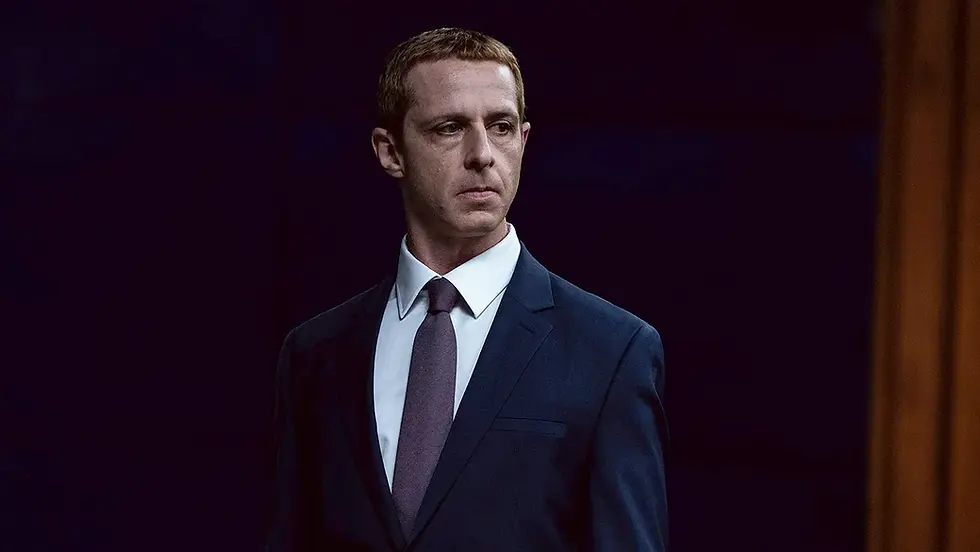
The film is a companion piece rather than a direct continuation of Mark Zuckerberg’s origin story. It turns toward events Haugen and Horwitz helped bring into public view: internal research, leaked documents, Facebook’s decisions and the consequences of keeping users engaged. Mikey Madison plays Haugen, while Jeremy Allen White is Horwitz; Jeremy Strong returns to the orbit of Zuckerberg. The change of focus is smart. The first film watched a company being born; this one asks what happens when employees understand what the company has become.
The release arrives when arguments about platform accountability, misinformation, political influence and the power of technology companies are still active. That makes the subject immediately legible, but it also makes the film’s choice of period and conclusion matter. The story reaches the years around 2019 to 2021, so it is a drama about a crucial chapter rather than a complete update on the social-media landscape of 2026. The distinction is useful: the movie has a specific investigation to dramatise, even if the world outside the credits has moved on.
The strongest reason to watch is the partnership at the centre. Haugen is navigating a decision with personal and professional consequences; Horwitz has to turn her material into reporting that can withstand scrutiny. Their work gives the film a procedural engine, and Sorkin’s dialogue keeps the process moving. The weakness is that his confidence in argument can make complex institutional failures feel tidier than they are. A sharp line can clarify a position; it cannot, by itself, resolve the scale of the problem.
This is not a documentary, and it should not be treated as a substitute for the underlying reporting. It is a dramatisation built around real people and public events, using compression and crafted scenes to make a sprawling subject playable. If you want a tense newsroom story, a thoughtful sequel or a film that makes you reconsider the systems behind your feed, there is plenty here to discuss. If you expect the restless formal invention of David Fincher’s The Social Network, this follow-up is more conventional and less surprising.
So, does The Social Reckoning turn a complicated investigation into compelling cinema? It has the people, the urgency and the sharp exchanges; the question is whether its neatness limits its reach. Let’s get into it 👇
Watch the official The Social Reckoning trailer on YouTube: Watch the trailer
Support That Love Podcast
Enjoying the reviews and recommendations? You can help support That Love Podcast and keep independent entertainment coverage and original storytelling going.
If you enjoyed this, check out:
Want to Reach Entertainment Fans?
If you’re a brand, author, publisher, streaming company, entertainment business or creator looking to reach an engaged audience, That Love Podcast offers advertising opportunities across the website, podcast and newsletter.
What Is The Social Reckoning About?
The Social Reckoning is Aaron Sorkin’s companion film to The Social Network, but its subject is not the company’s founding or the rivalry that surrounded its first years. The story centres on Facebook whistleblower Frances Haugen, a former employee who becomes concerned by what she sees inside the company. She leaves with internal material and faces the difficult question of how to make it public without losing control of the story or putting herself in a position she cannot manage.
Mikey Madison plays Haugen as a person with a technical understanding of the platform and a growing moral unease about its effects. Jeremy Allen White plays Jeff Horwitz, the Wall Street Journal reporter who receives the material and must work through it carefully. He cannot treat every document as self-explanatory. A journalist has to verify, contextualise and decide what the public needs to know; the film’s second lead therefore has a different kind of risk to navigate.
The central conflict is larger than whether one person will speak up. Haugen is challenging a powerful employer, while Horwitz is trying to establish what the documents show and how to report them responsibly. Facebook’s internal incentives and public messaging become part of the drama because the film sees the institution itself as an active force. The stakes include credibility, reputation, user safety and the question of whether a platform can be held accountable when its business model rewards attention.
The film uses real-world events as dramatic material and condenses a complicated investigation into character scenes, meetings and exchanges. It is therefore best approached as a fact-based drama, not a line-by-line record of every internal decision. The premise is compelling because it takes something abstract—the effect of a recommendation system and corporate policy—and connects it to people who must decide what to do with what they know.
If you have not followed the original reporting, you can still understand the basic setup: a Facebook employee turns whistleblower; a reporter evaluates her evidence; and both discover that exposing the facts is only the beginning of the fight. The movie’s question is whether information can move a large institution toward change, or whether the institution is better at absorbing criticism than responding to it.
The Story and Plot
The film’s procedural structure is its strongest organising choice. It follows the stages between private concern and public revelation: Haugen’s decision to leave, the handling of internal material, the reporter’s verification work and the eventual public scrutiny. That gives the plot a natural forward motion. Rather than inventing a conventional chase, Sorkin turns files, interviews and editorial decisions into sources of suspense.
The best scenes understand that journalism is not simply a matter of finding a dramatic document. Horwitz has to ask what it proves, what it does not prove and how it can be corroborated. Haugen has to decide how much to disclose and how to explain a technical system to audiences who may never have considered how their feeds are shaped.
Sorkin’s screenplay also places conversations against the larger political moment. Public hearings and the January 6 attack enter the film’s orbit, connecting Facebook’s information systems to the consequences of online circulation and political extremism. The juxtaposition has force, though it also reveals the film’s limitations.

The Cast and Performances
Mikey Madison gives Frances Haugen an inward focus that suits a story about a person moving from private doubt to public action. Haugen is not written as a flawless crusader who has already solved every ethical problem. She has to assess what she knows, what she can prove and what the consequences of speaking might be.
Jeremy Allen White plays Jeff Horwitz with a different rhythm. His character’s job is to question, test and organise, and White gives him a practical alertness that complements Madison’s more guarded presence. The film benefits from having two protagonists with distinct work to do. Their partnership is not built around instant trust; it develops through the shared pressure of deciding what can responsibly be said in public.
Jeremy Strong’s Mark Zuckerberg is used more sparingly than in the first film. That choice is sensible. This story belongs to Haugen and Horwitz, and a constant return to the CEO’s perspective would pull focus back toward the powerful figure rather than the people attempting to scrutinise the company.
Wunmi Mosaku, Betty Gilpin and the supporting cast contribute to the film’s institutional world: colleagues, executives and people caught in the process of interpreting evidence. The ensemble helps the investigation feel like work happening across teams, not a lone reporter and whistleblower solving everything in one room. Still, some supporting roles are defined more by what they represent in the argument than by independent inner lives.
What Works Best
The clearest strength is the decision to place Haugen and Horwitz at the centre. A sequel could easily have spent most of its time revisiting Zuckerberg, Facebook’s founders or the mythology of Silicon Valley. Instead, the movie asks what an employee and journalist can do when an institution’s internal knowledge conflicts with its public presentation.
The reporting process also gives the film a welcome degree of texture. Evidence does not simply arrive as a revelation ready for a headline. It has to be read, compared, checked and explained. The movie recognises that publishing a story is an ethical decision as well as a dramatic event. Even when it compresses the work, the distinction between possessing information and proving a claim gives the plot stakes.
Sorkin remains good at making a debate active. People do not merely state positions; they push each other to sharpen them. In a film about social media, that verbal energy creates an interesting contrast with the platform’s silent ranking systems. The characters speak in rooms, while the technology acts at a scale no individual can fully see.
What Doesn’t Quite Work
The film’s most significant weakness is also part of its style: Sorkin’s fluency can make uncertainty feel like a temporary obstacle on the way to a strong line. A whistleblower investigation contains competing interpretations, imperfect records and questions that cannot be solved by rhetoric alone. The screenplay understands verification, but its dialogue sometimes converts a difficult argument into a neat exchange too quickly.
The time frame creates another problem. By centring on events from 2019 to 2021, the movie gains a clear historical subject, yet its contemporary release invites comparisons with the situation now. The story does not always make enough room for the gap between then and the present.
Some supporting characters are more functional than fully developed. They represent corporate resistance, institutional caution or the public consequences of the reporting, but the story does not always let them become complicated people with their own evolving perspectives. That flattening matters because the film argues about systems.
Characters and Relationships
Haugen and Horwitz are linked by a professional partnership rather than a conventional friendship arc. They have different responsibilities, and that difference creates useful friction. Haugen has lived inside the company and knows how its systems and language work. Horwitz has to approach the claims with the distance required of a reporter, even when the material appears to confirm a troubling picture.
The movie’s most revealing character question is not simply whether Haugen is brave. It is what bravery means when the decision affects other people, when the facts are complicated and when the person speaking may be criticised from all sides. A whistleblower can be praised for revealing information and challenged about what she chooses to disclose.
Horwitz’s arc is about responsibility of another kind. He must avoid becoming a conduit for someone else’s interpretation, even if the source is credible and the story is urgent. The reporting relationship works because the film gives him the job of testing claims. It reminds viewers that trust is not the same as abandoning scrutiny. In a story about documents, credibility is both the currency and the hazard.
Visuals, Music and Atmosphere
The film’s visual approach is clean and workmanlike. Newsrooms, offices, interviews and public proceedings are arranged to keep information moving. That clarity helps a subject with many names, files and institutional relationships, but it does not create the icy visual tension that made The Social Network feel like a world with its own temperature. The sequel is more interested in explaining than enveloping.
Screens and documents naturally occupy the frame, yet the film is at its best when it avoids treating a glowing monitor as shorthand for technology. A spreadsheet, memo or internal report matters because of the people reading it and deciding what it means. When the camera stays with the human response, the material feels consequential. When information is presented too quickly, the scene can approach a briefing.
The editing follows the dialogue and investigative sequence. It creates momentum as the characters move from one source to another, and it keeps the story from becoming static despite its office-heavy settings. There are moments when the rapid pace cuts away before the impact of a revelation has settled. A little more silence might have made the public and private consequences more tangible.
The score and sound design support the sense of institutional pressure without becoming the film’s main event. Sorkin’s movies tend to be propelled by speech, and this one is no exception. The atmosphere comes less from a distinctive musical motif than from the contrast between ordinary professional spaces and the scale of the systems under discussion.
That restrained presentation suits the procedural core, although it leaves the film less visually memorable than its subject demands. You understand the work; you may wish the image itself conveyed more of the invisible architecture being debated.
Themes and What the Story Is Really About
The film’s central theme is the distance between knowing something and being able to change it. Haugen has access to internal knowledge; Horwitz has the skills to test and communicate it; the public can react once the material is reported. Yet those steps do not automatically produce reform. The movie is most thoughtful when it recognises that exposure is an event, while accountability is a process.
It also considers the ethics of attention. Social platforms are often described as neutral channels, but their design choices influence what becomes visible and how long people remain engaged. The film asks who is responsible when the incentive to hold attention collides with safety or public trust. It does not need every viewer to accept its conclusions to make the question worth discussing.
Another theme is the cost of speaking. A person who brings internal evidence forward can become the story as much as the company does. Motives are questioned; personal history is examined; the issue risks shrinking into a debate about the source’s character. The movie shows how a whistleblower’s credibility can be scrutinised while the institution’s power remains comparatively abstract.
Is The Social Reckoning Worth Watching?
Yes, if you like dialogue-driven political dramas, newsroom stories and films that turn real events into clear character conflicts. The Social Reckoning is easy to follow even if you have not read about Frances Haugen’s disclosures, and its focus on the whistleblower-reporter partnership gives it a solid emotional and procedural centre. The movie asks viewers to think about social media without becoming a lecture in every scene.
It is also worth watching if you are curious how the film compares with The Social Network. This sequel is less about invention, youthful ambition and the creation of a company. It is more concerned with consequences, internal evidence and the public role of journalism. It lacks some of the predecessor’s formal coolness and cultural shock, but it has a distinct subject and a strong lead pairing.
Viewers who want a documentary account should go directly to the original reporting and public materials. The film is a dramatization, and dramatic compression inevitably leaves things out. People looking for a character-first whistleblower thriller will likely find more to enjoy than viewers expecting a complete history of Facebook or a full 2026 update on social-media regulation.
It is a manageable watch for anyone who enjoys smart, talky films. You do not need to binge anything or know every detail of the company’s history beforehand. Watch it when you want a topical drama with arguments to continue after the credits, but temper expectations for a definitive final word on platform power.
Where to Watch The Social Reckoning
The Social Reckoning opened in US theatres on October 9, 2026, through Sony Pictures Releasing. The exact cinema availability varies by country and local release calendar; check a current local listings service before travelling. Sony’s official film site provides the film’s premise and release information.
Work With That Love Podcast
If you’re a brand, author, publisher, studio, entertainment business or creator looking to reach people who love movies, television, books and pop culture, we’d love to hear from you.
Final Verdict
The Social Reckoning is a well-constructed, timely sequel that knows where to point its attention. Frances Haugen and Jeff Horwitz give the film a strong pair of leads, and the act of turning internal documents into public reporting supplies a natural source of tension. The film is at its best when it treats verification, disclosure and trust as difficult choices rather than convenient plot mechanics.
Its weakness is a habit of smoothing complexity into polished argument. The dialogue is nimble, but its certainty can leave less room for ambiguity than the subject deserves. The 2019–2021 focus gives the story shape while also making the movie feel narrower than the larger debate it wants to evoke. It is a compelling sequel, not a complete reckoning.
If you are interested in technology, journalism or current-affairs drama, it is worth seeing. If your main reason is the first movie’s visual style or the expectation of an equally disruptive cultural portrait, you may find this one more conventional.
The film does not pretend that publishing evidence fixes a platform. That restraint is welcome, even when the ending feels tidier than the subject. The best reason to watch is not that it settles the argument, but that it gives a difficult public story a pair of people whose decisions make the stakes understandable.
⭐ Review Score: 7/10
A sharp, watchable whistleblower drama with a strong central pairing, held back by a tendency to make a complicated reckoning feel a little too neatly argued.
You May Also Love
Conclusion
What stays with The Social Reckoning is the uneasy space between a revelation and a remedy. Haugen and Horwitz can bring evidence to public attention, but they cannot guarantee how a company, a government or the public will respond. That makes the film’s story more useful than a simple victory narrative, even if the dramatic ending edges toward closure.
The movie’s strongest scenes are built around two people doing different jobs under pressure. Its weaker ones show how quickly a polished argument can make systemic problems seem solvable in the space of a feature film. That tension is worth discussing, especially if you watched The Social Network as a portrait of how power is created and want to see a later chapter about how it is challenged.
I recommend it to viewers who want a smart, accessible current-affairs drama and are comfortable with talk driving the action. It is less essential for anyone wanting a definitive account of Facebook’s history. If you have watched it, did its ending feel earned, or did the real-world story remain too open for that kind of closure? Share your score and the detail that stayed with you.
Frequently Asked Questions
Is The Social Reckoning worth watching?
Yes, especially if you enjoy political dramas and newsroom thrillers built around real events. The film gives Frances Haugen and reporter Jeff Horwitz a clear shared investigation and makes the work of verifying internal documents part of the suspense. It is more conventional than The Social Network and does not settle the wider debate about platform accountability, but its subject and lead performances make it a worthwhile topical watch.
What is The Social Reckoning about?
The film follows former Facebook employee Frances Haugen as she brings internal company material to Wall Street Journal reporter Jeff Horwitz. Together, they work through what the documents show and how the information can be reported responsibly. The story focuses on the company’s practices and the public consequences raised by Haugen’s disclosures, rather than retelling how Facebook was first created.
Who stars in The Social Reckoning?
Mikey Madison stars as Frances Haugen, and Jeremy Allen White plays reporter Jeff Horwitz. Jeremy Strong appears as Mark Zuckerberg, with Wunmi Mosaku, Betty Gilpin and other actors in supporting roles. The film is written and directed by Aaron Sorkin and is positioned as a companion to his earlier screenplay, The Social Network.
Is The Social Reckoning a sequel to The Social Network?
It is a companion film that returns to the world of Facebook and follows events years after the company’s founding. The focus shifts away from the creation of the platform and toward whistleblower Frances Haugen and the reporting that brought internal documents to wider attention. You can follow this story without having seen the first film, though the connection gives the new film added context.
Is The Social Reckoning based on a true story?
The movie is inspired by real people and public events, including Frances Haugen’s whistleblowing and reporting by Jeff Horwitz. As a feature drama, it uses scripted scenes and compression to create a coherent narrative. It should not be treated as a documentary or a full record of every conversation; readers seeking precise detail should consult original reporting and official public materials.
Who is Frances Haugen?
Frances Haugen is a former Facebook employee who became a whistleblower by bringing internal company information to journalists and lawmakers. In the film, Mikey Madison portrays her alongside Jeremy Allen White’s Jeff Horwitz. Haugen’s story gives the movie a personal centre while raising questions about how employees can challenge institutions from inside.
Where can I watch The Social Reckoning?
The film opened in US cinemas on October 9, 2026. Theatrical availability depends on country and local booking schedules. Check Sony Pictures’ official film page and cinema listings for current information in your area. A streaming release date should not be assumed unless Sony or a verified platform announces one.
Does The Social Reckoning explain how social media algorithms work?
The film discusses internal company practices and the way platform choices can influence what users see, but it is a dramatic feature rather than a technical guide. It explains enough to make the investigation understandable and to connect company decisions with public concerns. Viewers looking for detailed technical or policy information should use specialist reporting and public documents alongside the movie.
How does The Social Reckoning compare with The Social Network?
The Social Network is a sharply stylised drama about Facebook’s origins, ambition and ownership disputes. The Social Reckoning is more focused on whistleblowing, journalism and the consequences of a mature platform. It keeps Aaron Sorkin’s fast dialogue but has a more conventional visual and procedural style. The two films are linked by subject, not by identical tone or structure.
Is The Social Reckoning a documentary?
No. It is a scripted biographical drama inspired by real events and real reporting. Dramatised films select scenes, condense timelines and build dialogue for narrative purposes. The movie can introduce viewers to the issues surrounding Haugen’s disclosures, but it should be read alongside the original Wall Street Journal reporting and other authoritative sources.
More Places to Find Movie and TV Information
Enjoyed What You Read?
Subscribe to That Love Podcast’s newsletter for the latest reviews, recommendations, entertainment news, podcast updates and exclusive giveaways. And if you know someone who loves movies, television, books or pop culture, share this article with them too. Let’s spread the love together!




.jpg)





.jpg)


