





Prince and the Revolution – Purple Rain (1984) Review: A Cinematic Triumph

Some albums carry so much cultural baggage that listening to them feels like reading a museum label. Purple Rain is one of them. The title track, “When Doves Cry” and “Let’s Go Crazy” have been played so often on radio, television and in films that I expected the familiar parts first and the album second. That expectation is the central tension of this Purple Rain album review. Can Prince and the Revolution’s 1984 record stand up as a complete work, or is it mostly a run of famous moments held together by a huge reputation?
Released on 25 June 1984 by Warner Bros. Records, Purple Rain is credited to Prince and the Revolution. The band did far more than back him up. Wendy Melvoin, Lisa Coleman, Matt Fink, BrownMark and Bobby Z. give the songs their working muscle. The album runs nine tracks and 43:55, moving through pop rock, funk and R&B with a theatrical streak that resists a single genre label. It followed 1999 (1982), which had already shown how far Prince could push synthesisers and pop hooks.
My broad reaction is admiration with reservations. The record is confident, funny, sexually direct and emotionally open, and its sequence is built with more care than many albums of its time. What makes it interesting is the way it swings from exuberance to hurt without stopping to explain itself. Its main weakness is that a few gestures are so large they seem to ask for applause before the song has earned it.
This review is for anyone who loves classic 1980s albums, guitar-driven R&B and pop rock with a cinematic sweep. It is also for listeners who only know the hits.
So, is Purple Rain actually worth listening to? Let’s get into it 👇

Support That Love Podcast
Enjoying the recommendations? If you enjoy our music and entertainment coverage, you can help support That Love Podcast and keep independent articles and original audio stories coming. Donate to That Love Podcast
You May Also Love
If you’re in the mood for more music, pop culture and entertainment reads, try these next:
Johnny Marr’s The Age of Everything Review – Guitars That Turn Overthinking Into Momentum
Twin Atlantic’s Separation From the Animals Review – A More Open-Hearted Kind of Rock
Kodaline’s We Were Only Young Review – A Farewell That Knows How to Look Back
Victoria Monét’s Frequency of Love Review – A Big, Open-Hearted R&B World
Troye Sivan’s She’s the Best Review – Late-Night Pop With a Softer Side
Want to Reach Music Fans?
Artists, labels, music PR teams, publishers, music brands and concert promoters can reach an engaged audience through That Love Podcast’s website, podcast and newsletter. Find out more
Prince and the Revolution – Purple Rain Album Information
Artist: Prince and the Revolution
Album: Purple Rain
Released: 25 June 1984
Year: 1984
Genre: Pop rock, funk, R&B
Label: Warner Bros. Records
Length: 43:55
Producers: Prince and the Revolution
Previous Album: 1999 (1982) by Prince
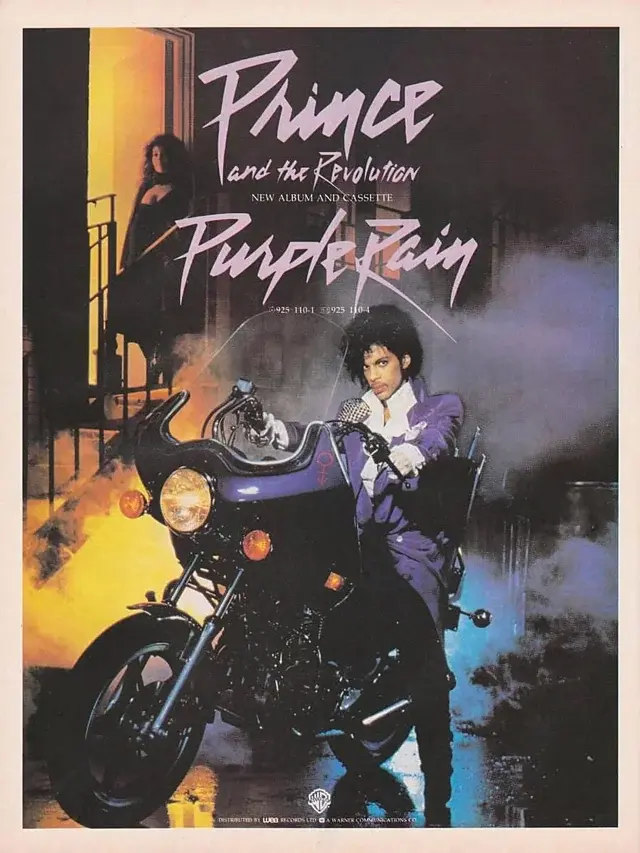
Purple Rain Tracklist
The standard edition has nine tracks, shown here in running order with their lengths. Full credits are on the Wikipedia album page.
“Let’s Go Crazy” – 4:39
“Take Me with U” – 3:54
“The Beautiful Ones” – 5:14
“Computer Blue” – 3:59
“Darling Nikki” – 4:14
“When Doves Cry” – 5:52
“I Would Die 4 U” – 2:59
“Baby I’m a Star” – 4:24
“Purple Rain” – 8:40
What Is Purple Rain About?
Purple Rain is not a conventional concept album, and I would be inventing a plot if I said otherwise. It has a shared emotional world instead. Ambition, attraction, rivalry, difficult family relationships and the wish to be taken seriously on your own terms run through the songs. Rather than telling a straight story, the record circles those ideas and returns to them from different angles, which is why it can move from playful romance to real hurt without a visible seam.
The mood changes constantly. “Let’s Go Crazy” opens with a burst of energy, “Take Me with U” is lighter and flirtatious, and “The Beautiful Ones” drops the mood entirely. “When Doves Cry” is cooler and more unsettled, and the title track gathers everything into a long, open-hearted finish. In Prince’s career, the album is the point where his pop instincts and band-driven rock met at full scale. It made his strangeness commercially enormous, and that is part of why it remains such a fascinating Purple Rain album review subject.
Sound and Production
The first thing I notice is the drum sound. Bobby Z.’s drums are punchy and precise, and they sit beside synthesiser patterns that feel almost mechanical. Even on busier tracks, bass and drums keep the groove moving, so the songs have a physical pull that stops the emotion from floating away.
Synthesisers are everywhere, but they are not wallpaper. On “Computer Blue,” layered keyboards and sharp guitars create pressure that suits the song’s restless energy. On “When Doves Cry,” the most striking choice is the missing bass line. The melody and synth layers carry the track, and that thin, deliberate arrangement makes it sound emptier than most hits of the period, which is why it still feels uneasy.
According to the album’s recording details, sessions took place at studios in Minnesota, New York and California, and three tracks were recorded live at First Avenue in Minneapolis on 3 August 1983. I hear that mix in the warmth of the bigger songs. The live material sounds loose and communal, while the studio work adds sharper edges.
🎧 Need something to listen to after the music stops?
That Love Podcast creates original romantic audio dramas, comedies and stories. Listen to That Love Podcast
Vocals and Performance
Prince is the anchor, and his range is the main reason the songs travel so far. He sounds playful on “Take Me with U,” commanding on “Let’s Go Crazy,” wounded on “The Beautiful Ones” and remote on “When Doves Cry.” Each delivery feels chosen, which keeps the record from becoming monotonous.
The band matters too. Lisa Coleman is credited as co-lead vocalist on “Take Me with U,” and the Revolution’s tight playing supports Prince’s shifts in mood. On “The Beautiful Ones,” the lack of restraint is the point. I would not call every performance flawless, since a few moments are pushed too far. Still, the singing suits music about big feelings far more often than not.
Lyrics and Themes
The lyrics work best when they are direct. Prince writes about desire with a clarity that can be funny or uncomfortable, and he tends to name a feeling and then complicate it. “Darling Nikki” is built around deliberate provocation. “I Would Die 4 U” is plain devotion, and the tune makes that devotion sound urgent.
The storytelling is looser. The album suggests scenes rather than delivering a plot, so each song must create its atmosphere quickly. “The Beautiful Ones” is the strongest example, with emotion rising through insistence rather than detail. The strongest themes are the moments when a line about love or ego suddenly reveals loneliness underneath it.
Track-by-Track Review
Let’s Go Crazy
This opener announces the album’s size without asking permission. The keyboards and guitar arrive quickly, and the chorus is built for a crowd. Its weakness is that it is so polished that the performance can feel neat rather than risky.
Take Me with U
The lightest and most affectionate track, with a buoyant melody and a duet texture that adds warmth without turning cloying. It lets the record breathe before the darker turns. Its weakness is that it is slightly less distinctive than its neighbours, though I still reach for it when I want brightness.
The Beautiful Ones
The emotional turning point. The vocal moves from controlled yearning to near desperation, and the arrangement follows that change rather than smoothing it out. It is the most exposed performance here, and one of Prince’s most striking vocal moments. It is intense, which is exactly why it works in this sequence.
Computer Blue
More restless and layered than its reputation suggests. The spoken introduction and dense keyboards give it nervous energy, and the guitar lines are sharp. Credited writers include Prince, John L. Nelson, Wendy Melvoin, Lisa Coleman and Matt Fink. It is underrated because it sits between the bigger hits. Its weakness is a middle section that can feel busy.
Darling Nikki
The most provocative track, and I respect how directly it goes there. It is built on a sharp riff and a vocal that leans into shock value. The joke can feel more immediate than the music, so it is not my favourite. Its placement still gives the album an edge.
When Doves Cry
The album’s most unusual hit. The missing bass line is the detail everyone notices, and it is still the reason the song feels unsettled. The arrangement does the real work, making emotional pressure feel contained rather than released. Its weakness is that its fame makes it harder to hear freshly.
I Would Die 4 U
A brisk devotional rush with a direct hook and a communal lift. It helps the record move from private hurt toward something celebratory. It is not the most complex song here, and that is part of its charm. It is slightly lighter than the material around it.
Baby I’m a Star
A bold statement of self-belief, delivered by a performer enjoying being noticed. The groove is strong, and the ego stays on display without becoming empty. It is one of the tracks where the album’s live energy is easiest to hear.
Purple Rain
The final statement and the reason the record is so well known. At more than eight minutes, it tests patience, but the length is earned. The song moves from a personal plea toward a much bigger finale, with guitar and vocal layers that grow with purpose. Its ending asks a lot of the listener, but it closes the album with real emotion.
Best Songs on Purple Rain
These four rise above the rest, and each for a different reason.
“The Beautiful Ones” is the record’s emotional centre. Its refusal to hold back makes it feel more personal than the famous hits.
“When Doves Cry” is the boldest arrangement. Its missing bass line makes it sound like little else in mainstream pop of its moment.
“Computer Blue” is the track I most want more people to hear, with energy and band chemistry that go beyond the singles.
“Purple Rain” ends the album with scale and conviction, even if its length asks for patience.
More Music Reads
More music reviews and features are waiting for you here:
Dawn Richard’s creole culture Review – A New Orleans Album Alive With Rhythm
Remi Wolf’s Mud Review – A Raw, Restless Pop Record About Starting Over
Greta Van Fleet’s Palace for the People Review – Arena Rock With a Human Pulse
Blossoms’ Songs From the Wedding Cake Review – Bright Hooks, Big Feelings and a Few Familiar Vows
Advertise With That Love Podcast
Musicians, record labels, PR agencies, music brands and publishers can put their releases in front of readers who care about albums and pop culture. Advertise with us
Album Sequencing and Cohesion
The album opens with a clear statement. “Let’s Go Crazy” sets a fast pace, and “Take Me with U” lowers the temperature without stalling. The move into “The Beautiful Ones” is the first real shock, and it works because momentum has already built.
The middle is where the album shows nerve. “Computer Blue” and “Darling Nikki” are restless and provocative, and “When Doves Cry” gives the sequence a cooler centre. Those transitions can feel abrupt, but they feel intentional. The closing stretch is the strongest argument for the album as a whole. At 43:55 the length is manageable, and the sequence makes it work as one piece.
Featured Artists and Collaborations
Apollonia is credited as co-lead vocalist on “Take Me with U,” singing a duet with Prince, while Jill Jones is also credited as co-lead and backing vocalist on the track. The second voice gives that song a different texture from the rest of the record, and it is one of the album’s most interesting collaborations.
How Does It Compare With Prince’s Other Music?
Purple Rain is often treated as Prince’s defining album, and the chart history explains why. It followed 1999 (1982), already a major step for his synth-pop sound. Here the songs are more band-driven and the emotional scale is far larger. “When Doves Cry” and “Let’s Go Crazy” both reached No. 1 on the US Billboard Hot 100 in 1984, and the title track peaked at No. 2.
I would not call it Prince’s best album without qualification. My point is simpler: it is the most complete statement of his mid-1980s pop-rock ambition.
Legacy and Influence
The reputation is measurable. Purple Rain spent 24 consecutive weeks at No. 1 on the US Billboard 200 and was certified 13 times Platinum by the RIAA, which shows how far it travelled beyond a cult audience. It won an Academy Award for Best Original Song Score in 1985, and its Grammy wins included Best Score Soundtrack for Visual Media.
My opinion is that its influence is easiest to hear in how later pop and R&B artists blend genres without apology. Does it still sound good? Yes. The best songs still surprise, and the arrangements still feel deliberate rather than dated.
What Works Best
The album’s best quality is its commitment. It can be grand without apology, but it is not only bombast. “Take Me with U” is nimble, “The Beautiful Ones” is raw, “When Doves Cry” is formally daring and the title track gives the final word to vulnerability. Prince’s voice connects all of it.
The blend of funk rhythm, rock guitar, synthesisers and pop hooks is also coherent. None of it feels like a genre exercise, and that is why the album still rewards close listening.
What Doesn’t Quite Work
The biggest strength is also a barrier. The gestures are large, and some listeners will find the performances too theatrical or the provocation too direct. “Darling Nikki” is confrontational by design, and the title track asks you to surrender to its scale. If understatement is your preferred mode, not every moment will persuade you.
Familiarity is the other problem. Repeated exposure makes the bolder choices feel inevitable, which hides how unusual they are.
🎧 Looking for your next listen?
Original romantic audio dramas, comedies and stories are waiting at That Love Podcast. Listen to That Love Podcast
Is Purple Rain Worth Listening To?
Yes. It is essential for Prince listeners and a strong entry point for anyone interested in landmark 1980s pop and guitar-driven R&B. Fans of big choruses will enjoy it, and so will people who like a bit of strangeness in the production.
It may not suit everyone. If you prefer restrained records, the emotions will sometimes feel too large. For a first listen, play it from start to finish rather than jumping to the title track. My recommendation is clear: hear the whole album, then return to the songs you already know.
Work With That Love Podcast
If you are a label, artist team, music brand or publisher looking for an audience of music and pop culture fans, we would love to hear from you. Discover advertising and sponsorship opportunities
Final Verdict
Purple Rain makes pop ambition sound personal. The songs are big but not emotionally shallow, and the vulnerability underneath the theatrics stays clear. The Revolution gives the music a real band identity, and Prince’s writing and singing hold the styles together.
My biggest strength is the sequence, which makes the title track feel earned rather than inevitable. My biggest weakness is that some gestures are too large for the songs they serve. The best songs are “The Beautiful Ones,” “When Doves Cry” and “Computer Blue,” and the replay value is high because the record keeps offering new details. It will last because the music still sounds specific. I recommend it as a full album, not only as a set of singles.
Review Score
⭐ Review Score: 9/10
A bold, cinematic and emotionally open album, slightly undone by a few of its biggest gestures.
Track Ratings
“Let’s Go Crazy” — 8.5/10
“Take Me with U” — 7.5/10
“The Beautiful Ones” — 9.5/10
“Computer Blue” — 8.5/10
“Darling Nikki” — 8/10
“When Doves Cry” — 9.5/10
“I Would Die 4 U” — 8/10
“Baby I’m a Star” — 8.5/10
“Purple Rain” — 9.5/10
Best Track: “The Beautiful Ones”
Most Underrated Track: “Computer Blue”
Weakest Track: “Take Me with U”
Best Feature: Apollonia’s co-lead vocal on “Take Me with U”
You May Also Love
Still in the mood for more? These reads are worth your time too:
Chloe Slater’s Riot Youth Review – Sharp Indie Pop With Something to Say
Quavo’s QRÖMELIFE Review – Pharrell Gives the Atlanta Rapper Room to Recalibrate
Knocked Up (2007) Review: Judd Apatow's Raunchy, Big-Hearted Comedy About Growing Up Too Late
Superbad (2007) Review: The Raunchy Teen Comedy That Is Really About Saying Goodbye
The Hangover (2009) Review: The Vegas Comedy That Made a Lost Night Into a Genre
Conclusion
What stayed with me was not the famous single but the sense of a record that trusts its performer. Purple Rain gets the big things right: the band sound, the vocal range, the striking arrangements and a sequence that moves like a story without a plot. It struggles when its gestures outrun the songs.
I will return to it, especially to “Computer Blue” and “The Beautiful Ones,” which still feel like the most generous parts of the album. What about you? Tell me your favourite track, your least favourite, your own score and what you think of the singles.
Support That Love Podcast
Frequently Asked Questions About Purple Rain
When was Purple Rain released?
Purple Rain was released on 25 June 1984 by Warner Bros. Records. It is credited to Prince and the Revolution, and it arrived at the height of Prince’s popularity. If you are checking the Purple Rain release date for a reissue, look at the edition details rather than the original 1984 date.
Who is the artist on Purple Rain?
The album is credited to Prince and the Revolution. Wendy Melvoin, Lisa Coleman, Matt Fink, BrownMark and Bobby Z. are the band members credited across the record, and their playing is central to the sound rather than simple backing support for Prince. Their performances shape the album’s identity throughout, and their work holds it together.
How many songs are on Purple Rain?
The standard edition has nine songs and runs 43:55, from “Let’s Go Crazy” to the title track. Deluxe editions add extra recordings, so check the edition you are buying before comparing the Purple Rain tracklist with another release. That detail matters for anyone reading a Purple Rain album review. The standard list is the one to use for an album review.
What are the best songs on Purple Rain?
The most discussed songs are the title track, “When Doves Cry,” “Let’s Go Crazy” and “The Beautiful Ones.” For a deeper cut, I would add “Computer Blue.” If you want a list of the best songs on Purple Rain built around repeat listening, those five are the place to start.
What genre is Purple Rain?
Purple Rain mixes pop rock, funk, R&B and theatrical rock. The styles connect around Prince’s voice, which is why the record resists a single label and still sounds coherent across nine songs. Pop album review readers and classic album review fans will both recognise it as a 1980s landmark.
Who produced Purple Rain?
The album is credited to Prince and the Revolution as producers, which answers most searches about the Purple Rain producers. It was recorded at studios in Minnesota, New York and California, with three tracks captured live at First Avenue in Minneapolis on 3 August 1983. Fans often ask about those studio locations too.
Does Purple Rain have featured artists?
Yes. Apollonia is credited as co-lead vocalist on “Take Me with U,” singing a duet with Prince. Jill Jones is also credited as co-lead and backing vocalist on that track. The duet gives the song a different texture from the rest of the record, which makes it memorable in any Purple Rain album review.
Is Purple Rain worth listening to?
Yes. It works as a complete album rather than a collection of hits, and it still surprises listeners who know the famous songs well. Start from the first track, since the sequence is part of the experience. It remains a strong pick for anyone looking for a classic album to hear in full.
What is Purple Rain about?
It is not a linear concept album. Its songs explore romance, ambition, rivalry and emotional vulnerability through a shared mood rather than a strict plot. The album works without knowing its film, although the cinematic feel adds to the experience for many listeners. Ask yourself whether the songs hold together as one listening experience.
Where can I listen to Purple Rain?
Check your preferred music streaming service, since availability varies by region and edition. You can also read the official album details on Wikipedia, linked above. Prices and formats change over time, so compare versions before you buy or stream. Official pages give the most reliable details on release formats. Compare the editions carefully before you commit.
Music Resources
Enjoyed What You Read?
Subscribe to That Love Podcast’s newsletter for the latest music reviews, entertainment recommendations, articles, updates and giveaways. If you know someone who loves music, albums and pop culture, share this review with them too. Let’s spread the love together!




.jpg)





.jpg)


