

All 3 Gillian Flynn Book Adaptations Ranked from Worst to Best

Gillian Flynn’s stories are built for viewers who like to question the version of events they have just been given. Her novels put pressure on marriage, family, memory and the gap between the person someone appears to be and the person they are when nobody else is looking. If you have watched one of Flynn’s screen adaptations and want to know which one to queue next, this ranking compares the three released adaptations of her novels from weakest to strongest.
The three titles offer different kinds of suspense. Dark Places is a crime story about a woman revisiting the massacre that shaped her childhood and the brother convicted of killing their family. Sharp Objects follows a journalist returning to her hometown to cover the murders of two girls while confronting a painful family history. Gone Girl begins with a wife’s disappearance and turns a missing-person case into a tense story about marriage, public image and who gets to control a narrative.
We rank them by the strength of the adaptation as a screen experience: how well the story survives the move from page to image, how clearly the characters and stakes come through, the performances, the atmosphere, the control of suspense and the emotional or thematic payoff. A film does not need to be a scene-for-scene copy to succeed. It needs to preserve the uncomfortable questions that make the source material compelling while using the screen’s own strengths.
This is an editorial ranking, not a claim that one adaptation is universally the favourite. Some viewers will choose the slow, claustrophobic unease of Sharp Objects, while others will prefer the brisker structure of Gone Girl or the family-history mystery of Dark Places. We explain why each entry sits in its position, and we keep the plot descriptions spoiler-light so you can still watch the stories unfold.
The list covers completed screen adaptations of Flynn’s own books. That means Dark Places, Sharp Objects and Gone Girl. Flynn has also written or adapted screen projects based on other creators’ work, and a new Dark Places television project has been reported as in development; it is not counted as a released book adaptation here. Let’s get into it.
Affiliate disclosure: This article contains Amazon affiliate links. If you sign up or make a qualifying purchase through one of these links, That Love Podcast may earn a commission at no additional cost to you. As an Amazon Associate I earn from qualifying purchases.
Support That Love Podcast
If you enjoy our entertainment coverage, you can help support That Love Podcast and keep independent articles and original audio stories coming. Donate to That Love Podcast.
Listen to That Love Podcast
That Love Podcast features original romantic audio dramas, comedies and stories. Explore the latest episodes.
How We Chose and Ranked the Adaptations
A book can spend pages inside a character’s thoughts. A film or television episode has to make those thoughts visible through behaviour, dialogue, framing and performance. Our ranking considers whether each adaptation finds an effective screen language for its protagonist’s perspective, and whether it gives the audience enough information to understand the emotional stakes without flattening the ambiguity.
We also considered structure. Dark Places and Gone Girl are feature films, so they have to compress sprawling novels into a limited running time. Sharp Objects has eight episodes to let a town, an investigation and a family history build gradually. That difference is not a shortcut to the ranking: a film can be more focused than a series, and a series can still feel overextended. The question is how well each format serves the material it is adapting.
Performances matter because Flynn’s characters are rarely simple heroes or villains. They can be perceptive and self-deceiving, vulnerable and manipulative, generous and cruel. We looked at whether the actors make those contradictions legible without explaining them away. Direction, sound, pacing and setting also shape the experience, especially in stories where dread comes from the feeling that something is wrong before anyone says it aloud.
Finally, we judged each title on the complete viewing experience. Does the suspense stay alive? Do the characters remain interesting after a major reveal? Does the adaptation leave us thinking about the story’s questions, not just its twists? Those points help explain why the ordering moves from Dark Places through Sharp Objects to Gone Girl. Each has real strengths, but one offers the clearest blend of narrative control, performance and lasting impact.
Why Flynn’s Suspense Can Be Difficult to Adapt
Flynn often makes the audience share a character’s limited or distorted view of events. A novel can give readers direct access to a narrator’s private interpretation, then quietly reveal that the narrator has left something out. A screen version has to create the same uncertainty through performance, editing, sound, and what the camera chooses to show. That is why the strongest adaptations do not simply explain every motive. They give actors room to make a gesture or pause feel open to more than one reading.
Her stories also depend on the contrast between public identity and private history. People are judged by what a family, town, newspaper or police investigation says about them, and that public version can become difficult to escape. A good adaptation keeps the social pressure visible while giving the central characters enough ordinary detail to feel like people rather than twist machines. Across these three titles, the filmmakers use very different tools to create that pressure: a compressed crime-film structure, an eight-hour hometown portrait and a carefully controlled missing-person thriller.
3. Dark Places

Libby Day was a child when her mother and two sisters were murdered at their Kansas farmhouse. Her testimony helped send her teenage brother Ben to prison for the crime, and she has spent much of her adult life trying not to revisit that night. Years later, people connected to a true-crime group pay Libby to look again at the case, asking whether the story that convicted Ben is complete. Charlize Theron plays Libby in the 2015 film, alongside Nicholas Hoult as Lyle, the group member who draws her into the investigation, and Tye Sheridan as the younger Ben in the flashbacks.
The film moves between Libby’s present-day investigation and the events surrounding the massacre, gradually setting family memories beside the official account. That structure gives the story a strong question: what did Libby see, what did she understand as a child, and what has the case meant to everyone who survived it? Her investigation also has a personal cost. Going back through the house, the witnesses and her own memories means facing a life she has spent years keeping at arm’s length.
Dark Places has a bleak atmosphere that suits its subject. Its world is shaped by rural isolation, family hardship and the fear that can grow when a community believes it already knows what happened. Theron gives Libby a guarded, unsentimental presence, while Hoult’s Lyle provides a different kind of energy as someone who has studied the case from outside. The film’s best moments come when Libby’s reluctance and the investigation’s unanswered details rub against one another. It understands that reopening a case is not the same as wanting to be healed by it.
It ranks third because its premise and mood are stronger than the film’s overall cohesion. The novel contains a dense chain of family history, multiple points of view and a long trail of details. A feature film has to compress that material, and some of the relationships and transitions feel thinner than the central mystery needs. The atmosphere remains effective, but the adaptation sometimes moves quickly through the emotional context that would make each new piece of evidence land with more force. It is an intriguing watch, yet less fully realised than the slow-burn television adaptation above it and less controlled than Gone Girl.
Dark Places is worth choosing if you want a grim family mystery with a woman forced to reconsider the story that defined her childhood. It is a difficult, unsparing film rather than an easy weekend thriller, and its bleakness is central to the experience. The adaptation’s limitations are visible, but the central question still has pull: when the only witness was a frightened child, how much of the accepted version can be trusted? That premise earns it a place on the list, even if the film does not bring every part of the book’s complexity onto the screen.
Advertise With That Love Podcast
Want to put your book, entertainment brand, streaming service, product or business in front of readers who love movies, television, books and pop culture? That Love Podcast offers sponsorship and advertising opportunities across the website, podcast and newsletter. Learn more about advertising.
You May Also Love
If Flynn’s uneasy mysteries are your kind of viewing, these That Love Podcast lists will help you find more psychological suspense and crime stories.
2. Sharp Objects
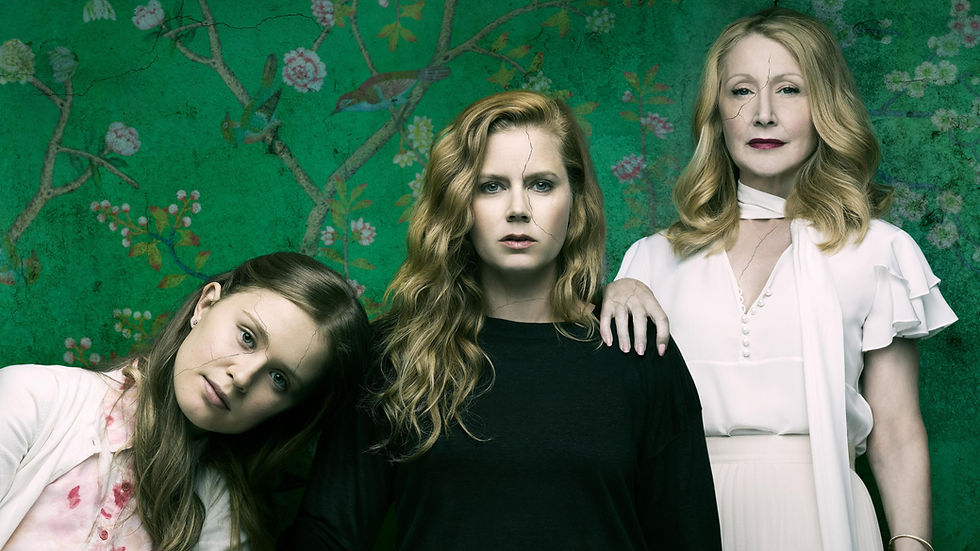
Reporter Camille Preaker returns to Wind Gap, Missouri, to cover the murder of one young girl and the disappearance of another. The assignment takes her back to the town where she grew up and into the house of her wealthy mother, Adora, and her half-sister, Amma. Camille’s editor wants a clear investigation, but the place itself keeps drawing her toward memories she has tried to keep buried. Amy Adams plays Camille, with Patricia Clarkson as Adora, Eliza Scanlen as Amma and Chris Messina as detective Richard Willis in HBO’s eight-episode limited series.
The story works on two tracks that keep pressing into each other. Camille interviews people about the girls and the town, trying to find the connections that might explain what happened. At the same time, her return forces her to spend time with a family whose rules have always made it difficult for her to feel safe or understood. The case is not separate from her past; every conversation about the victims raises questions about the home she left and the version of herself she has carried away.
Sharp Objects builds suspense through atmosphere, routine and emotional discomfort rather than a constant supply of plot turns. Wind Gap is full of familiar faces and social expectations, but Camille experiences it as a place where everyone seems to know her history except the parts she cannot say aloud. The show’s Southern Gothic mood is reflected in its houses, summer heat and precise family rituals. Those details can make an ordinary meal feel tense. Adams gives Camille a guarded intensity, while Clarkson makes Adora’s graciousness feel both inviting and difficult to read.
It earns second place because the television format gives the story room to let the investigation and Camille’s personal history develop together. The series is patient, and that patience lets performances and setting do a great deal of work. Its deliberate pace will not suit everyone; some viewers may find that the mood takes precedence over forward movement. But that slow-burn approach is also what makes the story’s emotional world feel so complete. Compared with Dark Places, it is more confident in adapting a character’s inner life for the screen. It sits below Gone Girl because its eight episodes are more immersive than propulsive, and its rewards depend on accepting a quieter rhythm.
If you are drawn to psychological drama that treats a mystery as part of a character study, Sharp Objects is the most intimate choice here. The case gives Camille a reason to return, but her relationships with Adora and Amma give the series its deepest tension. The story asks you to pay attention to what is said politely, what goes unmentioned and how a person’s home can shape the way she sees herself. HBO’s official page for Sharp Objects describes Camille’s assignment and return to her hometown.
🎧 Taking a Break From the Screen?
Listen to original romance, comedy and drama stories from That Love Podcast. Explore the latest episodes.
🎧 Before We Reveal Our No. 1 Pick…
You can also discover original romantic audio dramas from That Love Podcast. Listen here.
1. Gone Girl

On the morning of their fifth wedding anniversary, Nick Dunne reports that his wife Amy is missing from their Missouri home. A badly staged living room and a series of clues turn the disappearance into a police investigation, then a national media spectacle. As detectives, reporters and neighbours examine the couple’s life, the story moves between Nick in the present and Amy’s diary entries from earlier years. Ben Affleck plays Nick and Rosamund Pike plays Amy in David Fincher’s 2014 film, adapted for the screen by Flynn herself.
The setup gives Gone Girl an immediate hook, but the film’s deeper subject is the act of telling a story about a relationship. Nick and Amy have both been seen by other people in particular ways, and the investigation gives those impressions new power. The public wants a simple account of what happened. Interviews, photographs, diary pages and remembered conversations offer different versions of the marriage, so the audience has to reconsider the evidence as the film changes perspective. That structure makes the missing-person story a question about image, performance and who controls the narrative.
Pike and Affleck make the couple’s scenes and public appearances feel carefully balanced. Pike gives Amy an intelligence that can read as warmth, danger or both depending on the moment. Affleck’s Nick carries a loose, difficult-to-read quality that becomes part of the case’s tension. Fincher’s cool direction keeps the film precise even as the story grows more unsettling, while the score by Trent Reznor and Atticus Ross gives the relationship a polished surface with a corrosive edge underneath. Carrie Coon, Kim Dickens and Tyler Perry also make the supporting roles memorable without pulling focus from the central marriage.
Gone Girl takes first place because it makes its formal choices serve the story at every level. The shifting perspectives are not just clever devices; they make the viewer experience how easily a public version of a marriage can be built from selected evidence. The performances, editing and visual control all reinforce the same question, while the plot keeps moving with enough momentum to make the film gripping on a first watch. It beats Sharp Objects in this ranking because it is more tightly engineered as a feature, and it beats Dark Places because the adaptation’s shape feels more confident from premise to final note.
The film also has the strongest rewatch value of the three. Knowing the broad outline does not erase the interest in how the story handles its clues, characters and public spectacle. You can return to its early scenes and notice how much meaning sits in pauses, appearances and the way one person describes another. That is why Gone Girl is the most complete screen adaptation on this list: its thriller mechanics, performances and themes work together, and the result remains easy to discuss after the credits. Gillian Flynn’s official site identifies her as the author of the novel and writer of its screen adaptation.
Final Thoughts
These three adaptations share Flynn’s interest in people whose private histories do not fit the simple stories others tell about them. Dark Places builds its mystery around a family massacre and the memory of a child witness. Sharp Objects brings a journalist back to a hometown where a new case revives old wounds. Gone Girl turns a wife’s disappearance into a public story about marriage, performance and the power to frame what others believe.
Dark Places is the bleakest and most compressed pick, and it remains worth watching if the family-history question draws you in. Sharp Objects is the best choice when you want a slow, atmospheric series with a strong central performance and a haunting sense of place. Gone Girl is the most propulsive, formally controlled thriller, with the sharpest fit between its structure and its themes. It takes the top position because its mystery is both a gripping plot and a study of how relationships become stories told for other people.
You may order them differently, especially if atmosphere matters more to you than pace or if you prefer a television season’s room to breathe. Tell us which adaptation you would rank first, which performance stayed with you and whether there is another Flynn story you hope will make it to the screen.
Work With That Love Podcast
If you’re a brand, author, publisher, entertainment company or business looking to connect with an audience that loves movies, television, romance, books and pop culture, we’d love to hear from you. Discover advertising and sponsorship opportunities.
You May Also Love
Find more psychological suspense, crime and mystery recommendations in these That Love Podcast guides.
Support That Love Podcast
If you enjoyed this article and want to support more independent entertainment coverage and original audio storytelling, you can help us keep creating. Donate to That Love Podcast.
Looking for Something New to Listen To?
Listen to original romance, comedy and drama stories from That Love Podcast. Listen to the latest episodes.
You May Also Love
For more mystery series and character-focused crime stories, try these published That Love Podcast guides.
Frequently Asked Questions
How many Gillian Flynn novels have been adapted for the screen?
This article ranks three released adaptations of Gillian Flynn’s novels: Dark Places, Sharp Objects and Gone Girl. The first and third are films, while Sharp Objects is an eight-episode HBO limited series. The list leaves out Flynn’s work adapting stories that began with other writers, as well as projects that remain in development and have not yet been released. That distinction keeps the ranking focused on completed screen versions of her own books.
What is the best Gillian Flynn adaptation?
Gone Girl is our number-one choice because the story structure, performances and direction work together so closely. The film turns a missing-person investigation into a story about the different versions of a marriage that are created for private and public audiences. Sharp Objects is the better choice if you prefer a slow-burn series with a strong sense of place, while Dark Places suits viewers drawn to a bleak family mystery.
What is Dark Places about?
Dark Places follows Libby Day, who survived the murder of her mother and two sisters as a child. Her testimony helped convict her brother Ben, and years later a true-crime group encourages her to revisit the case. As Libby speaks with people connected to the family and returns to the events of her childhood, she begins to question how complete the accepted account is. Charlize Theron plays Libby in the 2015 film.
What is Sharp Objects about?
Sharp Objects follows reporter Camille Preaker as she returns to Wind Gap, Missouri, to cover the murder of one girl and disappearance of another. Her reporting brings her back into the orbit of her mother Adora and half-sister Amma, stirring painful memories of her own childhood. The investigation and the family drama keep influencing each other across the eight-episode series. Amy Adams, Patricia Clarkson and Eliza Scanlen star.
What is Gone Girl about?
Gone Girl begins when Nick Dunne tells police that his wife Amy has disappeared on their fifth wedding anniversary. The investigation turns their private life into a national story, and the people around the couple offer conflicting impressions of their marriage. The film shifts between Nick’s present-day search and Amy’s diary, making the viewer reconsider the details as the story develops. Rosamund Pike and Ben Affleck star in David Fincher’s adaptation.
Is Sharp Objects a film or a television series?
Sharp Objects is a television limited series, not a feature film. HBO released it as an eight-episode adaptation in 2018, starring Amy Adams as Camille Preaker. The longer format gives the story room to build Wind Gap, the investigation and Camille’s family history over several episodes. That slower pace is a large part of its style, so it suits viewers who enjoy atmosphere and character work more than rapid-fire plot turns.
Did Gillian Flynn write the Gone Girl screenplay?
Yes. Flynn adapted her own novel for David Fincher’s 2014 film. That connection helps explain why the film’s structure preserves the story’s shifting perspectives and its interest in who controls the narrative. The movie also uses its own visual and performance choices to express those ideas, so it is a screen adaptation rather than a filmed copy of the book. Flynn’s official website lists Gone Girl and her screenplay work.
Is Dark Places getting a new television adaptation?
A new television version has been reported as in development, with Flynn attached to the project, but a project in development is not a released adaptation. This ranking therefore covers the existing 2015 feature film version of Dark Places. Development plans can change before a series reaches production or a release date. Check current announcements from HBO and reliable entertainment outlets for a confirmed premiere or release update.
Which Gillian Flynn adaptation is the darkest?
Dark Places and Sharp Objects are both intensely bleak, but they create different kinds of darkness. Dark Places centres on family violence and a childhood shaped by a massacre, while Sharp Objects focuses on a murder investigation entangled with painful family relationships and memories. Gone Girl is also disturbing, but its cool, satirical approach to marriage and media gives it a different tone. Your choice depends on whether you want grim crime, Southern Gothic atmosphere or domestic psychological suspense.
What should I watch after Gone Girl?
Sharp Objects is a natural next choice if you want another Flynn adaptation that pairs a mystery with a troubled central character and an oppressive setting. If you want a feature film with more direct crime-investigation momentum, Dark Places is the closest match from this ranking. For more options beyond Flynn, browse the linked That Love Podcast guides to female-led thrillers, psychological suspense and mystery series. They cover different tones, from slow-burn dramas to sharper plot-driven films.
As an Amazon Associate I earn from qualifying purchases.