



8 Brilliant British TV Detectives to Watch After Ludwig

After Ludwig, it is natural to look for another detective with a distinctive mind, a strong supporting cast and cases that invite you to follow the clues. British television has built a long tradition of memorable investigators, from puzzle-minded eccentrics to patient police professionals. The best detectives do more than solve a crime; they make you want to spend time with them between cases.
This list ranks eight brilliant British TV detectives to watch after Ludwig. It includes characters who use unusual methods, see details other people miss, or bring a compelling personality to a familiar procedural. Some series are cosy and funny, while others are tense dramas. Each gives you a different version of the pleasure Ludwig offers: an engaging investigator, a satisfying mystery and a world worth returning to.
John Taylor is an unusual detective because he is not supposed to be a detective at all. He is a puzzle setter standing in for his missing twin, and his literal thinking creates both comic friction and sharp deductions. The detectives below are not copies of John, but they share something that can appeal to Ludwig fans: intelligence expressed through character, not just a dramatic final reveal.
If you are searching for the best British TV detectives, smart UK crime dramas or what to watch after Ludwig, these are excellent leads to follow. The list is spoiler-light and focuses on why each detective is worth watching, rather than revealing the resolutions to their best cases.
Let’s get into it 👇
# Support That Love Podcast Enjoying the recommendations? You can help support That Love Podcast and keep independent entertainment content like this coming. Donate to That Love Podcast
Explore more with our guide to the greatest TV detectives of all time.
# Want to Reach Entertainment Fans? Brands and publishers can connect with That Love Podcast readers and listeners. Find out about advertising.
8. DS Dodds — McDonald & Dodds

DS Dodds is a quiet, observant detective who can be easy to underestimate. Set against the direct, ambitious DCI Lauren McDonald, Dodds brings a patient style of investigation to McDonald & Dodds. He is comfortable taking time to examine a detail, and his knowledge can prove more useful than the more obvious display of authority. The partnership works because each detective notices different things.
Dodds is a good choice after Ludwig if you appreciate intelligence that does not arrive with swagger. John Taylor often has a correct insight but struggles to explain it in a socially smooth way. Dodds is more reserved than awkward, yet he also shows how a gentle manner can conceal a sharp mind. His investigations give the viewer a chance to watch someone who listens before he announces a theory.
The Bath setting adds character without overwhelming the cases. Historic streets and modern lives sit together, giving the show room to move between traditional whodunit structure and contemporary crime. McDonald’s energy can push the investigation forward, while Dodds’s careful attention helps test the evidence. Their contrast creates a satisfying team dynamic rather than a competition over who is cleverer.
Choose Dodds if you want a grounded British detective series with a distinctive partnership and occasional dry humour. He may not have John’s puzzle-maker background, but his thoughtful style and ability to catch overlooked details make him a comfortable next detective to follow.
7. DI Humphrey Goodman — Death in Paradise and Beyond Paradise

Humphrey Goodman is an endearingly unconventional detective whose intelligence is paired with a sometimes awkward manner. First introduced in Death in Paradise, he approaches cases with curiosity, patience and a willingness to consider an explanation that sounds odd at first. His personal warmth sets him apart from the colder, more hard-boiled investigator, and it helps make the series’ mysteries feel welcoming even when the crime itself is serious.
Humphrey’s appeal for Ludwig fans lies in the relationship between his mind and his personality. He can be distracted by an observation that other people dismiss, but that observation may be the start of a useful deduction. He is not as literal as John, and he works within a police team, yet both characters bring a slightly unusual rhythm to the investigation. Their intelligence is entertaining because it is tied to how they move through ordinary conversations.
In Beyond Paradise, Humphrey’s story continues in a rural Devon community. The change of setting gives the character a different pace and puts his family life more clearly alongside his work. Viewers who enjoy the ongoing relationship and domestic story in Ludwig may appreciate that balance. His cases remain accessible, while the personal storyline creates a reason to keep watching across episodes.
Start with Death in Paradise if you want a bright, tropical backdrop and a classic case-of-the-week format. Choose Beyond Paradise if you prefer village life and a gentler, family-focused tone. For current official details, check Death in Paradise and Beyond Paradise.
6. Father Brown — Father Brown

Father Brown is not a police officer, but his insight makes him one of British television’s most enduring detectives. Mark Williams plays the village priest who listens closely, understands human weakness and asks questions that official investigators may not think to ask. His faith is part of his perspective, but the mysteries depend on observation and an ability to see the emotional truth behind a person’s performance.
His cases are built around the people of Kembleford, where familiar neighbours can still surprise one another. Father Brown’s position gives him access to confessions and private conversations, yet he is not simply handed the answer. He has to work through motive, opportunity and the details people leave out. That makes him a strong fit for viewers who like Ludwig’s attention to what a witness says and what their words actually establish.
The tone is cosy and rooted in a period setting. The show returns to the same village and supporting characters, making it easy to settle into over multiple seasons. It is gentler than a modern police thriller, and Father Brown’s warmth makes him an appealing lead even when the cases are serious.
Ludwig fans may enjoy that Father Brown is a detective with a different route into the truth. John uses formal logic and puzzle structure; Father Brown often uses patience and empathy. Both series suggest that solving a crime can involve understanding people as much as identifying a clue. Find programme details on the BBC’s Father Brown page.
5. DCI Vera Stanhope — Vera

Vera Stanhope is a formidable investigator with a sharp eye, a blunt manner and a deep understanding of the North East communities where she works. Brenda Blethyn’s performance gives Vera a memorable combination of toughness and vulnerability. She can be impatient with evasions, but her determination comes from caring about the people affected by a crime and refusing to settle for an easy explanation.
Vera is a different kind of detective from John Taylor. She does not approach a scene like a puzzle setter; she reads people, follows inconsistencies and persists until the emotional and physical evidence line up. That makes her a useful follow-up if you want a more serious procedural after Ludwig’s comedy. The cases are often shaped by family ties, local history and personal choices, so the motive can matter as much as the method.
The Northumberland landscape is central to the atmosphere. Coastal roads, open countryside and small towns make the region feel distinctive, and Vera’s relationship with the place gives the series a strong sense of identity. Her team provides procedural support and interpersonal contrast, while Vera remains the compelling centre of the investigation.
Vera is worth watching when you want a detective who is not polished or conventionally charming but is impossible to ignore. Her methods are practical, her questions are direct and her cases are grounded in character. If you liked the way Lucy balances professional focus with personal loyalty in Ludwig, Vera offers another lead whose working relationships add depth to the crime stories.
4. DI Endeavour Morse — Endeavour

Endeavour Morse is the younger version of the detective first made famous in Inspector Morse. Set in Oxford, Endeavour follows a gifted but sometimes isolated officer whose intelligence, cultural interests and difficult personal history shape how he investigates. Shaun Evans plays Morse as perceptive and principled, but also capable of making life harder for himself through pride and reserve.
Morse’s cases often use Oxford’s institutions, traditions and social divisions as part of the mystery. A crime may connect to academia, music, local history or a seemingly respectable family. The detective has to navigate environments where knowledge and status can be used to obscure the truth. That makes the series rewarding for viewers who like a mystery that has texture beyond the crime scene.
The link to Ludwig is not a comic premise but an interest in how a character’s mind influences the investigation. Morse’s intelligence is broad and sometimes intuitive; John’s is more explicitly built around puzzles. Both are outsiders in their own way, and both can struggle to communicate smoothly with people who do not share their perspective. The supporting partnership with Fred Thursday gives Endeavour a strong emotional and professional centre.
This is an excellent choice if you want a richly detailed British detective drama with an ongoing character story. The tone is more reflective and often more serious than Ludwig, and the period setting adds another layer. Watch the series from the beginning to follow Morse’s development and the evolving relationship with his colleagues.
3. DCI Jane Tennison — Prime Suspect
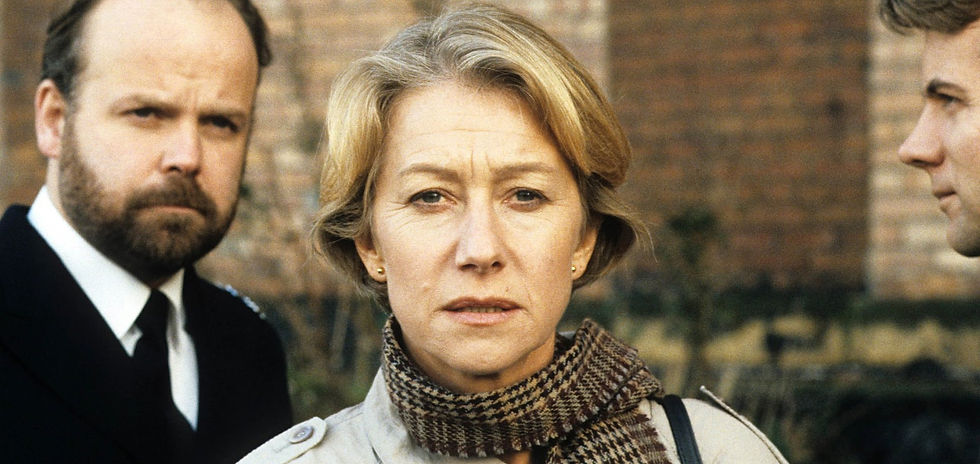
Jane Tennison is one of British television’s landmark detectives. Played by Helen Mirren in Prime Suspect, she is a determined senior investigator working in a police culture that repeatedly underestimates and challenges her. Tennison’s intelligence is matched by professional discipline and persistence; she has to prove her authority while solving cases that demand careful attention to evidence and motive.
Unlike Ludwig, Prime Suspect is a serious crime drama rather than a comedy. Its cases often explore institutional bias, political pressure and the emotional cost of police work. Tennison is compelling because the obstacles are not limited to the crime itself. She must negotiate colleagues’ assumptions, the expectations placed on women in authority and the private compromises demanded by an intense career.
Ludwig viewers may appreciate Tennison’s ability to keep asking questions when an easier answer would satisfy the room. Her investigations unfold through interviews, evidence and methodical work, and the series is interested in how professional systems shape an investigation. The detective’s character is inseparable from the cases, but the programme does not turn her into an infallible hero. Her choices have consequences.
Choose Prime Suspect when you want a more challenging and grounded series about a brilliant investigator. It is not a light follow-up, but it is essential viewing for anyone interested in the history of British crime drama and the detectives who changed what television could do with the genre.
2. Sherlock Holmes — Sherlock

Sherlock Holmes is the most famous detective on this list, and the BBC series Sherlock gives the character a modern London setting. Benedict Cumberbatch plays a brilliant consulting detective whose ability to infer details from people and objects is both his greatest asset and a source of social friction. Martin Freeman’s John Watson provides a grounded perspective and a loyal partnership that becomes central to the series.
The connection to Ludwig is easy to see: both shows turn observation into entertainment. John Taylor’s puzzle-solving instinct helps him see how the pieces of a case fit together; Sherlock makes deduction a defining performance. The difference is scale and tone. Sherlock is faster, more heightened and often more dramatic, with larger threats and a stronger emphasis on the detective’s mythic intelligence.
The friendship between Sherlock and Watson is what keeps the show human. Sherlock may be the person who solves the case, but Watson challenges him, helps him relate to other people and gives the audience a way into the story. That relationship echoes the importance of Lucy and the Cambridge team in Ludwig: a detective’s talent is more interesting when it has to work alongside other people.
Sherlock is a strong pick if you want contemporary British mysteries with a larger-than-life lead. The episodes are longer than a standard procedural and often connect to wider arcs, so begin with the first episode and watch in order. The BBC programme page has official series information.
1. Jonathan Creek — Jonathan Creek

Jonathan Creek is the best detective to watch after Ludwig if your favourite part of John Taylor’s story is the way he solves a puzzle. Jonathan designs illusions for a stage magician, so he understands how an apparently impossible event can be created through timing, perspective and misdirection. He is brought into cases that seem to defy ordinary explanation, and his job is to work out which assumptions have made the crime look impossible.
The series gives viewers a distinctive kind of mystery. A locked room or inexplicable disappearance is not just a hook; it is a practical problem. Jonathan wants to know what a witness saw, what they merely inferred and how a trick could exploit the gap. That is close to Ludwig’s pleasure of watching John turn an odd detail into a logical route through the case.
Jonathan himself is dry, private and often bemused by the people around him. His work background shapes his mind, but it does not make him socially smooth or universally confident. Investigative partners such as Maddy Magellan provide energy and perspective, helping the show balance the intellectual puzzle with character comedy.
Jonathan Creek ranks first because it combines clever British mysteries, an unconventional lead and a wry tone in a way that feels like a natural continuation after Ludwig. The cases can be eccentric, but they are built around a central question viewers can follow. If you want a detective who thinks like a puzzle-maker, start here. The BBC’s official page provides series details.
Which detective should you watch first?
Start with Jonathan Creek if you want ingenious puzzle cases, Sherlock if you want a modern, high-energy take on deduction, or Endeavour if you want a thoughtful period drama with a gradual character arc. For a cosy mystery, Father Brown is an easy choice. For a more serious police investigation, Vera and Prime Suspect offer very different but equally memorable detectives.
The right next show depends on what you want from a mystery night. Ludwig mixes comedy, family life and a weekly case. Not every detective series will balance those elements in the same way. A good pick can preserve the part you enjoyed most while giving you a new mood: more logic, more atmosphere, more emotional realism or a stronger focus on the police team.
What makes a TV detective memorable?
The best television detectives have a method viewers can recognise. It might be Jonathan Creek’s attention to illusion, Sherlock’s rapid deduction, Vera’s persistence or Father Brown’s patient understanding of people. A method creates anticipation: when the next case begins, viewers know what kind of question the detective is likely to ask, but they do not know where the answer will lead.
A strong detective also has limits. John Taylor is excellent at seeing patterns and uncomfortable with ordinary social rules. Vera is tough but not detached from the people she investigates. Sherlock can see a clue and still miss the emotional meaning around it. These gaps let supporting characters matter, and they stop intelligence from becoming a shortcut that removes tension.
Finally, a memorable investigator belongs to a world. The Oxford of Endeavour, the North East of Vera, the London of Sherlock and the theatre-adjacent puzzle world of Jonathan Creek all shape the cases. Ludwig’s Cambridge setting and police workplace serve the same role. When the place, the team and the detective’s method come together, a series becomes more than a succession of crimes.
Choose a detective by the kind of story you want
If you want a lead who solves a case by testing the mechanics of a strange event, start with Jonathan Creek. His magician’s-illusion background gives the investigation a clear question: how could this apparently impossible thing have happened? If you prefer deduction with a modern pace and a larger sense of spectacle, Sherlock is a better fit. Both shows make observation part of the entertainment, but Sherlock is more dramatic, while Jonathan Creek is more dry and puzzle-led.
For a detective whose character develops over years, Endeavour offers a thoughtful journey. It follows Morse before the events of the original Inspector Morse series, so the viewer sees how the young officer becomes the person he will later be. Prime Suspect takes a different route through time, giving Jane Tennison demanding cases and showing the professional cost of her ambition. These are good choices when you want the investigation to sit inside a larger portrait of work, identity and personal life.
Vera is the strongest choice for an experienced, no-nonsense investigator who knows how to keep asking difficult questions. Father Brown is a gentler option, with a priest whose access to people’s private worries helps him understand their motives. Humphrey Goodman gives you warmth and comic awkwardness, while Dodds offers a quieter partnership built on observation. Choosing by temperament can be more useful than asking which detective is technically the cleverest.
Why character is as important as deduction
A detective’s brilliance is only one part of a good series. The character must create tension, humour or emotional investment while the case is unfolding. John Taylor can be right about a pattern and wrong about how to speak to a witness. Vera may understand a suspect’s evasions but clash with colleagues. Sherlock can make a correct inference and still overlook what a friend needs. These limits keep the characters human and give the people around them meaningful work to do.
The best detective series also build a relationship between the investigator and the audience. Viewers learn the lead’s habits, the questions they ask and the kinds of details they value. That familiarity creates pleasure when a new case begins: you know what the detective is good at, but not which clue will matter this time. A recurring team deepens that bond. Lucy and the Cambridge officers make Ludwig’s deductions more engaging because the audience sees how John’s ideas land with different people.
That is why the eight recommendations range beyond one type of show. A puzzle-focused series, a police procedural and a cosy village mystery can all appeal to Ludwig fans for different reasons. If you enjoy a detective’s mind, Jonathan Creek may be best. If you want an ensemble, Death in Paradise or McDonald & Dodds may be more satisfying. If you want to spend time with a lead whose professional life carries real weight, Prime Suspect or Vera provides a very different but compelling experience.
British detective television has room for every mood
British mystery television is not one tone or formula. Some shows invite you to solve a locked-room puzzle; others follow police procedure through a difficult case. A period village mystery can feel comforting, while a contemporary city drama can be tense and morally complicated. The settings matter too: Oxford, the North East, Bath, London and a fictional Caribbean island all give their series a particular rhythm.
Ludwig is appealing because it moves between tones. It can let John make an awkward joke, ask Lucy a revealing question and then turn back to a murder puzzle without losing its sense of character. You may not find another show with the same mixture, but you can choose a next series that carries forward the ingredient you want most. Treat this ranking as a menu: try the detective who sounds right for your mood, then return for another once you have finished.
For a first sample, choose one early episode that introduces the detective and their team. That gives you the context needed to understand why the lead approaches a case in a particular way. If the series has an ongoing story, watch in order. If each episode stands alone, you can test the format with a case that has a setting or premise you find interesting. Either way, the best detective is the one you enjoy following after the crime has been solved. ## Frequently asked questions
Who is the best British TV detective?
There is no single answer. Sherlock Holmes is iconic, Jane Tennison changed the police drama, Vera is a modern favourite, and Jonathan Creek is an excellent choice for puzzle fans. The best detective depends on the tone and type of mystery you enjoy.
What detective should I watch after Ludwig?
Jonathan Creek is the closest match for viewers who enjoyed John’s logic puzzles. If you want a warmer police procedural, try McDonald & Dodds or Death in Paradise; for a serious drama, choose Vera or Prime Suspect.
Is Jonathan Creek like Ludwig?
Both series use an unconventional lead whose way of thinking helps solve unusual cases. Jonathan Creek focuses more heavily on apparently impossible crimes and stage-illusion logic, while Ludwig blends puzzles with family comedy and John’s twin impersonation.
Which British detective show is the funniest?
Ludwig, Jonathan Creek and Death in Paradise all use humour alongside mystery, though in different ways. Shakespeare & Hathaway is another light option if you prefer comic detective partnerships.
Which series has the most complex mysteries?
Jonathan Creek and Sherlock are known for high-concept puzzles and deduction. Endeavour and Prime Suspect offer more layered cases that develop through character and investigation rather than a single trick.
Do I need to watch these series in order?
For ongoing stories, yes, especially Endeavour and Sherlock. Many episodes of Vera and Father Brown have self-contained cases, but watching in release order helps you follow the relationships and the lead character’s development.
Is Prime Suspect suitable for viewers who like cosy mysteries?
Prime Suspect is much more serious and explores difficult themes. It is a strong recommendation for viewers who want a grounded police drama, but it does not have the cosy tone of Ludwig or Father Brown.
Where can I check streaming availability?
Availability changes between countries and platforms. Check official broadcaster pages or the current listing in your local streaming apps before subscribing.
What makes John Taylor different from other detectives?
John is a puzzle setter who impersonates his missing twin, a police detective. His pattern recognition helps him solve cases, while his social awkwardness creates both comedy and complications. That mix makes him different from a conventional procedural lead.
Are there more British detective recommendations?
Yes. Explore That Love Podcast’s BBC detective shows guide, ITV detective shows list, and British detective series roundup.
More places to explore
For official information, see the BBC pages for Ludwig, Jonathan Creek, Sherlock, and Father Brown. For more entertainment recommendations from That Love Podcast, browse the episodes page, support the site, or see advertising options.
12 alternative SEO title ideas
1. 8 Brilliant British TV Detectives to Watch After Ludwig 2. What to Watch After Ludwig: 8 Great British TV Detectives 3. 8 Best British Detectives for Fans of BBC’s Ludwig 4. From Jonathan Creek to Vera: 8 British TV Detectives Ranked 5. 8 Clever British Detectives to Binge After Ludwig 6. The Best TV Detectives in British Crime Drama 7. 8 Iconic British TV Detectives and Their Best Shows 8. 8 Brilliant UK Detectives for Mystery-Loving Ludwig Fans 9. Best British Detective Shows: 8 Unforgettable Leads 10. 8 British Crime Drama Detectives Who Solve Every Case Their Way 11. The 8 Smartest British TV Detectives to Watch Next 12. 8 Great British Mystery Detectives for Your Next Binge
---
Listen to more entertainment discussions on That Love Podcast. Support independent coverage with a donation, and learn about advertising.