




10 Best Batman Villains Ranked

Batman has one of the richest rogues’ galleries in comics because his enemies do more than create obstacles for a costumed hero. They test different parts of Bruce Wayne’s identity. Some turn Gotham into a puzzle, some use the city’s fear against it, and some make Batman confront the possibility that his rules are more fragile than he wants to believe. Ranking the best Batman villains means considering how well each character challenges Bruce, how memorable their stories are and whether they remain compelling beyond one particular adaptation.
This countdown follows your ranking exactly: Clayface enters at #10, while the Joker claims #1. The list draws on the characters across comics, films and television rather than treating a single actor’s performance as definitive. A villain can change dramatically from one version to another. The Riddler can be a theatrical puzzle-setter, an obsessive serial killer or a lonely genius desperate to be recognised. The Penguin can be a grotesque gangster or a polished political operator. Those variations are part of what makes Gotham so adaptable.
Batman’s best villains also reflect the city they inhabit. Gotham is corrupt, unequal and full of people who have turned pain into a personal mythology. The villains make that rot visible, but they are not all tragic or sympathetic. Some are frightening precisely because they enjoy control. Others begin with a real grievance and then choose an unforgivable response. Batman’s task is to stop them without becoming a mirror image.
If you are looking for the best Batman villains ranked, Batman’s greatest enemies, or a guide to Gotham’s most iconic rogues, this article explains why each character matters. We consider motive, visual identity, story potential and the kind of challenge each one creates for Bruce. Different readers will rank the top three in a different order, and we welcome that argument.
Let’s get into it 👇
Support That Love Podcast
Enjoying the recommendations? Donate to That Love Podcast to support independent entertainment writing and original audio stories.
If you love this, check out 9 Batman Villains Who Deserve the DCU Spotlight, which looks at rogues who deserve more screen time. Explore That Love Podcast episodes for original audio stories.
Want to Reach Entertainment Fans?
That Love Podcast offers advertising and sponsorship opportunities across the website, podcast and newsletter. Find out more.
10. Clayface

Clayface is one of Batman’s most visually inventive enemies. Several characters have carried the name, but the classic concept centres on an actor or performer whose body becomes a shifting mass of clay. That power lets Clayface imitate other people, reshape limbs into weapons and slip through spaces that would stop an ordinary criminal. For Batman, the challenge is not just physical. If the person across the room can change face at any moment, evidence and trust become unstable.
Clayface can be written as a tragic figure whose transformation costs him his old identity, or as a monstrous criminal who enjoys manipulating people through imitation. The best stories use both sides: his appearance is frightening, but his lost humanity gives Batman something to appeal to besides force. The character also gives artists a chance to make action sequences genuinely strange, since Clayface can turn a familiar room into a threat.
At #10, he ranks just outside Gotham’s central icons, but his shapeshifting ability makes him one of the rogues’ gallery’s most flexible threats. Fans who want a supernatural or body-horror Batman story should move him up. His best stories are reminders that the scariest disguise is one that makes you question what is real. For official character details, browse DC’s Batman universe.
9. Penguin

Penguin is often mistaken for a joke because of the name and the umbrella, but Oswald Cobblepot is most effective when treated as an organised criminal with social ambition. He is a Gotham insider who understands that power can be exercised through money, information and respectability as easily as through a weapon. The nightclub, the legitimate business front and the carefully chosen suit are not decorations; they are part of his attempt to make the city accept him while he manipulates it.
That position makes Penguin a valuable contrast to Batman. Bruce is wealthy and uses his fortune to fight crime; Oswald uses his resources to profit from Gotham’s weaknesses. Their public status and private identities are almost opposite mirrors. Penguin does not always want to destroy the city. Often he wants a place at the table, and his resentment grows when the old elite treats him as an outsider.
At #9, he is not always the most physically dangerous villain, but he is one of Gotham’s most useful recurring power brokers. Stories about Penguin can be crime dramas rather than superhero spectacles, giving Batman a different kind of opponent. Colin Farrell’s version in The Batman and the HBO series leans into that criminal ambition. For another take, read The Penguin review.
8. Poison Ivy
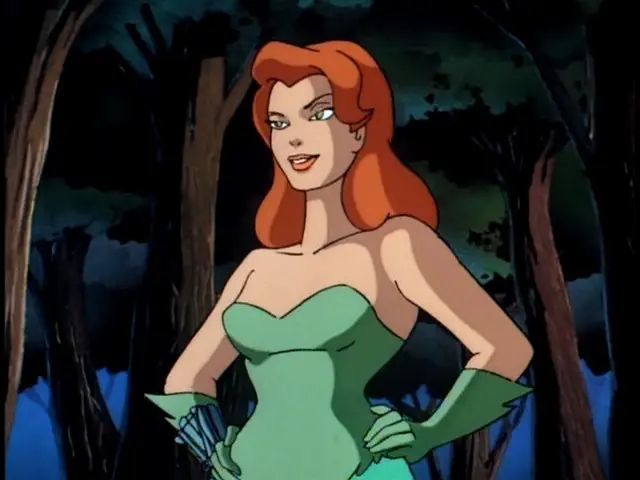
Poison Ivy can turn a botanical lecture into a threat to the entire city. Pamela Isley is a scientist whose connection to plant life gives her control over vines, toxins and pollen, but her strongest stories are about the conflict between environmental protection and human life. She may begin with a legitimate anger at corporations that poison ecosystems, yet her willingness to treat people as expendable makes her a genuine antagonist. Batman cannot dismiss her concerns, but he also cannot allow her to decide that mass harm is acceptable.
Ivy’s powers create distinctive visual storytelling. Gotham’s hard surfaces can be swallowed by greenery; a greenhouse can become a fortress; a kiss can carry danger. She also works well in stories about obsession and persuasion, because her charm can be as threatening as her toxins. Depending on the writer, she can be a villain, antihero or ally, and that range is one reason she remains relevant.
At #8, Ivy has more potential than many adaptations use. She brings ecological themes into Batman’s urban crime world and challenges Bruce to think beyond one night’s emergency. Her best stories give her wit and intellect, not just a plant-themed costume. DC’s character library is a useful place to explore the wider cast surrounding Batman. Where to watch or read: check current listings through JustWatch UK.
7. Mr. Freeze
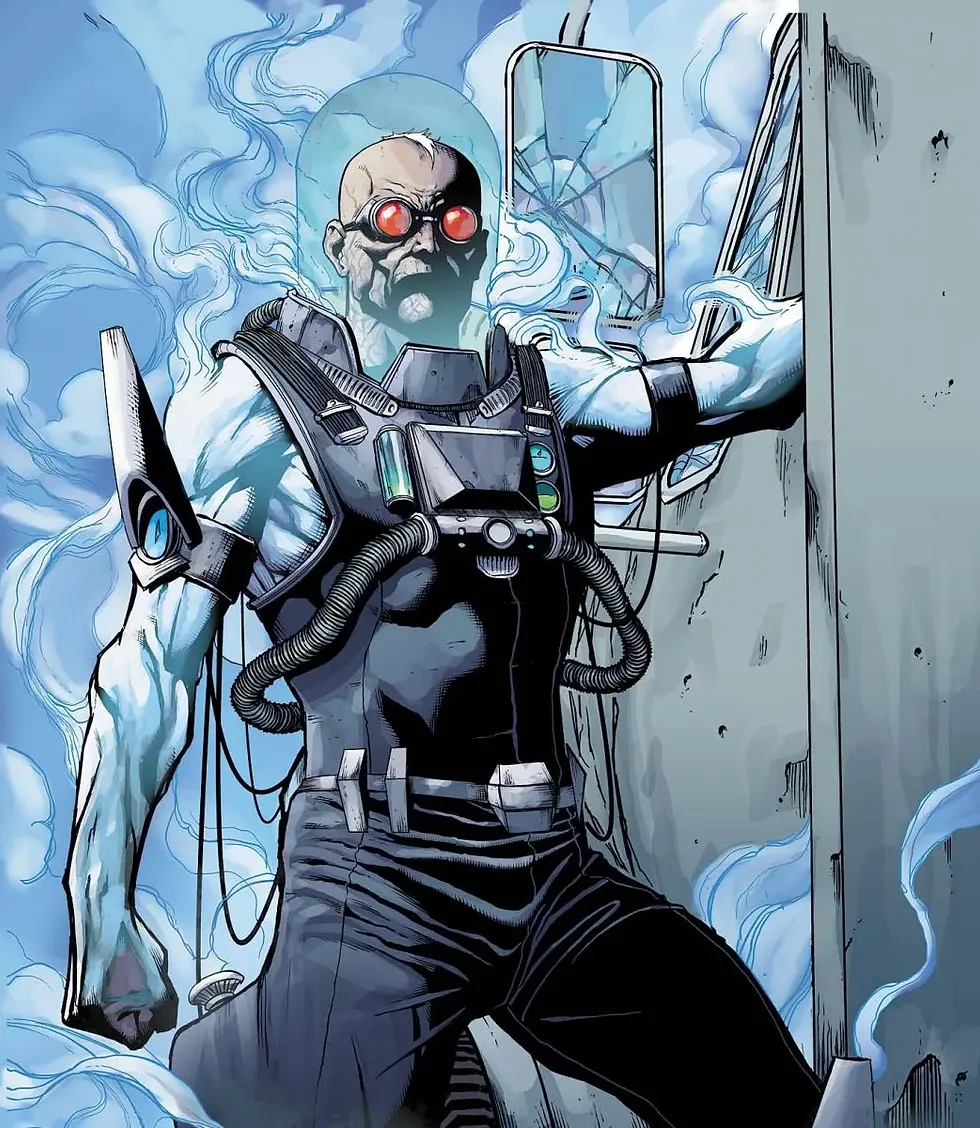
Mr. Freeze is one of Batman’s most tragic enemies because the best version of Victor Fries is motivated by love. His scientific work and criminal methods are tied to the desperate effort to save his wife, Nora, from a fatal illness. Freeze’s cold equipment and icy crimes create a clear visual identity, but the emotional engine is a refusal to accept loss. Batman can understand the grief without approving of the people harmed in the process.
The character’s defining stories make Gotham physically colder while asking a warmer question: what does devotion become when it refuses every limit? Freeze is often a precise, controlled presence rather than a chaotic one. That restraint makes him distinct from the Joker and gives his confrontations with Batman a quieter sadness. When he is written as a one-note “ice villain,” the story loses the quality that made him memorable; when his intelligence, grief and anger are all present, he becomes one of the rogues’ gallery’s strongest tragic figures.
At #7, Freeze is a fan favourite whose emotional potential is enormous, even if not every adaptation uses it equally well. His visual design is also among the most recognisable in Gotham. He suits readers who enjoy a villain whose motive is understandable and whose choices remain indefensible. Where to watch: check the current UK availability of Batman: The Animated Series and other adaptations.
🎧 Taking a break from the villains? Listen to original stories from That Love Podcast.
6. Scarecrow
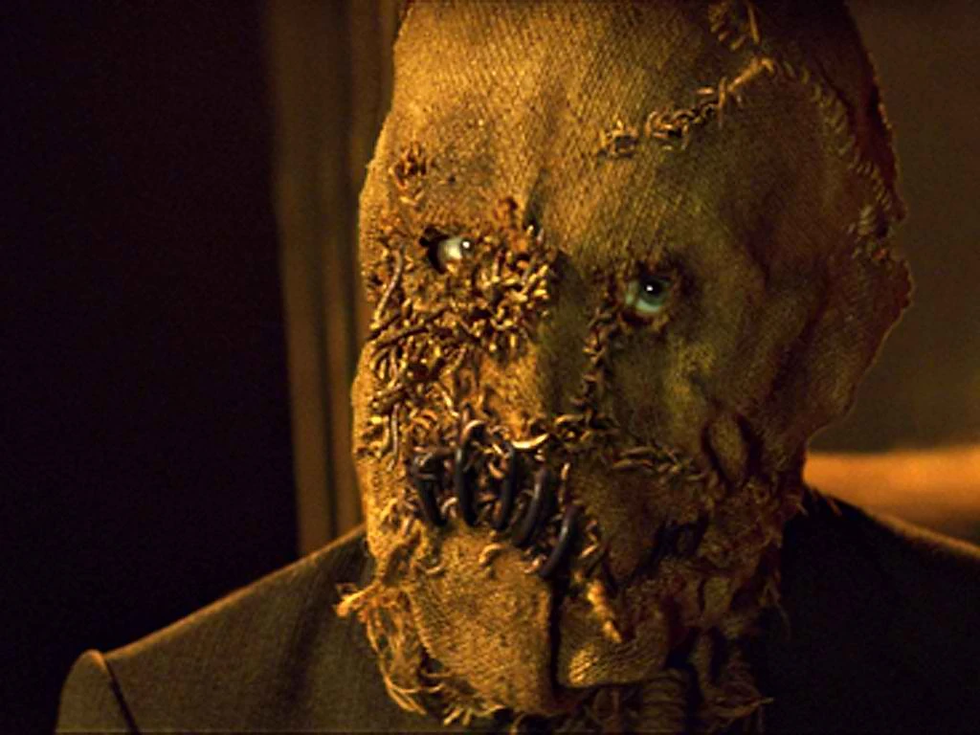
Scarecrow attacks Batman through the one material Bruce has spent a lifetime trying to master: fear. Jonathan Crane is a psychologist and criminal who uses fear toxin to distort perception, turning a person’s most private terrors into an immediate experience. Batman’s training gives him discipline, but it does not make him immune. In fact, Scarecrow’s greatest advantage is that he understands fear as both a chemical reaction and a means of control.
The villain’s scarecrow costume and gas mask give him a silhouette that feels almost folkloric. He is a figure from a harvest nightmare wandering through a modern city. Strong stories use that contrast to show how fragile Gotham’s ordinary reality can feel when people cannot trust their senses. Scarecrow can also expose Bruce’s unresolved childhood trauma without reducing Batman to a helpless victim; the interesting question is how Bruce acts while afraid.
At #6, he is one of Batman’s most thematically precise villains, though his threat can become repetitive if every story relies on another toxin hallucination. His psychology gives writers a direct way to examine Batman’s inner life. Cillian Murphy’s film portrayal and the animated versions highlight different facets, but the character’s core remains the same: fear can be engineered, and a disciplined mind is still vulnerable. Where to watch: verify current Batman film listings on JustWatch UK.
🎧 Taking a break from the screen? Explore the latest episodes from That Love Podcast.
That Love Podcast also offers advertising opportunities for entertainment brands and creators.
5. Ra’s al Ghul
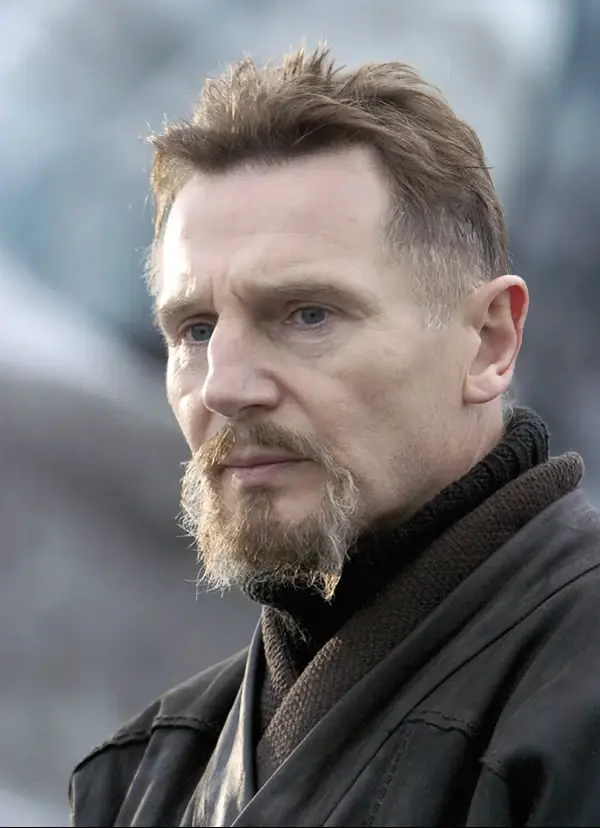
Ra’s al Ghul gives Batman a global antagonist with the conviction and resources to threaten entire societies. The leader of the League of Assassins believes humanity is destroying the world and that mass death can be justified as a corrective. His longevity, strategic patience and knowledge of Bruce Wayne make him more than a powerful enemy; he is a possible mentor whose values Bruce must reject. Ra’s understands Batman’s discipline, which makes their disagreement more compelling than a clash between strangers.
His best stories put idealism and extremism uncomfortably close together. Ra’s is not wrong to see corruption and environmental damage, but his solution treats individual lives as disposable. Batman’s refusal to kill becomes a direct challenge to Ra’s belief that only ruthless action can save the future. Their relationship can feel almost familial, which adds another layer to the conflict.
At #5, Ra’s ranks as one of Batman’s most important strategic and philosophical opponents. He is less instantly recognisable than Joker or Two-Face, but he gives the franchise a wider scope and a villain who can plausibly anticipate Bruce’s moves. Liam Neeson’s version in Batman Begins makes his mentor relationship central, though comic stories allow for much more of his history. DC’s official Batman profile offers a useful overview of the character’s long publication history.
4. The Riddler
The Riddler turns the crime story into a performance. Edward Nygma wants Batman to prove his intelligence by solving clues, but beneath the puzzles sits a hunger for recognition and control. In some versions, he is a flamboyant showman who cannot resist leaving a theatrical clue; in others, he is an obsessive criminal who uses puzzles as a way to impose his worldview on the city. Either way, he is one of the villains best suited to Batman’s detective side.
The Riddler’s presence changes the structure of a story. Batman has to interpret a message, anticipate the next move and understand why a particular crime has been staged. That gives the audience a role in the investigation. The villain can also challenge Bruce intellectually without needing to overpower him physically. Paul Dano’s version in The Batman is a striking example of how the character can be adapted into a grim crime thriller, while other versions lean much more into comic-book absurdity.
At #4, the Riddler is a perfect Batman antagonist because he makes the hero use his mind and forces Gotham’s hidden secrets into view. The best stories balance cleverness with character; a puzzle alone is not enough. Fans who love mysteries and cat-and-mouse plots may place him even higher.
3. Bane

Bane is often reduced to the man who broke Batman’s back, but the character is much more interesting when physical strength and strategic intelligence are both present. Born and raised in a brutal prison, Bane becomes a tactician who studies Batman, identifies his habits and chooses the moment to attack. His use of Venom can make him enormously strong, yet the drug is only one part of his danger. Bane’s patience is what makes him a true threat.
A good Bane story tests Batman at several levels. Bruce’s body can fail, his confidence can become a weakness, and his reliance on being the smartest person in the room can be used against him. That makes Bane a villain who can change the status quo instead of simply appearing for one dramatic fight. His imposing mask and controlled voice make him visually memorable, but his planning is the reason he belongs among Gotham’s top adversaries.
At #3, Bane is the rogues’ gallery’s most effective physical and strategic challenger. The Dark Knight Rises gives him a large cinematic presence, while comic stories often explore his tactical skill in greater depth. Readers should look for versions that preserve both sides; a brute alone is a less interesting opponent for Batman.
🎧 Before our No. 1 pick, discover original audio stories from That Love Podcast.
2. Two-Face
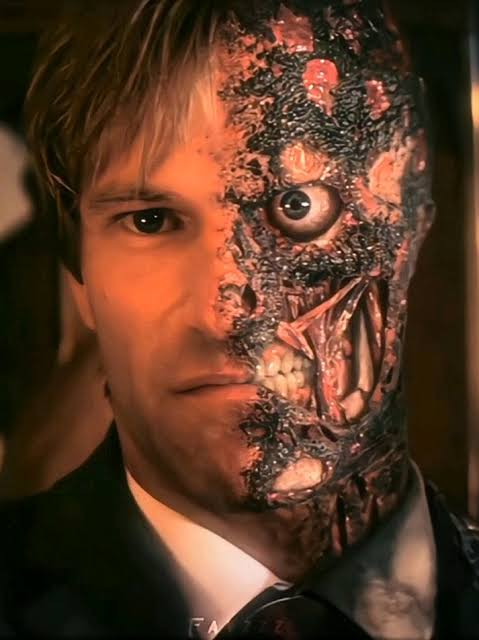
Harvey Dent’s tragedy is that Gotham once believed he could make Batman unnecessary. As district attorney, Harvey represents lawful reform: the idea that the city can defeat organised crime through institutions rather than through a masked vigilante. His transformation into Two-Face turns that hope into a personal catastrophe. The coin is more than a signature prop; it lets Harvey pretend chance is responsible for decisions he has already made.
Two-Face forces Bruce to confront a painful question about friendship and justice. Harvey was not just another criminal; he was an ally whose fall changes what Batman thinks the city can become. The villain’s divided appearance reflects a divided moral life, but the best stories do not make him a simple symbol. He is a person whose grief, rage and attachment to an old ideal remain tangled together.
At #2, Two-Face is the strongest tragic villain in Batman’s world and one of the most emotionally consequential. His stories give Gotham’s institutions a face and show how corruption can break people who were trying to fight it. Aaron Eckhart’s performance in The Dark Knight is memorable, though the comics and animation offer more time with Harvey’s internal conflict. He would be a reasonable #1 choice for fans who prioritise tragedy over mythic chaos.
1. The Joker

The Joker is Batman’s greatest enemy because he attacks the meaning of Batman’s mission. He is not always the strongest or most organised villain, but he understands how to make Gotham’s fear visible. His unpredictable humour, theatrical crimes and personal fixation on Batman turn each encounter into an argument about whether order can survive chaos. Different writers and actors present him as a prankster, an anarchist, a serial killer or a disturbing mixture of all three.
The best Joker stories do not rely only on shock. They use his unpredictable behaviour to test Batman’s self-control and his refusal to kill. Joker wants Bruce to abandon that boundary, because turning Batman into a killer would make the two men feel less different. That obsession creates an unusually intimate rivalry even when the plot is large. The Joker can also expose Gotham’s appetite for spectacle, since the city watches his crimes almost as if they were a show.
At #1, Joker remains the most enduring Batman villain because he can embody multiple fears at once: loss of control, the fragility of social rules and the possibility that a personal code will collapse under pressure. Heath Ledger’s film performance, Mark Hamill’s animated voice work and Joaquin Phoenix’s separate character study each reveal different versions. No single adaptation defines the character, which is part of the point. For more on overlooked Gotham threats, read 9 Batman Villains Who Deserve the DCU Spotlight.
What Makes a Great Batman Villain?
A memorable Batman villain challenges more than his physical strength. The Riddler makes him investigate. Scarecrow makes him face fear. Two-Face puts his belief in justice under emotional strain. Bane tests the body and the mind. Joker attacks the boundary Bruce has built around himself. The villains who last are the ones who create a problem Batman cannot solve simply by hitting harder.
Gotham also benefits from range. The city needs organised crime, theatrical criminals, tragic figures and characters whose motives connect to social or personal conflicts. Penguin gives Batman a political and criminal power broker. Poison Ivy brings environmental questions into the story. Clayface can make reality and identity unstable. Ra’s al Ghul raises the stakes beyond the city. That variety keeps each story from feeling like a rerun.
The strongest adaptations also allow villains to be funny, pathetic, charming or frightening without losing their danger. A character who can only snarl becomes repetitive. A character who can make the audience understand a grievance without excusing the harm becomes more compelling. Mr. Freeze’s love for Nora, for example, makes his motives legible while keeping the crimes serious.
Finally, Gotham’s villains reflect the hero. Batman is a man who channels trauma into discipline; his enemies often turn pain into obsession. That is not a perfect symmetry, and the stories should not imply that grief inevitably creates a criminal. It does, however, give Batman an emotional reason to keep looking for a better outcome than simple revenge.
Advertise With That Love Podcast
Want to reach readers who love movies, comics and pop culture? Explore That Love Podcast advertising opportunities.
You May Also Love
- 9 Batman Villains Who Deserve the DCU Spotlight - The Penguin Review: Colin Farrell Shines in HBO’s Gritty Batman Spinoff - 10 DC Movies and Shows for Dark Knight Trilogy Fans - Top 10 Superhero Movies That Revolutionized Cinema Forever - Top 10 Marvel & DC Movies Ranked in IMDb’s Top 250
For advertising and partnership opportunities, see the information above and contact That Love Podcast.
Conclusion
The best Batman villains make Bruce reveal something about himself. The Joker tests his code, Two-Face shows what Gotham can lose, and Bane proves that preparation can be turned against the person who depends on it. The Riddler is the strongest detective-story opponent, while Mr. Freeze and Clayface offer the rogues’ gallery’s most unusual tragic and visual possibilities.
This ranking puts Joker first because no other enemy has shaped Batman’s identity so persistently across comics, films and television. That said, Harvey Dent may be the most heartbreaking, and Bane may be the most physically formidable. Gotham’s gallery is deep enough for a different answer depending on what kind of story you value.
Which villain would you move to the top, and who deserves more attention in a future Batman film? Tell us your ranking.
Support That Love Podcast
If you enjoyed this list, donate to That Love Podcast to support independent entertainment writing and original audio stories. Then listen to our latest episodes.
How Batman’s Rogues Challenge Different Parts of Bruce Wayne
The variety of Batman’s rogues gallery comes from the fact that the villains do not all test the same skill. Clayface challenges the line between identity and appearance. Penguin represents the criminal systems and social hierarchies that keep Gotham unequal. Poison Ivy turns environmental anger and personal autonomy into a threat. Mr. Freeze is often written through grief, making him a reminder that emotional pain can make a person understandable without making their actions acceptable.
Scarecrow attacks the senses and uses fear to make Batman question what he sees. Ra’s al Ghul brings an ideological argument, asking whether Gotham can be saved without destroying the people who live in it. The Riddler makes Batman prove that he is an investigator and not just a fighter. Bane combines physical strength with planning, which means Bruce cannot treat the encounter as a simple contest of force. Two-Face is especially personal because Harvey Dent once represented a lawful future Bruce hoped could replace Batman.
Joker sits apart because he tries to turn the hero’s code into the central conflict. He wants Batman to believe that everyone will abandon principle when the pressure becomes severe enough. A strong Joker story makes that challenge about more than spectacle; it asks what Batman’s refusal to kill means and whether it can survive grief, fear and public criticism. Different writers answer those questions differently, which is why the character supports such many interpretations.
When comparing villains, think about what Batman has to do differently to stop each one. He needs evidence against the Riddler, emotional restraint with Mr. Freeze, strategic patience against Bane and a clear moral position when confronting Joker. This is one reason a single ranking can be difficult: a villain may be memorable because of a performance, a story, a theme or an especially inventive challenge. Not every antagonist needs to be the strongest to be effective.
The rogues gallery also gives Gotham a history beyond Bruce Wayne. Criminals, scientists, activists and outsiders all respond to the city’s failures in distinct ways. The best stories connect a villain’s personal motives to a larger social problem without suggesting that the city’s problems excuse individual cruelty. That balance lets Batman’s enemies remain entertaining comic-book characters while still giving the stories something to say.
Frequently Asked Questions
Who is Batman’s greatest villain?
The Joker is usually considered Batman’s greatest villain because of his long history, his personal fixation on Bruce and the way he challenges Batman’s moral code. Two-Face, Bane and the Riddler can be more compelling in particular stories, but Joker remains the most influential and adaptable enemy.
Who is Batman’s most dangerous villain?
The answer depends on what kind of danger you mean. Bane can defeat Batman physically and strategically; the Joker creates unpredictable threats; Ra’s al Ghul has global resources; and Scarecrow can weaponise fear. The most dangerous villain is often the one whose methods target Batman’s specific weakness.
Is Two-Face Batman’s friend?
Harvey Dent begins as an ally and friend to Bruce Wayne and Jim Gordon in many versions. His transformation into Two-Face is tragic because Gotham loses a public reformer as well as gaining a dangerous criminal. The details vary across comics, films and animated adaptations.
Why does the Joker hate Batman?
The Joker’s motive changes between versions. Some portrayals frame the rivalry as a personal obsession, while others make it a philosophical game in which Joker tries to prove that Batman’s rules will eventually fail. The relationship is usually more about forcing Batman to break his code than about ordinary criminal profit.
Is Bane smarter than Batman?
Bane is often portrayed as an exceptional strategist who studies Batman and plans around his habits. He can match Bruce physically through Venom in some versions, but his most important advantage is preparation. Batman may outthink him in other stories, which keeps their rivalry from having one fixed outcome.
Who is Batman’s most tragic villain?
Mr. Freeze and Two-Face are among the most tragic, though their stories are different. Freeze’s crimes are connected to his effort to save Nora, while Harvey Dent’s fall turns a once-promising public servant into a divided criminal. Their motives can be understood without excusing the harm they cause.
Is Poison Ivy a villain or an antihero?
Poison Ivy has been written as a villain, antihero and occasional ally. Her environmental concerns can be legitimate, but her willingness to endanger people makes her methods dangerous. The strongest stories let her intelligence and convictions coexist with accountability for her choices.
Which Batman villain is best for a detective story?
The Riddler is the most natural choice for a puzzle-driven investigation because his crimes are designed around clues and intellectual challenges. The Penguin and the Falcone family work well in organised-crime stories, while the Joker can pull Batman into a more unpredictable cat-and-mouse thriller.
Which Batman villains have appeared in the most movies?
The Joker, Penguin, Catwoman and Two-Face have appeared in many live-action and animated adaptations. Exact counts depend on whether short films, cameos and alternate versions are included. Their popularity comes partly from how differently each can be interpreted by writers and performers.
What Batman villain should appear in a new DC movie?
Clayface, Poison Ivy, Mr. Freeze and the Court of Owls all offer strong possibilities for new stories, depending on the tone. A fresh adaptation should give a villain a specific challenge for Batman rather than adding a familiar costume without a meaningful character conflict.
More Places to Find Great Movies and TV Shows
For official character information, visit DC.com’s Batman profile. Check JustWatch UK for current film and series listings, and use IMDb or Rotten Tomatoes for cast and review details.
For more film, television, comics and pop-culture information, these reference sites are useful starting points:
Enjoyed what you read?
Subscribe to That Love Podcast’s newsletter for new entertainment recommendations, updates and giveaways. Share this Batman villains ranking with a fellow fan, and let’s spread the love together!



.jpg)



.jpg)


Comments