
15 Star Wars Movies & Shows Ranked: From Good to Galactic Greatness

Introduction
Choosing the best Star Wars movie or show is a little like trying to settle a family argument about the correct way to watch the saga: you can be right, and still have a long evening ahead of you. The franchise now spans theatrical trilogies, animated adventures, live-action series and stories that fill in the corners between the films. This ranking brings fifteen of those movies and shows together, from the scrappy beginnings of a clone commando family to the shadowy politics of the Rebellion and the mythic confrontation that still defines the saga.
The list follows the list order. The same fifteen titles appear here, with the numbering corrected so the countdown runs from 15 and finishes at 1. That matters because the list you supplied ran from 15 to 29; read literally, that would make the final position number 29. Here, The Bad Batch opens the countdown and The Empire Strikes Back remains the top pick. The standard is not simply “which has the biggest battle?” A great Star Wars story needs a clear emotional journey, memorable characters, a world that feels larger than the screen and a reason to revisit it after the credits.
There are several kinds of Star Wars here. Some entries work best as intimate character studies; others are ensemble adventures that reward a longer investment. A New Hope has the clean propulsion of a fairy tale, while Andor watches ordinary people become part of a political struggle. The Clone Wars expands familiar characters over many episodes, and Tales of the Jedi distils two lives into a handful of animated parables. The best pick for you may depend on whether you want a complete film tonight or a series to settle into over a weekend.
This is a spoiler-light guide. I will explain each premise, introduce the important characters and make the case for its precise place in the ranking without revealing major turns. Release and series details are checked against Lucasfilm and StarWars.com. For UK viewers, the Star Wars library is generally associated with Disney+, but catalogues and access can change; check the current service listing before you start, especially if you are travelling or watching through another account region. If you are looking for the best Star Wars movies, the best Star Wars shows, or simply a confident answer to “what should I watch next?”, this is your map. Let’s get into it
Affiliate disclosure: This article contains Amazon affiliate links. If you sign up or make a qualifying purchase through one of these links, That Love Podcast may earn a commission at no additional cost to you. As an Amazon Associate I earn from qualifying purchases. Explore Amazon Prime
Support That Love Podcast
Enjoying the recommendations? If you enjoy our entertainment coverage, you can help support That Love Podcast and keep independent articles and original audio stories coming. Donate to That Love Podcast.
That Love Podcast also creates original romantic audio dramas, comedies and stories. Listen to That Love Podcast episodeswhenever you want a story for your headphones.
15. Star Wars: The Bad Batch (2021–2024)

The Clone Wars have ended, the Republic has fallen, and the soldiers who once fought for it are being told to serve a new Empire. Star Wars: The Bad Batch follows Clone Force 99, an experimental squad whose members have genetic differences that give them specialised abilities. Hunter leads the team with heightened senses; Tech is the analytical problem-solver; Wrecker supplies enormous strength and a loud appetite; Crosshair is a precise sharpshooter; and Echo, rescued from Separatist captivity, brings hard-won experience. Their lives shift when they meet Omega, a young clone whose presence turns a group of soldiers into something more like a family.
The series begins during the immediate aftermath of Order 66, so its action is tied to a major change in the galaxy. The squad must decide whether to comply with the Empire, disappear from it or protect people caught in its expansion. That choice leads them through mercenary jobs, uneasy alliances and the consequences of being clones in a society that is quickly replacing them. The central appeal is not just the team’s tactical competence; it is watching each member work out what freedom means when the military was the only life they knew.
The Bad Batch earns the opening position because it is a rewarding continuation for viewers who already care about the clones, but its episodic detours and dependence on Clone Wars context can make it less welcoming than the entries above. It has a complete three-season run, ending in 2024, and builds its strongest emotional material through loyalty, belonging and the cost of choosing your own family. It is a good animated Star Wars show; the higher-ranked choices simply shape their ideas with more consistency or leave a more defining mark on the whole saga. Lucasfilm’s official series guidedescribes the unit’s place in the rapidly changing galaxy.
14. Star Wars: Tales of the Jedi (2022)

This six-episode animated anthology takes two familiar figures from the prequel era and gives each a set of short, connected parables. Three episodes follow Ahsoka Tano through formative moments, from childhood to the experiences that shape her relationship with the Jedi. The other three focus on Count Dooku before he becomes the Sith Lord audiences meet in the films. In these earlier stories, he is still a Jedi Master, and his former Padawan Qui-Gon Jinn appears in a relationship that helps explain what Dooku once valued and what began to trouble him.
The format is the point. Tales of the Jedi does not attempt to tell a sprawling war story or introduce a dozen new planets. It uses compact episodes to place a character at a decision point and show how that choice echoes later. Ahsoka’s chapters expand her resilience and her connection to the Order; Dooku’s make his eventual fall more legible without asking viewers to approve of it. The anthology rewards familiarity with The Clone Wars and the prequel films, but its focused storytelling makes it easy to watch in one sitting.
It ranks fourteenth because its best episodes are excellent character supplements, yet the short form leaves less room for complexity than the longer shows and films above it. The two strands also do not carry precisely equal dramatic weight for every viewer. Still, this is among the most efficient ways to deepen your understanding of Ahsoka and Dooku. It is particularly useful before returning to the prequel trilogy or exploring Ahsoka’s later live-action story. Disney+ describes it as six parables about two Jedi whose choices define their destinies; its official episode pagelists the season and its episodes.
13. Solo: A Star Wars Story (2018)
Solo goes back to the early life of Han Solo, played here by Alden Ehrenreich, and imagines how a gifted young pilot became the roguish smuggler first seen in A New Hope. Han and Qi’ra, played by Emilia Clarke, try to escape the criminal control of Corellia, but separation sends Han into a life of military service, risk and improvisation. He meets Chewbacca, develops a wary partnership with Tobias Beckett, played by Woody Harrelson, and becomes involved in a dangerous attempt to steal coaxium, a valuable fuel. Donald Glover plays Lando Calrissian, whose charm and shifting loyalties add another layer of uncertainty to the crew.
The film’s story is a heist adventure wrapped around an origin story. Han wants freedom and a way back to Qi’ra, but the people around him have their own plans, and criminal bosses make every deal feel temporary. The best stretches are built on the friction between Han’s confidence and his lack of experience. The Kessel Run sequence gives the movie a clear action climax, while the developing bond between Han and Chewie offers the warmer, sturdier relationship underneath the caper.
Solo lands at thirteen because it is an entertaining space western with a terrific supporting cast, but it explains several pieces of Han’s history that were more fun as hints than answers. The movie is handsomely made and Glover’s Lando is a particular pleasure, yet the plot sometimes feels like it is checking off fan trivia rather than discovering something surprising. It ranks above the sequel trilogy entries below because its focused adventure has an old-fashioned momentum; it cannot quite reach the emotional or thematic ambition of the films and series ahead. If you want a self-contained Star Wars film with smugglers, crime syndicates and a young Chewbacca, this is a lively choice.
12. Star Wars: The Force Awakens (2015)
The Force Awakens reopens the saga decades after Return of the Jedi. The New Republic exists, but the First Order has grown into a dangerous military power, and General Leia Organa leads the Resistance fighting it. On the desert world Jakku, scavenger Rey finds herself caught up in the search for Luke Skywalker, who has vanished. She crosses paths with Finn, a stormtrooper who has defected, and Poe Dameron, a Resistance pilot whose mission carries vital information. Their flight from the First Order brings them together with Han Solo and Chewbacca, linking a new generation to the characters who began the original trilogy.
The central conflict is immediately legible: the Resistance needs to locate Luke, while the First Order tries to crush the movement before it can grow. Rey’s curiosity and resourcefulness, Finn’s attempt to choose his own conscience, and Poe’s confidence as a pilot give the film three different routes into the adventure. Director J.J. Abrams builds a brisk chase story with desert scavenging, droid companionship, a cantina-like meeting place and a planet-sized weapon. The familiarity is deliberate, but it also became the film’s biggest critical question: how much should a new chapter echo the structure of A New Hope?
At number twelve, The Force Awakens gets credit for bringing Star Wars back to cinemas with appealing new characters and energetic pacing. Daisy Ridley, John Boyega and Oscar Isaac make Rey, Finn and Poe easy to follow, while Harrison Ford’s return gives the story a welcome ache of history. It ranks below The Last Jedi because its nostalgia is more powerful than its reinvention, and below most of the original-era stories because it leans heavily on a familiar template. Still, as an introduction to the sequel trilogy and a gateway for new fans, it is an effective space adventure with a strong sense of forward motion.
11. Star Wars: The Last Jedi (2017)

The Last Jedi begins with the Resistance in retreat. The First Order has located the fleet and continues to pursue it, leaving General Leia, Poe Dameron and the remaining fighters with dwindling options. Rey travels to the remote island of Ahch-To to find Luke Skywalker and persuade him to help. Luke, however, has withdrawn from the galaxy and is reluctant to return to the role the Resistance needs. Meanwhile, Finn joins mechanic Rose Tico on a mission intended to help the fleet escape. The story moves between these strands as each character confronts the difference between the hero they imagined becoming and the difficult choices in front of them.
Rian Johnson’s film is the most divisive entry in this ranking because it questions the inherited rules of the saga. It asks whether failure can teach, whether the past should be preserved unchanged, and what leadership looks like when every option carries a cost. Luke’s scenes with Rey form the emotional centre: she wants a teacher and a clear answer, while he sees the Jedi tradition as something that may have to change. Poe’s impulsiveness and Finn’s evolving sense of purpose add separate arguments about sacrifice and responsibility. The result is visually bold and structurally willing to surprise, though its comic rhythm and tonal shifts do not work equally well for every viewer.
It ranks eleventh because its willingness to challenge expectations gives it more to discuss than The Force Awakens, but the film’s several plotlines do not all land with equal force. Its strengths are significant: memorable imagery, a thoughtful performance from Mark Hamill, and a version of Luke shaped by disappointment rather than nostalgia. Its place below Rogue One reflects the latter’s tighter mission structure and more direct connection to the original trilogy. If you value risk-taking and character debate, The Last Jedi may climb much higher on your personal list.
10. Ahsoka (2023– )

After the fall of the Empire, former Jedi Ahsoka Tano investigates a threat that could destabilise a vulnerable galaxy. Rosario Dawson plays the adult Ahsoka, who is searching for clues connected to Grand Admiral Thrawn’s possible return. The investigation draws in Sabine Wren, a Mandalorian artist and former rebel; Hera Syndulla, an experienced pilot and leader; and other allies whose histories reach back to the animated series Star Wars Rebels. Ezra Bridger, a young Jedi who disappeared with Thrawn, becomes a central piece of the mystery. The story is part detective hunt, part reunion and part attempt to prevent the Imperial remnant from regaining power.
The show has a deliberately mythic tone. Ahsoka’s path is about more than finding a missing person: she must decide how to carry the Jedi identity after leaving the Order and after learning from Anakin Skywalker, whose legacy still shapes her. Sabine’s journey is more personal, focused on whether she can commit to a new kind of training and reconnect with the people she lost. Their sometimes strained partnership gives the large-scale plot an emotional centre. Viewers who know Rebels will recognise many threads, while newcomers can follow the broad mission even if some relationships arrive with a long history.
Ahsoka ranks tenth for its striking atmosphere, strong central performance and satisfying expansion of Rebels, with a second season announced for January 20, 2027. It sits below The Clone Wars and Rebels because its first season relies more heavily on prior animated storytelling and moves at a patient pace that can feel still rather than suspenseful. But the patience suits Ahsoka’s reflective character, and the show gives Thrawn a serious, strategic presence. It is a strong choice if you want Star Wars that feels like fantasy as much as space opera. The official StarWars.com series pageoutlines the premise; the season-two release date was announced by Lucasfilm in August 2026.
9. Rogue One: A Star Wars Story (2016)

Rogue One follows a group of rebels who attempt to steal the plans to the Death Star, the Empire’s planet-destroying weapon. Jyn Erso, played by Felicity Jones, has been raised apart from her father Galen, a scientist forced to work for the Empire. When the Rebellion learns that Galen may have sent a message about the weapon, it recruits Jyn to help find him. She travels with intelligence officer Cassian Andor, the reprogrammed Imperial droid K-2SO, pilot Bodhi Rook, spiritual warrior Chirrut Îmwe and former Guardian of the Whills Baze Malbus. Their mission connects personal loss to a desperate military gamble.
The movie’s strength is its ground-level view of the conflict. These are not all seasoned heroes with a perfect plan; several characters begin with competing motives and incomplete information. Cassian has been shaped by the compromises of rebellion, while Jyn is reluctant to trust a cause that has already taken much from her. Their uneasy cooperation gradually becomes a genuine commitment. Director Gareth Edwards gives the film a war-movie texture, with occupied cities, covert operations and battles that make the Empire’s power feel tangible rather than abstract.
Rogue One ranks ninth because it turns a single line of original-trilogy backstory into a complete, emotionally involving mission. It has one of the franchise’s strongest ensembles and a sharp visual identity, though its first act can feel like a series of introductions before the team coheres. It sits below The Clone Wars and Rebels because those shows build relationships over much longer arcs, and below Revenge of the Sith because that film carries a central character’s full tragic transformation. For viewers who want a self-contained Star Wars war story with a clear objective and real stakes, Rogue One is among the easiest recommendations here. StarWars.com’s film guideprovides official background.
8. Star Wars: The Clone Wars (2008–2020)

Set between Attack of the Clones and Revenge of the Sith, this animated series follows Jedi Knights, clone troopers and their allies through a galaxy-wide war against the Separatists. Anakin Skywalker and Obi-Wan Kenobi lead missions across different worlds, while Anakin is given a Padawan, Ahsoka Tano, whose growth becomes one of the series’ most important long-term stories. Captain Rex and the other clones develop into individual characters rather than interchangeable soldiers. The show also returns to figures such as Darth Maul and introduces memorable opponents including Asajj Ventress and Cad Bane.
The central premise allows the series to shift genres from week to week. One arc is a military rescue; another is a political conspiracy, a prison escape or a story about civilians trying to survive the war. That variety can make the early seasons uneven, but it also lets the franchise explore consequences that the films only have time to suggest. Ahsoka’s changing relationship with Anakin, the clones’ questions about identity and duty, and the Jedi Council’s increasingly difficult choices give the broad action a human foundation. The final season returns to the events around Revenge of the Sith with unusual focus.
The Clone Wars takes eighth place because its best arcs deepen the prequel era more than almost any other Star Wars series, but the full run is uneven and long. It asks for patience, and new viewers may want a curated episode path rather than treating every instalment as essential. Its high points—especially Ahsoka’s evolution and the clones’ growing individuality—are strong enough to justify the commitment. It ranks below Rebels because Rebels maintains a tighter family ensemble across its run, and below Rogue One because the film is more immediately complete. Still, for animated Star Wars, world-building and character development, this is foundational viewing. See Lucasfilm’s official series guideand its chronological episode order.
Watch More with Amazon Prime
For a longer movie-night watchlist, watch more with Amazon Primeand check the current UK catalogue and rental options.
7. Star Wars Rebels (2014–2018)
Star Wars Rebels starts on Lothal, a planet under Imperial occupation, where young Ezra Bridger survives by stealing what he needs. His life changes when he crosses paths with the crew of the starship Ghost: pilot Hera Syndulla, former Jedi Kanan Jarrus, Mandalorian artist Sabine Wren, Lasat warrior Zeb and astromech droid Chopper. They carry out small acts of resistance that gradually connect them to a larger rebellion. Ezra joins the crew and begins learning the ways of the Force from Kanan, while the group learns how to act as a team despite very different histories and temperaments.
The family dynamic is the series’ engine. Hera is the steady leader, Kanan is a teacher still figuring out how to live after the Jedi purge, and Ezra brings both energy and unresolved anger. Sabine’s art and Mandalorian past give the show a different visual and cultural texture, while Zeb’s bluster hides loyalty and grief. The early missions are accessible adventure stories, but the stakes grow as the Empire tightens its hold and the crew’s actions begin to matter beyond Lothal. Rebels also connects naturally to the original trilogy and later live-action stories without losing sight of its own characters.
It sits at number seven because it earns its emotional payoffs through a coherent ensemble and a confident four-season arc. The first season can feel aimed younger than some other Star Wars entries, but the characters mature, and the show grows more layered without abandoning its sense of fun. It ranks above The Clone Wars for consistency and below the live-action series ahead because its scale and animation occasionally limit the impact of the biggest moments. If you want a complete, warm-hearted Star Wars show about found family, resistance and a young hero’s education, Rebels is an excellent binge. Lucasfilm’s series pageis the official starting point.
6. Star Wars: Episode III – Revenge of the Sith (2005)

Revenge of the Sith follows Anakin Skywalker as the Clone Wars approach their end and the Republic’s political crisis reaches its breaking point. Chancellor Palpatine has gained enormous influence, while the Jedi grow suspicious of his power. Anakin, now a respected Jedi Knight and war hero, is caught between his loyalty to the Order, his friendship with Palpatine and his fear that Padmé Amidala will die in childbirth. Obi-Wan Kenobi is sent away on a mission, leaving Anakin increasingly isolated in the capital. Those pressures make the film the decisive bridge between the prequel trilogy and the original films.
The story is a tragedy built around a good person making worse choices because he believes he is preventing a personal catastrophe. Anakin’s fear is understandable; his decisions become destructive. Palpatine knows how to turn his doubts into dependence, while the Jedi Council’s distance and political misjudgements make it harder for Anakin to trust them. Obi-Wan remains the emotional counterweight: he loves Anakin as a brother but cannot see how far the situation has shifted until it is almost too late. The film’s action is large, but its lasting force comes from watching relationships collapse under pressure.
At number six, Revenge of the Sith is the strongest prequel film because it brings its era’s political and personal threads to a powerful, inevitable conclusion. It ranks below The Mandalorian and Andor because those series have more room for nuance, and below the original trilogy entries because the dialogue and pacing can be uneven. Yet the performances, music, visual design and tragic structure make it one of the saga’s most affecting chapters. It is best watched after The Phantom Menace and Attack of the Clones, though its central conflict is clear enough to follow on its own. StarWars.com lists the official Episode III film page.
More Star Wars and Sci-Fi Guides
5. The Mandalorian (2019– )

The Mandalorian opens in the years after the Empire’s defeat, when the New Republic has not yet brought order to every corner of the galaxy. Din Djarin, played by Pedro Pascal, is a bounty hunter from Mandalore who accepts a job from an Imperial remnant. The target turns out to be Grogu, a small child of the same species as Yoda, and Din’s decision to protect him sends the two across the galaxy. Their journey draws them into disputes involving local communities, other Mandalorians, former Imperials and people who see Grogu as valuable for reasons Din does not trust.
The series borrows the shape of a western: a lone traveller arrives somewhere, learns what threatens the locals and chooses whether to get involved. That structure makes the early episodes easy to enjoy one at a time. Beneath it, the show builds a relationship between a guarded adult who has lived by a strict code and a child who needs care. Din’s armour and creed make him seem untouchable; Grogu’s curiosity keeps disrupting that distance. The evolving partnership gives the action meaning, and the wider Mandalorian history adds a second story about identity, home and survival.
The Mandalorian ranks fifth because its central duo is instantly memorable and its episodic adventures make Star Wars feel accessible again. Some later episodes lean heavily on franchise connections and set up other stories, which keeps it just below the most focused series on the list. It is nevertheless a defining modern Star Wars show, with strong production design, clear action and a warm emotional core. You can start with season one without studying every film, though the later world-building benefits from knowing the broader galaxy. It is a good first choice for new viewers and an easy rewatch for fans of Din and Grogu.
4. Star Wars: Episode IV – A New Hope (1977)

On a desert planet, farm boy Luke Skywalker dreams of a life beyond his family’s moisture farm. When he discovers a message hidden in a droid belonging to Princess Leia Organa, he learns that the Galactic Empire has captured her and is building a weapon capable of destroying planets. Obi-Wan Kenobi introduces Luke to the Force, and Luke joins the old Jedi in an effort to help Leia. Along the way, they recruit smuggler Han Solo and his Wookiee co-pilot Chewbacca. The unlikely group must get the stolen plans to the Rebel Alliance before the Death Star can target its base.
George Lucas builds the plot with the clean clarity of a fairy tale: a young hero leaves home, meets a mentor, gathers allies and faces a seemingly unbeatable power. The film’s world feels large because every conversation hints at histories beyond the immediate mission, but the objective is never confusing. Luke wants to help; Leia wants the Empire stopped; Han wants to be paid and then discovers that loyalty may matter more. Their different motives give the adventure its warmth. The droids, cantina and desert landscapes make the galaxy feel lived in, while John Williams’ score makes the stakes feel mythic.
A New Hope places fourth because it is the indispensable foundation: an original, self-contained adventure with characters and images that became cultural landmarks. It sits below Andor and Return of the Jedi because later works deepen the political reality and emotional consequences, and below The Empire Strikes Back because the sequel complicates the hero’s path. But the first film has an unmatched sense of discovery. It remains a remarkably inviting entry point for anyone who has never seen Star Wars. Lucasfilm’s official film pageprovides the release and story details.
3. Andor (2022–2025)

Andor tells the story of Cassian Andor before the events of Rogue One, tracing how a cynical survivor becomes committed to the Rebel cause. Diego Luna plays Cassian, who starts the series trying to escape the consequences of a violent encounter on Ferrix. His choices draw the attention of Imperial officer Syril Karn, while Rebel operative Luthen Rael sees Cassian as a possible tool in a much larger operation. Mon Mothma, a senator working within the Empire’s political system, struggles to oppose it without exposing herself and her family. Their separate worlds gradually reveal the costs of resistance from the street, the prison and the halls of power.
This is Star Wars as political thriller. Tony Gilroy gives the Empire a bureaucracy, an intelligence service and a habit of turning small acts of control into a system that reaches everywhere. The show’s tension often comes from people deciding what they are willing to risk rather than from a lightsaber duel. Cassian is not a born hero; he is observant, resourceful and sceptical, and the series earns his transformation by showing how the people around him make inaction impossible. The supporting cast is exceptional, especially the characters whose quiet courage is tested by surveillance and public fear.
Andor takes third place because it is the franchise’s most rigorous dramatic writing and its richest account of how rebellion is built. It ranks below Return of the Jedi and The Empire Strikes Back because it does not have the same mythic completeness or defining central confrontation, and its measured pace is not the best fit for viewers seeking a quick adventure. But as a two-season, completed story it rewards attention with precise character work and a clear thematic arc. It also makes Rogue One more affecting without requiring that film as homework. StarWars.com describes Cassian’s transformation and confirms that both seasons are streaming on Disney+ on its official Andor page.
If you want to keep exploring the galaxy beyond this ranking, try Amazon Primeand check the current UK catalogue and rental options.
2. Star Wars: Episode VI – Return of the Jedi (1983)
Return of the Jedi brings the original trilogy toward its conclusion. Luke Skywalker, Leia Organa and their friends attempt to rescue Han Solo from Jabba the Hutt before joining the Rebel Alliance in a final effort against the Empire. A new Death Star is under construction, and Emperor Palpatine plans to use it to destroy the Rebel fleet. Luke must face Darth Vader again, this time while wrestling with the possibility that anger could make him resemble the enemy he wants to defeat. Han, Leia, Lando Calrissian and the Ewoks each play a role in the larger fight, which unfolds both in space and on the forest moon of Endor.
The film has the pleasures of a grand finale: familiar characters reunite, old relationships reach turning points and the battle for the galaxy is tied to one family’s unresolved history. Luke’s conflict is the strongest thread. He is more powerful than when he began, but the real question is whether strength means defeating Vader or refusing to give in to hatred. Leia’s resourcefulness and Han’s return to the cause keep the story grounded in the friends who made the original film work. The Endor sequences add humour and a sense of scrappy resistance, while the throne-room scenes deliver the trilogy’s emotional and moral climax.
It earns second place because it provides the most satisfying resolution to the original saga’s central relationships. The middle act is lighter and less consistently paced than The Empire Strikes Back, and the Ewok material can divide viewers, but the film’s final movement is powerful enough to carry the whole. It turns a space battle into a decision about mercy, family and what kind of person Luke chooses to be. It ranks just below the number-one pick because The Empire Strikes Back is more tightly structured and transforms the story in a way no other entry quite matches. Return of the Jedi is still the essential pay-off, and the reason its ending has remained with audiences for decades.
1. Star Wars: Episode V – The Empire Strikes Back (1980)
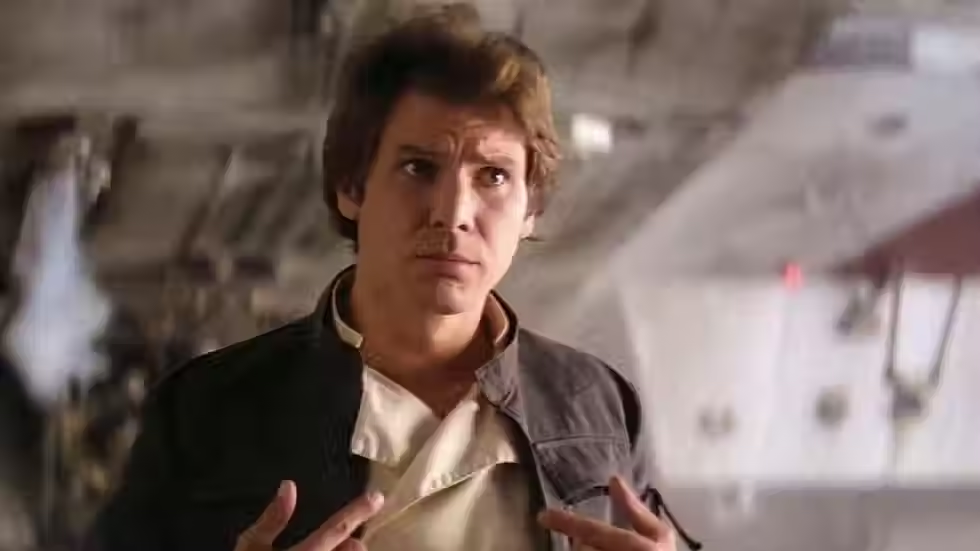
The Empire Strikes Back begins after the Rebel victory at Yavin, but the Empire has not been weakened for long. Imperial forces attack the hidden Rebel base on the ice planet Hoth, forcing Luke, Leia, Han, Chewbacca and their allies to flee in different directions. Luke travels to Dagobah to train with Jedi Master Yoda, while Han and Leia try to evade Darth Vader’s pursuit. Their paths lead toward a trap set by the Empire, and Luke must choose between completing his training and rushing to help his friends. The movie’s interwoven journeys put the original heroes under pressure in different ways.
The sequel deepens the characters without losing the pulpy adventure that made A New Hope work. Luke is talented but impatient, and Yoda challenges his belief that courage alone is enough. Han’s swagger begins to give way to genuine attachment, while Leia’s strength is matched by moments of vulnerability and hard-won trust. Vader becomes more than an armoured threat because the film gives him a personal connection to Luke’s future. The Cloud City section is especially effective: it begins as a possible refuge and turns into a test of loyalty, perception and resolve. Every victory comes with a cost, which gives the ending its unusual mixture of defeat and hope.
It is number one because it is the strongest balance of momentum, character, atmosphere and revelation in the franchise. A New Hope is the purest introduction, Andor is the most detailed political drama, and Return of the Jedi offers the fullest resolution; The Empire Strikes Back is the one that most completely changes what the saga can be. Its middle-chapter structure makes the heroes lose ground, but each setback reveals something essential about them. The Hoth battle, Dagobah training and Cloud City confrontation each have a distinct tone while serving the same emotional question: what does it mean to become a hero when the truth is frightening and your choices can hurt the people you love? That focus is why it beats the rest of this ranking.
Final Thoughts: Where to Start in the Star Wars Galaxy
For a complete film tonight, start with A New Hope or The Empire Strikes Back. For a modern character-led adventure, choose The Mandalorian; for patient political drama, watch Andor. Rebels and The Clone Wars offer the richest animated world-building, though both ask for more time. Rogue One gives you a self-contained mission, while Tales of the Jedi is ideal when you want a short return to Ahsoka and Dooku. There is no need to conquer the entire franchise in release or timeline order before enjoying one good story.
The ranking’s top three show the range that makes Star Wars endure: a gritty account of political awakening, a mythic finale about family and mercy, and a sequel that tests its heroes rather than simply rewarding them. That combination of scale and intimacy is the franchise’s real superpower. Tell us which film or show you would put at number one, and which overlooked story deserves a place in a future ranking.
You May Also Like
Want to Reach Entertainment Fans?
If you're a brand, author, publisher, streaming company, entertainment business or creator looking to reach an engaged audience, That Love Podcast offers advertising opportunities across the website, podcast and newsletter. Find out more about advertising with That Love Podcast.
You May Also Like
For more movie-night recommendations, explore this Amazon offer.
Frequently Asked Questions
What is the best Star Wars movie of all time?
The Empire Strikes Back is the top pick in this ranking because it combines tightly paced adventure with the saga’s strongest character development and most consequential turning points. It makes the heroes face setbacks, deepens Luke, Leia, Han and Vader, and gives the original trilogy a more complicated emotional shape. A New Hope remains the best entry point, while Return of the Jedi offers the most complete resolution.
What is the best Star Wars series to start with?
The Mandalorian is a welcoming starting point if you want a modern live-action adventure with a clear central relationship. Andor is the best choice for grounded political drama, though its tone is more serious. If animation appeals, Rebels has a compact ensemble and a complete story; The Clone Wars rewards viewers willing to follow a longer, more uneven journey.
Do I need to watch The Clone Wars before The Bad Batch?
It helps. The Bad Batch’s main characters first appear in The Clone Wars, and several relationships and turning points have more emotional weight if you know that earlier series. The basic premise—a clone commando squad trying to survive under the new Empire—is still understandable on its own, so newcomers can follow the action and return to the earlier show later.
Is Tales of the Jedi a full-length series?
Tales of the Jedi is a six-episode animated anthology, not a long multi-season drama. Its short episodes focus on Ahsoka Tano and Count Dooku at different points in their lives. It works well as a quick watch for viewers who want additional context for the prequel era and the characters’ later choices.
How many seasons of The Mandalorian are there?
The Mandalorian has three released seasons. The show follows Din Djarin and Grogu in the period after the original trilogy, combining episodic frontier adventures with an expanding story about Mandalore and the post-Empire galaxy. Check Disney+ for the current UK listing and any newer franchise releases connected to the series.
Is Andor set before Rogue One?
Yes. Andor is a prequel series that follows Cassian Andor’s life before the events of Rogue One. It shows how a cynical survivor becomes part of the Rebel Alliance and introduces the political and personal pressures surrounding that transformation. Watching Andor first is possible, but Rogue One provides the destination the series is building toward.
What order should I watch Star Wars movies and shows in?
For a first viewing, release order is a clear way to experience the major reveals as audiences originally did. If you prefer the in-universe timeline, consult an up-to-date Lucasfilm guide because series and films are added over time. You can also choose a self-contained entry such as A New Hope, Rogue One or The Mandalorian without committing to a complete franchise marathon.
Is Ahsoka season two coming out?
Lucasfilm announced that Ahsoka season two is scheduled to arrive on Disney+ on January 20, 2027. The first season follows Ahsoka as she investigates an emerging threat and reconnects with characters from Star Wars Rebels. Release schedules can change, so check the official StarWars.com or Disney+ listing nearer the date.
Where can I watch Star Wars movies and shows in the UK?
Disney+ is the main home for Star Wars films and series in the UK, but exact availability and subscription terms can change. Check the Disney+ app or the official title page before watching, particularly if you are outside the UK, using a bundle, or looking for a rental rather than a subscription stream.
Which Star Wars show is best for someone who likes political stories?
Andor is the strongest fit. It focuses on the institutions and personal compromises behind rebellion, following Cassian, Mon Mothma, Luthen Rael and Imperial officer Syril Karn across connected storylines. It has less emphasis on Jedi and space fantasy than many Star Wars shows, and more on surveillance, bureaucracy, resistance and the choices that turn ordinary people into political actors.
More Places to Find Great Movies and TV Shows
For official franchise information, start with StarWars.comand Lucasfilm. For cast and release details, compare listings on IMDb; for reviews, Rotten Tomatoes and Metacritic collect critical and audience responses. Entertainment news publications such as Varietyand The Hollywood Reportercover industry announcements and interviews. Use current official sources when checking future release dates or streaming availability.
Enjoyed What You Read?
Subscribe to That Love Podcast's newsletter for the latest articles, entertainment recommendations, podcast updates and exclusive giveaways. And if you know someone who loves movies, television, books or pop culture, share the article with them too. Let’s spread the love together!