



.jpg)
12 Best Black Panther Characters of All Time, Ranked

Introduction
If you have ever watched Black Panther and wondered which characters make Wakanda feel so complete, you are not alone. The world of Black Panther is filled with kings, inventors, spies, generals, rebels, ancestors, rivals, and ordinary people whose choices carry enormous consequences. Every character adds a different shade to the story: courage, grief, pride, humor, innovation, loyalty, or the uncomfortable questions that appear when a powerful nation decides whether to help the wider world.
The best Black Panther characters do more than look impressive in a fight. They change the direction of the story, challenge the meaning of leadership, or make Wakanda feel like a living culture rather than a backdrop. Some are beloved because they are heroic. Others are unforgettable because their wounds and beliefs force the heroes to grow. A few stand out because they can make a tense scene funny without weakening its emotional weight. Together, they explain why Black Panther remains one of the MCU’s most discussed worlds and why its characters continue to inspire fan art, cosplay, edits, debates, and rewatch conversations.
This ranking considers the MCU first, while also recognizing the deeper comic-book legacy behind the characters. It weighs personality, story importance, emotional impact, cultural influence, action presence, and the ability to remain interesting beyond a single scene. That means a character does not have to be the strongest person in Wakanda to rank highly. A brilliant inventor, a loyal warrior, or a complicated enemy can matter just as much as the person wearing the vibranium suit.
You will find familiar heroes such as T’Challa, Shuri, Okoye, Nakia, and M’Baku, alongside characters whose importance is sometimes overlooked. The list also includes the figures whose decisions shaped Wakanda’s history, because Black Panther is ultimately a story about legacy. What parents hide from children, what rulers owe to outsiders, and what a nation chooses to do with its gifts all matter here.
Whether you are looking for the best Black Panther characters, the strongest Wakandan heroes, the most powerful Dora Milaje members, or the most memorable Marvel villains connected to Wakanda, this list gives you a clear place to begin. It is designed for longtime comic readers, MCU fans, new viewers, and anyone who enjoys character-driven superhero stories.
Let’s start, and then👇

If you enjoy thoughtful pop-culture stories, please support the work behind That Love Podcast with a donation: https://www.thatlovepodcast.com/donate
If you love this, check out: From Killmonger to T’Challa: Exploring the Complex Villain-Hero Dynamic in Black Panther
A quick note on the ranking
This list focuses on the characters’ total impact across Black Panther, Black Panther: Wakanda Forever, the wider MCU, and the comic-book ideas that shaped them. It is not a power-scaling list. A character can rank highly because of wisdom, presence, emotional complexity, or influence on Wakandan history.
Support independent entertainment coverage
Brands, authors, publishers, and businesses can connect with the That Love Podcast audience through sponsored articles, podcast placements, and newsletter opportunities. If you want your work or product introduced to readers who enjoy culture, film, relationships, and entertainment, learn more at https://www.thatlovepodcast.com/advertise-with-us.
12. W’Kabi

W’Kabi is one of the most interesting examples of how loyalty can become dangerous when it loses its moral center. As the border tribe leader and T’Challa’s longtime friend, he begins Black Panther as a respected protector of Wakanda. He is not introduced as a cartoon traitor. He is a man who believes his king has failed to respond to a direct threat and that the country needs a stronger, more decisive answer.
That motivation gives his betrayal real weight. W’Kabi is angry about Ulysses Klaue’s attacks and frustrated by what he sees as T’Challa’s hesitation. When Killmonger arrives with proof of royal blood, W’Kabi sees an opportunity to support a leader who promises action. The tragedy is that his understandable desire for security becomes support for a violent revolution.
His relationship with Okoye makes the conflict personal. She loves him, but her loyalty to Wakanda is deeper than loyalty to one man. Their final confrontation shows the cost of allowing political allegiance to overpower judgment. W’Kabi also represents the danger of treating military strength as the same thing as leadership.
Where to watch: Stream Black Panther on Disney+ or purchase the film through your preferred digital movie retailer.
11. Zuri

Zuri is the spiritual guardian of Wakandan tradition and one of the people who understands the cost of the throne better than almost anyone. As the keeper of the Heart-Shaped Herb ritual, he stands between ancient custom and the people who must live with its consequences. Forest Whitaker gives the character warmth, authority, and a quiet sadness that makes every ritual scene feel important.
Zuri’s most difficult role is not ceremonial. He carries the secret of what happened to N’Jobu and knows that T’Chaka’s decision created a wound that never healed. When Killmonger returns, Zuri is forced to face the consequences of protecting the royal family’s version of history. His confession is a turning point because it exposes the truth behind the villain’s anger.
He is a reminder that tradition can preserve identity, but secrecy can also preserve injustice. Zuri’s presence makes the ancestral and political sides of Wakanda feel connected. He is not a warrior in the conventional sense, yet his spiritual authority shapes the future of the nation.
10. Queen Ramonda

Queen Ramonda represents the emotional heart of Wakanda. She is regal without becoming distant, powerful without needing to dominate every conversation, and deeply protective of both T’Challa and Shuri. Her character becomes especially important in Wakanda Forever, where grief turns her from a supporting presence into one of the film’s strongest moral voices.
Ramonda understands that leadership is not only about winning battles. It is also about holding a grieving people together, defending a nation under pressure, and refusing to surrender dignity when enemies expect weakness. Her public strength never erases her private pain. That balance makes her feel like a real parent and ruler rather than a symbol.
Her defense of Shuri and Riri Williams shows her instinct to protect the vulnerable, while her confrontation with the world’s governments shows that Wakanda will not be intimidated. Ramonda’s legacy is rooted in love, but it is not passive love. It is active, brave, and willing to speak when silence would be easier.
You’ll also love: Women of Wakanda: The Powerful Female Characters That Stole the Show in Black Panther
9. Everett K. Ross

Everett Ross is an outsider, but that is exactly why he matters. He allows the audience to enter Wakanda through the eyes of someone who begins with incomplete assumptions. Ross is not the most powerful person on this list, yet his willingness to help makes him a valuable ally.
His role also gives the story humor and humanity. He is surprised by Wakandan technology, regularly outmatched by the people around him, and still willing to place himself in danger. In Black Panther, he takes control of the royal aircraft and helps defend Wakanda even though he has no vibranium suit, super-serum, or formal combat training.
Ross works because he is not treated as the savior of Wakanda. He is useful, but the Wakandans remain the center of their own story. That balance is important. His best scenes show friendship across cultures without pretending that one outsider can understand everything immediately.
8. M’Baku
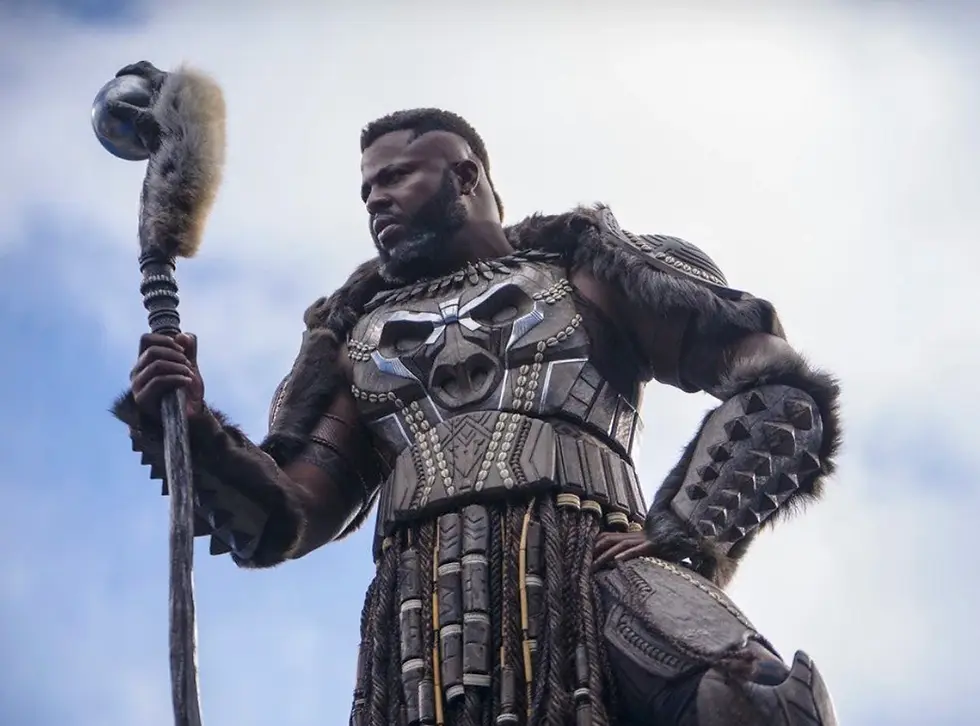
M’Baku arrives as a challenger to T’Challa, but he quickly becomes one of the MCU’s most entertaining and dependable allies. As leader of the Jabari, he protects a distinct community with its own traditions, humor, and worldview. Winston Duke gives him a huge physical presence, yet the character’s greatest strength is his ability to combine pride with loyalty.
M’Baku does not agree with every royal decision. He challenges T’Challa in ritual combat, rejects the idea that the Jabari should simply follow the Golden Tribe, and speaks with an honesty that many court officials avoid. But when Wakanda is threatened, he understands that solidarity matters more than old rivalries.
His compassion toward the injured T’Challa is a major turning point. Instead of taking advantage of a vulnerable king, M’Baku chooses to preserve his life. Later, he helps defend Wakanda and offers Shuri thoughtful guidance. He is both a warrior and a community leader, and his scenes add warmth to a world that could otherwise become too solemn.
7. Ayo

Ayo is one of the Dora Milaje’s most precise and compelling members. She is disciplined, direct, and intensely loyal to Wakanda, but she is not blindly obedient. In Wakanda Forever, her decision to free Okoye demonstrates that duty can include protecting a friend from a system that has decided she is expendable.
Her leadership in The Falcon and the Winter Soldier expands her role beyond palace security. Ayo and the Dora Milaje arrive with a clear mission, and the scene shows how formidable Wakanda’s warriors are even when they are operating outside their homeland. Ayo’s weapons, movement, and calm confidence make her instantly recognizable.
What makes Ayo rank above many other fighters is that she embodies the Dora Milaje without disappearing inside the group. She has an individual moral point of view. She knows when to follow orders, when to question authority, and when protecting Wakanda requires changing the rules.

6. Nakia

Nakia is one of the MCU’s best examples of a hero whose power comes from perspective. She is a War Dog, a spy who travels beyond Wakanda’s borders and sees the suffering that the country’s isolation leaves untouched. Her experiences make her more willing than T’Challa to question whether secrecy is still ethical.
Nakia is also a skilled fighter, but the story never reduces her to action scenes. She is thoughtful, compassionate, and independent. She refuses to become queen simply because tradition expects it, choosing instead to continue work that she believes will help people directly. That choice gives her a different definition of service.
Her relationship with T’Challa works because they respect each other even when they disagree. Nakia pushes him toward a more generous vision of Wakanda, and he learns that love cannot require her to abandon her convictions. In Wakanda Forever, her role becomes quieter but remains significant, especially in the story’s exploration of family and the future.
Where to watch: Watch Black Panther and Black Panther: Wakanda Forever on Disney+.
5. M’Baku’s Jabari community
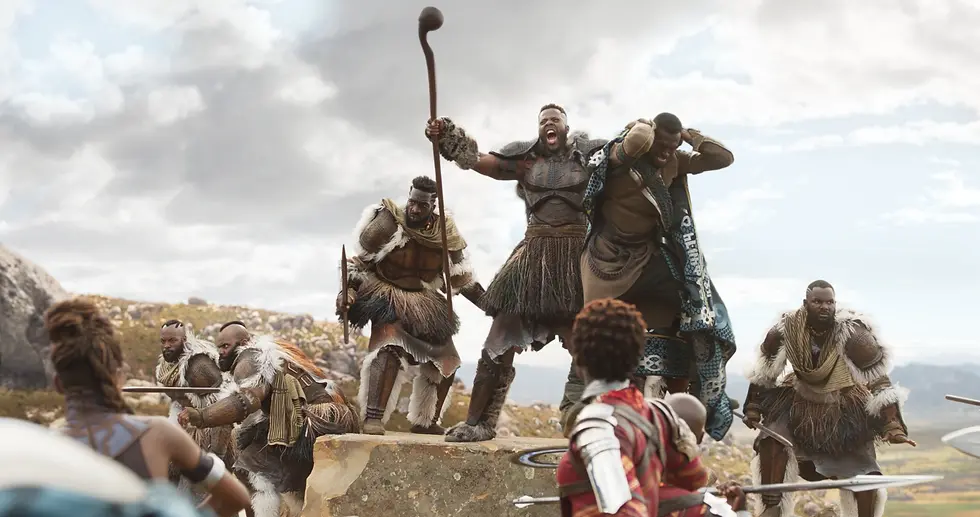
Although M’Baku leads the Jabari, the community itself deserves recognition as a major character in the Black Panther world. The Jabari live apart from the Golden Tribe and maintain a culture that feels connected to Wakanda while remaining distinct. Their mountain home, wooden architecture, animal imagery, and communal values expand the idea of what Wakandan identity can be.
The Jabari also challenge the assumption that technology is the only path to strength. They use tradition, physical courage, social unity, and knowledge of the mountains to protect themselves. When the wider nation faces war, their participation proves that Wakanda is not a single culture with one political voice.
Their humor is important too. The Jabari scenes prevent the story from becoming a parade of solemn speeches. They show that a powerful society can contain teasing, food, ritual, debate, and disagreement. By giving the Jabari a clear identity, Marvel made Wakanda feel larger than one royal family.
4. Killmonger

Erik Killmonger is one of the MCU’s most effective villains because he is both wrong and understandable. His anger comes from a real abandonment. As N’Jadaka, he loses his father after T’Chaka kills N’Jobu and then grows up far from the home and history that should have been his inheritance. He turns that pain into a worldview built around revolution.
Killmonger’s criticism of Wakanda is not empty. He asks why a nation with extraordinary resources allowed Black communities around the world to suffer. His solution—arming oppressed people and replacing one form of domination with another—is destructive, but his question forces T’Challa to change.
Michael B. Jordan plays him with intelligence and hurt beneath the aggression. His tattoos mark victories, but they also suggest a life shaped by violence. The final conversation between Killmonger and T’Challa is powerful because it refuses to turn him into a harmless victim or a simple monster. He is a product of choices made by people who believed isolation would protect them.
For more on that conflict, read From Killmonger to T’Challa: Exploring the Complex Villain-Hero Dynamic in Black Panther.
3. Okoye

Okoye is discipline, duty, comedy, and emotional conflict in one unforgettable character. As general of the Dora Milaje, she is one of Wakanda’s greatest fighters, but her real importance comes from the question she must answer: what does loyalty mean when the person on the throne is making a terrible decision?
Okoye’s loyalty to the throne is tested when Killmonger wins the challenge. She does not pretend that tradition has disappeared simply because she dislikes the result. At the same time, her actions show that loyalty to Wakanda is ultimately more important than loyalty to one ruler. Her conflict with W’Kabi is devastating precisely because she cannot allow romance to determine the country’s future.
In Wakanda Forever, Okoye experiences failure and reinvention. Losing her position forces her to discover that being a protector is not the same as holding a title. Her new Midnight Angel armor gives visual form to that evolution, but the emotional change matters more. Okoye remains one of the MCU’s most complete warriors because she can be fierce, funny, vulnerable, and principled in the same story.
2. Shuri

Shuri is the bridge between Wakanda’s ancient traditions and its future. She begins as a teenage genius who treats royal technology like a playground, but her humor hides a serious responsibility. Every invention she creates can protect Wakanda, change the balance of power, or become a target for enemies.
Her relationship with T’Challa gives the first film some of its best energy. She teases him about his ceremonial clothes, updates his suit, and refuses to be impressed by royal seriousness. Yet Shuri also understands the danger of the world. Her laboratory is not just a collection of gadgets; it is the place where imagination becomes national defense.
In Wakanda Forever, grief strips away much of her playful confidence. Her journey toward becoming the Black Panther is not a simple inheritance story. She must decide whether she is willing to accept tradition, whether vengeance will define her, and whether she can honor T’Challa without copying him. Shuri ranks near the top because she represents both continuity and change.
1. T’Challa

T’Challa remains the defining Black Panther character because he carries every major theme of the story inside one personal journey. He is a king, warrior, scientist by association with Wakanda’s technology, son, brother, lover, Avenger, and symbol of a nation that has hidden from the world. His strength is impressive, but his uncertainty is what makes him memorable.
T’Challa begins as someone who believes protecting Wakanda means preserving its isolation. He is not cruel or careless. He is trying to honor his father and prevent foreign powers from exploiting vibranium. Killmonger’s arrival forces him to see that safety can become selfishness when it depends on ignoring suffering outside the border.
His greatest moment is not defeating Killmonger. It is choosing to listen. T’Challa opens Wakanda’s resources and knowledge to the world, not because Killmonger’s methods were right, but because the pain behind his challenge revealed a failure in Wakandan leadership. That is a rare superhero transformation: the hero wins by changing his values.
Chadwick Boseman gave T’Challa a calm, thoughtful presence that made quiet scenes as important as battles. In Wakanda Forever, his absence becomes the emotional center of the story, showing how much the character shaped the people around him. T’Challa is number one because the best Black Panther stories are ultimately stories about the kind of king he chooses to become.
Podcast and sponsor break
For more film, culture, and character conversations, listen to the latest episodes at https://www.thatlovepodcast.com/episodes.
If your brand, book, business, or creative project belongs in front of an engaged entertainment audience, consider sponsoring That Love Podcast, the website, or the newsletter. Learn more at https://www.thatlovepodcast.com/advertise-with-us.
Why these characters continue to matter
Black Panther characters remain popular because they are connected to ideas larger than superhero spectacle. Wakanda is a fantasy of African innovation and self-determination, but it is also a society with class divisions, political disagreements, gender expectations, family secrets, and competing views of justice. The characters make those tensions visible.
The women of Wakanda are especially important. Shuri, Okoye, Nakia, Ramonda, Ayo, and the wider Dora Milaje are not decorative additions to a male hero’s story. They make decisions, lead armies, challenge kings, design technology, and redefine what protection looks like. Their presence is one reason fans continue to share fight clips, costume recreations, character edits, and conversations about representation.
The villains matter for a similar reason. Killmonger and Klaue are not simply obstacles. They reveal the weaknesses of the society they attack. A strong Black Panther story asks whether a nation can preserve its identity while accepting responsibility for its influence. That question remains relevant long after the credits.
Streaming and reading guide
Start with Captain America: Civil War for T’Challa’s introduction, continue with Black Panther for the central Wakandan conflict, and watch Avengers: Infinity War and Avengers: Endgame for his place among the Avengers. Finish with Black Panther: Wakanda Forever for Shuri, Ramonda, Okoye, Namor, and the story of grief and succession.
You can also explore Marvel’s official Black Panther character guide for background on T’Challa and the mantle. For broader superhero context, read The 20 Most Popular Marvel Characters, Ranked.
Conclusion
The best Black Panther characters are not all heroes, and they are not all perfect. Their appeal comes from the way they represent different answers to the same questions: What does a nation owe its people? What does a ruler owe the world? Can tradition survive change? Can grief become a source of wisdom instead of revenge?
T’Challa, Shuri, Okoye, Nakia, M’Baku, Ramonda, Ayo, and Killmonger remain memorable because each one pushes Wakanda in a different direction. Some protect the past. Some demand a future. Some expose the cost of silence. Together, they give Black Panther its emotional power and its lasting cultural impact.
Before you go, listen to the latest That Love Podcast episodes at https://www.thatlovepodcast.com/episodes. If this article entertained or informed you, please support independent storytelling with a donation at https://www.thatlovepodcast.com/donate.

Frequently Asked Questions
1. Who is the best Black Panther character?
T’Challa ranks first because he anchors the central themes of leadership, legacy, responsibility, and change. Shuri and Okoye are close behind because they bring powerful ideas of innovation and duty.
2. Is Shuri stronger than T’Challa?
In the MCU, both characters are highly capable, but their strengths are different. T’Challa is the more experienced warrior, while Shuri is the stronger technological innovator and eventually becomes Black Panther herself.
3. Why is Killmonger such a popular villain?
Killmonger is popular because his criticism of Wakanda contains a real moral question. His methods are violent and authoritarian, but his anger exposes the damage caused by Wakanda’s isolation.
4. Is Okoye a member of the Dora Milaje?
Yes. Okoye is the general and one of the most senior members of Wakanda’s all-female royal guard.
5. What makes Nakia different from the other Wakandan heroes?
Nakia has spent significant time outside Wakanda as a War Dog. Her experiences make her especially aware of global suffering and more willing to challenge isolationism.
6. Who leads the Jabari?
M’Baku leads the Jabari, a distinct Wakandan mountain community with its own traditions and political identity.
7. Does M’Baku become Black Panther?
In the MCU films, M’Baku challenges T’Challa for the throne but does not become the Black Panther. He remains an important leader and ally.
8. What is the Dora Milaje?
The Dora Milaje are Wakanda’s elite all-female royal guard. They protect the throne and serve as some of the nation’s most skilled warriors.
9. Where can I watch Black Panther?
Availability can vary by country and date, but Black Panther and Black Panther: Wakanda Forever are commonly available through Disney+ and digital rental or purchase services.
10. Is Black Panther based on Marvel Comics?
Yes. Black Panther was created by Stan Lee and Jack Kirby and first appeared in Fantastic Four #52 in 1966. The MCU films adapt many comic-book ideas while creating their own continuity.
External links
💡 You May Also Love
If you’re enjoying this blog, check out these other ones on That Love Podcast for more film, television, and character analysis.


.jpg)






.jpg)


Comments