






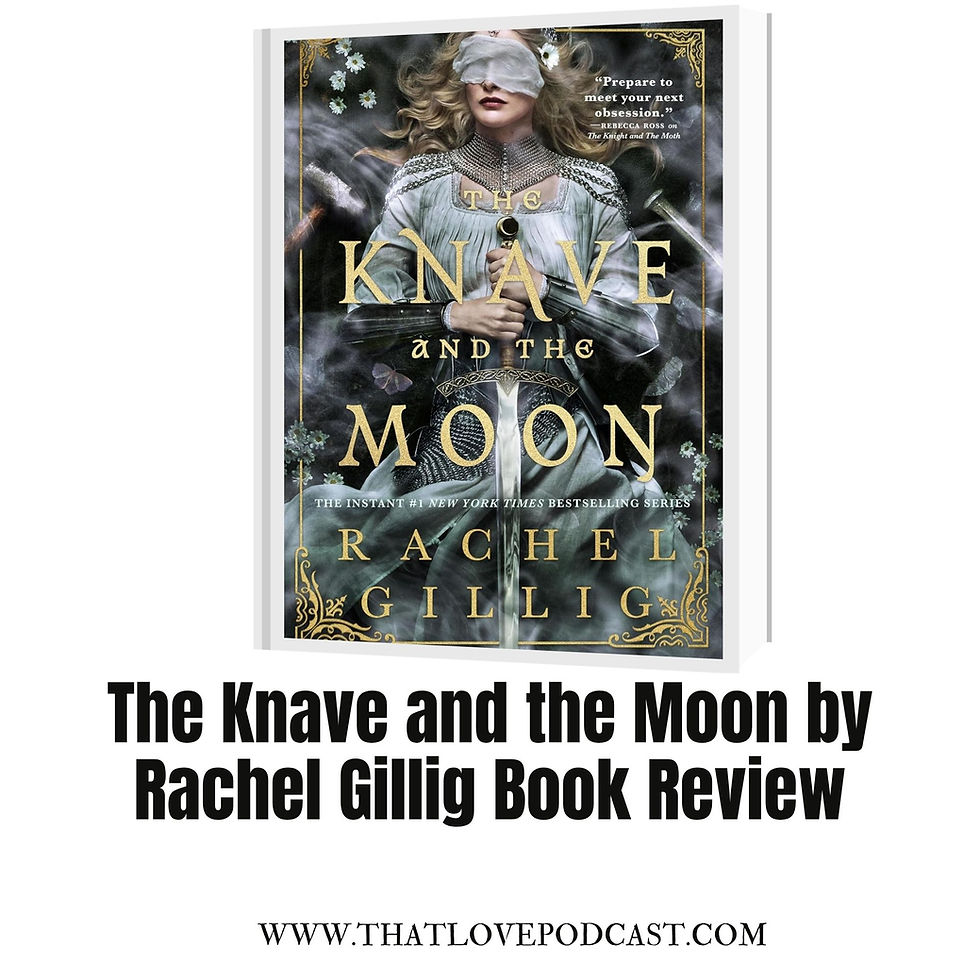
The Knave and the Moon by Rachel Gillig Book Review

Why The Knave and the Moon by Rachel Gillig Deserves Your Attention
Rachel Gillig’s The Knave and the Moon arrives with the difficult task of closing a fantasy-romance world already loved for its gothic atmosphere, mysterious mythology, and slow-burning emotional tension. The novel is the sequel and final installment in the Stonewater Kingdom duology, following The Knight and the Moth.
This The Knave and the Moon review is a spoiler-free first-look review because the book is scheduled for publication on September 1, 2026. Hachette describes it as a fantasy romance filled with higher stakes, darker mysteries, and deeper longings. Read the official Hachette listing
The story begins after catastrophe. Aisling Cathedral lies in ruins, several characters are believed dead, and King Benji has taken Sybil Delling as his bride. Sybil is captive and drugged, but she remains determined to destroy the king’s power, even if doing so also destroys the kingdom’s faith and her own sense of self.
Then a nameless knave rises through a series of tournaments. He has no memory, no clear identity, and perhaps the exact connection Sybil needs to challenge Benji. The premise promises gothic mystery, political danger, religious conflict, and romance shaped by questions of identity and destiny.
Readers should begin with The Knight and the Moth. This is not the ideal entry point for someone unfamiliar with Gillig’s world. It is a conclusion, and much of its emotional power will likely depend on the relationships, mythology, and wounds established in the first book.
If you love this, check out: 10 Fantasy Romance Books with Magical Settings
That Love Podcast offers promotional opportunities for authors, publishers, and fantasy-romance brands. Learn more at Advertise With Us.
💡 You May Also Love
The Story at the Heart of The Knave and the Moon
The world of The Knave and the Moon appears to be built around ruins, repetition, and belief. Aisling Cathedral is damaged, important figures have vanished, and the kingdom’s political order has become unstable. The physical destruction of the cathedral reflects a deeper crisis: the institutions that once gave people certainty no longer appear reliable.
Sybil Delling stands at the emotional center of that crisis. The official synopsis presents her as captive and drugged, but not defeated. She is still determined to vanquish Benji, the king who has taken control of her life and uses their supposed union to strengthen his political authority.
Sybil’s goal is complicated because she is not simply trying to escape. She may have to destroy the faith supporting the kingdom in order to destroy the king. That gives her conflict a moral dimension. Victory may require her to damage the very belief system that shaped the people she wants to save.
Benji’s power is presented as both political and religious. He uses tournaments across the hamlets to display authority and solidify his position. These tournaments are not merely action scenes. They are public performances of control, turning ordinary communities into stages for the king’s power.
The mysterious knave changes the balance. He has no name and no memory, but he rises through the tournament ranks. His lack of identity makes him both vulnerable and symbolically important. He may be free from the stories and expectations that control everyone else, or he may be trapped inside a story he cannot yet remember.
The phrase “where stories repeat themselves” suggests that the novel will explore cycles. History, violence, faith, and political power may all be repeating patterns. Sybil’s challenge is not only to defeat one cruel king but to stop the kingdom from recreating the same structures under a different name.
The romance should develop through uncertainty. Sybil does not know whether the knave can be trusted, and he does not know who he is. Their connection therefore has the emotional tension of two people trying to build intimacy without a stable past. In a fantasy world obsessed with fate and repeated stories, choosing one another may become an act of rebellion.
💡 You May Also Love
How Rachel Gillig Brings This Story to Life
Rachel Gillig is known for atmospheric fantasy, gothic imagery, emotionally charged mysteries, and romantic tension that develops gradually. Hachette’s description of this book emphasizes darker mysteries and deeper longing, suggesting a story that leans into mood as much as plot.
The setting appears central to the reading experience. Ruined cathedrals, haunted belief systems, tournaments, hamlets, and the language of gods create a world with a fairy-tale structure but adult emotional weight.
The book is likely to appeal to readers who enjoy lyrical romantasy rather than purely action-driven fantasy. The emotional questions are as important as the external ones: Who are we without memory? Can faith be saved by destroying its institution? Can love interrupt a story that seems destined to repeat?
Because this is the final book in a duology, pacing will be especially important. The novel must resolve political conflict, personal identity, mythology, and romance without making the ending feel rushed.
The Themes That Make The Knave and the Moon More Than Its Premise
Faith is the most obvious theme. Sybil’s struggle is not simply against a king. It is against the way power uses faith to control people. The story appears interested in whether belief can remain meaningful after institutions become corrupt.
Identity is equally important. The knave’s amnesia removes his name and history, forcing the story to ask whether identity comes from memory, action, relationships, or destiny. Sybil may also need to decide whether she is defined by what has happened to her or by what she chooses to do next.
The third theme is sacrifice. Sybil is prepared to destroy the kingdom’s faith and perhaps herself to defeat Benji. That creates an emotionally difficult question: how much destruction can be justified in the name of freedom?
The fourth theme is the power of stories. The official synopsis suggests that the kingdom is trapped in repeating patterns. Stories can preserve culture, but they can also preserve violence. Breaking the cycle may require rewriting the role each character has been assigned.
You may also enjoy 12 Small Town Romances That Feel Like Autumn Magic, especially if you like books where setting strongly shapes the emotional experience.
💡 You May Also Love
What The Knave and the Moon Gets Absolutely Right
The premise has excellent gothic-romantasy imagery. A ruined cathedral, a captive bride, a cruel king, public tournaments, and a mysterious nameless knave create a visually rich world before the reader reaches the first page.
Sybil also has a compelling emotional position. She is not waiting to be rescued. She is making decisions under impossible circumstances and appears willing to pay a devastating price for freedom.
The amnesiac knave offers strong romantic and narrative potential. His missing identity can support mystery, vulnerability, and a gradual discovery of who he wants to become.
The religious and political conflict gives the book more depth than a simple good-versus-evil fantasy. Saving the kingdom may require questioning the foundations on which it was built.
Finally, ending a duology gives the story a clear sense of purpose. Readers know they are entering a concluding chapter rather than an endlessly expanding series.
Where The Knave and the Moon Could Have Gone Further
The largest potential weakness is the amount of resolution required. The book must answer questions from the first installment while introducing new mysteries involving the knave, Benji, Sybil, and the kingdom’s faith.
Readers who prefer fast romance may find the atmospheric pacing too slow. Gillig’s style is built around mood, symbolism, and gradual revelation, so the book may not suit those looking for immediate answers.
The knave’s amnesia could also feel familiar if his identity mystery is not connected to the book’s larger themes. It will work best if his personal discovery changes the political and spiritual conflict rather than existing only as a romantic mystery.
Books to Read If You Loved The Knave and the Moon
Begin with The Knight and the Moth, the first book in the same duology. It is essential for understanding the world, characters, mythology, and emotional history carried into the finale.
Readers who enjoy gothic fantasy romance should try One Dark Window by Rachel Gillig. It shares the author’s interest in atmospheric settings, dangerous magic, secrets, and romance shaped by psychological tension.
For a broader romantic fantasy experience filled with political stakes and complicated faith, try The Serpent and the Wings of Night by Carissa Broadbent.
Who Will Love The Knave and the Moon the Most?
This book is best suited to adult romantasy readers who enjoy gothic settings, slow-burn romance, mysterious heroes, captive heroines, faith-based worldbuilding, political fantasy, and lyrical prose.
Content Warnings: Captivity, drugging, religious manipulation, violence, death, psychological distress, political coercion, and self-sacrifice.
Readers should read 10 Fantasy Romance Books with Magical Settings for more atmospheric fantasy recommendations.
How The Knave and the Moon Stayed With Me
Because the book is unreleased, this review cannot honestly claim a personal reaction to its full ending. What remains most striking about the premise is its central contradiction: the kingdom may need to be saved by destroying the faith that holds it together.
That idea gives the romance unusual weight. Sybil and the knave are not simply trying to find one another in a dangerous world. They may be trying to decide whether a world built on repeating stories can be changed at all.
Final Verdict: Is The Knave and the Moon Worth Reading?
The Knave and the Moon looks like an excellent choice for readers who want gothic romantasy with emotional, spiritual, and political depth. Its ruined cathedral, captive heroine, mysterious knave, and cruel king create a powerful foundation for a final installment.
The book’s success will depend on how smoothly it resolves the many questions carried over from The Knight and the Moth. Readers who enjoy Rachel Gillig’s atmospheric style should be prepared for a story that values mood, symbolism, and emotional tension as much as action.
Read the first book before beginning this one, then expect a conclusion shaped by faith, sacrifice, identity, and the possibility of breaking a story that has been repeating for generations.
➡ Buy The Knave and the Moon on Amazon:
About Rachel Gillig
Rachel Gillig is the New York Times and USA Today bestselling author of the Shepherd King series, including One Dark Window and Two Twisted Crowns. Her work is known for gothic atmosphere, mysterious magic, romantic tension, and emotionally intense fantasy worlds.
The Knave and the Moon concludes the Stonewater Kingdom duology after The Knight and the Moth. The publisher lists Samantha Hydeson and Rupert Channing as audiobook narrators for the new release.

Learn more through Rachel Gillig’s official website, Hachette’s book page, and Rachel Gillig’s Goodreads page.
Support That Love Podcast
Support the podcast through donations, and discover more episodes.
Authors, publishers, and fantasy brands can explore sponsorship options through Advertise With Us.
Frequently Asked Questions About The Knave and the Moon
What is The Knave and the Moon about?
The story follows Sybil Delling, who is captive after King Benji takes her as his bride. A mysterious nameless knave enters a series of tournaments and may help her destroy the king’s power.
Is it part of a series?
Yes. It is the final book in Rachel Gillig’s Stonewater Kingdom duology.
What should I read first?
Read The Knight and the Moth before beginning The Knave and the Moon. The new book continues the same world and story.
What genre is the book?
It is a gothic fantasy romance, also known as romantasy.
Is it a standalone?
No. It is a sequel and conclusion, so reading the first book is strongly recommended.
Is the book spicy?
The exact spice level has not been officially confirmed. Readers should expect romantic tension and a slow-burn relationship rather than rely on an assumed spice rating.
Who are the main characters?
The central characters include Sybil Delling and the mysterious knave, a man with no name and no memory. King Benji is the primary political antagonist.
Is there an audiobook?
Yes. Hachette lists Samantha Hydeson and Rupert Channing as audiobook narrators.
When is the release date?
The book is scheduled for publication on September 1, 2026.
Is it worth reading?
It should appeal strongly to readers who enjoy gothic romantasy, dangerous kingdoms, mysterious heroes, religious mythology, and slow-burn fantasy romance.


.jpg)





.jpg)


