






10 Best 2000s Police Procedural TV Shows

10 Best 2000s Police Procedural TV Shows
If you grew up watching crime television in the 2000s, you already know that something genuinely extraordinary was happening — you just might not have had the language for it at the time.
The 2000s were the golden era of the police procedural. The decade that gave us The Wire, The Shield, CSI, Criminal Minds, NCIS, Cold Case, Without a Trace, and Flashpoint all within the same ten-year window was not simply producing popular television. It was redefining what crime drama could be, what it could say about the institutions it depicted, and how deeply it could embed itself in the cultural conversation.
This ranking covers the ten best police procedural TV shows from the 2000s — ranked from tenth to first, with full descriptions of what made each show exceptional, why it has endured, what its legacy looks like in 2026, and where to watch it right now.
Whether you are rewatching the shows that defined your childhood and early adulthood, discovering these classics for the first time, or trying to explain to someone younger why crime television in the 2000s was fundamentally different from what came before and after — this ranking gives you the complete picture.
These were not just popular shows. They were television events that changed the medium, created careers, launched franchises, and produced some of the most unforgettable detective and law enforcement characters in the history of the form.
Let's get into it. 👇

💛 Love great content? Support That Love Podcast: https://www.thatlovepodcast.com/donate
If you love this, check out: 10 Best Cop Shows Streaming Right Now
Related Articles From That Love Podcast
Six reads to save alongside this ranking:
Why the 2000s Were the Golden Era of the Police Procedural
Before getting into the individual rankings, it is worth understanding what made the 2000s specifically extraordinary for crime television — because the decade was not simply producing more police procedurals, it was producing a qualitatively different kind.
Three factors converged in the early 2000s to create the conditions for this golden era. The first was the rise of cable television — channels like HBO, FX, and TNT that were commissioning television with the editorial freedom to be genuinely complex, genuinely dark, and genuinely invested in moral ambiguity in ways that broadcast network standards would not permit. The Wire on HBO and The Shield on FX could not have existed ten years earlier.
The second factor was the cultural moment. The post-9/11 environment — the specific anxiety about institutions, about authority, about the relationship between the state and the individual — made the police procedural as a vehicle for social commentary more relevant than it had been at any point since the 1970s. Crime television became one of the ways that the culture processed questions about justice, about power, and about what institutions actually owe the people they are theoretically serving.
The third factor was talent: the specific concentration of extraordinary writers, directors, and performers who chose crime television as their primary creative vehicle during this decade. David Simon, David Chase, David Milch, Shawn Ryan — the density of genuinely ambitious creative minds working in the genre simultaneously was unprecedented.
The result was a decade of crime television that has never been equalled.
10. Flashpoint (2008–2012) — Tactical Drama at Its Most Humane

Where to Watch: Amazon Prime Video (digital purchase/rental)
Network: CTV (Canada) / CBS (US) | Seasons: 5 | Genre: Tactical police drama / Procedural
Flashpoint is the most underrated show on this list — a Canadian tactical police drama that consistently achieved a level of character depth and ethical complexity that its genre equivalents could not match, and that built one of the most devoted fanbases in crime television without ever generating the mainstream critical attention it deserved.
The premise centres on a Strategic Response Unit — the Canadian equivalent of SWAT — led by Sergeant Greg Parker (Enrico Colantoni), whose philosophy of crisis negotiation is built around de-escalation, psychological understanding, and the preference for talking over shooting that distinguishes his approach from the more militaristic tactical drama conventions. Every episode is built around a crisis that Parker and his team must resolve, and the show consistently finds ways to make the perpetrator as specific and as humanly comprehensible as the officers resolving the situation.
This is Flashpoint's most distinctive quality: its genuine, sustained interest in why people do the things that bring the SRU to their location. The show does not simply use crisis scenarios as action set pieces. It uses them as character studies — extended portraits of people at the most extreme moments of their lives, making decisions under pressure that the audience is given enough information to genuinely understand even when those decisions are catastrophically wrong.
Enrico Colantoni's Greg Parker is one of the decade's finest procedural leads — a commander whose specific empathy and whose specific willingness to remain in dialogue with people even in situations of genuine danger is the show's moral center and its most compelling dramatic argument. The ensemble around him — Hugh Dillon, Amy Jo Johnson, David Paetkau — maintains the quality of the central performance across all five seasons.
Flashpoint's place at tenth on this list reflects the constraints of a ranking that includes The Wire — not a comment on its quality, which is genuinely exceptional.
Why watch it: The most compassionate tactical police drama ever made — Flashpoint consistently asks why people reach breaking point rather than simply responding to the fact that they have, and the answers it finds make it one of the decade's most emotionally affecting crime dramas.
🎧 Love great storytelling? Listen to That Love Podcast — original audio drama every week: https://www.thatlovepodcast.com/episodes
9. Numb3rs (2005–2010) — Mathematics, Murder, and the Most Original Procedural Formula of the Decade

Where to Watch: Paramount+ / Pluto TV
Network: CBS | Seasons: 6 | Genre: Crime procedural / Drama
Numb3rs is the 2000s police procedural that did something no other show in the genre had attempted at the mainstream level: it made mathematics the investigation's central tool, and it made understanding how mathematics works the central pleasure of watching the show.
FBI Special Agent Don Eppes (Rob Morrow) is a competent but ordinary federal investigator. His brother Charlie (David Krumholtz) is a mathematics professor at CalSci whose specific understanding of pattern recognition, probability, statistical modelling, and the mathematical structures underlying human behaviour gives Don's investigations a dimension that conventional detective work cannot access. The partnership between the two brothers — and the specific dynamic of a practitioner needing a theorist to see what the physical evidence alone cannot reveal — is both the show's dramatic engine and its educational premise.
CBS marketed Numb3rs explicitly on the educational value of its mathematical content — and mathematics consultants from academic institutions were employed to ensure the content's accuracy — which represented a genuinely novel mainstream television proposition. The show demonstrated, across six seasons, that you could make complex mathematical concepts not only accessible to a general audience but genuinely exciting to watch in action.
David Krumholtz's Charlie Eppes is one of the decade's most original television characters — a mathematician whose specific cognitive style, whose way of seeing patterns where other people see randomness, and whose emotional development across six seasons as he learns to operate in his brother's world rather than simply consulting on it, is handled with genuine intelligence.
Numb3rs is one of those rare procedurals where the gimmick is not a gimmick — the mathematics is genuinely central, genuinely accurate, and genuinely illuminating, and the show uses it to produce a specific pleasure that no other procedural of the decade offered.
Why watch it: The most intellectually original police procedural of the 2000s — a show that made mathematics genuinely thrilling to watch in action and built a rich family drama around it.
8. Law & Order: Criminal Intent (2001–2011) — The Psychology Behind the Crime
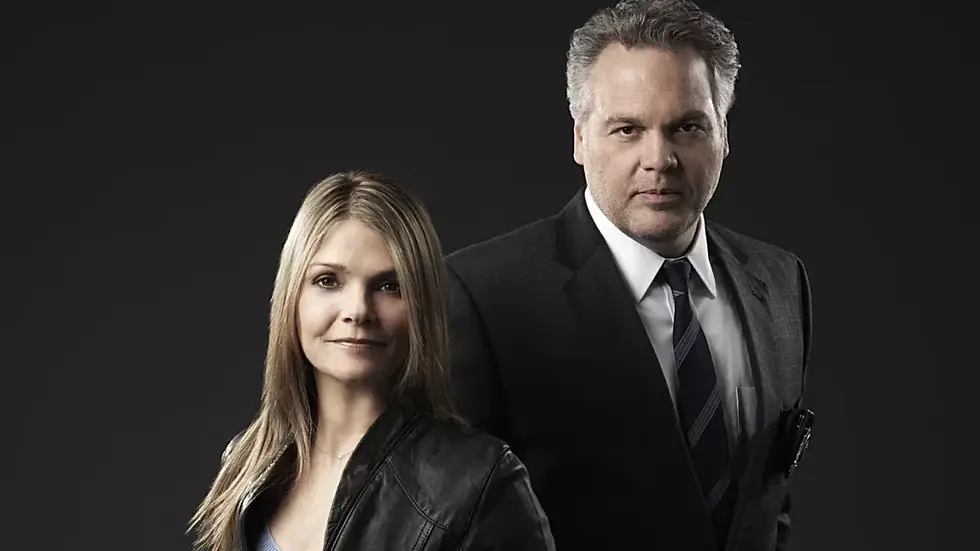
Network: NBC / USA Network | Seasons: 10 | Genre: Crime procedural / Psychological drama
Law & Order: Criminal Intent is the spin-off that surpassed the original in critical estimation precisely because it did something the parent show had never prioritised: it made the psychology of the criminal as important as the mechanics of the investigation, and it gave its central detective the specific gift of insight into human motivation as his primary investigative tool.
Vincent D'Onofrio's Detective Robert Goren is one of the great characters in police procedural television — a man whose specific genius consists of understanding how people think, what drives them to make the choices they make, and how to use that understanding in an interrogation room in ways that are simultaneously fascinating and deeply unsettling to watch. D'Onofrio plays Goren with a physical eccentricity and a psychological intensity that makes him one of the decade's most immediately distinctive detective presences: the tilted head, the controlled intensity, the specific way he observes rather than simply looks.
Criminal Intent's format — following the investigation almost entirely from the detective's perspective rather than splitting time between investigation and prosecution as the original Law & Order did — allowed it to go deeper into character than the parent show's formula permitted. Goren's specific psychology, his complicated relationship with his partner Eames (Kathryn Erbe), and the recurring villain Nichols (Jeff Goldblum, in later seasons) all receive a depth of development that the procedural format usually discourages.
The show's best seasons — particularly those built around D'Onofrio's work — are as intellectually sophisticated and as psychologically rich as anything in the decade's crime television canon.
Why watch it: Vincent D'Onofrio's Robert Goren is one of the great eccentric genius detective characters in television — a character whose specific intelligence and specific damage make every interrogation scene one of the most compelling pieces of performance in 2000s crime drama.
You'll also love: 10 Binge-Worthy TV Crime and Detective Dramas of 2026 So Far
7. Without a Trace (2002–2009) — The FBI's Missing Persons Unit and the Cases Nobody Forgets

Network: CBS | Seasons: 7 | Genre: Crime procedural / Drama
Without a Trace is one of the most underappreciated CBS procedurals of the 2000s — a show whose specific format (every episode opens with a disappearance and follows the FBI Missing Persons Unit's investigation back through the missing person's final hours) generated a specific emotional quality that the standard crime procedural could not match.
Anthony LaPaglia plays Jack Malone, the unit's driven, complex team leader whose professional investment in finding missing people — in refusing to accept that some people simply cannot be found — is connected to personal history the show reveals carefully across its seven seasons. The ensemble around him — Poppy Montgomery, Marianne Jean-Baptiste, Eric Close, Enrique Murciano — is one of the most consistently effective in CBS crime drama, combining the procedural competence of standard investigation scenes with the emotional intelligence that the missing persons format specifically enables.
The show's structural innovation is its greatest asset: because investigations in Without a Trace are backwards in time — moving from the present (the person is missing) into the past (who they were, what they were carrying, what led to this moment) — every episode is simultaneously a mystery and a character study. The missing person is always both the subject of investigation and the developing subject of a portrait, and the two functions amplify each other in ways that give the show a depth that straightforward crime procedurals rarely achieve.
Seven seasons of genuine sustained quality make Without a Trace one of CBS's most complete crime drama achievements of the decade.
Why watch it: The CBS procedural with the most emotionally sophisticated format of the decade — Without a Trace consistently made you care about the missing person as a specific human being rather than simply as a case to be resolved.
6. Cold Case (2003–2010) — Reopening the Past, One Forgotten Case at a Time

Network: CBS | Seasons: 7 | Genre: Crime procedural / Drama
Cold Case is one of the most formally distinctive police procedurals of the 2000s — a show that built its identity around a specific structural and emotional promise: that every victim of an unsolved crime deserves to eventually have their story told, no matter how much time has passed between the crime and its resolution.
Kathryn Morris plays Detective Lilly Rush, a Philadelphia investigator who specialises in reopening cold cases — crimes that were officially closed without satisfactory resolution, often because of limitations in technology, investigative resources, or the specific biases of their era. Lilly's specific investment in these cases is not simply professional. It is personal in ways that the show reveals across its run: a specific identification with victims who were overlooked, dismissed, or deemed less important than their circumstances suggested they should be.
The show's musical choices are among the most emotionally effective in crime television — period-appropriate songs mark the timeline of each case's original investigation, creating a specific nostalgic charge that connects the cold case investigation to its living historical moment and gives the resolution of each episode an emotional weight that is difficult to achieve through conventional procedural mechanics alone.
Cold Case's consistent focus on victims who were marginalised in their time — women, gay and lesbian victims, Black victims, working-class victims — made it a quietly but genuinely progressive procedural that used its historical format to address what justice has historically meant for different groups of people.
Why watch it: The most emotionally resonant procedural format of the decade — Cold Case consistently found ways to make decades-old crimes feel immediate, specific, and genuinely heartbreaking, and then found ways to resolve them with the care their victims always deserved.
🎧 More great stories at That Love Podcast: https://www.thatlovepodcast.com/episodes

5. NCIS — The Show That Became a Cultural Institution

Where to Watch: Paramount+ / Pluto TV
Network: CBS | Seasons: 23+ (2003–present) | Genre: Crime procedural / Drama
NCIS is the most commercially successful police procedural in the history of American broadcast television — a show that has maintained its position as one of the most-watched dramas on American television for over two decades, generated multiple spin-offs across several countries, and created in Leroy Jethro Gibbs (Mark Harmon) one of the most recognizable authority figures in the history of the crime genre.
The specific appeal of NCIS is not easy to reduce to a single element because the show operates simultaneously on several registers — procedural crime drama, workplace comedy, found family ensemble, and the specific appeal of Gibbs's personal mythology — all of which contribute to the specific warmth and the specific entertainment value that has kept audiences returning for twenty-plus years. The Naval Criminal Investigative Service setting gives the show a procedural niche that the franchise has used with consistent intelligence: military crimes, military culture, and the specific intersection of institutional loyalty and personal ethics that the military context generates.
The ensemble assembled across the original series — Mark Harmon's Gibbs, Michael Weatherly's DiNozzo, Pauley Perrette's Abby, David McCallum's Ducky, Sean Murray's McGee — is one of the finest found-family ensembles in crime television. The specific dynamic of the team, with Gibbs's rules as the operating system and the individual characters' relationships as the firmware, generates a warmth and a consistency that the show has maintained across its extraordinary run.
NCIS is not the most critically ambitious show on this list. It is the most enduringly beloved — and that is its own kind of achievement.
Why watch it: The greatest found-family ensemble in crime television history, sustained across more than two decades of consistent quality, warmth, and the specific appeal of Gibbs and his rules.
4. Criminal Minds (2005–2020) — The BAU and the Most Binge-Worthy Crime Series Ever Made

Where to Watch: Paramount+ / Netflix (select regions)
Network: CBS | Seasons: 15 (plus Evolution revival) | Genre: Crime procedural / Psychological thriller
Criminal Minds is the most consistently binge-watchable crime drama in the history of American network television — a show that understood, before binge-watching was a defined phenomenon, exactly what the serial crime drama needed to do to keep its audience watching the next episode rather than going to bed.
The Behavioural Analysis Unit of the FBI profiling unsolved serial killer cases — bringing psychological insight and statistical pattern analysis to bear on crimes whose perpetrators are defined by the specific internal logic of their compulsions — is one of the great television premises of the 2000s. It is not simply that the crimes are interesting, though they are. It is that the specific work of understanding why a person has crossed the line into serial violence, rather than simply identifying who has done it, gives every investigation an intellectual dimension that distinguishes it from conventional procedural.
The ensemble across the show's fifteen seasons is consistently excellent — Matthew Gray Gubler's Spencer Reid became one of the decade's most beloved television characters, and the ensemble dynamic shifted across seasons in ways that kept the show's energy fresh despite the extraordinary length of its run. The show understood that its central characters were as interesting as their cases, and gave their personal histories and their professional evolution genuine narrative weight.
Criminal Minds is not the most formally ambitious show on this list. But it is the show that most completely mastered the specific mechanics of keeping an audience watching — the cliffhanger, the case structure, the character reveal, the procedural satisfaction — and it delivered those mechanics at the highest level across a decade and a half.
Why watch it: The most bingeable crime drama ever made — Criminal Minds mastered the formula that keeps you watching one more episode, and then another, and then suddenly it is 3am and you are still watching.
You'll also love: 10 Best Detective Movies Based on Crime Books
3. CSI: Crime Scene Investigation (2000–2015) — The Show That Changed Crime Television Forever

Where to Watch: Paramount+ / Pluto TV
Network: CBS | Seasons: 15 | Genre: Forensic crime procedural | Impact: Changed crime television and forensic science public understanding permanently
CSI: Crime Scene Investigation is the most culturally influential police procedural of the 2000s — a show that arrived in the first year of the decade with a radical proposition (forensic science as television's central dramatic tool) and within its first two seasons had become the most-watched drama in the world, launched three major spin-offs, transformed public understanding of forensic evidence, and permanently changed both the crime drama genre and the practice of criminal law.
The CSI effect — the term coined to describe how the show changed jury expectations in real criminal trials, with jurors requiring forensic evidence that was either unavailable or scientifically impossible after watching the show's dramatised version of forensic capability — is one of the most significant cultural impacts that any television programme has had on a real-world institution. This is a show whose fictional portrayal of science had measurable consequences for how criminal justice actually operated.
William Petersen's Gil Grissom is one of the decade's great detective archetypes — the scientist-detective whose emotional distance from the human drama of the crimes he investigates is both his professional advantage and his personal limitation. The Las Vegas setting, rendered with consistent attention to the specific visual and cultural texture of a city built on performance and concealment, gives the show a backdrop that amplifies the central theme of evidence revealing truth beneath surface.
CSI's specific legacy is as much about what it proved about television as about what it delivered in individual episodes: that audiences would engage deeply and enthusiastically with genuinely complex scientific content when that content was embedded in genuinely compelling drama, and that the forensic laboratory was as cinematically viable a location as any crime scene.
Why watch it: The show that changed television — CSI's fifteen seasons represent the full arc of one of the medium's most transformative crime drama franchises, from its genre-defining peak through the experimentation and evolution of its later years.
2. The Shield (2002–2008) — Television's Greatest Antihero Before Tony Soprano Became the Template

Where to Watch: Hulu / Amazon Prime Video (digital purchase)
Network: FX | Seasons: 7 | Genre: Police drama / Crime thriller | Legacy: Launched the FX prestige drama model
The Shield is the show that most directly challenged the moral universe of the police procedural and won — a gritty, relentlessly intense FX drama that placed a corrupt, violent, morally indefensible police officer at its center and spent seven seasons demonstrating that the most compelling crime television is not about heroes solving crimes but about the specific ways that power corrupts the people tasked with wielding it.
Michael Chiklis's Vic Mackey is one of the great antihero performances in television history — a detective whose first scene establishes his moral territory by having him commit a murder, and who spends seven seasons constructing elaborate justifications for his behaviour that the show continually, methodically dismantles without ever quite letting the audience stop finding him compelling. Chiklis won the Emmy for his performance and deserved it — the specific combination of physical threat, genuine charisma, and moral rationalization that makes Mackey simultaneously terrifying and watchable is one of the most technically demanding sustained performances in the decade's television.
The Strike Team — Mackey, Vic's crew of equally compromised but less self-aware officers — gives the show an ensemble that functions simultaneously as found family and as criminal organisation, their loyalty to each other the force that drives both their worst choices and the eventual devastation those choices produce.
The Shield's final season — and specifically its final episode — is one of the great endings in crime television: a conclusion that denies Mackey every escape he has been constructing across the entire series and delivers instead something genuinely, appropriately devastating. When the final scene ends, the show has made its argument completely.
The Shield launched the FX prestige drama model that would go on to produce Damages, Justified, Sons of Anarchy, and The Americans — making it not just a great show but the originator of an entire subsequent tradition.
Why watch it: The greatest antihero in police television history given the seven seasons he deserves — The Shield is as intense, as morally complex, and as formally accomplished as anything in the 2000s crime drama canon.
1. The Wire (2002–2008) — The Greatest Television Drama Ever Made

Where to Watch: Max / Sky Atlantic (UK)
Network: HBO | Seasons: 5 | Genre: Crime drama / Social realism | Legacy: Universally recognised as one of the finest television productions in history
The Wire is number one on this list — and on most reasonable lists of the greatest television ever made — because it did something that no crime drama before or since has managed with the same completeness: it used the police procedural format as the vehicle for a genuinely comprehensive portrait of an American city, examining every institution that shapes the lives of its citizens with the same unflinching, patient, loving attention.
Created by David Simon and Ed Burns — Simon a former journalist who covered crime in Baltimore for the Baltimore Sun, Burns a former detective who worked in Baltimore homicide — The Wire is built on a specificity and a documentary authenticity that gives it a texture no other crime drama in the 2000s could approach. Every character in the show's enormous ensemble is a specific person rather than a type. Every institution — the police department, the drug trade, the port, the school system, the city government, the newspaper — is understood from the inside, with the specific knowledge of people who worked within these systems for years before dramatising them.
The show's wire-tap premise — the Major Crimes Unit building a case against Avon Barksdale's drug organisation through electronic surveillance — is the structural device that the first season uses to examine both sides of the drug trade simultaneously: the police investigation and the criminal enterprise. What the show reveals, with complete structural evenhandedness, is that both sides are institutions operating under similar pressures, similar loyalties, and similar limitations, and that the individuals within each are shaped far more by the systems they inhabit than by their personal choices.
Across five seasons, The Wire extends its institutional examination to cover the docks (Season 2), city government (Season 3), schools (Season 4), and the media (Season 5) — each season expanding the portrait of Baltimore as a specific, beautifully observed, deeply damaged American city. Season 4 — the education season, following four middle school students navigating the Baltimore school system — is by unanimous critical consensus the finest season of television drama in the medium's history.
Dominic West as Jimmy McNulty, Idris Elba as Stringer Bell, Michael K. Williams as Omar Little, and the ensemble across all five seasons are performing at a level that the format of a police procedural had never before demanded of them and that they meet completely. Omar Little — the independent stick-up man who operates by his own code in the margins of the drug war — became one of the most beloved and most discussed characters in television history, a figure whose specific moral universe the show presents with complete respect for its internal consistency.
The Wire does not resolve. It does not provide the satisfactions that procedural television usually delivers. What it provides instead is understanding — a specific, earned, beautifully constructed understanding of how American cities work and fail and persist and damage the people who live within them. It is television as literature. It is crime drama as social analysis. It is the greatest work the medium has produced.
Why watch it: Because The Wire is the greatest television drama ever made, and because experiencing it is one of the most complete and most enduringly affecting things that television can offer. Five seasons. All on Max. Start tonight.
Watch it on Max. All five seasons. Take your time.
Conclusion: Your Complete 2000s Police Procedural Watching Guide
The 2000s gave television its greatest decade of crime drama — and the ten shows on this list represent the full range of what that decade produced, from the humanitarian tactical drama of Flashpoint to the mathematical innovation of Numb3rs to the forensic revolution of CSI to the antihero masterpiece of The Shield to the unmatched social realism of The Wire.
Start with The Wire — because it is the greatest television drama ever made and every other show on this list makes more sense having experienced it. Then add The Shield for the finest antihero performance in crime television. CSI for the show that changed the genre permanently. Criminal Minds for the most reliably bingeable crime drama in streaming. Cold Case for the most emotionally sophisticated procedural format. And NCIS for the found family that has been the most beloved ensemble in crime television for over two decades.
Every show on this list is available to stream right now. Every one of them is worth your time. The one at number one is essential.

💛 Loved this ranking? Support That Love Podcast: https://www.thatlovepodcast.com/donate
🎧 For original storytelling and audio drama: https://www.thatlovepodcast.com/episodes
💡 You May Also Love
If you're enjoying this blog, check out these other ones:
10 FAQs About the Best 2000s Police Procedural TV Shows
1. What is the greatest police procedural TV show of the 2000s? The Wire (2002–2008) is the critical consensus choice — universally recognised as not only the greatest police procedural of the decade but one of the greatest television dramas ever produced. Created by David Simon, it is available to stream on Max.
2. Where can I watch The Wire in 2026? The Wire is available to stream on Max (HBO Max) in the United States and on Sky Atlantic in the UK. All five seasons are available. It is one of the most consistently recommended first watches for new streaming subscribers specifically because of the depth and completeness of its achievement.
3. Is The Shield available on Netflix or a major streaming service? The Shield is currently available on Hulu in the United States. It is also available for digital purchase or rental on Amazon Prime Video, iTunes, and other digital platforms. All seven seasons are available.
4. What made the 2000s particularly significant for crime television? Three factors converged: the rise of cable television (specifically HBO and FX) that enabled morally complex content the broadcast networks could not commission; the post-9/11 cultural anxiety that made crime fiction as social commentary immediately relevant; and an extraordinary concentration of talented writers, directors, and performers choosing crime television as their primary creative vehicle. The result was a decade in which the police procedural achieved a level of artistic ambition it had never reached before.
5. Is NCIS still running in 2026? NCIS has been one of CBS's most enduring franchises since its 2003 debut, with over 23 seasons produced and multiple spin-offs currently in production or on air. The complete original series is available on Paramount+ and has generated the NCIS: Los Angeles, NCIS: New Orleans, NCIS: Hawai'i, and NCIS: Sydney spin-offs.
6. How many seasons of Criminal Minds are on Paramount+? All 15 seasons of the original Criminal Minds series plus the continuation Criminal Minds: Evolution are available on Paramount+. Criminal Minds: Evolution (2022–present) brings back much of the original cast for a serialised format that is a direct continuation of the original series.
7. What is the CSI effect? The CSI effect is a term coined by legal scholars and journalists to describe the measurable impact that CSI: Crime Scene Investigation had on real-world criminal trials. After the show popularised forensic science as entertainment, jury members in criminal trials began requiring forensic evidence — DNA testing, fingerprint analysis, trace evidence — that either did not exist or was scientifically impossible, based on expectations formed by watching the show's dramatically enhanced portrayal of forensic capability.
8. Where can I watch Cold Case in 2026? Cold Case is available on Max (HBO Max) and on free streaming platforms including Tubi and Pluto TV in the United States. The complete seven-season run is available and represents some of CBS's finest procedural work from the decade.
9. What happened in The Wire's final season and why is Season 4 considered the finest television season in history? Season 4 of The Wire follows four middle school students navigating Baltimore's education system simultaneously with the ongoing investigation and the political storyline of the previous seasons. It is considered the finest single season of television drama because of the specific, devastating, and completely honest portrayal of how institutional failures in education shape the life trajectories of children with no resources to navigate those failures. Season 5 — covering the Baltimore Sun newspaper — is widely considered the show's weakest but still exceptional season.
10. Are there good honorable mentions from the 2000s crime TV era beyond the top 10? Yes — several shows worthy of note include Monk (USA Network, 2002–2009), a comedic procedural featuring Tony Shalhoub as a detective with extreme OCD; Psych (USA Network, 2006–2014), a comedy procedural about a fake psychic consultant; Bones (Fox, 2005–2017), a forensic procedural inspired by Kathy Reichs's novels; and Law & Order: Special Victims Unit (1999–present), which continued through the 2000s as one of NBC's most consistently watched crime dramas.
External Resources for More 2000s Crime Drama Coverage:
Rotten Tomatoes — Best Crime TV Shows 2000s — Aggregated critic and audience scores for all 2000s crime and police procedural series.
IMDb — Top Crime TV Shows by Rating — Community ratings and full information for all 2000s crime drama series discussed in this ranking.
Max — The Wire All Seasons — The home of The Wire in streaming, with all five seasons of the greatest television drama ever made available on demand.


.jpg)





.jpg)


