





Spider-Man: Brand New Day Ending Explained — 10 Biggest Moments and What They Mean

Updated: Aug 10
The ending of Spider-Man: Brand New Day leaves you with enough answers to understand Peter Parker’s transformation, but just enough uncertainty to keep its most important relationships alive.
By looking closely at the final battle, Peter’s shooting, Jean Grey’s decision, MJ’s buried memories, Ned’s handshake and the mysterious post-credits scene, you can see how the film quietly rebuilds Spider-Man’s world without undoing the sacrifice that brought him here.
Full spoilers from beginning to end.
Spider-Man: Brand New Day spends much of its running time showing Peter trying to turn loneliness into a form of discipline. He patrols New York, builds increasingly sophisticated technology and insists that keeping people at a distance is the safest choice for everyone involved.
The arrangement appears functional because Spider-Man remains active. Peter still stops criminals, responds to emergencies and protects a city that celebrates him without knowing the person beneath the mask. Yet the film gradually reveals how unstable that life has become.

His physical mutation reflects everything he has refused to confront. Peter’s strength increases, his aggression becomes harder to control and his body begins changing in ways even he cannot fully understand. The more he suppresses his grief, the more violently that grief appears through his powers.
Jean Grey enters the story from the opposite direction. Peter has buried his pain until it has made him emotionally unreachable. Jean has allowed hers to expand until it can invade the minds and bodies of everyone around her. Both believe isolation protects them. Both are being destroyed by it.
You Might Like This
The ending of Brand New Day leaves a lot to unpack, especially once you start thinking about what it means for Peter’s future. These related articles explore the film’s biggest emotional and story questions:
That connection gives the ending its emotional foundation. The climax is not ultimately about whether Peter is powerful enough to defeat Jean. It is about whether either of them can recognise themselves inside the other before grief makes their choices permanent.
Director Destin Daniel Cretton resists the kind of ending that would neatly restore Peter’s old life. MJ does not suddenly remember every detail of their relationship. Ned’s recognition remains open to interpretation. Jean leaves New York without revealing exactly where she will go next. Even the post-credits scene creates a question rather than announcing a clear destination.
The film still offers resolution where it matters. Jean abandons revenge. Peter stops treating loneliness as a moral obligation. Frank Castle recognises a form of heroism he cannot reduce to weakness. Ned responds to a friendship his conscious mind may have forgotten, but something deeper still appears to recognise.
Peter does not recover everything he lost. He reaches the point where he is finally willing to risk being known again.
Let’s break it down 👇
If you love this, check out: Spider-Man: No Way Home Review — A Multiverse of Emotion, Nostalgia and Heartbreak
📣 Are you a brand, author, publisher or business looking to reach devoted entertainment fans? That Love Podcast offers sponsorship and advertising opportunities across its website, original podcast and newsletter. Express your interest in advertising with That Love Podcast.
10. Jean Grey Takes Control of New York
By the beginning of the final act, Jean Grey’s powers have expanded far beyond the unstable telepathy Peter encountered earlier in the film.
Her psychic range now extends across a substantial part of New York, allowing her to immobilise civilians, control members of the Hand and create a sealed environment around Bill Metzger. What began as a desperate search for her sister has become an act of collective punishment.
Jean has learned that Sara was abducted, tortured and ultimately killed through a Department of Damage Control programme operating under Metzger’s authority. Her anger is therefore not based on a misunderstanding. The institution harmed her family, concealed the truth and treated mutant lives as material for experimentation.
The film does not ask you to question whether Jean has a right to be furious. It asks what happens when justified anger becomes powerful enough to remove every limit around itself.
Jean’s psychic lockdown turns the city into an extension of her grief. People lose control of their bodies because she has lost control of the boundary between pain and revenge. She can no longer imagine justice as anything other than making Metzger suffer.
That is why the climax feels more personal than the multiverse collision at the end of No Way Home. Peter is not trying to prevent reality from collapsing. He is trying to reach one frightened person before she commits an act that will define the rest of her life.
Metzger’s guilt complicates the situation further. He deserves to face consequences, and the film never suggests otherwise. Peter’s objection is not that Metzger should be protected from justice. It is that Jean should not surrender herself to murder in order to deliver it.
Her control over the city also reveals the scale of what she could become. Jean is still learning how to use her abilities, yet she can already dominate hundreds of minds simultaneously. The sequence offers an early glimpse of the enormous power associated with the character throughout X-Men history.
More importantly, it establishes that the real danger is not simply telepathy. It is telepathy guided by grief that no one has helped her process.
What It Means
Jean’s psychic lockdown externalises her emotional condition. She has spent the film feeling trapped inside loss, so she traps the city inside it with her.
The scene also lays the foundation for her possible future with the X-Men. She does not need a stronger weapon. She needs people capable of teaching her how to live with what she can do.
Where to watch: Spider-Man: Brand New Day is currently playing in cinemas. Check your local cinema listings for available screenings.
9. Peter Finally Embraces His Full Mutation

Peter enters the final battle without the inhibitor that has been controlling the evolution of his spider physiology.
Throughout the film, he has treated the device as a practical solution. Bruce Banner helps him understand the changes occurring inside his body, and Peter uses that knowledge to suppress the heightened aggression, organic abilities and physical instability accompanying them.
The inhibitor works, but it does not resolve the underlying problem. Like Banner’s own technology, it creates control without creating acceptance.
When Peter removes it, the decision is dangerous because the mutation has already pushed him close to brutality. His fight with Scorpion showed how easily the new strength can combine with years of anger he has never allowed himself to express.
The final battle therefore carries two threats at once. Peter must reach Jean before she kills Metzger, but he must do so without becoming another person who believes superior power gives him the right to dominate her.
The Hand sequence demonstrates how much Peter’s body has changed. His movements are faster and less restrained, his Spider-Sense operates with greater precision and his attacks carry a force that would have been difficult for the younger version of the character to control.
The choreography makes the transformation feel physical rather than cosmetic. Peter is not simply wearing another suit or activating an upgraded feature. He is fighting through a body that no longer feels entirely familiar.
Yet the most important choice comes when he reaches Jean. He does not use that strength to beat her into submission.
He removes his mask.
The gesture strips away the symbolic identity Jean has been fighting and leaves Peter Parker standing in front of her. He offers vulnerability at the exact moment when physical dominance would be easier.
That choice completes the mutation storyline more effectively than another victory through force could have done. Peter accepts that the changes are part of him, but refuses to let them decide the kind of hero he will become.
What It Means
Peter’s evolution is not presented as a simple power upgrade. It represents what happens when fear, grief and self-denial are allowed to reshape someone from within.
Removing the inhibitor shows that Peter cannot suppress every difficult part of himself forever. Choosing compassion after removing it proves that acceptance does not require surrendering control.
External resource: Marvel’s official page describes Peter undergoing a physical evolution that threatens his existence and confirms Destin Daniel Cretton as the film’s director: Spider-Man: Brand New Day on Marvel.
8. Peter Lets Jean Into His Mind
Peter’s decision to let Jean enter his mind is the emotional turning point of the climax.
Until this moment, Jean has used telepathy as an act of intrusion. She enters other people without permission, searches for information and turns their bodies into instruments of her will. Her powers allow her to reach anyone, but they have not helped her feel understood.
Peter changes the nature of that connection by inviting her inside.
He knows what she may find. His memories contain Aunt May’s death, MJ and Ned forgetting him, years of isolation and the fear that every person he loves will eventually be harmed because of him.
Allowing Jean to see those memories means abandoning the emotional control Peter has maintained throughout the film. He cannot decide which parts of his grief she encounters or how she will interpret them.
That vulnerability is precisely what reaches her.
Jean has spent much of the story convinced that nobody can understand the scale of her loss. Peter does not argue that his suffering is identical. He shows her that pain can isolate two people in different ways while still creating common emotional ground between them.
Inside his mind, Jean sees that Peter’s restraint is not evidence that he has suffered less. It is the method he has used to survive suffering he never properly processed.
The scene also reverses the usual power dynamic between them. Jean’s telepathy has made her the person who knows what others are hiding. Peter becomes the first person who chooses to show her.
That consent matters. For perhaps the first time, Jean experiences her ability as a genuine connection rather than a weapon.
Peter cannot force her to abandon revenge, and the film wisely avoids giving him a speech powerful enough to erase her anger. He creates enough emotional space for Jean to make the choice herself.
What It Means
Peter wins the climax by becoming known rather than becoming stronger.
The scene directly challenges the belief that has governed his life since No Way Home: that disappearing from other people is the safest and most heroic thing he can do.
You’ll also love: Is Spider-Man: No Way Home the Best Spider-Man Movie Ever?
You Might Like This
The ending of Brand New Day leaves a lot to unpack, especially once you start thinking about what it means for Peter’s future. These related articles explore the film’s biggest emotional and story questions:
7. Jean Meets Aunt May Inside Peter’s Memory

Jean expects to find pain inside Peter’s mind. What she finds is Aunt May.
The memory places her beside the person who shaped Peter’s understanding of responsibility, compassion and heroism. May’s presence is not presented as a resurrection or supernatural return. She remains part of Peter because her love continues to influence how he sees other people.
For Jean, the encounter carries a different meaning.
Her own family responded to her abilities with fear. After her powers manifested, she was denied the stable, unconditional acceptance she needed. Sara’s disappearance then became the loss around which the rest of her identity was organised.
May offers something Jean has spent the film searching for without knowing how to name it: comfort that does not require her to become harmless before she can receive it.
She holds Jean without pretending that the damage she has caused does not matter. Compassion and accountability are allowed to exist together.
Peter sits beside them and tells Jean he is sorry about her sister. He does not compare their losses or claim to understand every part of her experience. He simply reminds her that losing someone does not mean grief has to be carried alone.
The line applies to both characters.
Jean has turned her grief outward until it controls everyone around her. Peter has turned his inward until no one is allowed to reach him. They appear to be making opposite choices, but both have allowed loss to dictate their relationships with the world.
May’s memory creates a third possibility. Pain can remain real without becoming the only force shaping what comes next.
Marisa Tomei’s brief return works because the film does not use her as a piece of fan service. May appears at the exact point where Peter needs the moral inheritance she left behind, and where Jean needs to experience a form of maternal warmth untouched by fear.
Jean finally allows herself to be held. The gesture is small, but it breaks the emotional logic driving the climax.
What It Means
May remains the heart of Peter’s Spider-Man story even after death.
Her appearance also explains why Peter refuses to abandon Jean. He is extending the compassion May once gave him to someone who has almost convinced herself she is beyond receiving it.

6. Jean Chooses Not to Kill Metzger
Jean’s decision to stand down does not mean she forgives Bill Metzger.
The film never asks her to treat his crimes as a misunderstanding or to release him from responsibility. What changes is her belief that killing him will restore the part of her life that was taken away.
Jean has reached a point where revenge feels like the only remaining connection to Sara. Abandoning it therefore requires more than controlling her temper. She must accept that her sister will still be gone after Metzger dies.
Peter and May’s memory allow her to see that grief does not have to remain active in order to remain meaningful. She can love Sara without allowing the people responsible for her death to determine every future choice.
That distinction prevents the resolution from feeling sentimental. Jean is not suddenly calm, healed or ready to trust the world. She remains angry and traumatised. She simply chooses not to become the person her anger is asking her to be.
Metzger’s survival also keeps the institutional story open. A single death would have allowed the Department of Damage Control’s abuses to disappear behind one villain. Keeping him alive creates the possibility of exposure, prosecution and a broader confrontation with the system he represents.
Peter’s victory is therefore moral rather than physical. He stops Jean from killing without protecting Metzger from consequences.
Jean’s choice also marks the beginning of her life as something other than a victim or threat. For much of the film, other people define her through her powers. Metzger treats her as an experiment. The authorities treat her as a danger. Peter initially approaches her as a problem he must contain.
Standing down becomes the first major decision she makes that is not dictated by fear, pursuit or revenge.
What It Means
Jean’s redemption does not depend on innocence. It depends on agency.
She cannot undo what she has done, but she can decide that Metzger will not shape the person she becomes next.
📣 Do you represent a brand, publishing company, entertainment business or creative project looking for an engaged audience? That Love Podcast welcomes sponsorship enquiries across the podcast, website and newsletter. Discover advertising opportunities with That Love Podcast.
5. Peter Takes the Punisher’s Bullet
The moment Jean stands down, the physical conflict appears to be over.
Frank Castle has been positioned at a distance with Jean in his sights. He does not know that Peter has reached her or that the immediate threat has ended. When he fires, Peter’s enhanced Spider-Sense detects the bullet before anyone else can react.
Peter throws Jean clear and takes the shot himself.
The sequence draws emotional power from the fact that Peter has spent much of the film wondering whether his life still belongs to anyone but Spider-Man. The world knows the mask, but Peter Parker has been erased from the memories of the people who once loved him.
Taking the bullet could therefore have become another expression of his self-destructive isolation. A person who believes nobody would miss him can mistake indifference toward his own survival for heroism.
The film avoids that interpretation through the relationship Peter has developed with Jean. He does not protect her because he believes his own life is worthless. He protects her because she has finally chosen to live differently, and he refuses to let that possibility be taken away before it begins.
The reference to the Ultimate Spider-Man storyline adds another layer for comic readers. In that story, Peter suffers a gunshot wound that contributes to his death. The film knows audiences familiar with the comic will recognise the image and briefly consider the possibility that Tom Holland’s Peter may not survive.
The shooting also brings Frank’s moral philosophy back into focus. He fired because eliminating the threat appeared efficient. Peter’s intervention exposes the danger of acting on that certainty without leaving room for circumstances to change.
Frank has not intentionally shot Peter, but his methods create the possibility that an innocent person will pay for the speed of his judgement.
What It Means
Peter taking the bullet completes his connection with Jean. He does not merely tell her that she deserves another chance; he places his life between her and the person trying to take it away.
The moment also forces Frank to confront the human cost hidden inside his certainty.
You Might Like This
The ending of Brand New Day leaves a lot to unpack, especially once you start thinking about what it means for Peter’s future. These related articles explore the film’s biggest emotional and story questions:
4. Jean Saves Peter’s Life
Peter survives because Jean refuses to let him disappear.
The bullet causes damage his body cannot immediately repair, even with the changes created by his mutation. Jean uses her abilities to hold his consciousness together while he is transported to hospital, functioning as an emotional and psychic anchor while his body begins healing.
The act reverses their relationship.
Earlier in the film, Jean enters minds to control them. Here, she uses the same ability to preserve Peter’s identity when it is in danger of slipping away. Her power stops being a weapon and becomes a form of care.
That development matters because the film has never suggested Jean needs to become less powerful in order to become good. Her abilities are not the moral problem. The question is whether she uses them to violate, punish or connect.
Saving Peter is also the first opportunity Jean has to respond to compassion with something other than suspicion. He entered the confrontation believing she could choose differently, and she proves him right by refusing to abandon him.
Frank carries Peter to the hospital, creating one of the film’s strangest and most effective alliances. The Punisher provides physical protection while Jean maintains the psychic connection keeping Peter alive.
Neither person fits easily into Peter’s old life. Frank operates outside his moral boundaries, while Jean has spent much of the film as his opponent. Yet they become the people fighting hardest to save him.
That irony reinforces the film’s broader argument about connection. Peter has spent years avoiding relationships because they create danger. In the end, he survives because two deeply complicated people have come to care whether he lives.
The sequence also gives Jean a concrete act of restoration. She cannot bring Sara back or erase the harm caused during her rampage. She can save the person who prevented her grief from consuming the rest of her life.
What It Means
Jean saving Peter confirms that their connection changed her before the film asked the audience to believe it had.
It also transforms telepathy from the symbol of her isolation into the first tool she uses to create genuine human attachment.
External resource: Sony Pictures offers official information about its current Spider-Man film catalogue and franchise releases through Sony Pictures.
3. Frank Castle Becomes Spider-Man for a Moment

The hospital creates an immediate problem: Peter cannot remain long enough to be publicly identified.
Crowds have gathered outside because the city knows Spider-Man has been injured. Doctors need to treat the person beneath the mask, but revealing Peter’s face would destroy the anonymous life he has rebuilt since No Way Home.
Frank solves the problem in the least graceful and most emotionally effective way possible.
He puts on Spider-Man’s mask, stands at the hospital window and waves.
The image is absurd because Frank Castle represents almost everything Spider-Man refuses to become. He does not share Peter’s optimism, his refusal to kill or his belief that most people remain capable of choosing differently.
For a few minutes, however, Frank becomes the symbol the city needs to see.
The crowd erupts. People cheer, wave and celebrate the survival of a hero whose real identity remains completely unknown to them. The affection is sincere, but it is directed toward an image rather than a person.
Peter watches as he slips away through the hospital. The moment allows him to feel the scale of the city’s love while also recognising its limitation. New York knows Spider-Man. It still does not know Peter Parker.
That distinction has defined his loneliness throughout the film. He is surrounded by evidence that his work matters, yet none of it can replace being personally recognised by MJ, Ned or May.
Frank’s participation gives the scene its tenderness. He is not comfortable performing hope, and Bernthal does not play him as though he enjoys the attention. He waves because Peter needs time, privacy and a way out.
Later, at Frank’s boatyard, he apologises for the shooting and acknowledges Peter’s bravery. The compliment matters because Frank has seen courage in people who endured war, violence and loss. He does not offer admiration casually.
He remains committed to methods Peter cannot accept, but he has encountered a form of strength that his philosophy cannot fully explain.
What It Means
Frank wearing the mask demonstrates the difference between Spider-Man as a public symbol and Peter as a private human being.
It also shows how far Frank and Peter’s relationship has travelled. Frank does not become gentle, but he chooses to protect Peter in the language he understands best: action.
2. MJ Remembers Peter Without Fully Remembering Him
MJ’s ending is built from clues rather than a single revelation.
She does not suddenly look at Peter and recall their relationship. There is no complete restoration of the memories erased at the end of No Way Home. The film instead suggests that the emotional imprint of their connection has survived somewhere beneath conscious access.
The first sign arrives when Jean’s psychic control reaches MJ and Ned’s apartment. MJ sheds a tear while everyone else remains physically frozen.
The film does not explain whether Jean has disturbed the memory spell, whether MJ is responding to Peter’s emotional presence through Jean or whether the feeling has always existed beneath the surface.
What matters is that her body reacts before her mind can provide a reason.
The second clue is the broken Black Dahlia necklace Peter gave MJ during Far From Home. She keeps it despite being unable to explain why the object matters.
The necklace is especially effective because it has never been a perfect romantic symbol. It was damaged from the beginning, awkwardly chosen and meaningful because Peter gave it to her. MJ retaining it suggests that emotional value can survive even when the history creating that value has been erased.
The third clue is the rooftop drawing.
MJ sketches Peter without his mask, reproducing a face she should not consciously know. The image does not prove that every memory has returned, but it makes coincidence increasingly difficult to accept.
These moments have generated several interpretations. Jean’s telepathy may have weakened the spell. MJ’s memories may be returning naturally. The spell may have removed narrative access to Peter without completely destroying the emotional patterns created by loving him.
The film refuses to choose between those explanations.
That ambiguity protects MJ’s independence. Peter does not receive their relationship back as a reward for surviving. MJ will have to understand what is happening inside her and decide what she wants with the knowledge she recovers.
It also preserves the moral weight of Peter’s original choice. The ending of No Way Home mattered because he accepted that MJ and Ned might be safer and happier without him. Brand New Day does not declare that sacrifice meaningless. It asks whether love can remain part of someone even when the memories explaining it have been removed.
What It Means
MJ remembers Peter emotionally before she remembers him narratively.
Her ending offers hope, but it does not promise an immediate romantic reunion. The next step belongs to MJ as much as it belongs to Peter.
1. Ned Completes the Handshake and Says “Peter”
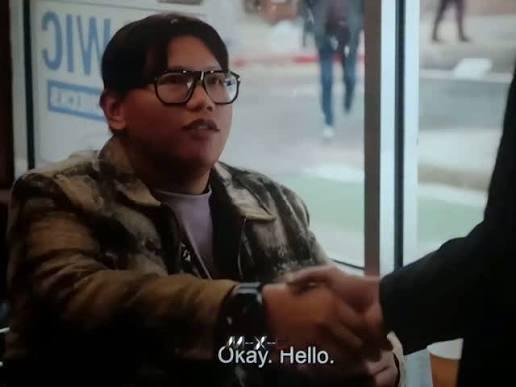
The final handshake is the clearest sign that Peter’s life may no longer remain completely erased.
After visiting Aunt May’s grave, Peter promises that he will stop trying to carry everything alone. The promise would mean very little without action, so the film immediately places him in a situation where he must risk rejection.
At the bodega, he sees Ned sitting alone.
Peter approaches and introduces himself as though they are strangers. Ned vaguely recognises him from the housewarming party, but there is no immediate indication that his old memories have returned.
Peter then begins their elaborate handshake.
Ned completes it before he appears to understand what he is doing. The movements emerge automatically, suggesting that the friendship has survived in the same buried way MJ’s emotional connection appears to have survived.
Muscle memory offers one explanation. Magic offers another. Jean’s psychic activity may have weakened Doctor Strange’s spell. The emotional patterns created by years of friendship may simply be more resilient than the spell anticipated.
Then Ned says Peter’s name.
He has technically just heard the name, allowing the scene to retain a degree of ambiguity. Yet the performance, score and placement communicate something more substantial than repetition. Ned does not sound as though he is politely confirming an introduction. He sounds as though a door has opened somewhere inside him.
The moment does not reveal how much he remembers. He may recognise only the handshake. He may feel the shape of the friendship without recovering its individual events. He may be at the beginning of a complete restoration.
The uncertainty is important because Peter has already changed before Ned responds. His growth does not depend on receiving an immediate reward. Walking over and risking the interaction fulfils the promise made at May’s grave.
Peter finally chooses connection without knowing whether it will work.
Ned’s response gives that choice hope. The spell may have removed names, events and conscious recollection, but it appears unable to eliminate every trace of what two people meant to each other.
What It Means
The handshake is the film’s emotional conclusion because it represents Peter’s first deliberate step out of isolation.
Ned saying his name does not restore Peter’s entire old life. It tells him that the life may not be as unreachable as he believed.
You Might Like This
The ending of Brand New Day leaves a lot to unpack, especially once you start thinking about what it means for Peter’s future. These related articles explore the film’s biggest emotional and story questions:
What Happens to Jean Grey?
After helping Peter survive, Jean leaves New York on a bus travelling upstate.
The destination is not stated, but the direction carries obvious significance for Marvel fans. Westchester County is traditionally home to Xavier’s School for Gifted Youngsters, where Jean becomes one of the founding and most important members of the X-Men.
The film does not show Charles Xavier, the mansion or another mutant waiting for her. That restraint keeps Jean’s departure from becoming a trailer for a different franchise.
Emotionally, the important point is that Jean leaves by choice.
For most of the film, she is running from authorities, chasing information or reacting to the loss of Sara. Boarding the bus is quieter. She has no certainty about what she will find, but she is finally moving toward the possibility of belonging rather than using revenge to remain connected to the past.
Her arc is complete enough to satisfy this story. She has discovered the truth, confronted the person responsible and chosen not to let murder become her answer. She has also experienced a form of compassion that challenges everything her earlier abandonment taught her.
At the same time, her broader MCU journey has barely begun.
Jean remains enormously powerful, emotionally vulnerable and largely untrained. If the bus is taking her toward Xavier’s school, Brand New Day may eventually be remembered as the film that quietly began the MCU’s central X-Men story.

What Happens to Frank Castle?
Frank returns to his boatyard base after helping Peter leave the hospital.
His apology is characteristically direct. He does not become emotionally expressive or attempt to justify himself through a long explanation. He accepts that his shot nearly killed Peter and recognises the courage required to protect Jean.
When he tells Peter that he has witnessed real bravery but considers what Peter did something different, the line carries weight because of Frank’s history.
He has seen soldiers, vigilantes and ordinary people endure extreme violence. What surprises him is not Peter’s willingness to face danger. It is his willingness to risk himself for someone who had recently been his enemy.
That form of courage exists outside Frank’s moral system. He understands sacrifice, but forgiveness is harder for him to process.
Peter does not persuade Frank to abandon violence, and Frank does not convince Peter that killing is sometimes the only meaningful answer. Their disagreement survives the film.
What changes is their respect for one another.
That makes future meetings more interesting. They are not comfortable allies, but they have reached the point where neither can reduce the other to naïve child or heartless killer.
Does Doctor Strange’s Memory Spell Begin to Break?
The film stops short of confirming that Doctor Strange’s spell is collapsing, but the evidence surrounding MJ and Ned suggests it may no longer be absolute.
Ned completes a handshake connected to Peter. MJ keeps the necklace and draws Peter’s face. Both respond to him through forms of memory that appear deeper than conscious recollection.
Jean’s presence may be responsible. As a telepath, she can reach suppressed, altered or inaccessible parts of the mind. Her psychic connection to Peter, MJ and Ned could have disturbed the magical boundaries separating them from their past.
Another possibility is that the spell removed accessible memories without erasing the emotional and physical patterns those memories created.
That interpretation fits the film’s interest in the difference between factual recognition and emotional truth. MJ may not remember the events of her relationship with Peter, but part of her still responds to what he meant. Ned may not recall years of friendship, but his body remembers the ritual they created together.
The film offers no definitive mechanism because the emotional meaning matters more than the technical explanation.
Peter’s relationships were real. Magic may have hidden them, but it could not make them entirely meaningless.
The Post-Credits Scene Explained
The post-credits scene begins with Ned’s Spidey Tracker app.
Created earlier in the film to map reports of Spider-Man sightings, the app initially appears to be another sign that Ned remains connected to Peter without knowing why. He has built technology around a hero who used to be his closest friend.
A new signal appears.
The map pulls back from New York, then from the United States and eventually from Earth itself. The signal does not stop at the edge of the atmosphere. A Spider-Man marker appears in deep space, glitching as though the app has detected something it was never designed to find.
The scene ends with the message:
Spider-Man will return.
Several explanations are possible.
The signal may belong to Peter at a later point in the MCU timeline, suggesting his next appearance will place him in a cosmic conflict. It could be connected to Avengers: Doomsday or Avengers: Secret Wars, both of which are expected to move the franchise beyond the street-level setting of Brand New Day.
The tracker may also be detecting another Spider-Man.
Miles Morales remains the most obvious candidate whenever the franchise introduces the possibility of a second web-slinger. The signal’s location in space complicates that theory, unless Miles has already become involved in a wider multiversal event.
Tobey Maguire or Andrew Garfield’s versions could also explain the second marker. The tracker may be responding across universes rather than ordinary distance, with the cosmic setting representing a disturbance between realities.
A connection to the Fantastic Four is another possibility. Their stories naturally operate across space and alternate dimensions, while Secret Wars could bring several Spider-Man variants into the same conflict.
The scene offers no firm answer, and that is its purpose. Brand New Day spends most of its story rebuilding Peter at a human scale. The post-credits sequence reminds viewers that the wider MCU is preparing to pull him back into something much larger.
External resource: Current reporting on the scene confirms that the tracker locates a Spider-Man signal in outer space but leaves its identity and timeline unexplained: Read the post-credits breakdown from Business Insider.
Why the Ending Is Deliberately Unresolved
A cleaner ending could have restored MJ and Ned’s memories completely, confirmed Jean’s arrival at Xavier’s school and identified the Spider-Man detected by the tracker.
That approach would have provided immediate satisfaction, but it would also have weakened the film’s central ideas.
Peter’s transformation matters because he chooses connection before he knows whether his old relationships can be repaired. Jean’s decision matters because she abandons revenge without knowing what kind of future awaits her. MJ’s remaining feelings matter because they belong to her, not because they automatically return her to Peter.
The unresolved elements allow each character to retain agency.
MJ must decide what Peter means if her memories return. Ned must discover whether his recognition is a fragment or the beginning of something larger. Jean must find a community capable of helping her understand her powers. Peter must continue building a life instead of waiting for magic to restore the old one.
The ending is hopeful because change has begun, not because every problem has disappeared.
📣 That Love Podcast reaches readers and listeners who care deeply about movies, television, books, romance and popular culture. Brands, authors, publishers and businesses interested in sponsoring the podcast, website or newsletter can advertise with That Love Podcast here.
You Might Like This
The ending of Brand New Day leaves a lot to unpack, especially once you start thinking about what it means for Peter’s future. These related articles explore the film’s biggest emotional and story questions:
Conclusion
The ending of Spider-Man: Brand New Day is not about Peter getting his old life back.
It is about him becoming willing to build a life again.
Jean Grey begins the final act prepared to make her grief permanent by killing Bill Metzger. Peter reaches her not by overpowering her, but by allowing her to see the pain he has spent years hiding. Inside his memory, Aunt May gives Jean the unconditional compassion she was denied, allowing her to step away from revenge without pretending the crimes against her family no longer matter.
Peter then takes Frank Castle’s bullet because Jean’s future has become worth protecting. Jean saves him in return, transforming her telepathy from a method of control into an act of connection.
Frank’s hospital disguise allows the city to celebrate Spider-Man while Peter slips away unseen, capturing the central contradiction of his life. Millions of people may love the hero, but only a handful have ever known the person.
MJ’s necklace, tear and drawing suggest that Peter survives somewhere inside her even if she cannot consciously reach him. Ned’s handshake goes further. His body remembers before his mind does, and the single word “Peter” offers the first real indication that Doctor Strange’s spell may not remain unbreakable forever.
None of these moments restores everything. That restraint is what gives them weight.
Peter’s victory is not MJ immediately returning to him or Ned recovering every memory. It is walking toward another person after years of convincing himself that isolation was an act of love.
Jean’s victory is not becoming completely healed. It is leaving New York in search of something beyond revenge.
Frank’s victory is not changing his entire philosophy. It is recognising a kind of courage that forces him to question the limits of his own.
The cosmic Spider-Man signal then opens the story outward again, promising that Peter’s next chapter may pull him into the wider conflicts of the MCU. Whether it leads to another Spider-Man, the Avengers, the Fantastic Four, Miles Morales or Secret Wars, the message is clear: this quieter new beginning is only the first step.
Brand New Day ends with Peter still carrying loss, but no longer treating loneliness as the price he must pay for being a hero.
For the first time since the world forgot him, he says his name and waits to see whether someone will answer.
Someone does.
FAQs
1. What happens at the end of Spider-Man: Brand New Day?
Peter enters Jean Grey’s mind and uses a memory of Aunt May to persuade her not to kill Bill Metzger. The Punisher fires at Jean, but Peter senses the bullet, pushes her out of the way and is shot instead.
Jean uses her psychic abilities to keep Peter alive while Frank Castle takes him to hospital. Peter later reconnects with Ned through their old handshake, while several clues suggest MJ may also be regaining some emotional memory of him.
2. Does Peter Parker die in Spider-Man: Brand New Day?
No. Peter is seriously wounded after taking a sniper bullet intended for Jean Grey, but he survives.
Jean helps preserve his consciousness while his enhanced body heals, and Frank Castle carries him to hospital. The sequence evokes an Ultimate Spider-Man comic storyline in which a similar gunshot contributes to Peter’s death.
3. Does MJ remember Peter at the end?
MJ does not definitively recover all her memories, but the ending strongly suggests that part of her remembers him.
She keeps the broken Black Dahlia necklace, cries during Jean’s psychic control and draws Peter’s unmasked face despite having no conscious reason to recognise him.
4. Does Ned remember Peter Parker?
Ned completes their old secret handshake and then says Peter’s name.
The scene leaves open whether he has recovered every memory, experienced a moment of muscle memory or begun a gradual restoration. Its emotional framing strongly suggests that Peter’s friendship with Ned is beginning to return.
5. Why does Peter let Jean Grey into his mind?
Peter realises that force will only deepen Jean’s belief that everyone sees her as a threat.
By voluntarily allowing her into his memories, he shows her his own experience of grief, loneliness and loss. The act creates a genuine connection and leads Jean to Aunt May’s memory.
6. Why does Aunt May appear in the ending?
Aunt May appears inside Peter’s memory rather than returning to life.
She represents the unconditional love and moral compassion that continue to guide Peter. Her warmth gives Jean an experience of maternal acceptance and helps her step away from revenge.
7. Where is Jean Grey going at the end?
Jean boards a bus travelling upstate, apparently in the direction of Westchester County.
The film does not confirm her destination, but Westchester is traditionally the location of Xavier’s School for Gifted Youngsters, suggesting Jean may be moving toward the X-Men.
8. Why does the Punisher wear Spider-Man’s mask?
Frank wears the mask at the hospital window to convince the crowd outside that Spider-Man is well.
The distraction allows the real Peter to leave without revealing his identity. The scene also shows Frank protecting Peter after nearly killing him.
9. Is there a Spider-Man: Brand New Day post-credits scene?
Yes. Ned’s Spidey Tracker app detects a Spider-Man signal outside Earth, somewhere in deep space.
The identity of that Spider-Man is not revealed. The scene may be setting up a cosmic MCU appearance, another Spider-Man variant, Avengers: Secret Wars or a future Miles Morales storyline.
10. Will there be another Tom Holland Spider-Man movie?
The film ends with the message “Spider-Man will return,” confirming that the character will appear again.
The exact project and release date are not revealed in the ending. The cosmic tracker signal suggests Peter or another version of Spider-Man may become involved in a larger Marvel storyline.
External resource: For official release, cast and trailer information, visit Marvel’s Spider-Man: Brand New Day page.
If you've enjoyed this blog and want to explore more about movies, TV shows, comics, and entertainment, these trusted external platforms offer news, reviews, and in-depth features you’ll love:
ScreenRant – Your go-to source for the latest news, reviews, and insights on movies, TV shows, and entertainment trends.
CBR (Comic Book Resources) – A top destination for comic, movie, and TV news, offering engaging articles and updates for fans of pop culture.
Collider – A trusted platform providing movie news, trailers, and reviews to keep you updated on the latest Hollywood buzz.
IMDb – The most comprehensive movie information platform, perfect for exploring cast details, trivia, and reviews on your favorite films and shows.
Rotten Tomatoes – Known for its reliable movie reviews and ratings, featuring critic insights and audience opinions you can trust.
MovieWeb – A fantastic resource for the latest movie news, trailers, and reviews, perfect for staying in the loop.
Slash Film – A dynamic source for movie and TV news, reviews, and trailers, offering in-depth and engaging entertainment coverage.
Comic Book Movie – Focused on comic book and superhero movie news, this platform delivers the latest updates and fan insights for enthusiasts.


.jpg)







.jpg)


Comments