






Lanterns Review – Kyle Chandler and Aaron Pierre Make HBO’s Green Lantern Mystery Worth the Risk

The biggest question facing Lanterns was always going to be whether HBO could take one of DC Comics’ most fantastical superheroes and make Green Lantern work as a grounded television drama without draining away everything that makes Green Lantern interesting. Based on the seven episodes made available to critics from the eight-episode first season, the answer is mostly yes, although anyone arriving primarily for enormous intergalactic battles, glowing constructs and weekly superhero spectacle may need to adjust their expectations.
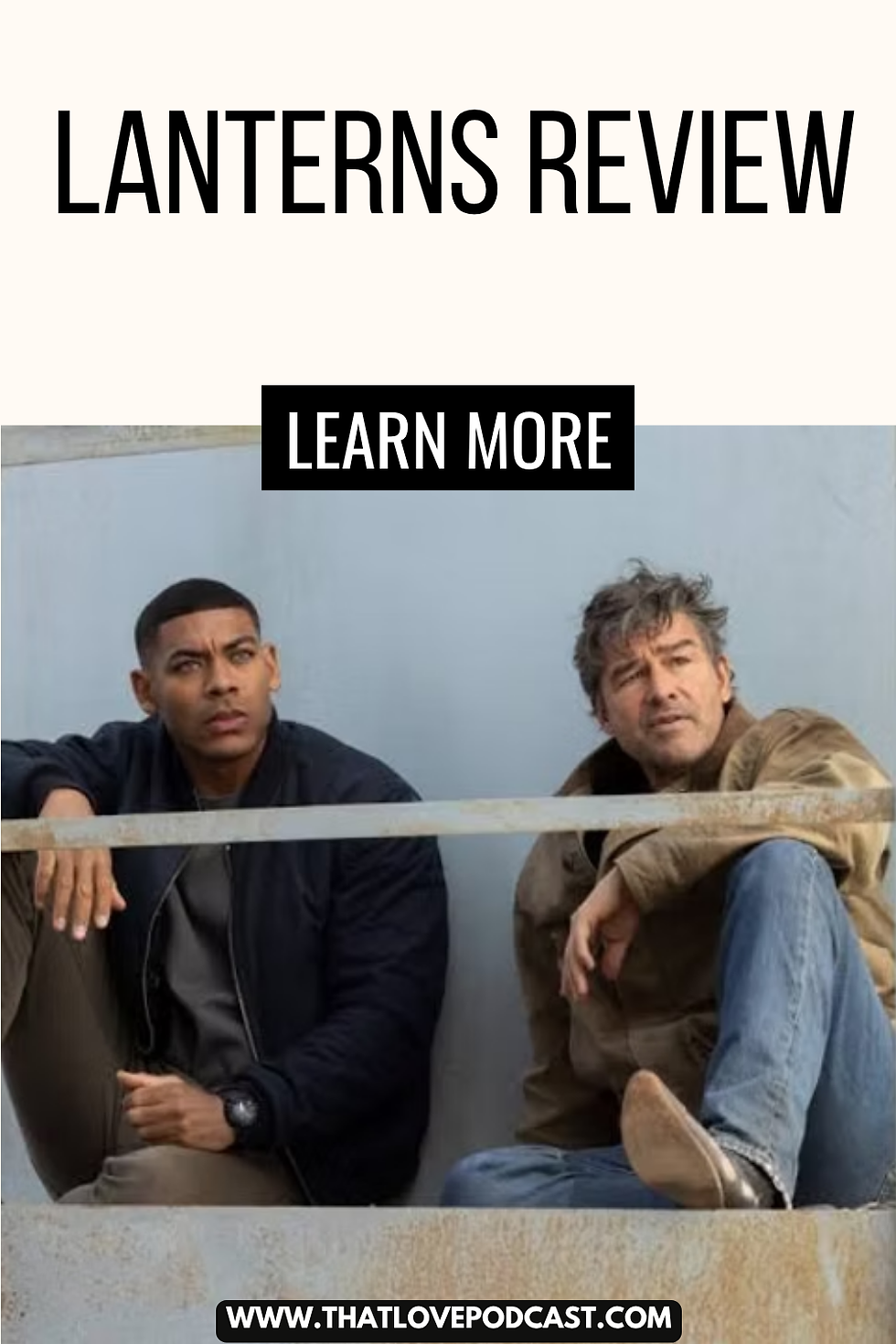
Premiering August 16, 2026, Lanterns stars Kyle Chandler as veteran Green Lantern Hal Jordan and Aaron Pierre as John Stewart, the younger Lantern waiting to inherit Hal’s position. Chris Mundy, Damon Lindelof and Tom King created the HBO series, and you can immediately feel the prestige-TV influences surrounding it: murder mystery, Western, police procedural, character drama and mismatched-partner comedy have almost as much importance as its DC superhero mythology.
That combination could have been disastrous. Green Lantern is built around alien police officers, magical-looking rings, Guardians, space travel and the ability to create practically anything through sheer willpower, yet Lanterns spends much of its time around Nebraska diners, roads, ranches, bars and interrogation rooms. Instead of trying to out-Superman Superman, the series asks what happens when two enormously powerful people have to investigate something the old-fashioned way.
The answer is that they spend quite a lot of time annoying each other, and that turns out to be the show's smartest decision. Chandler and Pierre have exactly the chemistry this premise needs: Hal is experienced, defensive, irritated and increasingly aware that the younger man beside him represents his replacement, while John has spent years supposedly being trained by someone who seems determined not to actually train him.
There are moments when the influences become almost impossible to ignore. You can see pieces of True Detective, Watchmen, Reacher and old-school Westerns everywhere, and sometimes Lanterns feels more interested in being an HBO crime drama that happens to contain Green Lanterns than a Green Lantern series that happens to be a crime drama. Variety similarly noted the heavy shadow cast by True Detective and Watchmen, while early critical consensus has particularly praised the character writing and central chemistry. Variety
But when Lanterns gets its balance right, it becomes far more interesting than another eight hours of anonymous CGI enemies being punched through buildings. The mystery gives John and Hal something to argue about, their differences give the mystery personality, and Aaron Pierre in particular makes a convincing case that John Stewart could become one of the most compelling characters in the new DC Universe.
It isn't perfect, and I suspect viewers will be sharply divided over just how little conventional superhero spectacle the series sometimes provides. Yet I'd rather watch Kyle Chandler and Aaron Pierre arguing beside a Nebraska road than two interchangeable digital armies firing green lasers at one another for forty minutes.
So, is Lanterns actually worth watching? Let’s get into it 👇

Support That Love Podcast
Enjoying the reviews and recommendations? You can help support That Love Podcast and keep independent entertainment coverage and original storytelling going. Every contribution helps us continue producing long-form reviews, recommendations and original audio dramas.
Supporting independent entertainment writing also allows the site to keep expanding its coverage of television, movies and the new DC Universe. You can contribute directly through the link below.
If you're following the wider DC Universe, our detailed review of James Gunn's first live-action DCU movie makes a natural companion to Lanterns. It also gives useful context for the world into which Hal Jordan and John Stewart are being introduced.
Want to Reach Entertainment Fans?
If you're a brand, author, publisher, streaming company, entertainment business or creator looking to reach an engaged audience, That Love Podcast offers advertising opportunities across the website, podcast and newsletter. Our entertainment coverage reaches readers actively looking for new television, movies, books and pop-culture recommendations.
If your work fits that audience, you can find current partnership and sponsorship information below. That includes opportunities connected to both our editorial content and original audio storytelling.

What Is Lanterns About?
Lanterns begins by establishing Hal Jordan as something close to a celebrity superhero. In 1996, the public already knows that he is Earth's Green Lantern, an intergalactic law-enforcement officer chosen to wield an extraordinary ring after answering one rather important question: is he afraid?
Watching Hal's television interview is a young John Stewart, whose parents already have ambitions for their son. That detail matters enormously because Lanterns isn't simply interested in John becoming a superhero; it is interested in what happens to someone who has effectively been raised for a job before he was old enough to decide whether he actually wanted it.
Jump forward twenty years and John is now Hal's apprentice. The problem is that Hal hasn't exactly embraced the mentoring part of their arrangement, partly because John's eventual promotion requires Hal to retire or die, and neither possibility is particularly appealing to him.
Their relationship therefore begins from an unusually uncomfortable position. John isn't merely Hal's younger colleague; he is walking evidence that Hal's time is running out, and Hal behaves like a man who has spent years pretending not to notice the clock.
The central investigation takes them to Rushville, Nebraska, following a mysterious incident involving what initially appears to be a mass shooting. The situation becomes significantly stranger when extraterrestrial connections emerge and the pair realise their small-town murder investigation may be tied to something considerably larger.
Local sheriff Kerry, played by Kelly Macdonald, isn't thrilled to have two cosmic law-enforcement officers marching into her jurisdiction. Meanwhile, wealthy ranch owner William Macon, played by Garret Dillahunt, becomes another important figure as the investigation begins revealing tensions buried beneath Rushville's apparently ordinary surface.
There are aliens, Green Lantern rings, Sinestro and flashes of the enormous mythology surrounding these characters. Yet the show's basic engine is surprisingly simple: two incompatible investigators arrive somewhere they don't belong and start asking questions people would rather they didn't ask.
That gives Lanterns its distinctive identity. This isn't primarily a superhero adventure with a mystery attached; it is a mystery series whose detectives happen to possess two of the most powerful pieces of jewellery in comic-book history.
The Story: True Detective With Green Rings?
The obvious True Detective comparison isn't remotely accidental. Two difficult investigators travel through a bleak American landscape while uncovering secrets surrounding a suspicious death, and long stretches consist of Hal and John driving, talking, disagreeing and trying to determine who is lying to them.
The series also benefits from making Rushville feel contained. Instead of immediately throwing John across dozens of alien planets, Lanterns forces him to remain somewhere small enough that every diner conversation, suspicious local and strange encounter potentially matters.
I like that choice more than I expected. Superhero television often assumes scale automatically creates importance, but Lanterns understands that one unexplained death can generate tension if the characters investigating it are interesting enough.
The mystery also creates a useful contradiction between Hal and John. These men possess technology capable of doing impossible things, yet much of their job still involves reading people, asking questions, noticing inconsistencies and deciding whom they trust.
Where the story becomes less successful is when the series remembers that it eventually has to service the larger Green Lantern mythology. Some cosmic material feels like it has arrived from another programme entirely, and the movement between intimate Nebraska mystery and intergalactic superhero mythology isn't always elegant.
Sinestro's presence should theoretically expand the world dramatically, but the character sometimes feels more like evidence of a larger mythology waiting outside this story than an essential part of the immediate drama. Ulrich Thomsen has the presence required for the role, but I wanted the series to give him considerably more room.
The eight-episode structure is also interesting because critics were given seven episodes, meaning early reviews necessarily stop short of judging the complete ending. The episodes viewed suggest a season that becomes increasingly invested in its characters even when the larger cosmic stakes remain comparatively muted. Hollywood Reporter
The strongest material comes when the investigation becomes personal. John's history, Hal's growing awareness of his own limitations and Kerry's connection to Rushville give the mystery emotional consequences beyond simply discovering which alien did what.
That's ultimately why the quieter storytelling works. Lanterns may occasionally look like True Detective wearing a Green Lantern ring, but its best episodes understand that imitation alone isn't enough; Hal and John need reasons for us to care specifically about them.
Kyle Chandler and Aaron Pierre Are the Real Superpower
Kyle Chandler as Hal Jordan initially sounds like such obvious casting that you almost worry it will become predictable. He has spent years playing authority figures, reluctant mentors and men who can communicate disappointment with approximately half an eyebrow movement, and Hal allows him to weaponise all of that familiar charm.
The clever part is the bitterness underneath it. This Hal isn't Coach Taylor with a power ring; he is an ageing hero confronting the deeply unpleasant discovery that experience does not guarantee permanence.
Chandler lets you see Hal's insecurity without asking you to excuse his behaviour. He can be petty, arrogant and spectacularly unhelpful toward John, but there is sadness behind his hostility because John's presence forces him to contemplate who Hal Jordan becomes when he is no longer Green Lantern.
Aaron Pierre has the more difficult job because John Stewart could easily have become the permanently irritated straight man standing beside Chandler's more colourful veteran. Pierre instead gives John enormous controlled intensity, building on the physical authority and restraint that made him so compelling in Rebel Ridge.
John doesn't need to announce that he is dangerous. Pierre can make silence feel confrontational, and that becomes especially effective whenever someone in Rushville underestimates him.
The best scenes simply put Chandler and Pierre together and allow their irritation to breathe. Hal calls John "Junior," treats mentoring like an administrative inconvenience and seems determined to keep emotional distance between them, while John increasingly recognises that the legendary Green Lantern he grew up watching is a considerably messier human being in person.
Kelly Macdonald may be the supporting cast's secret weapon. Her Sheriff Kerry has authority without needing to perform toughness every five minutes, and Macdonald finds uncertainty, humour and emotional intelligence inside a character who could easily have existed merely to obstruct the superheroes.
Poorna Jagannathan also brings welcome complexity to Zoe, whose relationship with John adds another perspective on being an outsider in Rushville. Garret Dillahunt, meanwhile, is extremely well suited to William Macon because few actors can make friendliness feel quite so potentially threatening.
The performances explain why the quieter approach survives. Remove Chandler and Pierre's chemistry and Lanterns could become a rather familiar rural conspiracy drama wearing expensive DC branding; keep them together and even a car conversation can become more entertaining than another CGI fight.
🎧 Need something to listen to after watching? That Love Podcast creates original romantic audio dramas, comedies and stories you can listen to anytime. If character chemistry is the reason you keep watching television, our original stories put relationships and dialogue right at the centre.

What Lanterns Does Best
The smartest decision Lanterns makes is treating John Stewart and Hal Jordan as characters before treating them as pieces of intellectual property. Their rings matter, their history matters and the larger DC Universe matters, but none of those things would rescue the series if spending time with these two men became tedious.
Thankfully, it rarely does. Their relationship has several conflicts operating simultaneously: old versus young, established hero versus potential replacement, reluctant teacher versus frustrated student, instinct versus discipline and two men who are considerably worse at discussing their feelings than they are at investigating suspicious deaths.
John's position is particularly compelling. He has been prepared for Green Lantern responsibility while knowing that the position isn't actually available until Hal leaves it, turning what should be an aspirational mentorship into something closer to waiting for someone else's career to end.
The show also does interesting things with the idea of fear. Green Lantern mythology has always connected willpower and fearlessness, but Lanterns questions whether having nothing to fear is necessarily the same thing as being emotionally healthy.
Hal's bravery begins to look less heroic when you understand how much of it comes from detachment. If you refuse meaningful relationships because losing people might hurt, charging into danger becomes considerably easier, but that isn't necessarily courage.
John provides the counterargument. His discipline has been deliberately cultivated since childhood, and the series asks uncomfortable questions about what happens when parents turn a child's potential into a project.
The Nebraska setting is another strength. Small-town America gives the alien mystery an eerie quality because extraordinary events are occurring in locations that look completely ordinary, and the clash between cosmic authority and local authority creates useful tension.
There is also humour here, thankfully. Chandler and Pierre's exchanges prevent the show from drowning inside its own seriousness, and Hal's occasional pettiness can be extremely funny because Chandler plays it with complete conviction.
Most importantly, Lanterns doesn't require extensive Green Lantern homework. Metacritic's critical roundup similarly notes praise for its accessibility and mature character relationships, while Rotten Tomatoes' first-review summary highlights the grounded mystery and Chandler-Pierre chemistry as major strengths. Metacritic
You can understand Hal, John and the central investigation without knowing decades of comic continuity. Existing DC fans will recognise considerably more, but newcomers aren't being handed an entrance exam before episode one.
What Doesn't Quite Work
The biggest weakness is also the show's most interesting creative gamble: sometimes Lanterns simply doesn't feel enough like Green Lantern. There are stretches where removing the rings and changing several proper nouns might leave you with an unusually polished HBO detective drama rather than something unmistakably drawn from one of DC's strangest cosmic mythologies.
That isn't automatically bad. The problem arrives when the show suddenly reintroduces aliens, constructs or larger cosmic ideas and the tonal distance between those elements and the grounded Nebraska investigation becomes obvious.
The action is another potential disappointment. Anyone expecting the scale of a major superhero movie every week should significantly lower those expectations, because the series often treats the ring almost like an expensive resource it would prefer not to use unnecessarily.
Sometimes that restraint is clever. Limited spectacle means the moments when Green Lantern abilities appear carry more novelty, while Hal's poorly charged ring provides an in-story reason why every disagreement can't be solved by generating a giant glowing fist.
But there are points where restraint begins looking like limitation. Green Lantern should occasionally inspire genuine wonder, and Lanterns doesn't always find the visual imagination required to make its superhero moments feel as extraordinary as the concept deserves.
The influences can become distracting too. Variety's review argues that the series struggles to escape the shadow of True Detective and Watchmen, and I understand that criticism completely. Variety
There are moments when you stop thinking, "This is an interesting Green Lantern story," and start thinking, "I understand exactly which HBO programme inspired this scene." Influence becomes a problem when the audience can see the joins.
The middle portion also appears more uneven than the excellent opening suggests. Some episodes deepen John, Hal and their histories beautifully, while others feel as though the investigation is circling information rather than meaningfully changing our understanding of it.
None of these weaknesses destroys the series because Chandler, Pierre and Macdonald remain compelling. But Lanterns works best when it stops worrying about appearing prestigious and simply trusts the complicated relationship it has already created between its two leads.
You’ll also love:
Advertise With That Love Podcast
Want to put your movie, series, book, entertainment brand, product or business in front of readers who love television, movies, books and pop culture? That Love Podcast offers advertising and sponsorship opportunities across the website, podcast and newsletter.
Our growing library of entertainment reviews and recommendations connects brands with readers already actively discovering what to watch next. You can find current partnership information through our advertising page.
John Stewart, Hal Jordan and a Mentorship Built to Fail
John Stewart is the character I came away most interested in because his entire situation contains a contradiction. He has supposedly been preparing to become Green Lantern, but his mentor is the person who must stop being Green Lantern before John can truly occupy the role.
Imagine starting a new job where your promotion depends upon your manager either retiring or dying, and then imagine having to travel around Nebraska with that manager. Human resources would have several questions.
John's upbringing makes that tension considerably more complicated. His parents saw extraordinary potential in him and pushed him toward the Lantern path, meaning his identity has been shaped by expectations long before Hal began reluctantly supervising him.
That raises one of the show's best questions: does John actually want this because he chose it, or has he become exceptionally good at wanting what everybody told him he should want? Pierre plays that uncertainty subtly rather than turning it into an obvious identity crisis.
Hal has the opposite problem. Being Green Lantern isn't something he is preparing to become; it has become so entangled with his identity that relinquishing the ring means confronting the possibility that he doesn't know who remains afterward.
Their hostility therefore makes emotional sense. John sees Hal as someone refusing to teach him properly, while Hal sees John as the walking countdown to his own irrelevance.
Kerry complicates Hal in a different way because she forces him into a relationship with someone who doesn't automatically accept his authority. Macdonald and Chandler have a quieter dynamic than Pierre and Chandler, but that restraint fits two older characters who have already accumulated enough emotional baggage to know attraction doesn't automatically simplify anything.
John and Zoe have more immediate heat. Their connection also allows the series to discuss race and belonging without turning John into a character whose entire personality is defined by those subjects.
Still, the central love story of Lanterns is essentially John and Hal learning how to become partners. Not romantically, obviously, but emotionally and professionally, their relationship carries more weight than either conventional romance.
By the later episodes, I cared less about which cosmic threat might eventually appear than whether these two men would ever stop treating vulnerability like a contagious disease. That probably wasn't the Green Lantern show I expected, but it became the one I wanted.
Visuals, Music and the Strange Beauty of Grounded Green Lantern
Visually, Lanterns commits heavily to its earthbound identity. Rushville is defined by open roads, agricultural landscapes, modest interiors, diners and spaces that make the appearance of glowing extraterrestrial technology feel deliberately unnatural.
The colour palette is restrained rather than comic-book bright. Hal spends significant time looking more like a tired detective or rancher than a superhero, which reinforces the series' determination to keep the fantastic rubbing against the mundane.
That approach sometimes creates effective imagery because a Green Lantern construct looks genuinely strange when it appears somewhere so ordinary. The downside is that viewers waiting for the visual imagination associated with Green Lantern comics may find the show's aesthetic almost aggressively modest.
The production design similarly prioritises credibility over spectacle. Rushville feels inhabited rather than constructed solely as scenery for superheroes, and that makes the conspiracy more convincing because the town appears to have existed long before Hal and John arrived.
The score doesn't overwhelm those scenes, either. Much of the atmosphere comes from silence, conversation and environmental tension rather than music constantly informing you that something important is happening.
I appreciate the confidence in that restraint. I just occasionally wished Lanterns would allow itself to become visually ridiculous, because Green Lantern mythology has earned the right to be ridiculous every now and then.
What Lanterns Is Really About
Strip away the alien investigation and Lanterns becomes a story about succession. Hal has power that he doesn't want to surrender, while John has spent years preparing for responsibility that he cannot fully claim.
That is much more interesting than a simple old-hero-versus-young-hero conflict. Hal isn't merely jealous of John, and John isn't simply impatient; both men have allowed the Green Lantern identity to define parts of themselves they haven't properly examined.
Fear becomes central to that idea. Hal's original selection as Green Lantern is connected to his claim that he isn't afraid, yet the series gradually makes you question whether fearlessness should automatically be treated as virtue.
Fear can mean you have something worth protecting. Hal's instinct to avoid attachments therefore begins looking less like heroic independence and more like emotional self-defence.
John's story explores expectation from another direction. His parents' determination to prepare him for greatness gives him discipline, but discipline created by other people's ambitions can become its own prison.
Race also matters to John's experience without becoming a detachable "issue episode." As a Black man carrying authority into a predominantly white environment, John understands that possessing power doesn't mean everyone will interpret that power neutrally.
The series uses Rushville's suspicion of outsiders to make those ideas concrete. Aliens hiding among humans create the literal science-fiction version of the outsider theme, while the town's politics and social tensions create its more recognisable counterpart.
Then there is legacy. Hal fears becoming obsolete, John fears never fully becoming the person he was prepared to be, and both are forced to confront whether the Green Lantern ring validates the man or merely gives him responsibility.
Those are unexpectedly mature questions for a superhero programme. Lanterns doesn't answer all of them perfectly, but I would rather watch a DC series wrestle imperfectly with interesting ideas than perfectly execute another anonymous world-ending threat.
🎧 If you love character-driven romance, comedy and drama, you can find original audio stories from That Love Podcast here. Our episodes focus on relationships, dialogue and the messy decisions that make characters worth following.
Is Lanterns Worth Watching?
Yes. Lanterns is worth watching, particularly if your favourite superhero stories are the ones that remember the people underneath the costumes are supposed to be interesting.
Kyle Chandler and Aaron Pierre are the main reason. Their chemistry gives the series personality even when the mystery slows down, and watching Hal gradually confront John's significance becomes more compelling than many of the explicitly superhero-driven plot developments.
If you enjoyed HBO's Watchmen, The Penguin, True Detective or grounded comic-book adaptations that aren't afraid to spend significant time on conversation, Lanterns should be high on your list. Viewers who loved Aaron Pierre in Rebel Ridge will also immediately recognise the controlled physicality he brings to John Stewart.
Comic readers wanting Green Lantern mythology certainly aren't ignored. Sinestro, the Corps, Guy Gardner, alien threats and the rings themselves connect the series firmly to DC, but the show isn't interested in firing references at the audience every thirty seconds.
The biggest warning is for anyone wanting eight episodes of blockbuster superhero action. That isn't this programme, and pretending otherwise would create exactly the wrong expectation.
This is a detective drama first for long stretches, a character study second and a large-scale superhero spectacle somewhere further down the list. That ordering will delight some Green Lantern fans and frustrate others.
It is also easy to recommend as a weekly watch rather than something that demands immediate bingeing. The investigation benefits from having time to sit with you, particularly because HBO is releasing the eight episodes weekly rather than dropping the whole season at once. Hollywood Reporter
Most importantly, I want to keep watching these characters. For a franchise launch, that matters considerably more to me than how many glowing objects appear on screen.
Where to Watch Lanterns
Lanterns premieres Sunday, August 16, 2026, at 9 p.m. on HBO in the United States, with the remaining episodes airing weekly on Sundays. The first season consists of eight episodes. Hollywood Reporter
Availability differs internationally, so viewers outside the United States should check the authorised HBO/DC distribution partner in their territory. Avoid assuming an older HBO distribution arrangement still applies, as platform rights can change.
Work With That Love Podcast
If you're a brand, author, publisher, studio, entertainment business or creator looking to reach people who love movies, television, books and pop culture, we'd love to hear from you. That Love Podcast provides advertising and sponsorship opportunities across the website, podcast and newsletter.
Our reviews target readers actively searching for new releases, streaming recommendations and entertainment discussion. You can explore the available opportunities through the link below.
Final Verdict
Lanterns isn't the Green Lantern series I expected, and that ends up being both its biggest strength and the source of most of its weaknesses. Instead of attempting to compete with enormous superhero movies, Chris Mundy, Damon Lindelof and Tom King have built an HBO mystery about two men who happen to carry extraordinary rings.
Kyle Chandler understands exactly how to make Hal Jordan irritating without making him unbearable. His Hal is funny, bitter, lonely and frightened of becoming obsolete, even though admitting that fear would probably cause him physical pain.
Aaron Pierre is even better positioned for the long-term DC Universe. John Stewart has presence immediately, but Pierre also gives him enough vulnerability, frustration and uncertainty that I want to see what happens when he finally has to define Green Lantern on his own terms.
Kelly Macdonald, Poorna Jagannathan and Garret Dillahunt strengthen a supporting ensemble that rarely feels like decoration around the superheroes. Macdonald in particular gives the Rushville storyline human stakes that no amount of cosmic exposition could manufacture.
The weakness is scale. There are moments when I wanted Lanterns to stop apologising for being a superhero show and give me something visually enormous, strange and unmistakably Green Lantern.
The grounded aesthetic can occasionally become visually conservative, while the heavy True Detective and Watchmen influences make parts of the series feel less original than its character work deserves. Those comparisons aren't merely theoretical either; contemporary reviews have repeatedly identified those influences while praising Chandler and Pierre as the element that pushes the show beyond imitation. Variety
Still, I kept coming back to the same thought: I would happily watch these two investigate another case. Not because I'm desperate to see what DC character appears next, but because Hal and John have become entertaining enough that the case almost becomes secondary.
That is a surprisingly strong foundation for Lanterns. The superhero spectacle may flicker, but its two leading men shine considerably brighter.
⭐ Review Score: 8/10
8/10 — A smart, occasionally uneven DC mystery powered by Kyle Chandler and Aaron Pierre's terrific chemistry, even when its grounded approach leaves the Green Lantern spectacle running on low battery.
💡 You May Also Love
If Lanterns has put you in the mood for more DC stories, superhero television and character-driven comic-book adaptations, That Love Podcast has several related features worth exploring. I've kept these recommendations closely connected to the DC universe rather than throwing unrelated superhero articles into the section.
Conclusion
What stayed with me after Lanterns wasn't an action sequence or enormous piece of DC mythology. It was Hal Jordan and John Stewart sitting, walking or driving somewhere while barely concealing how irritating they find each other.
That might sound like a strange compliment for a Green Lantern series, but it is exactly why the show works. Chandler and Pierre create a relationship capable of carrying scenes without visual effects, and once a superhero series can survive without constantly displaying its superpowers, those powers become an addition rather than a crutch.
I still think the show sometimes overcorrects. Green Lantern should be allowed to feel huge, colourful and completely absurd occasionally, and there are moments when Lanterns seems almost embarrassed by the cosmic playground available to it.
But the alternative would have been another expensive superhero programme filled with mythology and characters I couldn't care less about. Lanterns gives me characters I want to follow, even if I occasionally wish somebody would charge Hal's ring above five percent.
Aaron Pierre's John Stewart feels particularly important for the future of the DC Universe. He has the physical presence required for a major superhero, but the series wisely gives him internal conflicts that cannot be solved by creating a giant green weapon.
So yes, I'm staying with Lanterns. Give Chandler and Pierre another mystery, another town, another collection of terrible suspects and one functioning Green Lantern ring, and I'll happily come back.
Did Lanterns work for you, or did you want considerably more Green Lantern in your Green Lantern show? Let me know what you thought and what score you would give the series.

Support That Love Podcast
If you enjoyed this review and want to support more independent entertainment coverage and original storytelling, you can help That Love Podcast continue producing long-form reviews, recommendations and audio fiction. Every contribution helps us keep creating.
You can also support the site simply by sharing this review with another DC fan. Either way, it genuinely helps independent entertainment coverage reach more people.
If you want another story after Lanterns, you can swap superheroes for original romance, comedy and drama. Our audio episodes are available through the link below.
Lanterns FAQs
1. Is Lanterns worth watching?
Yes, especially if you enjoy character-driven superhero television, crime mysteries and HBO dramas. The strongest reason to watch is the chemistry between Kyle Chandler's Hal Jordan and Aaron Pierre's John Stewart, whose difficult mentor-apprentice relationship gives the series its personality.
Viewers wanting constant Green Lantern action may find it too restrained. If you prefer The Penguin, Watchmen or True Detective-style storytelling, however, its approach makes considerably more sense.
2. Is Lanterns good?
Early critical reaction has been positive, with Rotten Tomatoes listing the series at 90 percent as of August 16, 2026. Its first-review roundup highlights the grounded mystery, mature storytelling and central performances, while noting that viewers seeking blockbuster superhero action may be disappointed. Rotten Tomatoes
My biggest praise is similarly straightforward: Chandler and Pierre are excellent together. The show becomes less convincing when its grounded detective drama and cosmic superhero material collide.
3. Who plays Green Lantern in Lanterns?
There are two central human Green Lanterns. Kyle Chandler plays veteran Lantern Hal Jordan, while Aaron Pierre plays John Stewart, his younger apprentice and potential successor.
Nathan Fillion also briefly reprises Guy Gardner from Superman, while Ulrich Thomsen appears as Sinestro. The story remains primarily focused on Hal and John rather than becoming an ensemble Green Lantern Corps adventure. Hollywood Reporter
4. What is Lanterns about?
Lanterns follows Hal Jordan and John Stewart as they investigate a mysterious case in Rushville, Nebraska. What begins as a suspicious local incident gradually reveals extraterrestrial connections and a wider conspiracy.
The setup combines DC superhero mythology with murder mystery, crime drama and buddy-cop storytelling. Much of the tension comes from Hal and John's dysfunctional relationship rather than simply discovering the villain.
5. How many episodes are in Lanterns Season 1?
The first season contains eight episodes, with seven having been provided to critics ahead of release. The series premieres on HBO on August 16, 2026, with episodes airing weekly on Sundays. Hollywood Reporter
That weekly release pattern suits the mystery format surprisingly well. Rather than treating the season as one extremely long superhero movie, each instalment can gradually develop the Rushville investigation and the relationship between John and Hal.
6. Is Lanterns part of James Gunn's DC Universe?
Yes. Lanterns exists within the interconnected DC Universe overseen by DC Studios, and Nathan Fillion's Guy Gardner provides an especially obvious connection with Superman. The series nevertheless tells a largely self-contained mystery rather than requiring audiences to watch every other DCU project first. Variety
That accessibility is one of its advantages. Knowing Green Lantern comics adds context, but understanding decades of continuity isn't necessary to follow John and Hal's investigation.
7. Does Lanterns feature Sinestro?
Yes. Ulrich Thomsen plays Sinestro, who has a history with Hal Jordan and the Green Lantern Corps.
His presence helps establish that a much larger cosmic world exists beyond the Nebraska investigation. However, viewers expecting Sinestro to completely dominate the first season should temper those expectations, because the primary relationship remains Hal and John.
8. Is Lanterns like True Detective?
Very much so in structure and atmosphere, although it remains a DC superhero series. Two mismatched investigators travel through a rural American setting, investigate suspicious deaths, encounter hostile locals and gradually uncover a conspiracy while their difficult personal relationship develops.
The comparison has also appeared prominently in contemporary critical discussion. Variety specifically identifies True Detective among the show's clearest influences, while Watchmen is another obvious point of comparison. Variety
9. Is Lanterns connected to Superman?
Yes, because both projects belong to the same DC Universe. Nathan Fillion's Guy Gardner, introduced in Superman, appears in Lanterns, creating a direct character connection between the film and television series. Variety
You don't need to watch Superman first to understand Lanterns. However, seeing the film provides extra context for the wider superhero world in which John Stewart and Hal Jordan operate.
10. Will Lanterns have a Season 2?
As of the series' August 16, 2026 premiere, a second season should not be treated as confirmed unless HBO or DC Studios formally announces one. The initial season contains eight episodes and introduces John Stewart and Hal Jordan as significant figures within the wider DC Universe. Hollywood Reporter
The characters can therefore continue elsewhere even independently of a second season. Given the wider interconnected franchise, John's future in particular extends beyond the immediate Rushville investigation.
For another independent overview of the early critical response, Rotten Tomatoes' first-review roundup collects reactions to the show's grounded mystery, performances and restrained superhero spectacle. Lanterns Season 1 First Reviews
More Places to Find Movie and TV Information
If you're on the hunt for your next favorite TV show or movie, there's no shortage of resources to help you discover something worth watching. These platforms are particularly useful for checking casts, reviews, release information and the latest developments surrounding shows such as Lanterns.
IMDb and Wikipedia are useful when you need cast, character and production information, while Rotten Tomatoes and Metacritic make it easier to compare the wider critical response. For a new weekly series, those scores and episode details can continue changing as additional reviews arrive.
TV Guide and Entertainment Weekly provide broader recommendations, interviews and television coverage. Deadline and The Hollywood Reporter are particularly useful for production news, casting announcements, renewals and the business surrounding major streaming releases.
No single source should determine whether you personally enjoy a television series. Used together, though, they give you a much clearer picture of how a show is being received and where it fits within the wider entertainment landscape.
Enjoyed What You Read?
Subscribe to That Love Podcast's newsletter for the latest reviews, recommendations, entertainment news, updates and exclusive giveaways. You'll get more movie reviews, television recommendations and pop-culture coverage as new releases arrive.
And if you know someone who loves movies, television, books or pop culture, share this article with them too. It helps independent entertainment coverage find new readers.
Let's spread the love together!


.jpg)





.jpg)


