






Every Season Of The Office, Ranked From Worst To Best

Meta Description: All 9 seasons of The Office ranked from worst to best, with a detailed breakdown of what makes each one work or fall short — plus where to stream.
You love The Office, but let's be honest — not every season hits the same, and pretending otherwise doesn't do the show any favors. Some years are peak Dunder Mifflin, firing on every cylinder from the ensemble to the writing to the central romance, and some are clearly the show running on fumes, searching for a new identity after losing its center of gravity. Knowing exactly which is which makes your next rewatch dramatically more satisfying.
This list ranks all nine seasons from weakest to strongest, breaking down in detail what each one gets right, what it gets wrong, and where it fits into the show's overall arc.
Let's start 👇
💖 If you love deep dives like this one, support That Love Podcast here.
If you love this, check out: 10 Office Friendships We Loved the Most
Are you a brand, author, or publisher looking to reach passionate TV fans? That Love Podcast welcomes advertisers and sponsors who want to connect with an engaged audience of TV lovers who show up consistently for thorough, thoughtful coverage. If sponsoring content like this interests you, we'd love to hear from you. Advertise with us here.
9. Season 1
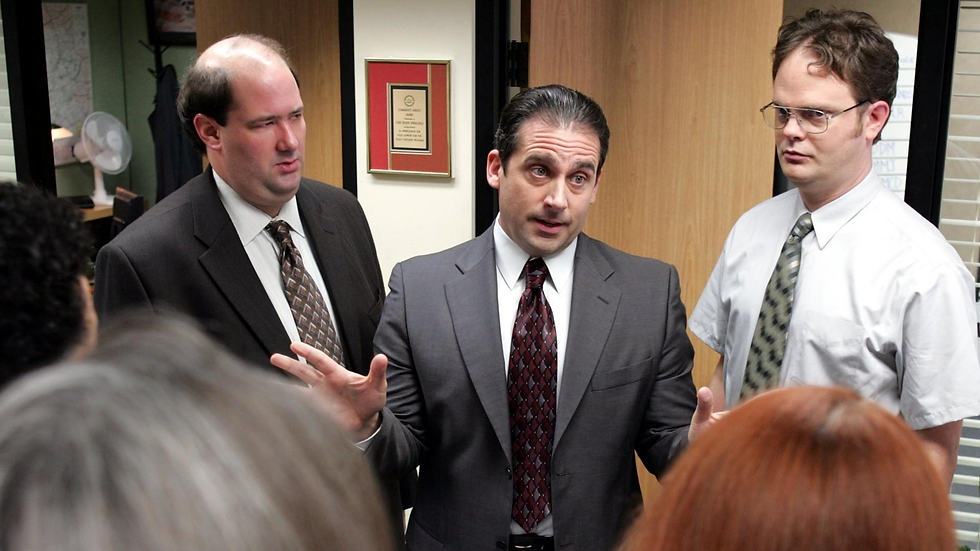
The Office's shortest season is also its shakiest by a wide margin, largely because the show hadn't yet found its own identity separate from the UK original it's adapted from. Michael reads as more genuinely cringeworthy than lovable here, with far less of the warmth and vulnerability that later seasons layer underneath his awkwardness. The humor leans heavier into secondhand embarrassment than character-driven comedy, and the ensemble hasn't fully clicked into place yet.
That said, Season 1 is essential viewing for understanding where everything eventually goes. The early seeds of Jim and Pam's relationship, Dwight's rigid worldview, and the overall documentary conceit are all planted here, even if the execution is noticeably rougher than what follows. Watching it now, it's fascinating to see how quickly the writers course-corrected once they realized the American version needed its own distinct tone rather than a straight transplant of the UK format.
It's the season most fans are least likely to rewatch purely for entertainment, but it's an important foundation for everything the show becomes, and it rewards patient viewers who push through with a much richer understanding of the characters' starting points once the show finds its stride.
🎧 Missed an episode of That Love Podcast? Catch up on every episode here.
8. Season 9
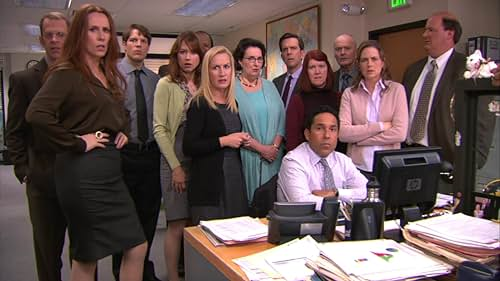
The final season closes out major character arcs with real heart, particularly in its widely praised finale, but the season as a whole suffers from the diminished presence of Michael Scott, whose absence is felt more acutely here than in any prior year. A somewhat unnecessary documentary-crew meta-subplot, involving the crew's own dynamics and a producer's romantic entanglement with an office employee, never fully lands and takes up time that might have been better spent on the established cast.
Despite these stumbles, Season 9 is saved considerably by its ending. The finale itself — with its returning cast members, emotional reflections, and genuinely satisfying send-offs for nearly every character — ranks among the best television series conclusions ever produced, elevating the season's overall reputation well above where its middle stretch would otherwise place it.
There's also real value in how the season handles the show's own legacy, using the impending release of the in-universe documentary as a way to let characters reflect on nine years of shared history together. It's an uneven season overall, but its best moments, particularly in the final handful of episodes, are among the most emotionally rewarding the show ever produced.
You'll also love: 10 Saddest Moments In The Office, Ranked
7. Season 8

Season 8 struggles openly with the awkward transition of power after Michael's departure, cycling through several management options — first the ill-fitting Deangelo Vickers, then the unpredictable Robert California — before eventually settling on Andy Bernard as the new regional manager. That search for a new center of gravity defines much of the season's uneven tone.
There are real highlights scattered throughout, particularly in how the ensemble cast steps up to fill some of the void left by Michael's absence, but the season is most accurately described as a show still figuring out what it looks like without its original anchor. Individual character arcs, particularly for Dwight and Andy, continue to develop in meaningful ways even as the overall season struggles to find a consistent identity.
The Florida storyline, in particular, tests the show's willingness to shake up its established setting, and while opinions vary on how successful that experiment is, it demonstrates a genuine ambition to keep evolving rather than simply coasting on established dynamics. It's not a disaster by any means, but it's the season most defined by transition rather than confident, settled identity.
6. Season 6

Season 6 delivers some genuinely great episodes — most notably Jim and Pam's long-awaited wedding, one of the most beloved events in the show's entire run — but it's also weighed down by uneven subplots, including a fairly divisive storyline involving Michael's short-lived competing paper company, Michael Scott Paper Company. The season stretches the central Jim-and-Pam romance thinner than it strictly needs to, now that the will-they-won't-they tension has fully resolved.
Still, even with these missteps, Season 6 remains a strong season overall, buoyed by strong individual episodes and continued development for supporting characters like Andy and Erin, whose relationship begins taking shape here. The wedding episodes alone are frequently cited among the show's best, showcasing the series' ability to deliver genuinely moving milestones without sacrificing its comedic identity.
The season also does meaningful work expanding Dwight's character beyond pure comic relief, giving him more emotional texture that pays off significantly in later seasons. Taken as a whole, Season 6 represents a show still operating at a high level even while working through some structural growing pains.
5. Season 7

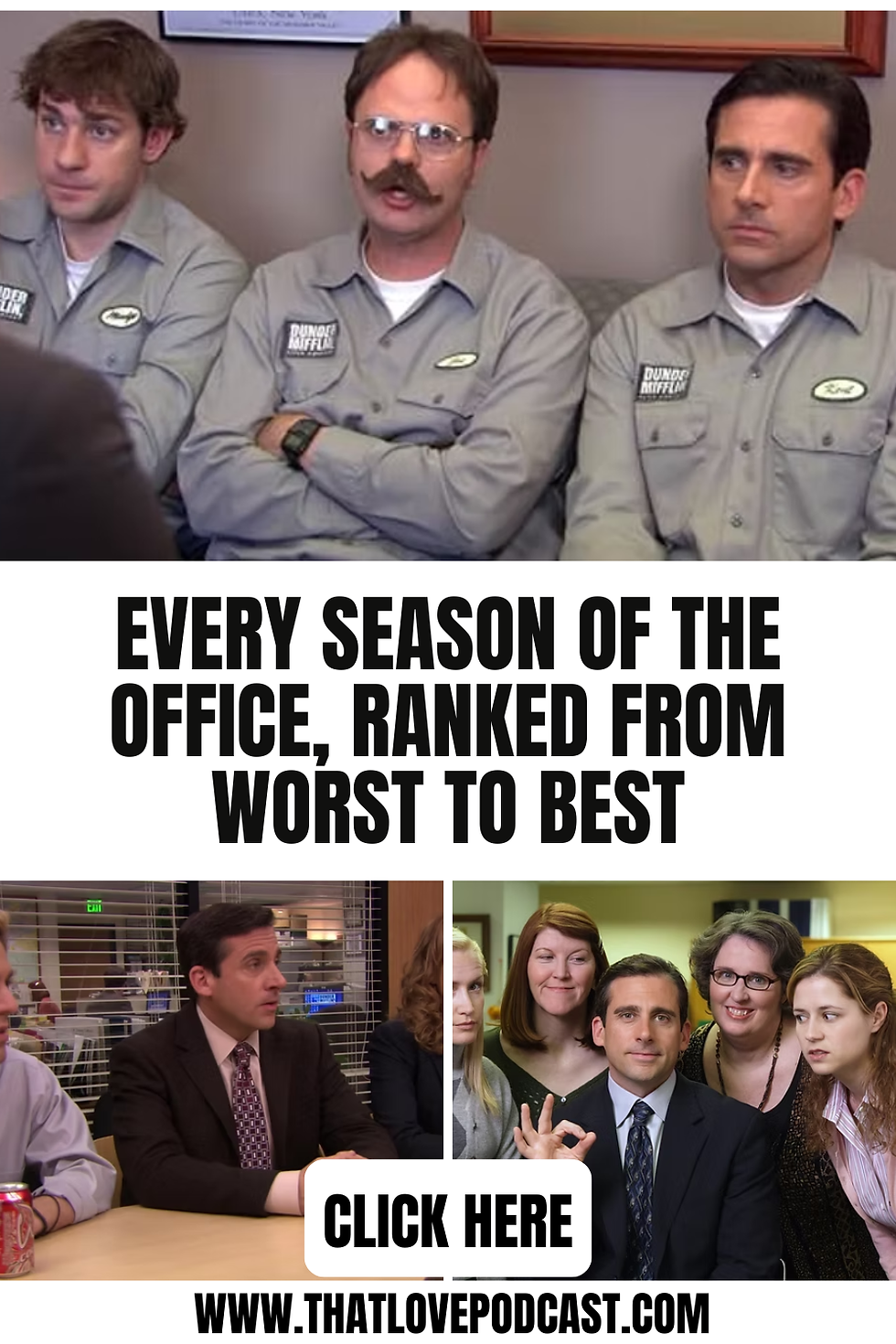
Michael's final season as a regular cast member is something of a mixed bag, torn between genuinely strong, poignant character work and some subplots that feel bizarre or disconnected even by The Office's standards, including a chaotic storyline involving new manager candidates competing for the position. The season occasionally struggles to balance its ensemble comedy with the weight of knowing Michael's exit is approaching.
Its highest highs, though, rank among the show's absolute best material. Michael's farewell episodes in particular — patient, emotionally honest, and genuinely moving — showcase the show at its most mature, more than making up for some of the season's weaker detours along the way. The slow build toward his departure gives these final episodes an emotional weight that few other stretches of the series manage to match.
Beyond Michael's exit, Season 7 also continues strong development for Jim and Pam as new parents, and for Dwight as he navigates increased responsibility within the branch. It's a season defined by its farewell more than its overall consistency, but that farewell alone secures its place solidly in the middle of this ranking.
4. Season 5

Season 5 hits a genuinely confident stride, balancing Michael's chaos, Jim and Pam's steadily developing relationship, and a deep, fully realized ensemble cast operating at full strength. This is the season where the show feels most comfortably in command of its own tone, mixing big, memorable comedic swings — including some of the series' most quoted episodes — with real emotional stakes that never feel forced.
Character development across the supporting cast is particularly strong here, with Dwight, Andy, and Angela all getting meaningful material that expands beyond their earlier, more one-note comedic functions. The season also benefits from a strong sense of momentum, with ongoing storylines carrying real weight from episode to episode rather than resetting each week.
It's widely considered one of the show's most purely satisfying seasons to watch start to finish, striking a balance of ambition and consistency that few other seasons of The Office manage quite as effectively across a full run of episodes.
You'll also love: 12 Reasons Michael Scott Was Actually a Great Boss
3. Season 4
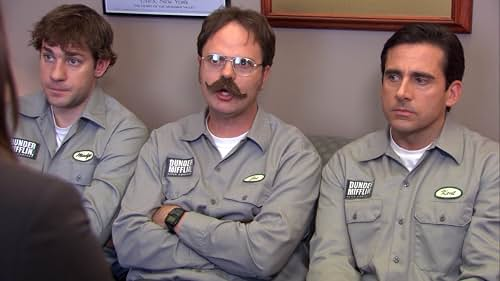
Season 4 benefits from a leaner, more focused structure compared to some of the show's longer seasons, and it gives Michael and Holly one of the show's most genuinely sweet, well-developed romantic arcs. The season is also home to some of the series' most purely funny episodes, striking a near-perfect balance between big comedic setpieces and grounded emotional beats.
What makes Season 4 stand out is how confidently it juggles multiple storylines without any single thread feeling neglected. Jim and Pam's relationship, Michael's romance with Holly, and the ensemble's various subplots all get meaningful room to breathe, making this one of the show's most consistently well-paced seasons.
The shortened episode count, a result of the writers' strike that affected the broader television industry that year, arguably works in the season's favor, forcing a tighter, more efficient storytelling approach that many fans point to as a strength rather than a limitation.
2. Season 3

Season 3 is widely regarded as the point where The Office fully becomes itself — the Jim-and-Pam will-they-won't-they tension reaches a genuine fever pitch, Dwight and Angela's relationship adds a compelling new layer to the ensemble, and the show's comedic rhythms feel fully, confidently locked in for the first time. Michael's character also deepens considerably here, moving beyond pure cringe comedy into something more textured and sympathetic.
This is also the season where several of the show's most iconic recurring elements first take shape, including the tension between the Scranton and Stamford branches following a corporate merger, which brings new characters like Andy Bernard permanently into the fold. That merger storyline reshapes the ensemble in ways that pay dividends for the rest of the series.
It's widely considered one of the show's most purely rewatchable years, balancing plot momentum with character-driven comedy in a way few sitcom seasons manage this consistently, and it's often the season new viewers point to as the moment they became fully hooked on the show.
1. Season 2
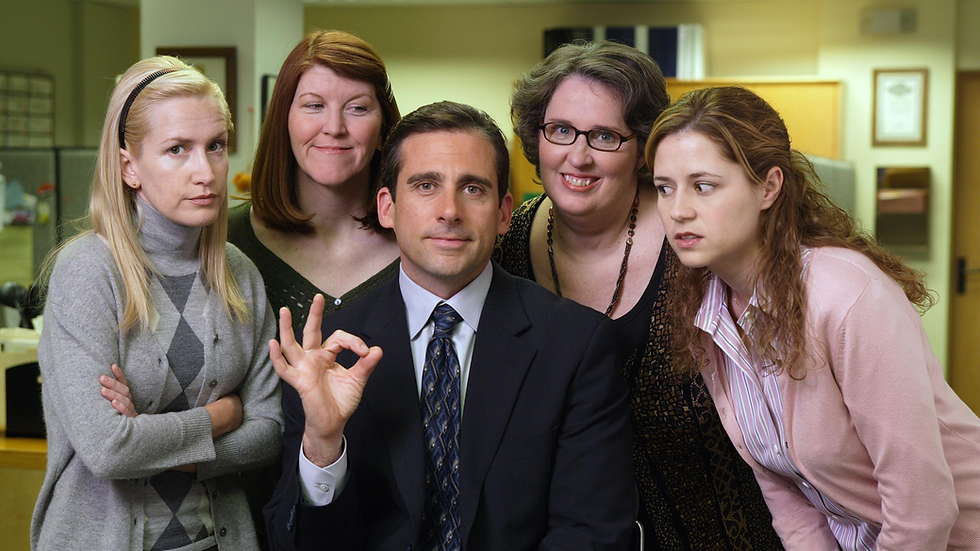
Season 2 is the season most fans and critics alike point to as The Office's creative peak. It properly introduces the emotional core of Jim and Pam's romance, gives Michael real dimension beyond surface-level cringe comedy for the first time, and delivers an almost unbroken run of classic, frequently-referenced episodes from start to finish.
What sets Season 2 apart is how effectively it balances everything the show would go on to be known for — sharp mockumentary-style comedy, genuine emotional stakes, and a rapidly deepening ensemble cast — without any of the padding or uneven subplots that occasionally weigh down later seasons. Nearly every episode from this season has become a touchstone reference point for the show as a whole.
It's the season that transformed The Office from a niche, somewhat divisive mockumentary into a full-blown cultural phenomenon, and it remains the gold standard against which every other season is still measured. For a huge number of fans, it's also the season they recommend to newcomers looking for the fastest possible way into what makes the show so beloved.
📺 Where to watch: All nine seasons of The Office are streaming on Peacock in the US.
The Verdict: What Makes The Office's Best Seasons Work
The Office's strongest seasons all share a remarkably consistent formula: a tight, well-managed balance between Michael's chaos, Jim and Pam's slow-burn relationship, and an ensemble cast given real room to develop beyond their initial comedic archetypes. Its weaker years tend to happen when that balance tips too far in one direction, whether that's leaning too heavily into disconnected subplots or, later in the show's run, losing its emotional center after Michael's departure and struggling to fully replace it.
What's remarkable, looking back across all nine seasons, is just how rarely the show truly falters. Even its weakest entries have genuine highlights worth revisiting, which says a great deal about how thoroughly the writers understood these characters and this world by the time the series wrapped, and why The Office continues to find new generations of fans discovering Dunder Mifflin for the first time.
💖 If you enjoyed this list, consider donating to support That Love Podcast. 🎧 Listen to more episodes of That Love Podcast here.
Frequently Asked Questions
What is the best season of The Office? Season 2 is most commonly cited as the show's creative peak, thanks to the developing Jim and Pam storyline and an especially strong run of classic episodes.
What is the worst season of The Office? Season 1 is generally considered the weakest, largely because the show hadn't yet developed its own distinct identity separate from the UK original.
Does The Office get worse after Michael Scott leaves? Many fans feel the show loses some energy after Season 7, though Seasons 8 and 9 still contain standout episodes and satisfying character arcs.
Is Season 9 a good ending to The Office? While uneven overall, Season 9's finale is widely praised as one of the best series endings in sitcom history, elevating the season's overall standing.
How many seasons does The Office have? The Office ran for nine seasons total, from 2005 to 2013.
What season do Jim and Pam get married? Jim and Pam marry in Season 6, in the widely beloved two-part episode "Niagara."
What season does Michael Scott leave The Office? Michael departs at the end of Season 7, relocating to be with Holly.
Is The Office worth rewatching from Season 1? Yes, though many fans recommend pushing through the shorter, rougher first season to reach the significantly stronger Season 2 onward.
Where can I stream The Office? The Office streams on Peacock in the US.
Who replaces Michael Scott as manager in later seasons? Andy Bernard becomes regional manager following a brief and turbulent stint by Deangelo Vickers and Robert California.
If you're on the hunt for your next favorite TV show, there's no shortage of resources to help you discover the perfect series tailored to your tastes. Whether you're in the mood for something new or a timeless classic, the following platforms and communities offer a wealth of recommendations and insights:
IMDb: The premier source for movie and TV show information. Visit IMDb
Rotten Tomatoes: A site that aggregates movie and TV show reviews from critics and audiences. Visit Rotten Tomatoes
Metacritic: It compiles reviews and assigns scores to movies, TV shows, and games. Visit Metacritic
Wikipedia: A comprehensive resource for detailed information about various shows, including plot summaries and production details. Visit Wikipedia
TV Guide: A well-known source for television listings and reviews. Visit TV Guide
Entertainment Weekly: Offers entertainment news, reviews, and features on movies and television. Visit Entertainment Weekly
Deadline Hollywood: An online news site focused on the entertainment industry, providing updates and insights. Visit Deadline
The Hollywood Reporter: A leading source for entertainment news, analysis, and reviews in film and television. Visit The Hollywood Reporter
Enjoyed what you read? Subscribe to That Love Podcast’s newsletter for the latest blogs, updates, and exclusive giveaways! Share the joy—pass along our blogs and website to family and friends so they can join in on the fun. Let’s spread the love together!


.jpg)





.jpg)


