



Movie Review: The Godfather (1972)
- Joao Nsita
- Jan 2, 2025
- 4 min read


Introduction
Directed by Francis Ford Coppola, The Godfather (1972) is a cinematic masterpiece that has stood the test of time. Based on Mario Puzo’s bestselling novel, this epic crime drama delves into the intricate dynamics of the Corleone family, exploring themes of power, loyalty, and morality. Featuring a star-studded cast led by Marlon Brando, Al Pacino, and James Caan, The Godfather transcends the gangster genre to become one of the greatest films ever made.
Plot Summary
Set in post-World War II New York, the film chronicles the rise and transformation of Michael Corleone (Al Pacino) from a reluctant outsider to the ruthless head of the powerful Corleone crime family. Don Vito Corleone (Marlon Brando), the family patriarch, oversees a sprawling criminal empire, balancing his code of honor with the harsh realities of organized crime.
After an attempt on Vito’s life by rival families, Michael reluctantly steps into the violent underworld he once shunned. As he navigates a labyrinth of power struggles, betrayals, and moral compromises, Michael’s journey becomes a poignant exploration of loyalty and corruption.
The narrative weaves through unforgettable moments: the chilling horse head scene, the climactic baptism sequence, and Vito’s tender farewell to his son. These iconic scenes cement the film’s legacy as a masterclass in storytelling.
Themes and Storytelling
The Godfather is a layered exploration of family, power, and identity. At its heart, the film examines the duality of Michael’s character—a man torn between familial duty and his desire to lead a legitimate life.
The film also reflects on the American Dream, portraying how immigrants like the Corleones navigate ambition and survival in a society shaped by corruption and greed. Coppola’s direction emphasizes the moral complexities of the characters, blurring the lines between right and wrong.
Every scene is meticulously crafted, with Puzo and Coppola’s screenplay balancing moments of quiet introspection with bursts of tension and violence. The result is a narrative that feels both intimate and epic.
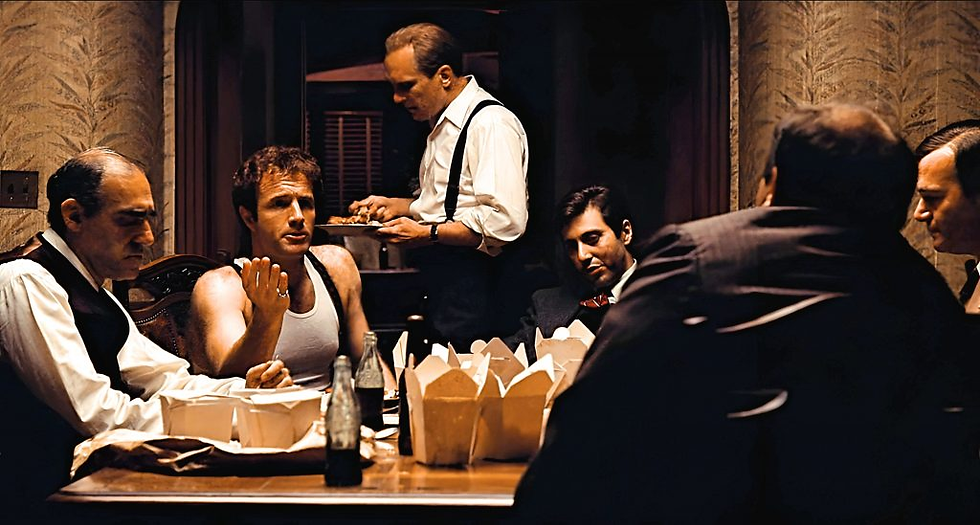
Performances
The performances in The Godfather are nothing short of legendary. Marlon Brando’s portrayal of Don Vito Corleone is iconic, embodying the character’s mix of warmth and menace. His understated delivery, combined with his physical transformation, creates a character that is both terrifying and deeply human.
Al Pacino delivers a career-defining performance as Michael Corleone, capturing his evolution from a reserved war hero to a calculating mafia boss. His transformation is gradual and haunting, marking one of cinema’s most compelling character arcs.
James Caan as Sonny, Robert Duvall as Tom Hagen, and Diane Keaton as Kay Adams round out the stellar cast, each bringing depth and nuance to their roles. The ensemble’s chemistry enhances the film’s emotional resonance, making the Corleones feel like a real family.
Visuals and Direction
Francis Ford Coppola’s direction is masterful, combining rich visuals with a meticulous attention to detail. Cinematographer Gordon Willis’s use of shadow and light creates an atmosphere of brooding intensity, earning him the nickname “The Prince of Darkness.”
The film’s visual language reflects its themes, with the Corleones’ world often shrouded in darkness, symbolizing the moral ambiguity of their actions. The iconic shots—Don Vito in his study, Michael closing the door on Kay—are etched into the fabric of cinema history.
Score and Sound Design
Nino Rota’s haunting score is one of The Godfather’s defining elements. The melancholic theme captures the film’s blend of beauty and tragedy, becoming synonymous with the Corleones’ saga. The music enhances every scene, from the grand wedding sequence to the intimate moments of loss and betrayal.
The sound design, from the crack of gunshots to the whispers of dialogue, immerses the audience in the story. Coppola’s attention to auditory detail ensures that every sound carries emotional weight.
Legacy and Impact
The Godfather redefined the gangster genre, elevating it to a level of artistry previously unseen in Hollywood. Its influence extends beyond film, shaping pop culture and inspiring countless imitations and parodies.
The movie’s success at the box office and critical acclaim cemented Coppola’s status as a visionary director and launched Al Pacino’s career. Winning three Academy Awards, including Best Picture, The Godfather is a benchmark for excellence in filmmaking.
Strengths and Critiques
Strengths:
Complex Characters: The Corleones are deeply human, making their moral struggles relatable.
Masterful Direction: Coppola’s vision brings every element together seamlessly.
Iconic Performances: Brando and Pacino deliver career-defining work.
Timeless Themes: The exploration of family, loyalty, and power remains relevant.
Critiques:
Pacing: At nearly three hours, the film’s deliberate pace may challenge modern viewers accustomed to faster storytelling.
Violence: The film’s graphic depictions of violence, while integral to the story, may be unsettling for some audiences.
Conclusion
The Godfather (1972) is a monumental achievement in cinema, blending impeccable performances, compelling storytelling, and masterful direction. Its exploration of power, family, and morality transcends the gangster genre, making it a timeless classic. Whether you’re a first-time viewer or revisiting it, The Godfather offers an unforgettable cinematic experience that continues to captivate and inspire.
FAQs About The Godfather
Q: What is The Godfather about?A: The film chronicles the rise of Michael Corleone as he takes over his family’s mafia empire while navigating power struggles, loyalty, and moral compromises.
Q: Who directed The Godfather?A: The movie was directed by Francis Ford Coppola.
Q: Is The Godfather based on a book?A: Yes, it is based on Mario Puzo’s 1969 novel of the same name.
Q: Who stars in The Godfather?A: The cast includes Marlon Brando as Don Vito Corleone, Al Pacino as Michael Corleone, James Caan as Sonny Corleone, and Diane Keaton as Kay Adams.
Q: What awards did The Godfather win?A: The film won three Academy Awards, including Best Picture, Best Actor for Marlon Brando, and Best Adapted Screenplay.
Q: Why is The Godfather considered a classic?A: Its complex characters, masterful storytelling, and cultural impact have solidified its place as one of the greatest films of all time.
Q: How long is The Godfather?A: The movie has a runtime of approximately 2 hours and 55 minutes.
Q: What themes does the movie explore?A: The film explores themes of family, power, loyalty, morality, and the American Dream.
Q: Is The Godfather suitable for all audiences?A: The film is rated R for graphic violence and mature themes, making it best suited for adult audiences.
Q: Does The Godfather have sequels?A: Yes, it is the first film in a trilogy, followed by The Godfather Part II (1974) and The Godfather Part III (1990).


.jpg)
.jpg)


.jpg)






Comments