





12 Life-Changing Habits to Start in the New Year

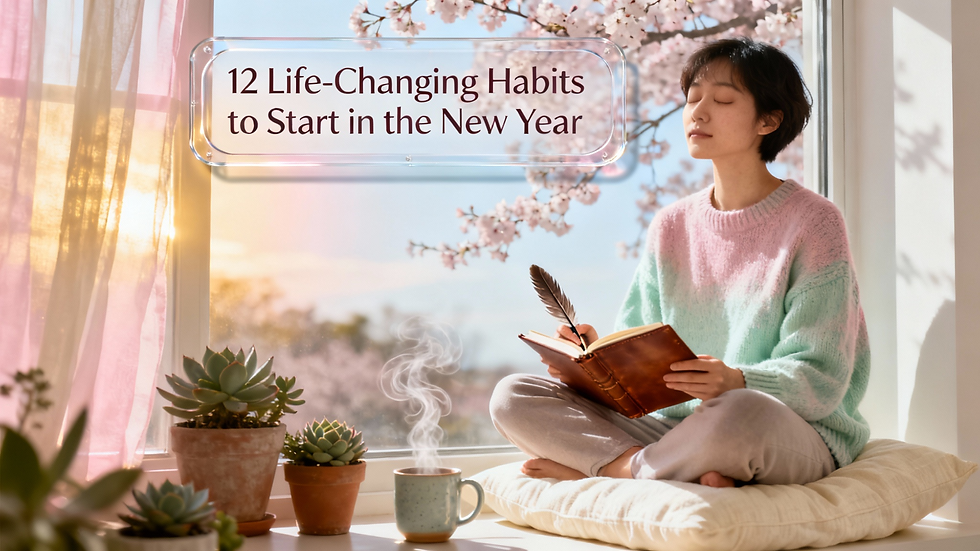
It’s a Sunday evening in late December, and a new, more contemplative mood is beginning to settle over London. The sun is dipping below the skyline earlier, the air is cooler, and the first true chill of autumn is in the air. This is the magical, transitional time of year when our thoughts naturally begin to turn inward. As the current year begins its final, graceful descent, we find ourselves on the cusp of a new beginning, a blank page, a fresh start. The New Year has always been a powerful symbol of hope and renewal, a collective, global moment of intention-setting. But in 2026, the idea of a "New Year's resolution" has undergone a profound and beautiful transformation.
The old model of drastic, punishing resolutions—"lose 20 pounds," "quit all carbs"—is a thing of the past. On social media platforms like TikTok and Pinterest, a new, more gentle and sustainable approach to self-improvement has taken hold. The trend is a powerful and beautiful one, a move away from the glorification of "the hustle" and towards the quiet, intentional cultivation of a "soft life." We see the rise of aesthetic journaling, of "dopamine walks," and of the simple, profound joy of a perfectly crafted morning routine. The focus is not on radical, overnight transformation, but on the small, consistent, and deeply impactful habits that, over time, can lead to a truly life-changing shift in our well-being.
This is your definitive, in-depth guide to embracing that new spirit and to creating a 2026 that is not just more productive, but more joyful, more connected, and more authentically you. We have curated a list of twelve of the most powerful, practical, and life-changing habits, presented in descending order of foundational importance. This is not a list of resolutions to be abandoned by February. It is a comprehensive playbook of small, sustainable practices that, when woven into the fabric of your daily life, can create a powerful and lasting ripple effect across every area of your existence.
From the revolutionary act of prioritizing your sleep to the art of curating your digital world, these are the twelve habits that will help you to build a more resilient, more peaceful, and more beautiful life in the year to come.
Enjoyed what you read? If you find this article insightful and it helps you on your own journey of personal growth, please consider supporting our work. Your generosity allows us to continue creating and sharing in-depth, valuable content. You can make a donation by moving your cursor to the top of the article or scrolling down to the bottom. Every little bit helps us spread the love, one article at a time!
12. Create a "Third Place"
The Vibe: Intentionally cultivating a space that is not your home and not your work, a place where you can simply be and connect with a community.
The Deeper Meaning: In our increasingly remote and digitally connected world, many of us find ourselves living in a two-place reality: home and work. The concept of the "third place," coined by the sociologist Ray Oldenburg, refers to the anchors of community life, the informal public spaces where people can gather, interact, and build relationships. These are your local coffee shops, your libraries, your pubs, your community centres. In a world that is grappling with an epidemic of loneliness, the intentional cultivation of a third place has become a vital and powerful act of community-building and self-care.
How to Put It into Practice:
Identify Potential Spaces: Think about what kind of environment would nourish you. Is it the quiet, intellectual energy of a beautiful library? The creative buzz of a local art class? The gentle, competitive spirit of a weekly sports league?
Make it a Ritual: The key to a third place is consistency. Try to visit your chosen space at the same time each week. This is how you move from being an anonymous customer to a "regular," a familiar face who is a part of the fabric of that community.
Be Open to Connection: The beauty of a third place is the potential for spontaneous, low-pressure social interaction. Make eye contact, smile at the staff, and be open to the simple, human connections that can emerge. For more on the importance of community, the book Bowling Alone by Robert D. Putnam is a classic and essential read.
It Can Be a Shared Space: A third place can also be a wonderful thing for a couple. Finding a pub that is "your" pub, or a coffee shop that is "your" spot, can be a beautiful way to build a shared life outside of the four walls of your home. This is a key part of building a lasting partnership, a theme central to Things I Wish I Knew Before Getting Married.
Find your new favourite local spot by exploring your neighbourhood on foot. For classes and community groups, a website like Meetup is a fantastic resource.
11. Practice a "Digital Sunset" Every Night
The Vibe: A simple, powerful, and scientifically-backed ritual to reclaim your evenings, improve your sleep, and protect your peace of mind.
The Deeper Meaning: Our phones are the last thing we look at before we go to sleep and the first thing we reach for when we wake up. This constant stream of information and stimulation is having a profound and often very negative impact on our mental health and our sleep quality. The "digital sunset" is the simple but revolutionary act of setting a specific time each evening when all screens—phones, tablets, laptops, and televisions—are turned off. This creates a vital, screen-free buffer zone between the chaos of the day and the restorative peace of the night.
How to Put It into Practice:
Set a Specific Time: Choose a time that is at least one hour before you plan to go to sleep. Set a recurring alarm on your phone to remind you that it is time to power down.
Create a Charging Station (Outside of Your Bedroom): This is a game-changer. By charging your phone in another room overnight, you remove the temptation to scroll in bed and you ensure that the first thing you do in the morning is not to reach for your phone.
Fill the Void: The first few nights of a digital sunset can feel strange and empty. Have a plan for how you will fill that screen-free time. This is a perfect opportunity to read a real, paper book, to listen to a calming playlist or a podcast, to do some gentle stretching, or to have a real, uninterrupted conversation with your partner. This kind of dedicated time is a key habit, as explored in 10 Habits of Couples Who Stay Deeply in Love for a Lifetime.
The Science Behind It: The blue light emitted from our screens is a powerful suppressor of melatonin, the hormone that makes us feel sleepy. By removing that blue light in the evening, you are allowing your body to naturally prepare for sleep. For a deep dive into the science of sleep, the book Why We Sleep by Matthew Walker is an essential and life-changing read.
The best tool for this habit is an old-fashioned alarm clock, which you can find at any major retailer like John Lewis. This will allow you to wake up without having your phone by your bed.
10. Start a "Five-Minute" Habit
The Vibe: A brilliantly simple and psychologically powerful trick to overcome procrastination and to start building the habits you've always wanted to create.
The Deeper Meaning: We often fail to start a new habit because the idea of it feels too big and too overwhelming. "I'm going to run a 5k every day" or "I'm going to write a novel" are huge, intimidating goals. The "five-minute" rule is a perfect antidote to this. The principle is simple: whatever new habit you want to start, commit to doing it for just five minutes a day. That's it. Anyone can do something for five minutes.
How to Put It into Practice:
Lower the Bar: The goal is not to achieve a massive result in those five minutes; the goal is to simply show up and to start. Do you want to start meditating? Meditate for five minutes. Do you want to start journaling? Write for five minutes. Do you want to start learning a new language? Use a language app for five minutes.
The Psychology Behind It: This technique, which is a key part of James Clear's groundbreaking book Atomic Habits, is so effective because it bypasses the part of our brain that is resistant to starting a new, difficult task. The hardest part of any new habit is simply starting. By making the starting process ridiculously easy, you are much more likely to be consistent.
The Ripple Effect: What you will often find is that, once you have started, you will want to continue for longer than five minutes. But even if you don't, you have still won. You have shown up, you have kept your promise to yourself, and you have cast a "vote" for the kind of person you want to be. These small, daily votes are what build a new identity over time. For more on the power of these small, consistent actions, you can check out our article on 10 Ways to Bullet-Proof Your Marriage.
9. Master a Single, Signature Dish
The Vibe: A delicious, confidence-boosting, and incredibly satisfying culinary project that will make you a legend among your friends and family.
The Deeper Meaning: In a world of takeaways and convenience food, the act of learning to cook a single dish, and to cook it really, really well, is a powerful act of self-reliance and creativity. It is a skill that will not only bring you a huge amount of joy and satisfaction, but will also be a beautiful and generous way to show love and care for the people in your life. This is not about becoming a gourmet chef; it's about finding one, single dish that you love and that you can make with confidence and pride.
How to Put It into Practice:
Choose Your Signature: What is a dish that you absolutely love to eat? Is it a perfect, creamy carbonara? A rich, slow-cooked beef bourguignon? A vibrant, fragrant Thai green curry? Choose a dish that excites you.
Find Your "Perfect" Recipe: The internet is a treasure trove of recipes. Find a few different, highly-rated versions of your chosen dish from trusted sources like BBC Good Food or The New York Times Cooking.
Practice, Tweak, and Perfect: Make the dish over and over again. The first time, follow the recipe exactly. The second time, start to make small tweaks to suit your own taste. This process of repetition and refinement is how you move from simply following a recipe to truly knowing a dish.
Host a Dinner Party: The ultimate test of your new skill. Invite a few friends over and share your signature dish with them. The act of cooking for others is a beautiful expression of love. For more on the art of hosting, you can check out our guide to How to Be a Good Host.
8. Schedule Regular "Money Dates"
The Vibe: A proactive, collaborative, and surprisingly romantic ritual that can transform your finances from a source of stress and conflict into a source of shared power and connection.
The Deeper Meaning: Money is one of the biggest and most common sources of conflict in a relationship. Most couples only talk about money when there's a problem, which means the topic becomes automatically associated with stress and anxiety. A "money date" is a powerful and positive alternative. It is a scheduled, recurring time to sit down together in a relaxed and positive environment to talk about your finances as a team. It is a proactive act of financial intimacy that can be incredibly empowering for a couple.
How to Put It into Practice:
Make it a Ritual: Schedule a money date once a month. Put it in your calendars and treat it as a non-negotiable appointment.
Set the Right Atmosphere: Don't have this conversation when you are tired, hungry, or stressed. Make it a positive experience. Order your favourite takeaway, open a bottle of wine, and put on some good music. The goal is to create a safe and relaxed environment. For more on creating a special atmosphere at home, check out our guide to 8 Cozy At-Home Date Night Ideas.
Have a Clear Agenda: Your money date could cover a few key topics: celebrate your wins, review your spending without judgment, look ahead at upcoming expenses, and check in on your long-term, shared goals.
It's About Values, Not Just Numbers: Use this time to have bigger-picture conversations. What does financial security mean to you both? What are your shared dreams, and how can your money be a tool to help you achieve them? This is the heart of building a strong financial partnership, a theme we explore in depth in our guide to 10 Financial Tips to Strengthen Your Marriage.
7. Go on a "Dopamine Walk" Every Day
The Vibe: The simplest, most powerful, and most accessible mental health tool there is. It's a mindful, joyful, and completely free way to boost your mood and to connect with the world around you.
The Deeper Meaning: A "dopamine walk" is a huge and wonderful trend on TikTok for a reason. It is a simple but profound re-framing of a daily walk. The goal is not exercise, or to get from A to B. The goal is to simply walk, with no destination in mind, and to actively look for small things that bring you a spark of joy—a beautiful flower, a cute dog, an interesting piece of architecture, the way the light hits a building. It is an active practice of seeking out and appreciating the small, everyday moments of beauty that are all around us.
How to Put It into Practice:
Leave Your Phone at Home (or in Your Pocket): The goal is to be present in your environment, not in your digital world.
Engage Your Senses: What can you see, what can you hear, what can you smell? The practice is a form of walking meditation.
Take Photos: If you see something that makes you happy, take a photo. You can create a digital or physical "joy" album of all the beautiful, small things you have noticed.
It's Not About the Distance: A ten-minute walk around your block is just as valid and as powerful as a two-hour hike in the countryside. The key is the intention.
This practice is a powerful way to cultivate a more positive and grateful mindset. This kind of mindful connection is a key to a happy life, a theme explored in Things to Give Up for Personal Growth and Success.
6. Read for 15 Minutes Every Day

The Vibe: A small, simple, and incredibly powerful habit that will expand your mind, reduce your stress, and reconnect you with the profound joy of a good story.
The Deeper Meaning: In our fast-paced, short-attention-span world, the simple, quiet act of reading a book can feel like a revolutionary act. Reading is more than just a form of entertainment; it is a powerful tool for building empathy, for reducing stress, and for keeping our minds sharp and engaged. Committing to just 15 minutes of reading a day is a small and achievable goal that can have a massive, positive ripple effect on your entire life.
How to Put It into Practice:
Find a Time That Works for You: This could be on your morning commute, during your lunch break, or as part of your "digital sunset" wind-down routine before bed.
Read What You Love: Do not feel pressured to read "important" or "difficult" books. The goal is to build a habit of reading for pleasure. Whether it’s a gripping thriller, a swoon-worthy romance, or a fascinating non-fiction book, read what brings you joy. For some great reading inspiration, you can check out our Romance Book Recommendations.
Join a Book Club: This is a fantastic way to stay motivated and to connect with other readers. For more on the benefits of reading, the National Literacy Trust website is a great resource.
Listen to Audiobooks: If you struggle to find the time to sit down with a physical book, audiobooks are a brilliant and accessible alternative. You can listen while you are driving, doing chores, or out for a walk. A service like Audible has a massive library of titles.
5. Practice Radical Honesty (With Yourself)
The Vibe: A brave, courageous, and often very difficult practice of being completely honest with yourself about what you truly want, what you truly feel, and what is no longer serving you.
The Deeper Meaning: We are often experts at lying to ourselves. We stay in jobs we hate, in relationships that are not right for us, and in situations that make us unhappy, because the truth is too scary to confront. The practice of radical honesty is about having the courage to gently and compassionately look at your life and to ask the difficult questions. It is the foundation of all true, meaningful personal growth.
How to Put It into Practice:
The Journal is Your Safe Space: Journaling is the single most powerful tool for practicing radical honesty. It is a private space where you can explore your truest thoughts and feelings without fear of judgment. Use your journal to have a completely honest conversation with yourself.
Ask Yourself the Hard Questions: What are you tolerating in your life that is draining your energy? If fear was not a factor, what would you do differently? What are you pretending not to know? For more on this, check out our guide to Questions to Ask a Guy to Get to Know Him on a Deeper Level (the principles of self-inquiry are universal!).
Listen to Your Body: Your body is an incredible source of wisdom. Pay attention to the physical sensations of stress, of tension, and of joy. Your body will often tell you the truth long before your mind is ready to accept it.
Talk to a Therapist: A therapist is a trained, impartial professional who can provide a safe and supportive space for you to explore your own truth. This is a core part of building a healthy life, a theme we explore in How to Find Your Purpose in Life.
4. Nurture Your Most Important Relationships
The Vibe: Intentionally and proactively investing your most precious resources—your time and your attention—into the key relationships that form the foundation of your happiness.
The Deeper Meaning: The quality of our relationships is the single biggest predictor of our long-term happiness and well-being. This is not a sentimental opinion; it is the definitive finding of the Harvard Study of Adult Development, one of the longest-running studies of adult life ever conducted. A life-changing habit for the new year is to stop treating your most important relationships as an afterthought and to start treating them with the same intentionality and focus as you would your career or your health.
How to Put It into Practice:
The "Relationship Audit": Take some time to think about the key relationships in your life. Which ones leave you feeling energized and supported? Which ones leave you feeling drained? Make a conscious decision to invest more of your energy into the relationships that truly nourish you.
Schedule Your Connection Time: Put regular, non-negotiable "dates" in your calendar with your partner, your best friends, and your family.
Practice Generous Appreciation: As we explore in other articles, the simple, consistent act of expressing your gratitude and appreciation for the people in your life is a superpower. Make it a habit to tell the people you love what you love about them.
Be Present: When you are with the people you love, put your phone away. Give them the gift of your full, undivided attention. This is a vital part of building a lasting connection, a theme we explore in Communication in Relationships: The Key to a Stronger Bond.
3. Practice Daily Gratitude
The Vibe: A simple, powerful, and scientifically-proven practice that can literally rewire your brain for happiness.
The Deeper Meaning: Our brains have a natural "negativity bias"—we are hard-wired to notice and to remember the bad things that happen more than the good. The practice of daily gratitude is a conscious and intentional way to counteract this bias. It is the simple act of training your brain to scan your world for the good. It is not about ignoring the bad things; it is about making a conscious choice to also give your attention to the good.
How to Put It into Practice:
The "Three Good Things" Journal: This is the classic, research-backed gratitude practice. At the end of each day, simply write down three things that went well that day, and a brief explanation of why they went well.
The Gratitude Jar: This is a great habit for a family or a couple. Keep a jar on your kitchen counter and, throughout the week, write down small things you are grateful for on little slips of paper. Once a week, read them all out loud together.
The Gratitude Walk: This is a perfect companion to your "dopamine walk." Go for a walk with the sole intention of noticing things that you are grateful for.
Express Your Gratitude to Others: As mentioned before, telling someone what you appreciate about them is a powerful act that benefits both the giver and the receiver.
The positive psychology movement, led by figures like Dr. Martin Seligman, has a huge body of research on the power of gratitude. You can explore more at the University of Pennsylvania's Positive Psychology Center website. This kind of positive mindset is a key habit, as explored in 10 Habits That Make Women Irresistible.
2. Set and Maintain Healthy Boundaries
Why It's So High on the List: The ability to set and maintain healthy boundaries is not just a "nice to have"; it is an absolutely essential and foundational skill for good mental health. A lack of healthy boundaries is a direct path to burnout, resentment, and a life that is lived in service of other people's expectations, rather than your own authentic desires. It is a profound and radical act of self-respect that has a positive ripple effect across every single area of your life.
The Deeper Meaning: Setting a boundary is not an act of aggression; it is a simple, clear, and kind communication of your own needs and your own limits. It is about understanding that you cannot pour from an empty cup. It is about having the courage to say "no" so that you can have the space and the energy to say a wholehearted "yes" to the things that truly matter.
How to Put It into Practice:
Start with a "Gentle No": A simple, "Thank you so much for the offer, but I'm afraid I can't do that" is a complete sentence. You do not need to over-explain or to justify your decision.
Boundaries in Your Relationships: Healthy boundaries are the absolute cornerstone of a healthy partnership. It’s about being able to communicate your needs clearly and respectfully. For more on this, our guide to Setting Boundaries in Relationships is an essential read.
The "Time" Boundary: Your time is your most precious and non-renewable resource. Protect it fiercely. It's okay to not be available for every single social invitation.
The "Emotional" Boundary: You are not responsible for managing other people's emotions. It is okay to take a step back from a conversation or a relationship that is consistently draining or toxic.
1. Practice Self-Compassion
Why It's at the Top: This is number one on the list because it is the absolute, undisputed, and foundational habit upon which all other forms of mental well-being are built. Without a foundation of self-compassion, all other self-improvement efforts are simply another way to beat yourself up for not being "good enough." Self-compassion is the radical and life-changing practice of treating yourself with the same kindness, care, and understanding that you would offer to a dear friend. It is the ultimate antidote to the destructive, and often very loud, voice of the inner critic.
The Deeper Meaning: Self-compassion is not the same as self-pity or self-indulgence. It is a powerful and resilient state of mind that consists of three core components: self-kindness (being gentle and understanding with yourself), a sense of common humanity (recognizing that suffering and imperfection are a part of the shared human experience), and mindfulness (observing your negative thoughts and emotions with openness and clarity).
How to Put It into Practice:
The "Best Friend" Test: The next time you make a mistake, ask yourself: "What would I say to my best friend if they were in this exact situation?" And then, say those kind, supportive words to yourself.
The "Self-Compassion Break": This simple, three-step practice from Dr. Kristin Neff is a game-changer. For more on this, the official Self-Compassion website is an incredible resource.
Challenge Your Inner Critic: When you hear that negative, judgmental voice in your head, don't just accept it as the truth. See it for what it is: an old, unhelpful, and often inaccurate habit of thought.
Celebrate Your Small Wins: Actively look for and celebrate your progress, no matter how small. This is a key part of building a healthier relationship with yourself, a theme we explore in our guide to Transform Your Life: The Ultimate Guide to Self-Healing, Fulfillment, Happiness, and Self-Care.
Conclusion
As we stand on the threshold of a new year, the invitation is not to reinvent ourselves into a completely new and "perfect" person. The invitation is to become more fully, more kindly, and more authentically ourselves. The twelve habits on this list are a powerful and practical roadmap for that journey. They are a testament to the fact that a life-changing transformation is not the result of a single, grand, and dramatic leap, but of a series of small, consistent, and compassionate steps taken every single day.
In the end, the ultimate "life hack" is simply the gentle, ongoing, and deeply loving practice of being on your own side. So, as you look ahead to 2026, let go of the pressure to be perfect. Instead, make a simple, and profoundly powerful, resolution: to be a little kinder to yourself, one small habit at a time.

Enjoyed what you read? If you found this article insightful and it helps you on your own journey of personal growth, please consider supporting our work. Your generosity allows us to continue creating and sharing in-depth, valuable content. You can make a donation by moving your cursor to the top of the article or scrolling down to the bottom. Every little bit helps us spread the love, one article at a time!
Related Articles from That Love Podcast:
Frequently Asked Questions (FAQs)
1. I'm feeling overwhelmed. Which of these habits is the best place to start? The "five-minute" habit is the perfect starting point. Choose one other habit from this list that excites you, and commit to doing it for just five minutes a day. The small, easy win will build momentum.
2. What is the difference between "mental health" and "mental illness"? This is a great question. "Mental health" is a state of well-being that everyone has, just like physical health. It exists on a spectrum. A "mental illness" is a diagnosed condition that affects a person's thinking, feeling, mood, or behaviour.
3. How do I know if I need to see a therapist? If you are finding that your thoughts, feelings, or behaviours are consistently and negatively impacting your daily life, your relationships, or your ability to function, it is a great idea to consider speaking to a professional. There is no issue that is "too small" for therapy.
4. I can't afford private therapy. What are my options? In the UK, the NHS offers free psychological therapies, such as CBT, which you can access through a referral from your GP. Charities like Mind also offer a range of low-cost and free local services.
5. What is the "soft life" trend? The "soft life" is a social media trend that celebrates a lifestyle of peace, comfort, and low stress. It is a conscious rejection of "hustle culture" and a move towards prioritizing well-being and gentle living.
6. How can I practice mindfulness if I find it hard to sit still? Mindfulness is not just about sitting meditation. You can practice mindfulness while doing almost any activity. A "mindful walk," "mindful eating," or even "mindful dishwashing" are all fantastic ways to practice.
7. How can my relationships impact my mental health? Our relationships are one of the single biggest factors in our overall mental health. Healthy, supportive relationships can be a powerful protective factor, while toxic or stressful relationships can be a major source of anxiety and depression. For more on this, you can check out our article on 8 Signs of a Healthy Relationship.
8. Are there any apps that can help with my mental health? Yes, there are many fantastic apps. Headspace and Calm are brilliant for guided meditation and sleep. Apps like BetterHelp can connect you with a licensed therapist for online counselling.
9. How does diet and nutrition affect my mental health? There is a growing body of research on the powerful link between our gut health and our brain health. A balanced diet, rich in whole foods, can have a significant positive impact on your mood and your overall mental well-being.
10. What is the most important takeaway from this article? The most important takeaway is that your mental health is a priority, and that taking small, consistent, and compassionate steps to care for your mind is the most powerful investment you can ever make in your own happiness and well-being.





.jpg)





.jpg)


