






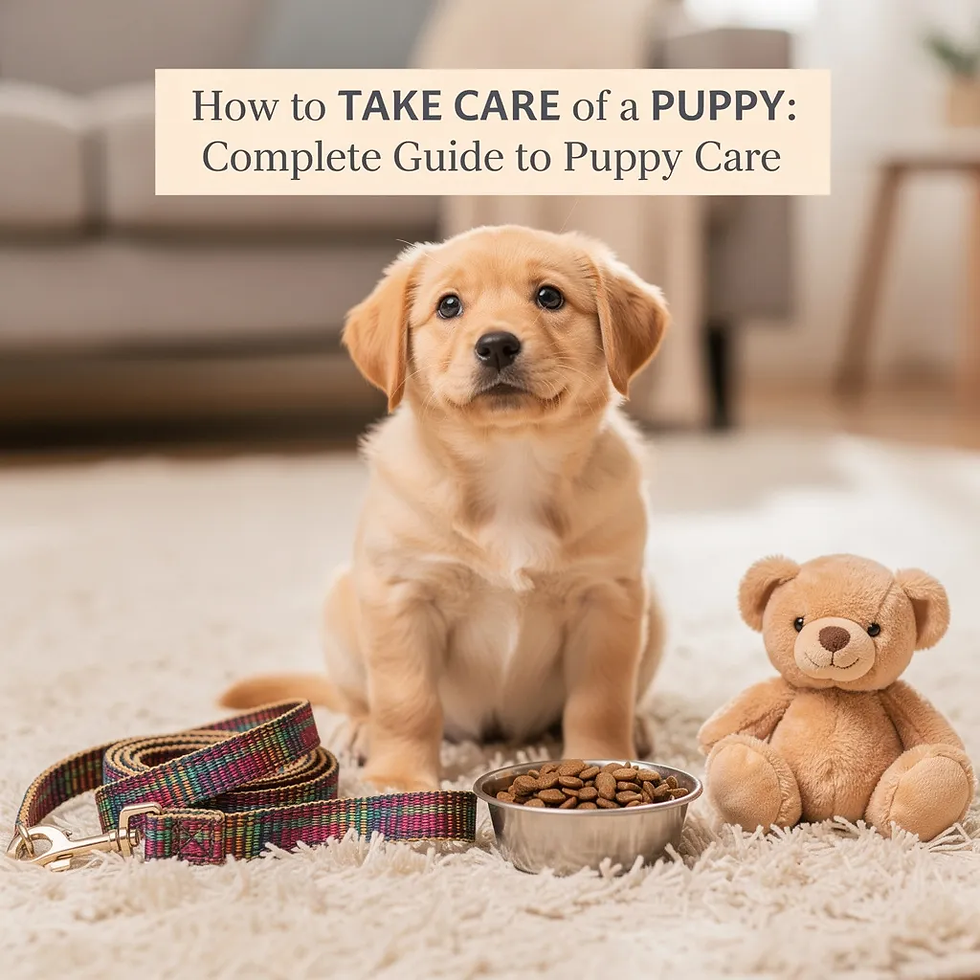
How to TAKE CARE of a PUPPY: Complete Guide to Puppy Care

Introduction
Bringing a new puppy home is one of life’s most joyous milestones. The soft fur, the puppy breath, and the clumsy paws are enough to melt anyone's heart. However, once the initial excitement settles, the reality of the responsibility sets in. Adopting a puppy is not just about buying cute accessories and taking photos for Instagram; it is a serious commitment that can last 15 years or more. Whether you have just adopted a puppy or are in the planning stages, understanding the roadmap to raising a healthy, well-adjusted dog is crucial.
In 2026, puppy care has evolved. We have moved past old-school dominance theories into an era of positive reinforcement, mental health awareness for pets, and high-tech health monitoring. Trends on TikTok and Pinterest are currently exploding with "canine enrichment," "aesthetic puppy corners," and "holistic pet wellness." This guide will walk you through everything you need to know, from the critical first vet visit to the nuances of behavioral training, ensuring you and your new best friend start on the right paw.
Related Articles from That Love Podcast
10. The Veterinary Visit: Establishing a Health Baseline

The absolute highest priority when adopting a puppy is securing their medical health. Regardless of whether you adopted from a shelter, a rescue, or a breeder, a visit to the vet within the first few days is non-negotiable. This isn't just a check-up; it is the foundation of your dog's future well-being.
The General Checkup Your vet will perform a nose-to-tail exam. They check for congenital defects (like heart murmurs), assess body condition, check the eyes and ears for infection, and examine the teeth/bite. This is the best time to ask about breed-specific health risks. For example, if you have a German Shepherd, you might discuss hip dysplasia; for a Pug, you might discuss respiratory care.
The Vaccination Schedule Puppies are born with some immunity from their mothers, but this fades quickly.
6-8 Weeks: Distemper, Parvovirus, Adenovirus (DHP or DA2P).
10-12 Weeks: DHPP booster, and potentially non-core vaccines like Leptospirosis or Lyme disease depending on your region.
16 Weeks: DHPP booster and Rabies (mandatory in most countries).
Trend Alert: In 2026, many pet owners are discussing "titer testing" with their vets to avoid over-vaccination, though following the core puppy schedule remains the gold standard for safety.
Deworming Protocols Intestinal parasites are incredibly common in puppies. Roundworms, hookworms, and tapeworms can stunt a puppy's growth and cause anemia. Worse, some of these are zoonotic, meaning they can transmit to humans.
Internal: Your vet will likely prescribe a dewormer immediately.
External: Flea and tick prevention is vital. Modern oral preventatives are highly effective and safe, preventing diseases like Lyme and Ehrlichiosis.
Sterilization (Spay/Neuter) The conversation around spaying and neutering has shifted. While it is essential for population control, new research suggests that for large breeds, waiting until the dog is fully grown (12-18 months) may protect joint health. Consult your vet for the best timeline for your specific dog.
Microchipping In an era where technology rules, a microchip is the ultimate safety net. It is a grain-of-rice-sized transponder injected under the skin. Unlike a GPS tracker, it doesn't need a battery. If your dog gets lost and loses their collar, a shelter can scan the chip to find your contact info.
9. Puppy Proofing and Environment Setup
Before the paws hit the floor, your home must be a fortress of safety. Puppies explore the world with their mouths, and common household items can be lethal.
The Room-by-Room Sweep
Electrical Cords: Puppies love the texture of rubber cords. Use cord protectors or hide them behind furniture to prevent electrocution burns.
Toxic Plants: The "Urban Jungle" aesthetic is huge on Pinterest, but plants like Lilies, Sago Palms, and Monsteras can be toxic. Swap them for pet-safe alternatives like Spider Plants or Boston Ferns.
Chemicals: Lock away cleaning supplies. Antifreeze is sweet-tasting but deadly.
Small Objects: Anything smaller than your puppy’s mouth is a choking hazard. This includes socks, coins, and kids' toys.
The "Safe Zone" Create a designated area where the puppy can be unsupervised safely. This usually involves a playpen or baby gates.
Pinterest Trend: Aesthetic puppy corners. Owners are color-coordinating crates with their living room decor, using beige and sage green tones, and incorporating non-toxic rugs that are machine washable.
Bedding Invest in a bed that is chew-resistant. While those fluffy donut beds are trendy, a teething puppy might rip them apart and ingest the stuffing. Start with a durable mat until the teething phase passes.
8. Essential Gear and Shopping List
Shopping for a puppy is fun, but it can be overwhelming. The market is flooded with gadgets, but you need to prioritize the essentials.
The Collar and ID Tag Even if microchipped, a visible ID tag is the fastest way to get a lost dog home. Martingale collars are trending for breeds with necks larger than their heads (like Greyhounds), while flat collars work for most.
The Leash and Harness
Harness: For puppies, a Y-shaped harness is recommended over a collar for walking. It protects the delicate trachea (throat) from damage if the puppy pulls.
Leash: Avoid retractable leashes. They teach the dog to pull and offer little control. A standard 6-foot nylon or leather leash is best for training.
Bowls Ditch plastic bowls, which can harbor bacteria and cause "puppy acne." Stainless steel or ceramic bowls are hygienic and durable.
Trend Alert: Slow Feeders. To prevent bloat and provide mental stimulation, many owners use puzzle bowls or "snuffle mats" for dry food instead of standard bowls.
Toys You need a variety:
Teething Toys: Dense rubber toys (like Kongs) that can be frozen.
Plush Toys: For comfort (supervised only).
Interactive Toys: Puzzles that require the dog to solve a problem to get a treat.
Call to Action: Ready to get the best gear for your new furry friend? Check out top-rated puppy essentials on Amazon or Chewy today.
7. Nutrition and Feeding Schedules
What you feed your puppy fuels their growth, brain development, and longevity. The "Pet Food Humanization" trend means owners are looking for human-grade ingredients, but nutritional balance is key.
Choosing the Right Food Puppies have different nutritional requirements than adult dogs. They need more protein and fat, as well as specific calcium-to-phosphorus ratios for bone growth.
Kibble vs. Fresh/Raw: High-quality kibble is convenient and balanced. Fresh food delivery services are booming in popularity, offering cooked meals with human-grade meats. If choosing raw, consult a veterinary nutritionist to avoid deficiencies.
Grain-Free Warning: Be cautious with grain-free diets, as the FDA has investigated links between certain grain-free formulations and heart disease (DCM) in dogs. Stick to science-backed brands.
Feeding Schedule Puppies have small stomachs and high metabolisms.
8-12 Weeks: 4 meals a day.
3-6 Months: 3 meals a day.
6-12 Months: 2 meals a day.
Hydration Fresh water must be available at all times. However, you might pick up the water bowl 2 hours before bedtime to help with potty training.
Internal Link: While managing your puppy's schedule, don't forget to manage your own self-care. Read 14 Glow-Up Habits to Feel Your Best in 2026 to keep your energy high.
6. Potty Training Mastery

Potty training is often the most stressful part of puppy ownership. It requires patience, consistency, and a good enzymatic cleaner.
The Routine Puppies need to go out:
Immediately after waking up.
Immediately after eating or drinking.
Immediately after a play session.
Every 30 minutes to 1 hour in between.
Crate Training The crate is your best friend. Dogs are den animals and naturally avoid soiling where they sleep.
Size Matters: The crate should be just big enough to stand up and turn around. If it's too big, they will use one corner as a bathroom and the other as a bedroom.
Positive Association: Never use the crate as punishment. Feed meals in the crate so they associate it with good things.
Positive Reinforcement When your puppy goes potty outside, throw a party. Treats, praise, and excitement. If they have an accident inside, do not punish them. Simply clean it up. Punishment only teaches them to hide from you when they pee.
Cleaning Accidents Use an enzymatic cleaner. Regular household cleaners mask the smell to humans, but dogs can still smell the pheromones and will return to the same spot. Enzymatic cleaners break down the proteins to remove the scent entirely.
5. Behavioral Training and Positive Reinforcement
Training is not just about "tricks"; it is about communication. The dominance theory (alpha rolls, scruffing) has been scientifically debunked. Modern dog training relies on Positive Reinforcement (R+).
The Basics Start with:
Name Recognition: They look at you, they get a treat.
Sit: A natural behavior that is easy to capture.
Recall (Come): The most important safety command.
Bite Inhibition Puppies explore with their mouths. When they bite too hard, they aren't being aggressive; they are playing.
The Solution: When teeth touch skin, stop play immediately. Redirect them to a toy. If they persist, remove yourself from the room for 30 seconds. They learn that biting = fun stops.
Leash Manners Teach loose-leash walking early. If the puppy pulls, stop walking. Only move forward when the leash is slack. This prevents a lifetime of being dragged down the street.
Internal Link: Training a puppy requires patience, much like navigating a relationship. Check out 11 Reality Shows That Celebrate Relationships & Love for some downtime entertainment.
4. Socialization and Bonding

Socialization is the most misunderstood aspect of puppy care. It does not mean letting your puppy run up to every dog and person they see.
The Socialization Window The critical window closes around 16 weeks. During this time, your puppy forms their worldview.
Goal: Neutrality. You want your dog to see a skateboard, a person in a hat, or another dog and remain calm, not overly excited or fearful.
Exposure Checklist
Surfaces: Grass, concrete, gravel, shiny floors, metal grates.
Sounds: Thunderstorms (use recordings), traffic, vacuums, doorbells.
Handling: Touching ears, paws, tail, and opening the mouth (essential for future vet visits).
The "Fear Period" Around 8-10 weeks, puppies go through a fear period. One bad experience can stick for life. Ensure all interactions are positive. If your puppy looks scared, back away and let them observe from a distance.
3. Exercise and Physical Health
A tired puppy is a good puppy, but an over-tired puppy is a nightmare.
The 5-Minute Rule A general guideline is 5 minutes of exercise per month of age, twice a day. So, a 3-month-old puppy needs about 15 minutes per walk. Over-exercising can damage developing growth plates in their joints.
Mental vs. Physical Exercise Mental stimulation tires a dog out faster than physical exercise.
Enrichment: 15 minutes of sniffing on a "decompression walk" (where the dog leads the way) is equivalent to 45 minutes of fast walking.
TikTok Trend: "Canine Enrichment" videos show owners freezing treats in ice blocks, using lick mats, and creating cardboard chaos boxes for puppies to shred.
2. Grooming and Hygiene
Grooming is health care. Neglecting it can lead to painful mats, infections, and structural issues.
Nail Care Long nails change the geometry of the foot and can cause joint pain. Trim nails weekly.
Desensitization: Touch the paws daily. Pair the sight of the clippers with high-value treats (like cheese or hot dogs).
Dental Care 80% of dogs have dental disease by age 3. Start brushing your puppy's teeth now. Use dog-specific toothpaste (human toothpaste is toxic).
Coat Care Brush your puppy regularly, even if they have short hair, to distribute natural oils and check for lumps or bumps. If you have a breed that requires professional grooming (Doodle, Poodle, Shih Tzu), start taking them for "puppy cuts" as soon as they are fully vaccinated to get them used to the blow dryer and handling.
1. Mental Health and Long-term Commitment

Ranking at number one is the mindset of the owner. The physical care is manageable, but the emotional commitment is profound.
The "Puppy Blues" It is normal to feel overwhelmed, anxious, or regretful in the first few weeks. Sleep deprivation and constant supervision are exhausting. Know that this phase passes.
Separation Anxiety In a post-pandemic world, separation anxiety is rampant. Teach your puppy to be alone. Start with 1 minute, then 5, then 10. Do not make a big deal out of leaving or returning.
Financial Planning Puppies are expensive. Beyond the adoption fee, factor in:
Premium food.
Monthly flea/tick/heartworm prevention.
Annual vet visits.
Emergency funds or Pet Insurance (highly recommended).
The Bond The effort you put in now pays dividends for a decade. A well-loved, well-trained dog is a companion that understands you deeply. The bond you build through training, play, and care is unbreakable.
Conclusion
Adopting a puppy is a transformative experience. By following these 10 steps—prioritizing veterinary health, ensuring safety, providing proper nutrition, and committing to positive training—you are setting the stage for a happy, healthy life together. The trends of 2026 emphasize a holistic approach, recognizing that our dogs are sentient beings who deserve mental enrichment just as much as physical care.

Remember, patience is your most valuable tool. There will be chewed shoes and accidents on the rug, but there will also be unconditional love and a loyalty that is unmatched. Welcome to the wonderful world of dog ownership.
Related Articles from That Love Podcast
🐾 Pet Retailers
Petco🌐 https://www.petco.com/A leading U.S. pet supply retailer with a user-friendly website offering food, toys, and essentials, plus grooming, training services, and personalized pet profiles.
Pets at Home🌐 https://www.petsathome.com/The UK’s largest pet retailer, providing pet food and supplies alongside in-store vet care, grooming services, loyalty rewards, and trusted pet care advice.
Zooplus🌐 https://www.zooplus.com/Europe’s top online pet shop, known for multilingual support, competitive pricing, detailed product descriptions, customer reviews, and expert pet care tips.
🩺 Health & Advice Sites
PetMD🌐 https://www.petmd.com/A veterinarian-reviewed resource covering pet health, emergencies, breed information, nutrition, and care guides for dogs, cats, and other animals.
ASPCA🌐 https://www.aspca.org/An authoritative non-profit organization offering expert guidance on animal rescue, poison safety, emergency care, and cruelty prevention.
🐶 Breed & Training Hubs
American Kennel Club🌐 https://www.akc.org/The premier dog breed authority since 1884, featuring in-depth information on breeds, nutrition, training, health, events, and responsible ownership.
Vetstreet🌐 https://www.vetstreet.com/A vet-approved platform offering trusted advice on pet wellness, training, and health, plus a helpful “Find a Vet” tool for local professionals.
🐕 Community & Niche
The Bark🌐 https://thebark.com/A popular dog lifestyle site with over 1.7 million monthly visitors, featuring wellness tips, training advice, news, recipes, and heartwarming stories for dog lovers.
10 FAQs
1. How long does it take to potty train a puppy? It varies, but typically takes 4-6 months for a puppy to be fully reliable. Some breeds learn faster, while others take up to a year. Consistency is the main factor.
2. When can my puppy go outside for a walk? Puppies should not walk in public areas (parks, sidewalks) until they are fully vaccinated, usually around 16 weeks, to avoid Parvovirus. Backyard play is usually fine if no other strange dogs visit.
3. Why does my puppy bite me so much? Puppies explore with their mouths and are often teething. This is normal behavior called "mouthing." It requires redirection and bite inhibition training, not punishment.
4. Should I get pet insurance? Yes. Veterinary costs are rising. Getting insurance while the puppy is young and has no pre-existing conditions is the most cost-effective move.
5. How much sleep does a puppy need? Puppies need 18-20 hours of sleep per day. Overtired puppies bite more and listen less. Enforced naps in a crate are highly recommended.
6. Is crate training cruel? No, if done correctly. Dogs are den animals. A crate provides a safe, quiet space that belongs to them. It aids significantly in potty training and prevents destructive behavior.
7. Can I feed my puppy adult dog food? No. Large breed puppies, in particular, need puppy-specific formulas to control growth rates and prevent joint issues. Small breeds need energy-dense puppy food to prevent hypoglycemia.
8. How do I stop my puppy from crying at night? Ignore the crying if their needs (potty, food, water) have been met. Comforting them reinforces the crying. You can place the crate near your bed or use a heartbeat toy to soothe them.
9. What is the best age to start training? Immediately. You can start training simple commands and house manners the day you bring them home (usually 8 weeks).
10. How often should I bathe my puppy? Unless they roll in mud, once a month is sufficient. Over-bathing strips natural oils and can cause itchy skin. Use a gentle, puppy-safe shampoo.


.jpg)




.jpg)


